Get in Touch with Guanma

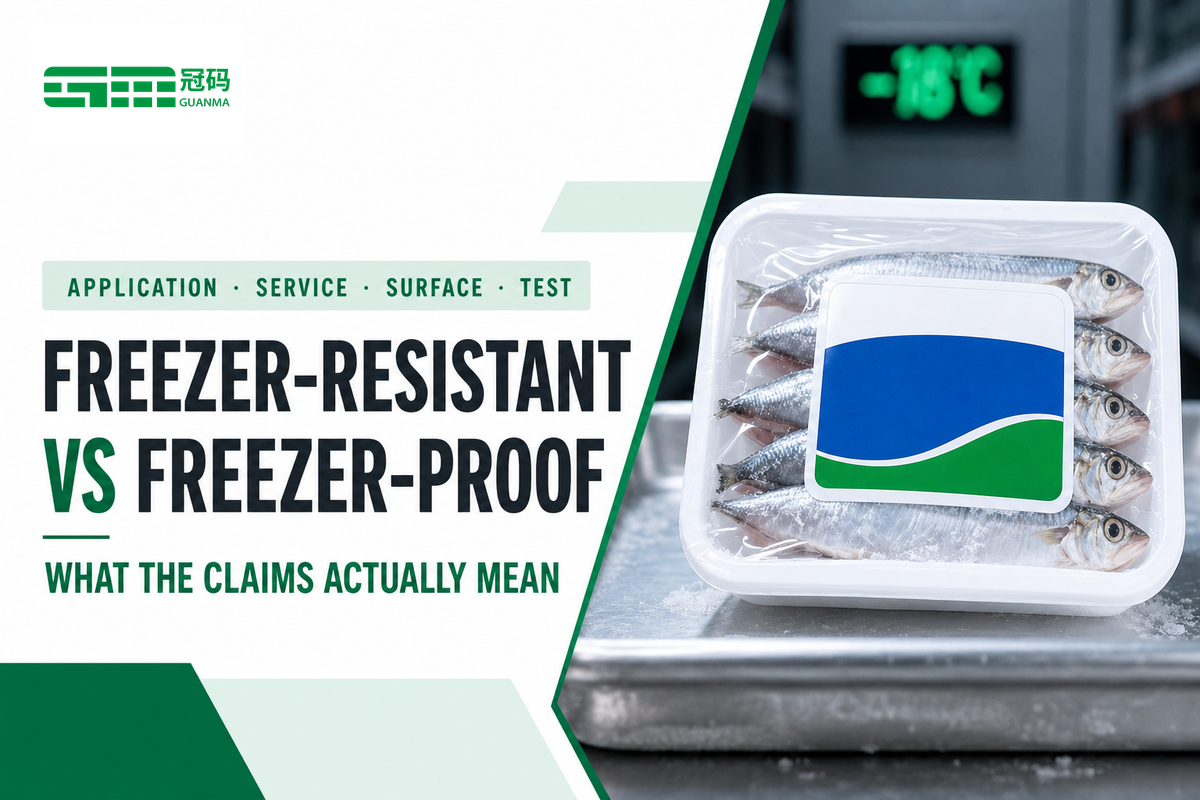
Freezer resistant vs freezer proof labels are not two dependable grades in a universal hierarchy. “Freezer-resistant” is usually a performance claim; “freezer-proof” sounds stronger, but the adjective alone proves nothing. Compare the exact label construction, minimum application temperature, service-temperature range, package surface, moisture condition, dwell time and test result. If a supplier can’t name those conditions, the safer conclusion is “claim not yet qualified,” not “better label.”
Direct answer: a freezer-resistant label can be the more defensible choice if its data sheet and trial match your process. A product called freezer-proof can still fail when it’s applied below its minimum application temperature, pressed onto frost, paired with the wrong plastic or printed with an unsuitable ribbon.
Key takeaway
Proof is a construction-specific test result, not the word “proof” on a product page. Qualify the bond-forming condition, frozen-service exposure and printed-information survival separately.
Freezer-Resistant vs Freezer-Proof: The Evidence Difference
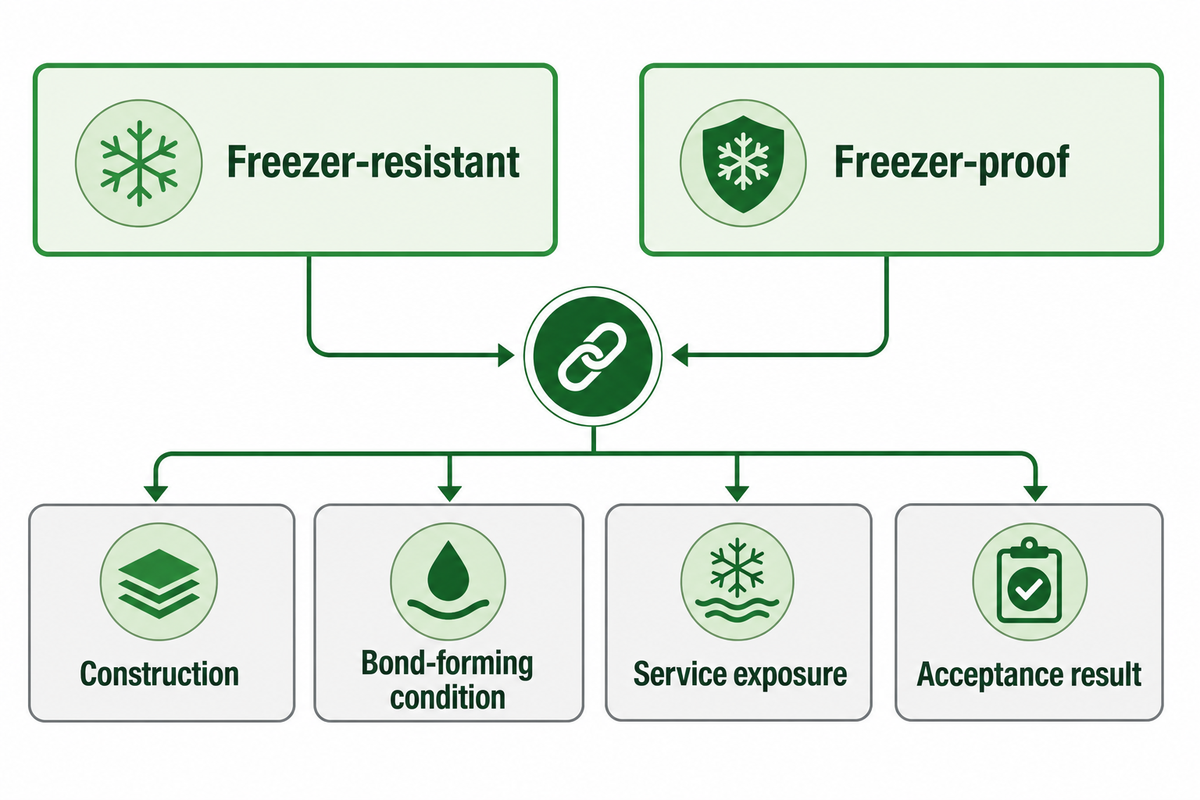
That proof-first rule makes the useful distinction not linguistic, but evidentiary. “Freezer-safe,” “freezer-resistant,” “freezer-proof” and “deep-freeze” appear across the market without a consistent ladder of performance. Industry bodies such as FINAT and standards publishers such as ASTM International define test methods. They do not turn a marketing adjective into a universal cold-chain approval.
That matters because a peel result is not a complete design specification. ASTM D3330/D3330M covers peel adhesion of pressure-sensitive tape and explicitly limits what the result can establish for an end use. A buyer still has to define the substrate, temperature path, moisture exposure, pressure, dwell and acceptance threshold. This is the rule behind Proof Is a Test Result, Not an Adjective: stronger language should trigger a request for stronger evidence.
A freezer claim becomes decision-ready only when the supplier names the construction, bond-forming condition, service exposure and acceptance result.
Do
- Ask for the complete facestock–adhesive–liner construction.
- Record application and service temperatures separately.
- Trial the label on the real package and surface state.
- Define bond, edge and readability acceptance criteria.
Don’t
- Rank products by the adjective alone.
- Transfer one grade’s temperature range to another grade.
- Assume waterproof film can bond through frost.
- Treat one peel number as total qualification.
Minimum Application Temperature and Service Temperature Are Not Interchangeable
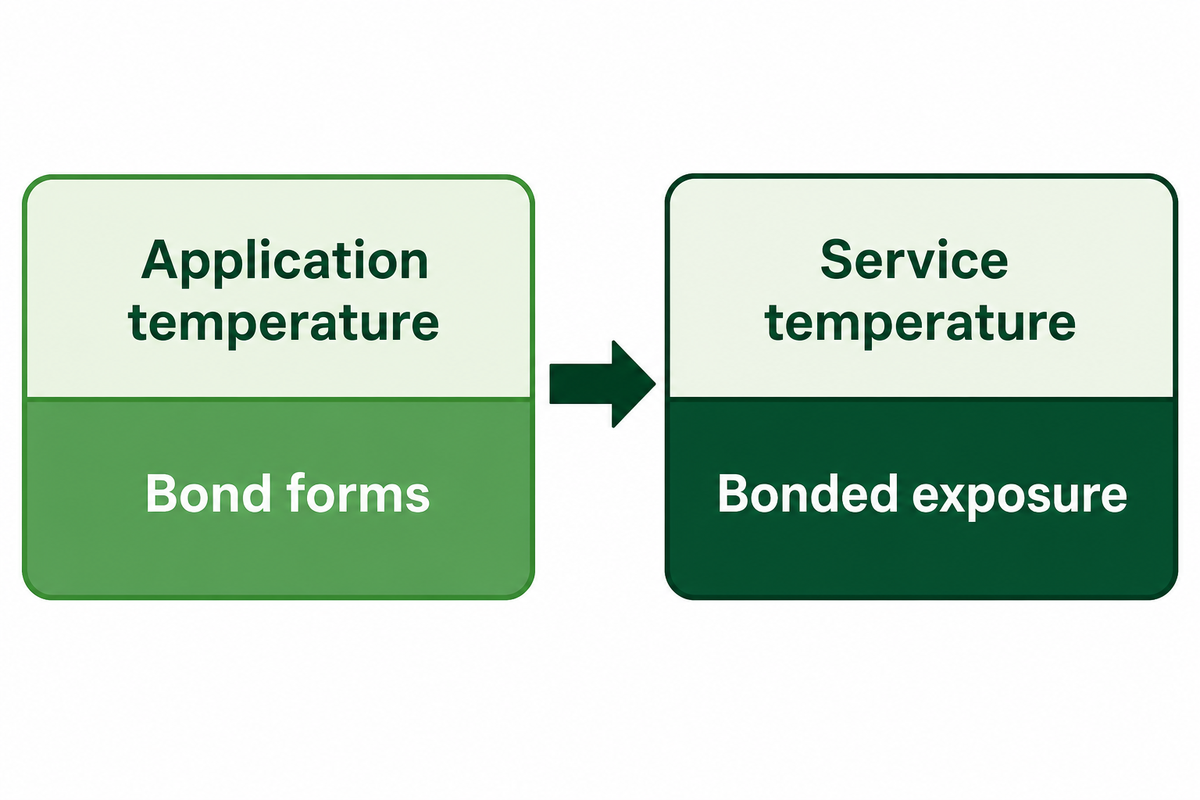
That evidence distinction starts with two separate temperature fields: minimum application temperature is the lowest temperature at which a specific pressure-sensitive adhesive is recommended to be applied. It governs initial wet-out and bond formation. Service temperature describes the range the construction can tolerate after application and bonding. A label may survive frozen storage at a temperature where it could not have formed a reliable bond in the first place.
Minimum application temperature
- Applies while the adhesive is forming its first bond.
- Depends on adhesive mobility, pressure and surface condition.
- Must reflect the pack temperature at the labeling station.
- Can be defeated by water or frost at the interface.
Service temperature
- Applies after the label has been bonded.
- Describes an exposure range, not instant tack.
- Must reflect storage, transport and thaw conditions.
- Does not guarantee print or barcode survival.
In its 2021 cold-temperature overview, Avery Dennison describes +5 °C as a typical minimum for ambient-application adhesives, offers deep-freeze choices down to -20 °C and presents a general service range of -40 °C to +80 °C. These are dated examples attached to named products in that portfolio, not current universal limits and not Guanma ratings. Verify the proposed construction against its current technical data sheet. The 2022 peer-reviewed study in the next section shows why any direct low-temperature application boundary remains formulation-dependent.
The 2-Route Bond-First Decision Map: Which Qualification Route Fits the Application?
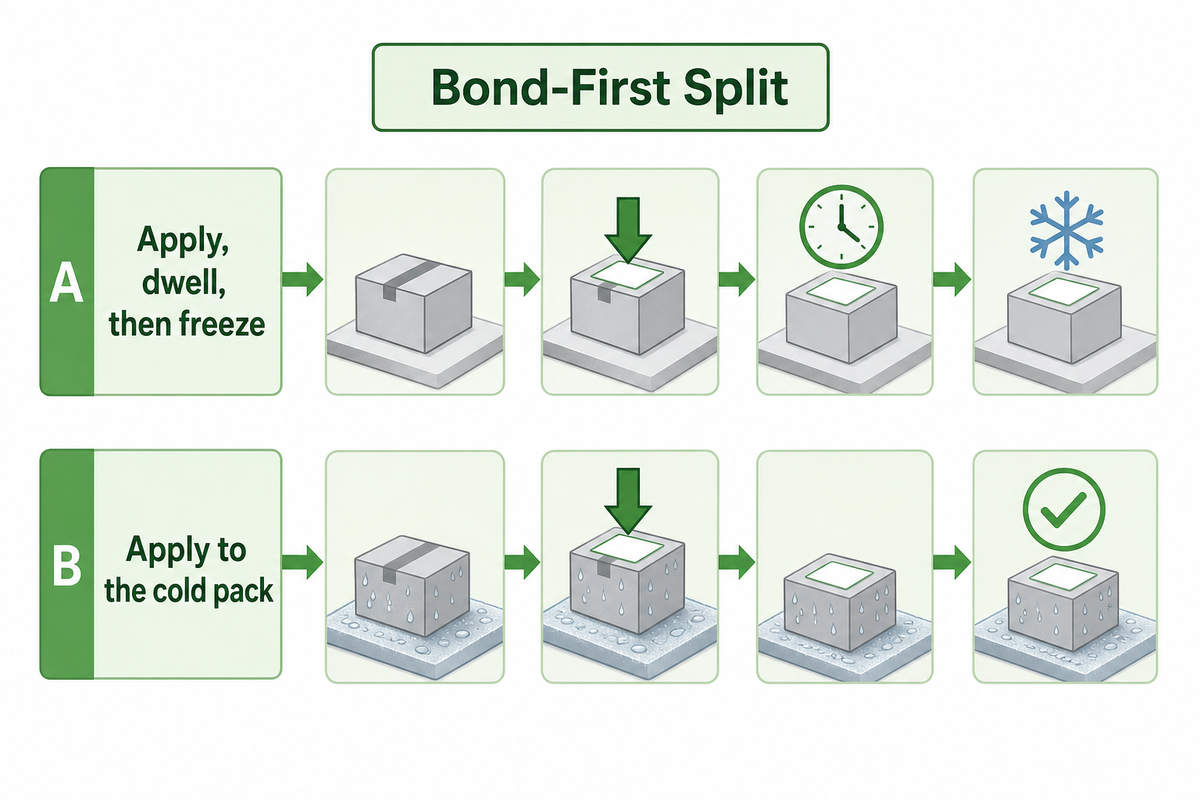
Choose the bonding route before selecting the facestock. This Bond-First Split avoids a common material-first error: buyers talk about paper vs. film while keeping the actual application circumstance unclear. The result is a test route tied to the package surface, labeling temperature, pressure and dwell.
Route A: Apply, dwell, then freeze
- Label a clean, dry pack above the adhesive’s minimum.
- Use controlled pressure for consistent wet-out.
- Allow the specified dwell before cold exposure.
- Validate the bonded construction through storage and thaw.
Route B: Apply to the cold pack
- Specify a construction rated for direct cold application.
- Test the real frozen, frosted or condensing surface.
- Control pressure and line speed at the labeling station.
- Reject any claim that assumes the adhesive displaces ice or water.
Route B is a qualification branch, not a claim that cold application is impossible. A 2022 peer-reviewed study reported a specially formulated supramolecular pressure-sensitive adhesive applied from 0 to -60 °C, with reported adhesion strength up to 3.61 MPa at -60 °C. That material result proves formulation can change the boundary; it doesn’t prove that an ordinary label stock will bond to every frozen package. For procurement, the relevant evidence remains the proposed label construction tested on the real surface.
Adhesive, Surface, Facestock and Print Form One System
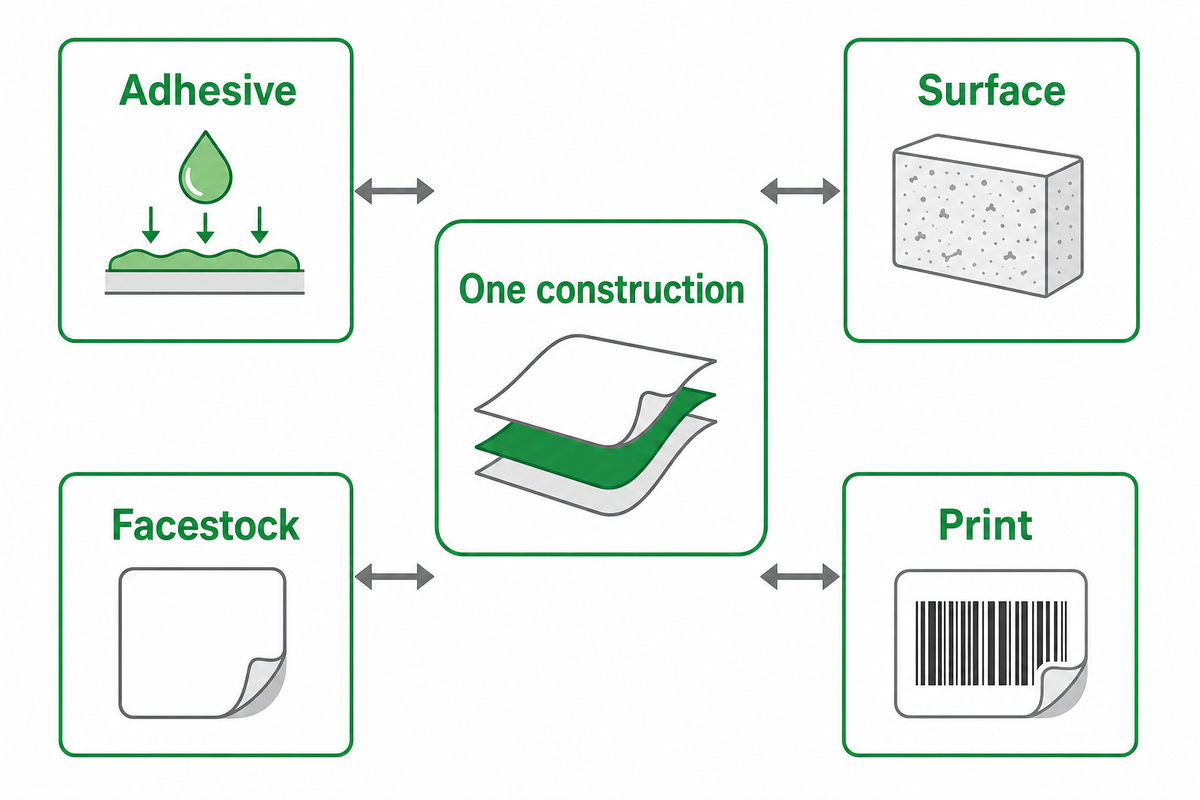
A freezer label is a system, not a facestock coupled to a cold-sounding adhesive name. The adhesive layer must wet the substrate; the facestock must withstand moisture and flexing; the printing ink must stay legible; and the finished construction must dispense and convert correctly. Change one layer and the previous result may no longer apply.
Durable Printable Label Materials by Surface and Printing System
| Variable type | What can go wrong | Evidence to request |
|---|---|---|
| Substrate material | Plastic, glass, board and flexible film present different bonding surfaces. | Named substrate and a production-representative sample. |
| Surface energy and texture | Low energy, roughness or coatings reduce adhesive contact. | Surface specification plus trial on the actual finish. |
| Surface state | Water, frost or condensation becomes an interfacial barrier. | Dry, wet, frosted or condensing condition at application. |
| Application temperature | Adhesive mobility may be too low for wet-out. | Measured pack and room temperature at the labeler. |
| Pressure and line speed | Insufficient contact time produces intermittent bond. | Applicator settings and representative production run. |
| Dwell and service cycles | Freezing too soon or repeated cycling exposes a weak bond. | Dwell before freezing, time at temperature and cycle history. |
| Facestock | Paper absorbs moisture; film can flex or shrink with the pack. | Construction data sheet plus condensation and abrasion trial. |
| Print system | Image smears, fades, cracks or loses barcode contrast. | Printed sample tested after the complete exposure profile. |
| Compliance and change control | A material substitution invalidates prior evidence. | Supplier declaration, approved bill of materials and change notice. |
Ordinary food-freezer labeling should also be kept separate from ultra-low-temperature work around -80 °C and from cryogenic storage below that range. Containers, adhesives, facestocks and print systems for those conditions require their own construction-specific evidence. Don’t extend an ordinary freezer claim into those ranges by analogy. For moisture-focused label materials, Guanma’s waterproof labels materials guide explains why the facestock, adhesive and print still have to work as one system.
Build a Cold-Chain Qualification Evidence Ledger
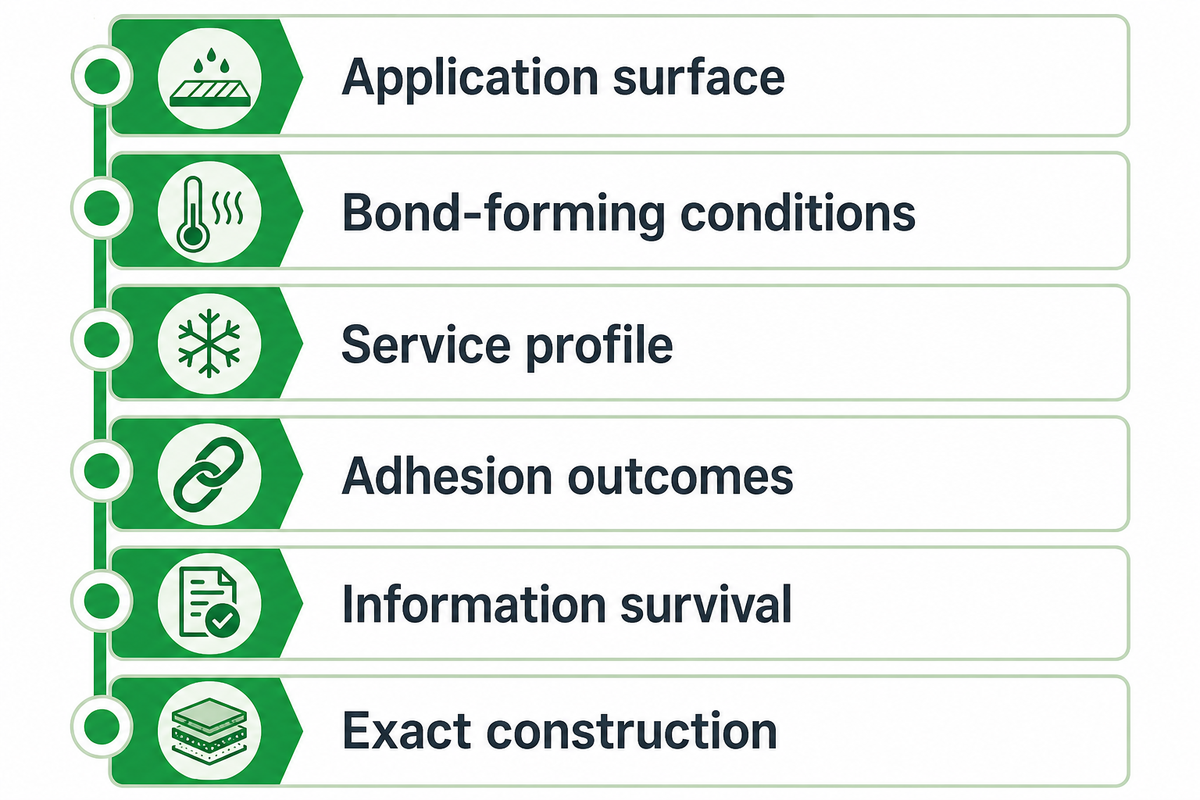
The most defensible acceptance record is a Cold-Chain Evidence Ledger: one document that defines how the bond forms, what happens during service and whether the printed information still works. It prevents teams from approving a material on one laboratory number and discovering the missing condition after production.
- Define the application surface — record substrate, texture, coating, cleanliness and whether it is dry, wet, frosted or condensing.
- Record the bond-forming conditions — capture pack temperature, room conditions, pressure, line speed and dwell before freezing.
- Reproduce the service profile — include time at temperature, freeze-thaw and condensation-drying cycles, flexing and sustained load.
- Measure adhesion outcomes — set acceptance limits for edge lift, flagging, peel or tack at named times.
- Verify information survival — inspect print, abrasion resistance, barcode grade or scan success after exposure.
- Approve the exact construction — bind the result to the facestock, adhesive, liner, ink or ribbon and package tested.
Recognized methods can supply parts of the record. FINAT’s public 2019 technical handbook describes FTM 1 as 180-degree peel adhesion measured at 300 mm/min, lists FTM 9 for loop tack and lists FTM 13 for low-temperature adhesion. Use the current controlled method when specifying a formal test. ASTM D3330/D3330M covers peel and ASTM D6195 covers loop tack. None of those methods, by itself, reproduces a buyer’s full frozen distribution route.
Qualification must also separate adhesion survival from information survival. UL’s marking and labeling program describes environmental conditioning followed by checks that include curling, wrinkling, shrinkage, perimeter adhesion, legibility and resistance to defacement. Before approval, store printed samples through the full exposure profile and verify the actual printing system after thaw. The lesson is transferable even when UL certification isn’t the project goal: a label can remain attached and still fail its operational purpose.
Turn Marketing Language Into an Evidence Table
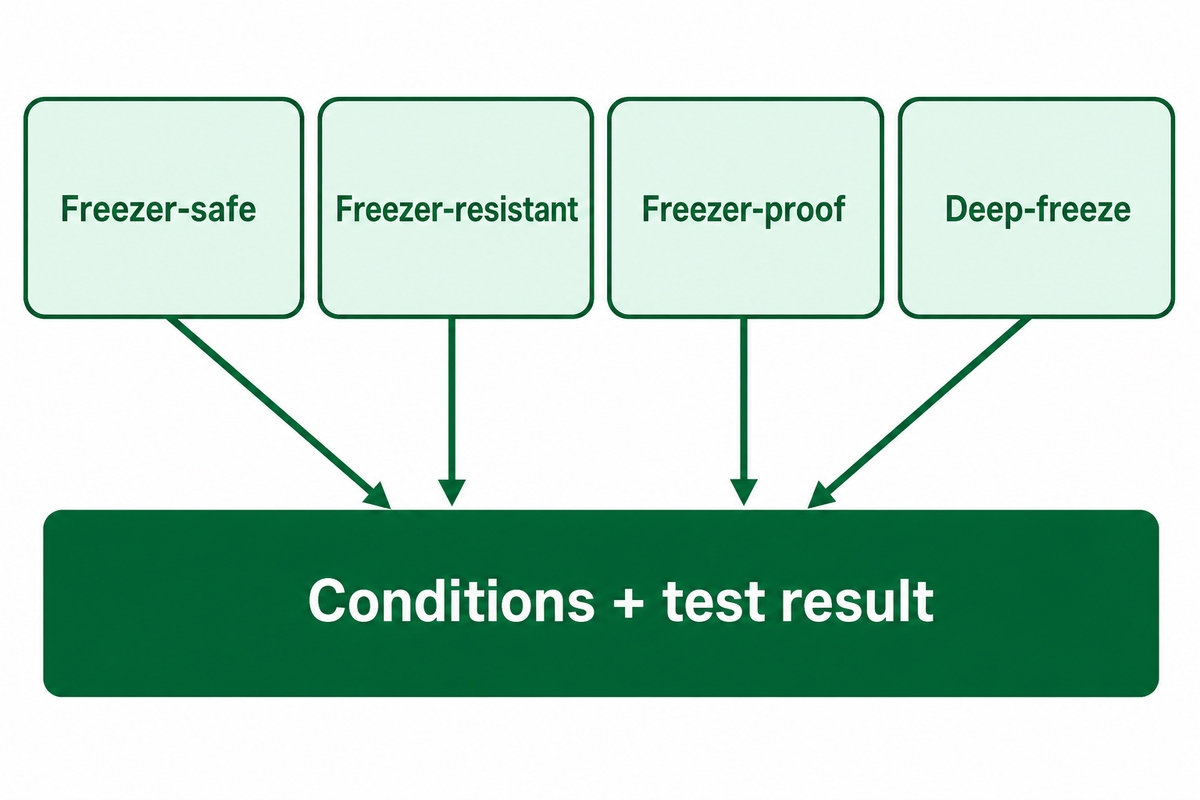
That evidence ledger becomes the procurement table below, which offers no “official hierarchy” of standards but translates what a phrase may imply, what physical proof makes the claim usable and how to proceed if a supplier cannot provide it. A named peel procedure is one evidence component, not the entire qualification.
Freezer-Safe Adhesive, Waterproof Labels and Cold Storage Claims
| Term | What it may imply | Evidence required | Buyer action |
|---|---|---|---|
| Freezer-safe | Some level of frozen-storage suitability. | Named construction, application condition and service profile. | Ask what “safe” means and for which package. |
| Freezer-resistant | Resistance to a defined cold exposure. | Minimum application temperature, service range and test result. | Compare the conditions, not the word. |
| Freezer-proof | A stronger durability promise. | The same fields, plus a clear acceptance threshold and trial report. | Treat it as unqualified until the proof is supplied. |
| Freezer-grade labels | A freezer adhesive and facestock selected for a cold route. | A named freezer-safe adhesive, application minimum and service profile. | Verify the exact construction rather than the grade name. |
| Waterproof labels | Resistance to water reaching the facestock and print. | Polyester or polypropylene facestock, print system and humidity or condensation trial. | Qualify the adhesive interface separately. |
| Labels for freezer containers | Suitability for a named rigid or flexible package. | Actual container material, curvature, surface state and application process. | Send production-representative containers for trial. |
| Cycle-resistant | Survival through multiple freeze-thaw cycles. | Number, duration and moisture state of each expected cycle. | Match the test to the distribution route. |
| Deep-freeze | A colder application or service range. | Exact product rating and whether it applies during application or service. | Reject an unlabeled temperature number. |
| Cryogenic | Specialized very-low-temperature use. | Container-, temperature- and process-specific construction validation. | Route to a separate cryogenic specification. |
For a freezer-specific route check, use Guanma’s freeze-thaw risk self-assessment, then confirm the result with the construction-specific trial evidence required here.
Diagnose Peeling in the Right Order
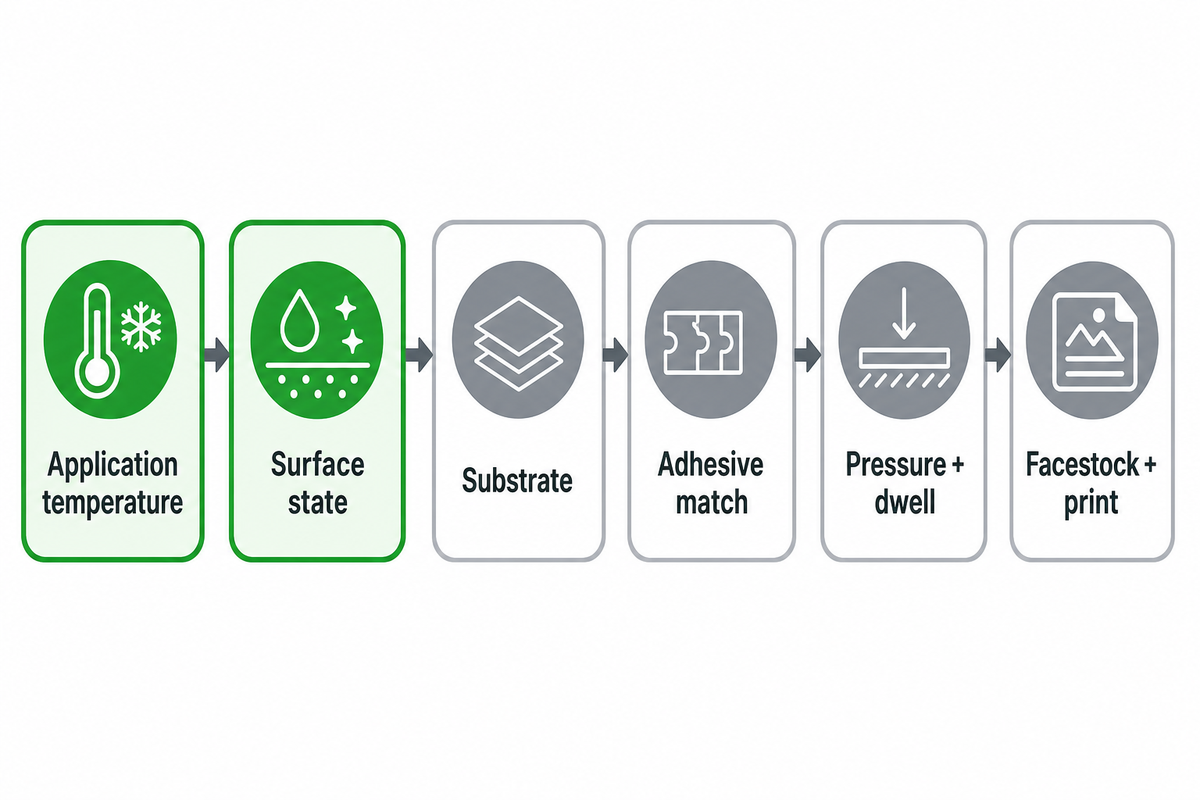
Using that evidence table, start a cold-storage peeling diagnosis with the bond-forming event. Replacing the facestock first often hides the true cause and consumes another trial.
Peel Checks for Freezer Bags, Boxes and Rigid Containers
| Symptom | Check first | Then check |
|---|---|---|
| Immediate edge lift | Application temperature and frost/water barrier. | Pressure, line speed, curvature and adhesive match. |
| Good warm bond, failure after freezing | Dwell before freezing and service range. | Package flexing, sustained load and cycles. |
| Film stays attached, print fails | Ink or ribbon compatibility and condensation. | Abrasion, scuffing and thaw handling. |
| Intermittent barcode scan | Print contrast and surface distortion after exposure. | Scanner setup, quiet zone, wrinkle and ice cover. |
A water-resistant film can protect the printed face while the adhesive remains separated from the package by condensation. Likewise, a high initial tack value can look promising but fail after cycling or package flexing. If the acceptance method is peel, use the ASTM D3330/D3330M procedure under stated conditions. Diagnose in order: temperature at application, surface state, substrate, adhesive match, pressure and dwell, then facestock and print.
Send a Freezer-Label RFQ That a Converter Can Actually Quote
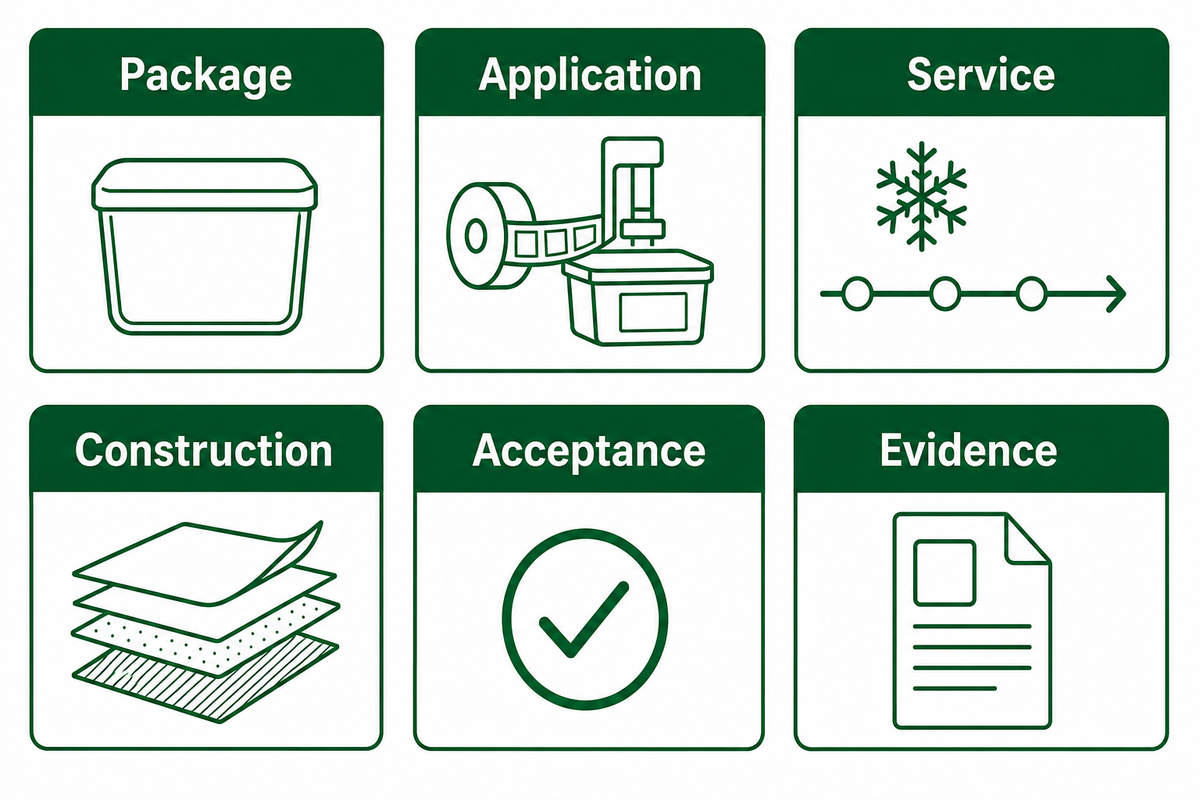
That diagnostic order also belongs in the RFQ: ISO/TS 18614:2016 provides a neutral backbone for the information users and suppliers should exchange when ordering and specifying self-adhesive labels. Convert that principle into an RFQ with the fields below.
Buyers searching for freezer labels for food, freezer safe labels or freezer labels that stick are usually describing outcomes; translate each phrase into the same application, service and acceptance fields.
Custom Labels by Sheet or Roll: Printer, Shipping and Storage Fields
- Package: material, coating, texture, shape, curvature and representative samples.
- Application: pack and room temperature, dry/wet/frosted state, labeling speed, pressure and automation method.
- Service: lowest and highest exposure, time at temperature, dwell before freezing and number of freeze-thaw or condensation-drying cycles.
- Construction: facestock, adhesive, liner, topcoat, ink or ribbon, label dimensions and dispensing requirements.
- Acceptance: edge-lift limit, peel or tack method, scan/readability target, abrasion test and inspection timing.
- Evidence: construction-specific technical data sheet, trial rolls, test report and change-control agreement.
For food applications, quote readiness isn’t the same as food-contact compliance. 21 CFR 175.125 distinguishes pressure-sensitive adhesive uses by food category and conditions. Ask the supplier for evidence tied to the proposed construction, supplier and intended conditions of use. Don’t treat one regulatory citation as approval of every component.
If you’re still defining the material system, start with Guanma’s freezer labels guide. When the application details are ready for a construction discussion, use the freezer label application page to discuss a substrate-matched proposal and trial requirements.
Frequently Asked Questions
Are freezer-proof or freezer-resistant labels better for frozen food?
No automatic hierarchy exists between the two phrases.
A freezer-resistant construction with a clear minimum application temperature, service range, substrate match and passed trial is more defensible than a freezer-proof product with no conditions attached. Compare the proposed construction and its evidence, not the strength of the adjective. Ask whether the rating covers application, bonded service or both, and require the trial to reproduce the real package, moisture state, dwell and cycle history.
Can freezer labels adhere to rigid containers after freezing?
Yes, but labels for freezer containers require a construction and trial qualified for direct cold application on the real substrate, surface state, pack temperature and labeling process.
The minimum application temperature must cover the real pack temperature, and the test must reproduce frost, condensation, surface texture and labeling pressure. A service-temperature claim after bonding does not prove the adhesive will form its first bond on a frozen pack. Ask the supplier to distinguish a dry cold surface from a wet or frosted one, then confirm edge lift, bond and readability after the expected dwell and distribution cycles.
Do durable waterproof labels need a synthetic film?
Waterproof labels using polyester or polypropylene can help when humidity, condensation and abrasion threaten the facestock or print, but film is not always required in service.
Coated paper may work in controlled dry-freezer routes. Film becomes more attractive with condensation, wash-down, flexing or repeated handling. Either way, the adhesive still has to contact the package; film cannot repair a frost or water barrier underneath it. The print system matters too: approve the facestock, adhesive, topcoat, ink or ribbon and package as one construction after the complete freeze-thaw exposure, not as separate catalogue items.
Can freezer-safe labels resist refreezing cycles in cold storage?
Use the number and duration expected in the real distribution route, including multiple freeze-thaw cycles only when the route actually exposes the package to them.
There is no useful universal cycle count. Reproduce the actual route and define the acceptance result.
Does an ordinary freezer-label claim cover -80 °C storage?
No. -80 °C storage requires a separate ultra-low-temperature qualification.
Ultra-low-temperature laboratory storage can involve different containers, surface conditions, adhesives, facestocks and print systems. Do not infer suitability from an ordinary frozen-food claim. Define the lowest exposure, whether the label is applied before cooling or to an already cold vessel, the container material, surface frost, dwell, storage duration and number of handling cycles. Then inspect edge lift, cracking, print loss and barcode readability. A construction qualified for an ordinary food freezer is not evidence for -80 °C storage, and any ultra-low-temperature or cryogenic product claim should remain tied to the exact container and test profile supplied.
How to Use This Guide
This article translates official test-method, technical-data and regulatory sources into a buyer qualification workflow. It doesn’t publish an unverified Guanma temperature rating. Final suitability must be confirmed against a construction-specific data sheet and a trial on the buyer’s actual package.
References & Sources
- FINAT Test Methods FINAT
- ASTM D3330/D3330M-04(2025) ASTM International
- ASTM D6195-22 ASTM International
- Cold-Temperature Labeling Overview Avery Dennison
- Supramolecular Polymeric Pressure-Sensitive Adhesive That Can Be Directly Operated at Low Temperatures PubMed record
- Thermo Forma ULT 8516 -86 °C Freezer National Institute of Standards and Technology
- Marking and Labeling Systems Program UL Solutions
- ISO/TS 18614:2016 ISO
- 21 CFR 175.125, Pressure-Sensitive Adhesives Electronic Code of Federal Regulations