Get in Touch with Guanma

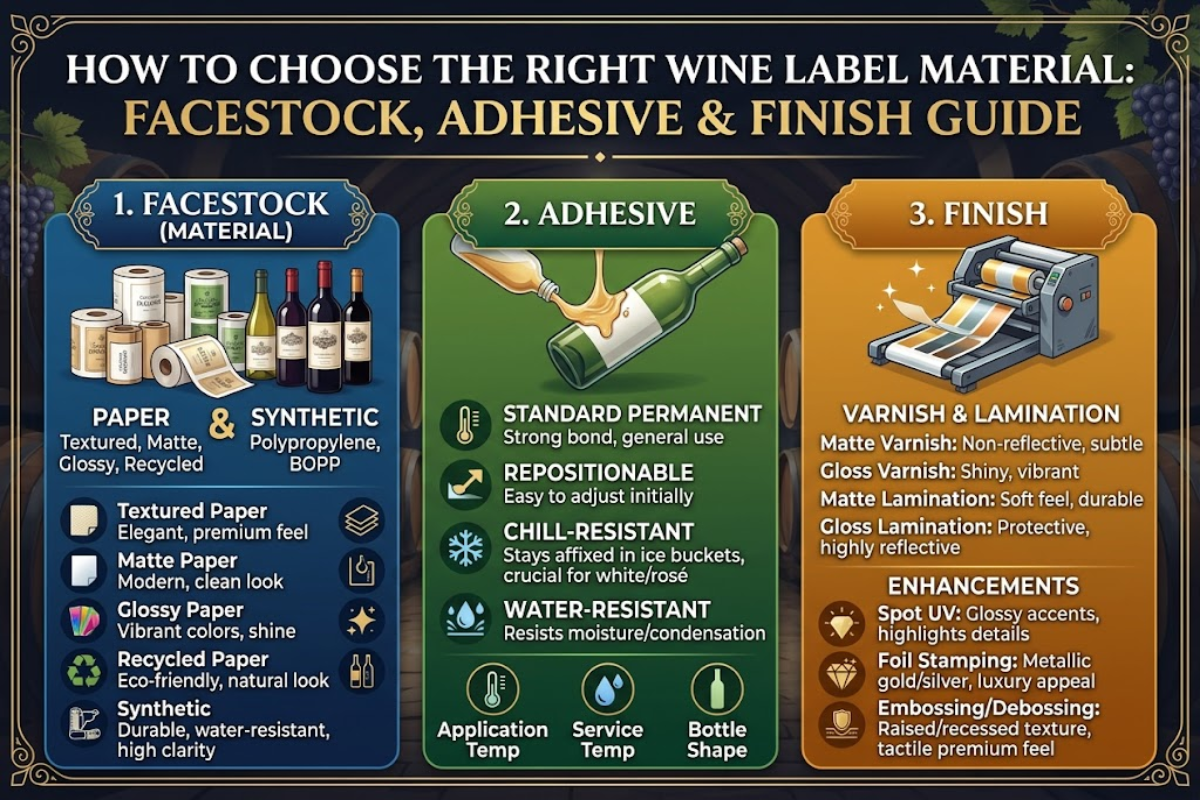
Quick Specs: Wine Label Material Parameters
| Primary facestock types | Paper · Film (BOPP / PET / PP Synthetic) · Hybrid |
| Adhesive types | Hot-melt · Acrylic (solvent / emulsion) · Water-based |
| Wet-condition benchmark | Ice bucket immersion ≥4 hours (wine industry field standard) |
| Paper weight range | 80–160 gsm (coated / uncoated); 75–130 gsm (textured specialty) |
| Film thickness range | 50–100 µm (BOPP / PET / PP Synthetic) |
| Print compatibility | Flexo · Letterpress · HP Indigo · UV Inkjet · Thermal transfer |
| Liner types | Glassine · PET film liner · PE-coated kraft |
Why Your Wine Label Material Determines More Than Aesthetics
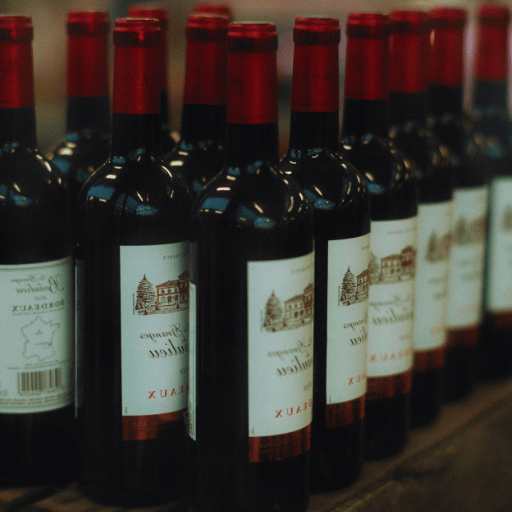
The Burgundy exporter who had shipped six pallets of Pinot Noir from Burgundy to London restaurants found out the problem three weeks after the shipment arrived. Suddenly, reports from sommeliers emerged: “Upon pouring in ice service, the labels were coming off”. From the warehouse, the labels, printed on a normal 90 gsm coated paper looked great.
After 20 minutes in icy water, the adhesive bond dissolved and the paper facestock became soaked, broke away and peeled. The wine was OK, the wine brand’s reputation at tableside was not.
Label material failure of this type occurs more often in the wine industry than suppliers or brand managers publicly acknowledge. Root cause is nearly always the same: an exclusive visual decision — appearance, print quality, cost per roll — made without consideration of the label’s particular service environment.
Wine label material selection affects four interlocking performance dimensions:
- Aesthetics — texture, sheen, embossing depth, print color gamut
- Survival performance — humidity resistance, ice bucket immersion, cold-chain transit
- Regulatory compliance — mandatory declarations including alcohol content and appellation of origin require legible, durable print surfaces
- Print process compatibility: various facestocks need different ink systems, primer coatings & drying conditions
According to the Alcohol and Tobacco Tax and Trade Bureau (TTB), wine labels sold in the US must carry mandatory information — including brand name, alcohol content, and appellation of origin — that must remain legible throughout the product’s shelf life. Material failure is a compliance failure, not just a branding problem.
70%+
Wine purchases made in-store, where label appearance drives selection
4 hrs
Minimum ice bucket immersion resistance — the wine industry benchmark for wet-label performance
The right wine label materials do not just wrap your mouthwatering brand name – they transport it whole and unscathed through all the places between the bottling line and the end-use glass.
The Three-Layer Label System: Facestock, Adhesive, and Liner
Most wine brand managers want a facestock. What they really want to specify is a system. A pressure sensitive wine facestock is comprised of three functional layers, each with several possible materials, and the performance of the system as a whole depends on how the layers perform together…not one alone.
📐 The Three-Layer Label System
Define all three layers together, as a coupled system. A hydrate-strength paper facestock combined with a water based low-tack adhesive will break down in ice environment— the weakness will be the adhesive— not the paper! Proper layer matching—and thickness is the key to success for a label design!
| Layer | Function | Common Material Options |
|---|---|---|
| Facestock | Visible surface carrying printed design, brand, and regulatory text | Coated paper · Uncoated paper · Textured paper · Wet-strength paper · BOPP · PET · PP synthetic · Hybrid |
| Adhesive | Bonds the facestock to the bottle surface; determines wet, cold, and humidity performance | Hot-melt · Acrylic (solvent / emulsion) · Water-based · High-tack · Repositionable |
| Liner | Release backing that protects the adhesive; affects dispensing speed and end-of-life recyclability | Glassine · PET film liner · PE-coated kraft · Linerless (no liner) |
The Three-Layer Label System Model places facestock, adhesive, and liner as one specification decision. Converters and label printing customers who think in systems- not just surfaces- realize better label survival and fewer reprint runs due to in-field adhesion failures.
Paper Facestocks: The Classic Choice for Premium Wine Branding
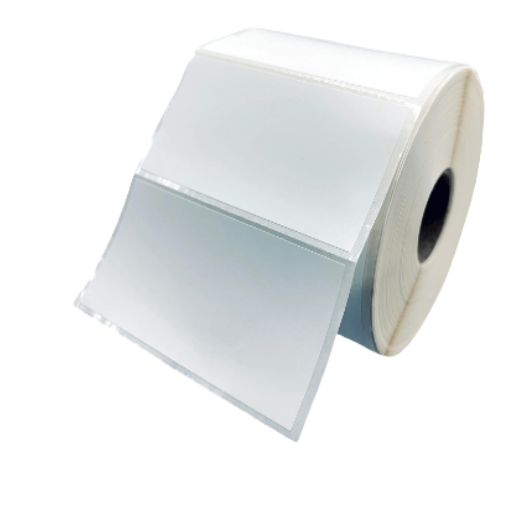
The paper label is prevalent in the ultra-premium and premium wine categories. Finish, texture, and weight of a paper facestock communicate product positioning before a consumer reads a single word. If a wine is looking for value and shelf impact, paper should be the first category considered.
✔ Advantages of Paper Facestocks
- Accessible emboss and deboss depths (up to 1.5 mm relief on stocks 120+ gsm)
- Letterpress, foil blocking and spot UV printing—essential for positioning wines at the luxury end
- Natural, tactile look and feel that film cannot replicate
- Lower cost per label in mid-range weight classes (80–120 gsm)
- Biodegradable / compostable options available in FSC-certified grades
⚠ Limitations of Paper Facestocks
- Standard grades fail in sustained wet environments without wet-strength treatment
- Lower dimensional stability vs. film under high-humidity bottling line conditions
- Heavier weight stocks add cost and complicate die-cutting on narrow web presses
- Emboss depth limited by paper caliper – very thin stocks (below 80 gsm) are unsuitable for deep emboss
H3a: Coated Paper — Vivid Print for Red Wine and Ambient-Storage Wines
Coated paper facestocks (80-160 gsm, available in high-gloss, semi-gloss, and matte litho finishes) deliver the sharpest print reproduction of any paper grade. Clay or calcium carbonate coating seals the paper fiber and creates a smooth, ink-receptive surface ideal for photographic label designs and vibrant color fills. Coated paper wine labels are the workhorse of the ambient-storage red wine category – Bordeaux, Cabernet Sauvignon, Shiraz. Where ice service is not expected, coated paper consistently offers the best cost-to-print-quality ratio
H3b: Uncoated and Textured Paper — Craft, Heritage, and Tactile Premiumness
Uncoated papers (linen, felt, laid, and wove) carry ink differently – the fiber absorbs rather than reflects. Ink absorption into the fiber produces a softer, more organic visual effect that communicates hand-crafted provenance. Textured specialty papers (75-130 gsm) accept letterpress printing and deep embossing exceptionally well, making them the preferred substrate for heritage brands and small-batch producers. A linen-textured label does not just look premium – it feels premium in the hand, which matters for high-end gifting occasions. Paper labels at this specification are where the category’s reputation for elegance originates
H3c: Wet-Strength Paper — Ice Bucket Performance Without Film Cost
Wet-strength paper is chemically treated during the papermaking process – typically with polyamidoamine-epichlorohydrin (PAE) resin – to retain its structural integrity when fully saturated. This treatment produces a facestock that maintains its bond, legibility, and visual appearance after 4 hours of ice bucket immersion: the wine industry benchmark for wet-label performance
📐 Engineering Note — Wet-Strength Paper + Acrylic Adhesive
At Guanma’s production facility, wet-strength paper facestock paired with a high-tack acrylic adhesive has demonstrated reliable performance in simulated ice bucket conditions (2C ice slurry, 6-hour immersion). Combined, wet-strength paper and high-tack acrylic deliver functional wet performance comparable to hybrid facestock at a lower material cost – a practical specification for white wine, rosé, and sparkling wine labels where budget and durability must both be met
Wine industry practitioners commonly report that wet-strength paper is the correct specification for any varietal destined for ice bucket service – an insight frequently learned after a costly reprint following field label failures
H3d: Foil-Laminated and Metalized Paper — Visual Impact at Paper Prices
Foil-laminated paper (silver or gold backing fused to a paper base) delivers the visual drama of a metallic label without the full cost of a film facestock. A paper base layer retains its suitability for embossing and letterpress; the metalized layer adds reflectivity and perceived luxury. Common applications include sparkling wine (Cava, Prosecco, Champagne) and prestige cuves where maximum shelf impact is required.
H3e: Hybrid Facestock — Paper Look with Film-Backed Durability
Hybrid facestocks combine a paper face material with a film backing layer- giving the tactile and visual feel of paper with the dimensional stability and moisture barrier of film. This hybrid label facestock remains the most popular specification for white wine, rosé, and sparkling wine brands that desire quality aesthetics but expect to spend the majority of time in the ice bucket. Film backing prevents the paper face layer from saturating when the adhesive is compromised (broken apart) with water, therefore hybrid represents the most durable “paper-category” option for temperature-challenging chilled wine application environments.
Film Facestocks: When Durability and Distinctiveness Come First
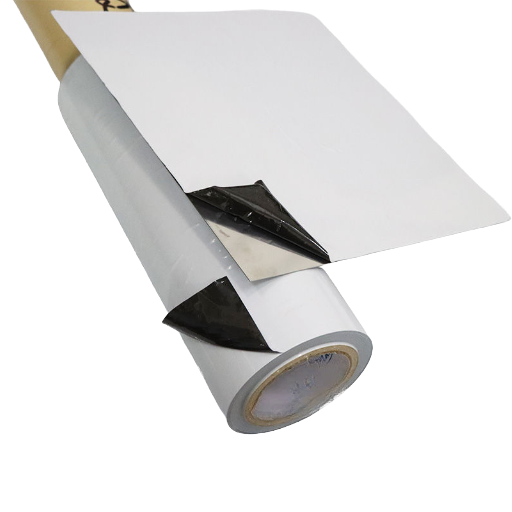
Film facestocks are specified when the performance demands exceed that which any paper grade- including wet-strength- can achieve. Long-haul export transit, high humidity, chemical resistant production and bottling environments, and the “no-label look” on tinted glass bottles are all valid conditions for film to be the right inventory selection.
| Property | BOPP | PET | PP Synthetic Paper |
|---|---|---|---|
| Typical thickness | 50–60 µm | 50–75 µm | 80–120 µm |
| Temperature resistance | −20°C to +70°C | −30°C to +100°C | −20°C to +80°C |
| Water resistance | Excellent | Excellent | Excellent |
| Emboss compatibility | Limited (shallow only) | Limited | Moderate |
| Print compatibility | Flexo, UV inkjet, HP Indigo | Flexo, UV inkjet | Flexo, offset, HP Indigo |
| Typical cost tier | Mid | Mid–High | Mid–High |
| Best use case | Export wine, value durability | High-temp bottling lines, export | “No-label look,” tinted bottles |
H3a: BOPP (Biaxially Oriented Polypropylene) — The Export-Grade Standard
BOPP is the world’s most common film label material, used throughout the global wine & beverage industry. Its biaxially-oriented construction- stretched bi-dimensionally during manufacture- lends BOPP excellent dimensional stability, water resistance and print adhesion. BOPP label film at 50–60 µm thickness is a proven value through long-haul sea freight and high humidity warehousing, establishing this as the winning inventory attribute for wine labels with export-concentrated distribution.
H3b: PET (Polyethylene Terephthalate) — Chemical and Heat Resistance
PET film facestocks offer the highest temperature resistance in the wine label material category — reliably stable from −30°C to +100°C. This range makes PET label film the correct specification for wines processed through high-temperature pasteurization or hot-fill bottling lines, and for export routes through equatorial warehouses where ambient temperatures regularly exceed 40°C. PET’s chemical resistance also makes it suitable for wines with high sulfite content that may degrade other film substrates over time.
H3c: PP Synthetic Paper — The Paper-Look Film Option
PP synthetic paper looks, feels, and performs like paper, prints like film, and delivers fabric-like performance in wet environments. Its semi opaque, matte surface lends itself to the “no-label look” on transparent and frosted glass bottles where the label image appears to be printed directly on the glass surface. White or clear PP synthetic paper at 80–120 µm thickness accepts offset, flexo, or HP Indigo digital printing, and offers an aesthetic expectation compatible with functional performance on premium rosé, natural wine, and minimal trend label packs.
Adhesive Selection: The Layer That Decides Wet Performance
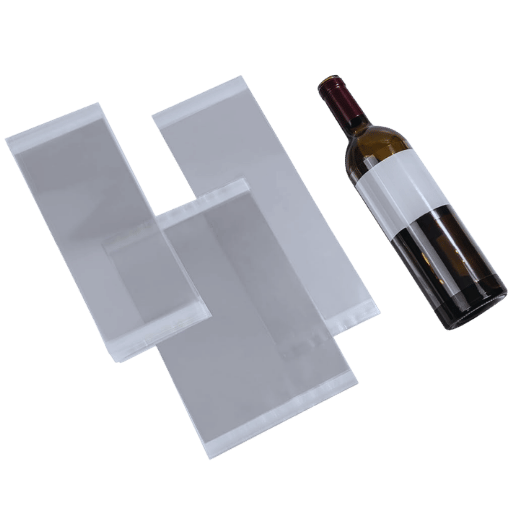
In any given application, the adhesive used to attach the label remains the unseen but decisive factor in label survivability. An appropriately-specified facestock bonded with an incorrect adhesive will fail- sometimes dramatically, sometimes slowly and for unnecessarily-high associated costs- when exposed to a label performance demand. This layer must be selected by anticipated end-use environment, before selecting the facestock material.
| Condition | Hot-Melt | Acrylic (High-Tack) | Water-Based |
|---|---|---|---|
| Ice bucket (0–5°C, wet) | ⚠ Marginal | ✔ Recommended | ⚠ Marginal |
| Cold storage / wine cellar (5–12°C) | ✔ Good | ✔ Excellent | ✔ Good |
| Freezer storage (−5°C to −18°C) | ✗ Avoid | ✔ Recommended | ⚠ Grade-dependent |
| Ambient / room temperature (18–25°C) | ✔ Excellent | ✔ Excellent | ✔ Excellent |
| High-humidity warehouse (RH 80%+) | ✔ Good | ✔ Good | ⚠ Marginal |
Hot-melt adhesives lose considerable portion of its stickiness at sustained temperatures of 0–5°C — the effective temperature range of the ice bucket environment. This is not an obscure circumstance, it is the recommended serving room temperature for white wine, rosé, sparkling wine, and Champagne in most restaurants or events. Hot-melt adhesives are therefore poor for these wine categories.
Acrylic adhesive – solvent type acrylic or emulsion type acrylic – can, due to excellent to very good high temperature (−20°C to +70°C) and long term wet cold temperature performance – ensure excellent adhesion performance in this environment. Acrylic adhesive label stock should be adopted as the standard adhesive specification for wine labels that are in sending ice bucket service or cold-chain distribution.
Scenario: Rosé Label Sourcing — Vietnam Trade Event
A Vietnamese wine brand running a rosé label for a regional hotel distribution account specified Guanma’s high-tack acrylic adhesive on a wet-strength paper facestock after receiving samples. At the following hotel trade event in Ho Chi Minh City, bottles were presented in ice-filled wine coolers for a six-hour tasting session. Post-event inspection confirmed zero label delamination across 240 bottles — a pass rate the brand’s previous hot-melt specification had failed to achieve in the same venue setting.
What Is the Best Material for Wine Labels in Ice Bucket Service?
Best-in-class for wine labels in ice bucket service is a two-part specification: wet-strength paper or hybrid facestock combined with high-tack acrylic adhesive. Wet-strength paper provides the structure of the label during immersion. High-tack acrylic provides bonding strength at 0–5°C – the temperature at which hot-melt adhesive quickly loses its tack.
This results in an ice bucket ready label at a much lower overall cost of material versus full film facestocks, and is the specification used by practitioners in the wine industry for white wine, rosé and sparkling wine labels in ice bucket service.
Embellishment Compatibility Matrix: Match Your Finish to Your Facestock
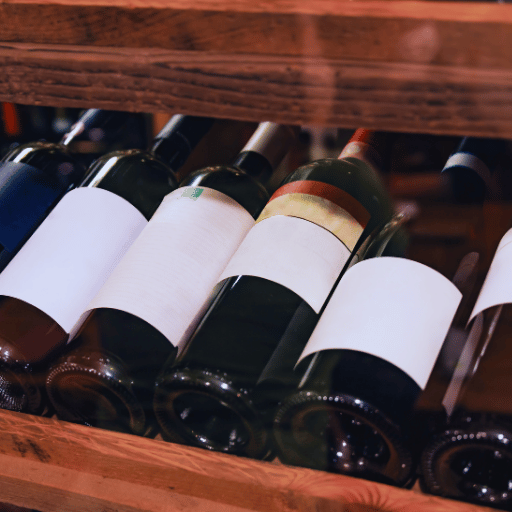
Embossing/endfold questions should be resolved prior to – not subsequent to – selection of a facestock. Any finishing technique, which is not suita
ble for the chosen facestock, is either going to provide unacceptable quality or request a total change of material which in turn adds cost as well as delay time. Below is a compatibility matrix mapping 6 finishing techniques against the major wine label facestock categories.
| Facestock | Hot Foil Stamp | Cold Foil | Emboss / Deboss | Spot UV / Varnish | Die Cut | Matte / Gloss Lam |
|---|---|---|---|---|---|---|
| Coated Paper | ✔ | ✔ | ✔ (medium depth) | ✔ | ✔ | ✔ |
| Textured / Uncoated Paper | ✔ | ⚠ Adhesion varies | ✔ (deep emboss) | ⚠ Matt only | ✔ | ⚠ Matt only |
| Wet-Strength Paper | ✔ | ✔ | ✔ (medium depth) | ✔ | ✔ | ✔ |
| Hybrid Facestock | ✔ | ✔ | ⚠ Shallow only | ✔ | ✔ | ✔ |
| BOPP Film | ⚠ Requires primer | ✔ | ✗ Not suitable | ✔ | ✔ | ✔ |
| PET Film | ⚠ Requires primer | ✔ | ✗ Not suitable | ✔ | ✔ | ✔ |
💡 Pro Tip — Finalize Embellishment Spec First
Premium wine label design production rule: choose the embellishment specification first, then decide on facestock weight and caliper. Deep embossing needs a good paper caliper (120+ gsm); hot foil on film, a primer coating which on paper you can do without. Reversing that order costs time and money.
⚠️ Common Mistake — Deep Emboss on Hybrid Facestock
Hybrid facestocks (paper face + film backing) can never deliver emboss depth, as the film backing prevents the emboss from going deep. Brands requesting deep emboss on a hybrid, expecting a paper-to-paper result, receive a shallow relief; the emboss looks unsatisfactory and does not meet the design brief. If deep emboss is a requirement, always specify 120+ gsm 100% paper facestock.
Aww, but choosing embellishment techniques isn’t just a design decision. It’s a label printing and facestock compatibility decision, which translates directly to production costs.
The Wine Label Material Selection Framework
Selecting the right material for your wine label requires aligning three variables that are typically evaluated in isolation. These three variables used are: the service environment, brand aesthetics and the print production process and are then combined together in the three step process below( based on the material selection process used by Guanma for wine and beverage labels in Southeast Asia and European exporting markets):
3-Step Wine Label Material Selection
- Step 1: Define the environment. Will the wine be served chilled(white / rosé / sparkling)? Will it spend time in an ice bucket? Will it be exported over 30+ days via sea freight? Environment defines minimum adhesive & facestock performance benchmark.
- Step 2: Define the aesthetic. Embossing, foil stamping, letterpress? Tactile paper texture critical to brand positioning? Or durability-led specification deliverable? Aesthetic criteria limit facestock choice to paper vs. film vs. hybrid.
- Step 3: Define the print process. What technology does your printer (converter) use — flexo, HP Indigo, UV inkjet, letterpress? Primer, coating, & ink compatibility varies by print process & facestock substrate.
| Wine Type | Storage / Service Environment | Recommended Facestock | Recommended Adhesive |
|---|---|---|---|
| Red wine (Cabernet, Shiraz, Bordeaux) | Ambient cellar (12–18°C), no ice service | Coated paper 90–130 gsm, or uncoated textured | Hot-melt or acrylic standard |
| White wine / Rosé | Refrigerator + ice bucket service | Wet-strength paper or hybrid facestock | High-tack acrylic (recommended) |
| Sparkling wine / Champagne / Cava | Chilled service, high humidity cellar | Hybrid facestock or foil-laminated paper | High-tack acrylic |
| Export wine (30+ day sea freight) | Variable humidity, equatorial transit | BOPP or PET film facestock | Acrylic high-tack |
| Premium / craft wine (boutique brands) | Ambient, gift retail, no ice service | Textured uncoated paper 110–160 gsm | Hot-melt or acrylic standard |
| “No-label look” minimal design | Any environment | PP synthetic paper (clear or white) | Clear acrylic |
Scenario: Evaluating Three Label Stock Quotes
A Brand Manager for a regional wine exporter received three quotations for a rosé label run one at a substantially lower price per roll. Drawing on the three-layer label system framework, the Brand Manager identified a water-based adhesive specified in the lowest-cost quotation as surprisingly technically functional at ambient temperatures but not quite fit-for-purpose for the ice bucket occasion through which their rosé was to be distributed. By choosing the mid-priced quotation with a high-tack acrylic adhesive, the Brand Manager avoided adhesion reprint costs 3 x the difference between low-cost and mid-priced Quotations.
For B2B purchase of custom-made labels & self-adhesive label stock, never buy before you see – request a material sample run. Typical MOQs for custom labels and wine label material samples range from 100-500 linear meters, depending on the combination of facestock and adhesive in question. Sample runs verify your choice of adhesive bond to your specific bottle glass type, ink adhesion to your finalized facestock selection, & embellishment quality before you production-run.
2026 Trends: Sustainable and Smart Wine Label Materials
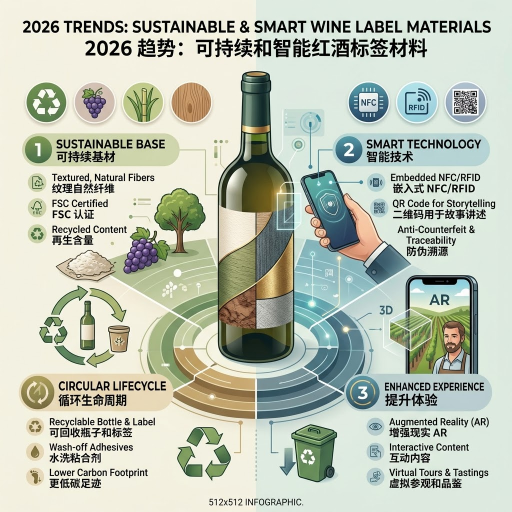
The wine packaging supply chain is experiencing material specification pressure simultaneously from consumer & regulatory perspectives. Five material developments are actively disrupting RFQ criteria in 2025-2026.
- Linerless label stock — Linerless labels eliminate the release liner entirely, reducing PSA label material waste by approximately 30% (liner accounts for ~30% of total label weight).
EU Packaging and Packaging Waste Regulation (PPWR 2024) is accelerating adoption timelines — see “https://www.europarl.europa.eu/topics/en/article/20230913STO06024/packaging-waste-new-eu-rules-to-make-packaging-more-sustainable” style=”text-decoration:underline; text-underline-offset:3px;”>EU Packaging and Packaging Waste Regulation (PPWR 2024) is accelerating adoption timelines. Buyers should ask suppliers whether linerless formats are available for their converter’s dispensing equipment. - FSC-certified paper facestocks — FSC International certification for paper label stock is becoming a mandatory supplier requirement from EU and UK wine brands. Certification verifies responsible forest management throughout the supply chain. Request supplier FSC chain-of-custody documentation as standard in your next label stock RFQ.
- NFC/RFID-integrated facestocks — Smart wine labels embedding NFC chips within the facestock layer enable bottle authentication, consumer engagement (linking to vintage notes, food pairing, and winery stories), and supply chain traceability. Pilot adoptions by premium wine producers in France and Australia accelerated through 2024–2025. Unit cost at volume remains the key challenge, with NFC-enabled labels currently commanding a 40–80% premium over standard facestock.
- Bio-based acrylic adhesives — Solvent-based acrylic adhesives account for a significant VOC emission share in label converting operations. Bio-derived acrylic formulations — using plant-based monomers instead of petroleum-derived feedstocks — are available from several label stock suppliers and deliver comparable wet performance at a modest cost premium. Applicable for brands with verified sustainability claims in their supply chain.
- Ultra-thin film facestocks (40–45 µm) — Next-generation BOPP and PET films at 40–45 µm (versus the standard 75 µm) deliver equivalent water resistance and print compatibility at approximately 40% less material per label run. Reduced caliper also improves label conformability on tapered and irregular bottle shapes — a practical benefit for small-format sparkling wine bottles and split sizes. Ask suppliers for trial samples of ultra-thin film grades alongside their standard offering. Evaluate on your eco-friendly label stock specification checklist.
Frequently Asked Questions About Wine Label Materials
What is the best material for wine labels?
View Answer
There is no one-size-fits-all best material – the optimal wine label material is a function of wine type, environment of service, & aesthetic priorities. For red wine kept at ambient temperature, coated paper is optimally suitable. For white, rosé, or sparkling served chilled or in ice buckets, wet-strength paper or hybrid facestock with corresponding high-tack acrylic adhesive solutions is the best specification. For export wines, BOPP or PET materials ensure maximum long-haul durability. Map your scenario through the decision matrix in this guide to find the best fit.
What is wet-strength paper and why does it matter for wine labels?
Show Details
Wet-strength paper: a chemical treatment of paper facestock that is formulated to hold its tensile integrity when wet. Standard paper facestocks deliver a 90% reduction of dry tensile strength when wet. To match paper strength between two wet surfaces, label facestock performance must be in between 15-40% of original dry strength.
This holds the label from delaminating during service on the table and prevents overall tearing and legibility issues with the paper substrate (see also abrasion card). All wine labels to be served in an ice bucket- white wine, rosé, sparkling wine- must specify at minimum a wet-strength paper facestock to ensure appropriate ice bucket performance, Chip. This costs less for a comparable ice bucket experience in comparison to a hybrid or film facestock and can accommodate emboss and foil stamping.
Can BOPP film wine labels be hot-foil stamped or embossed?
See Explanation
BOPP film does not lend itself to deep emboss or ‘deboss’ as the film does not accept the mechanical change that occurs during relief effects; an emboss of conventional BOPP usually results in no visual effect – or damage to the substrate. Hot foil stamping onto BOPP substrates can be achieved – a primer coating should be applied to the surface in order to guarantee foil acceptance – a preference for cold foil foils versus heat foil foils is recommended when using film substrates. When hot foil stamping and embossing are required simultaneously – either coated or uncoated paper facestock should be specified.
How do I choose between coated and uncoated paper for wine labels?
Read More
Coated paper offers the highest level of image sharpness, saturation and fidelity with digital printing (HP Indigo)—perfect for photographic imagery and brands where visual impact is key. The ink is absorbed into the fiber of an uncoated paper giving a more natural, softer visual effect which works well when letterpress print, heritage branding and craft wine positioning is required. The tactile feel of uncoated paper is a high value added point of difference for the boutique wine sector.
If emboss depth is critical, then textured uncoated stocks (110-160gsm) will normally give a better embossing result on an ‘apples with apples’ basis than coated grades of the same weight.
What are the eco-friendly wine label material options in 2025?
Expand
Leading sustainable wine label material options 2025 include: FSC-certified paper facestocks (verified responsible sourcing); recycled-content PET film (rPET from post-consumer recycled); linerless label options (eliminates approximately 30% of overall material waste associated with liner); and bio-based acrylic adhesives (plant-based monomers replacing traditional petroleum-based feedstocks). When selecting suppliers, ask for FSC chain-of-custody certification documentation and determine if the adhesive formula passes acceptable VOC emissions standards for your site. Several high-end EU wine brands now require the passage of sustainability credits at the supplier level as a required sourcing policy.
Our Perspective on Wine Label Materials
Guanma produces self-adhesive label stock -from coated paper and PET film to PP synthetic and BOPP faced stock – and hot melt, water based and acrylic adhesive systems, for beverage and industrial label applications. The technical details and performance comparisons contained within this guide are based upon our production experience in the South East Asian and European export markets for wine and beverages, rather than third party editorial research.
Submitted to the Guanma Label Materials Engineering Team – self adhesive facestock experts for beverage, pharmaceutical, and industrial labeling applications.
Need material samples for your wine label project?
State the type of wine, the environment of the service, and the degree of adornment desired–we will suggest a facestock/adhesive combination to you and organize sample rolls for your converter to test.
References & Sources
- Wine Labeling Requirements — Alcohol and Tobacco Tax and Trade Bureau (TTB), US Department of the Treasury
- Packaging Waste: New EU Rules to Make Packaging More Sustainable — European Parliament (PPWR 2024)
- FSC Certification — Forest Stewardship Council (FSC International)
- Label Materials — Beverage Applications — Avery Dennison (facestock and adhesive performance reference)
- Wine Label Performance in Service Environments — Wine Business Analytics / Wines & Vines (wet-strength label field data)
Related Articles
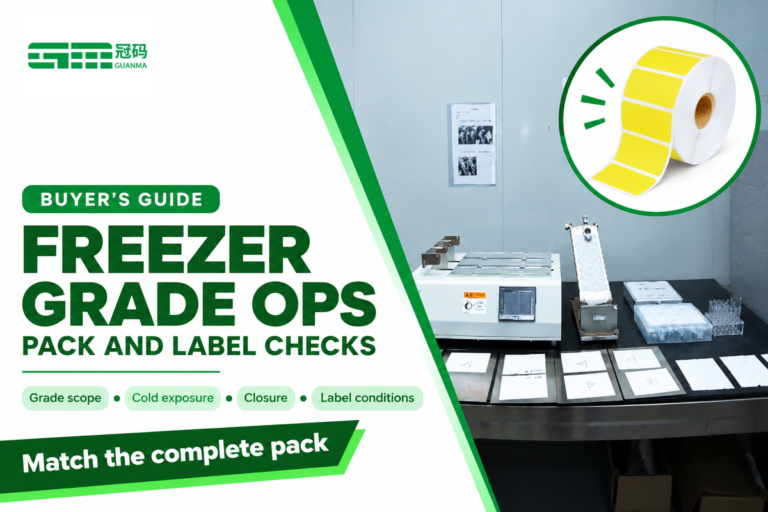
- Freezer Label Materials Guide — Adhesive and Facestock Selection for Cold-Chain Applications
- Pharmaceutical Label Facestock Selection — GMP-Compliant Materials for Drug Labels
- Beer & Beverage Label Stock Overview — Material Specifications for Cans and Bottles
- BOPP vs. PET Label Film — Which Film Facestock is Right for Your Application?