Get in Touch with Guanma

ISO 9001 & Industrial Certified
Durable & Outdoor Labels
Durable Labels Built for Outdoor UV, Heat, Weather, and Industrial Asset Identification
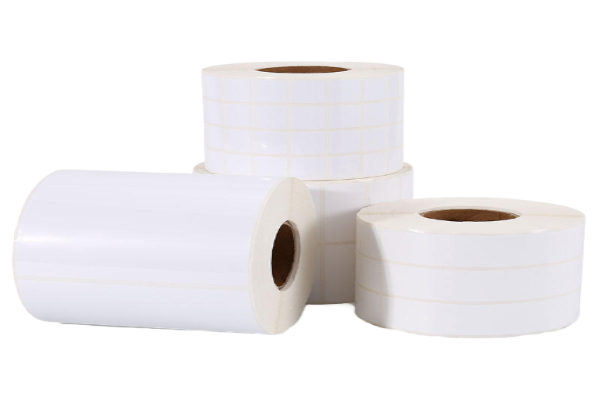
Self-adhesive rugged label substrate – Top-Coated PET, PP synthetic paper, and high gloss coated paper affixed to acrylic permanent, hot-melt and water-based adhesives – designed for outdoor signage, asset tags, cold chain freezer storage, automotive under-hood, and marine & solar equipment.
- UL 969 Compliance
- ASTM G154 (UV Resistant)
- ASTM B117 (Salt Spray)
- FINAT FTM-1 (High Adhesion)
- IEC 60068-2-30 (Damp Heat)
- Change Control SOP
3 × 3 × 10
Facestock × Adhesive × Environment
10+ yrs
Coating + Laminating R&D
2 Plants
Thailand + Vietnam Manufacturing
Full Pack
TDS, SDS, RoHS, REACH, CoC
Why Standard Adhesive Labels Fail in Outdoor and Industrial Environments
Durable labels have asset identification, safety warning, regulatory and brand information on equipment exposed to the outdoors, to extreme temperatures, to chemicals and to repeated abraision for years at a time. Field failure modes of these labels occur at the material layer long before any printer initially chooses a ribbon. Industry drum clears are frank about it: the durability of pre-printed industrial label printing is the single largest consideration in label material choice; losing 1 percent of the billion-lable-per-year line becomes straight cash on the procurement ledger through scrap, re-labeling labor, Downtime and audit findings.
Four material-level failure modes are responsible for most outdoor and industrial label complaints. UV fade and substrate yellowing–a poly or poly-coated topcoat without added UV stabilizers will lose its optical window within 6 to 18 months of continuous direct sunlight, depending on the local UV index. Cold-flow of adhesive–a bulk hot-melt rubber adhesive which is functional at room temperature can flow away from the bond line and off the substrate at minus 20 °C, eliciting the label off of a frozen container. Packaging film delamination and/or dimensional crawling–around plus 80 °C, many acrylic permanent adhesives will soften and shrink the paper or foil facestock, un-shrink and distort again, and make the barcode unreadable. Abrasion, moisture and chemical degradation–a label that is to be wiped down with a degreaser, brushed repeatedly with tooling, or lazed with saltwater spray every shift is not going to hold up on a generic product facestock. A weatherproof and waterproof label material has got to be engineered against water cycling on top of those three other design stresses, not just bonded with a minute layer of adhesive film.
The Hidden Cost of Picking a Cheap Paper Label for an Industrial Application
Procurement-side decision to knowingly operate with a paper-based pressure sensitive label thus stealing material savings the less Durable Operation downstream is a failing pattern that can be another missed opportunity for failure analysis. Industry Total-cost-of-Ownership studies indicate that in high-volume lines, when paper labels made or placed for outdoor or chemical containment industrial markets results in scrapping the waste-labeled product plus label material waste scenario eating away the unit price saving inside one year. A short LOS paper label shipper to the customer outdoor asset ID tracking program who can observe half the run peel off in 6 months risks not only the contract but future quotes presence. Material choice for a durable application is the TCO choice, not the unit price choice.
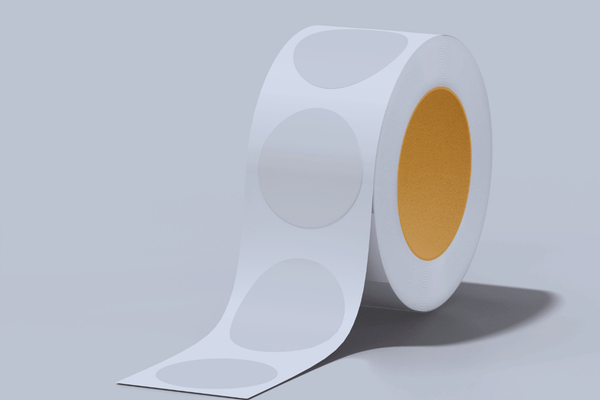
Each failure mode is resolved at one of five layers of the label material stack: facestock chemistry (PET versus PP synthetic paper versus coated paper), adhesive class (acrylic permanent versus hot-melt aggressive versus water-based), primer, topcoat, and release liner. Substituting a generic indoor pressure-sensitive label stock (designed for cardboard cartons or supermarket retail) into an industrial durable line. A durable label material is not a marketing label; it is a documented combo of facestock, adhesive, and topcoat with field-relevant test data, supplied as roll labels in custom slit widths and core sizes, ready for the converter’s print operation.
Application Spotlight — Where Guanma Durable Labels Are Specified
The Decision Matrix shows 6 application clusters where the most frequent combination of converter and brand owner specifications identifies a Guanma durable labels face stock material. Each application cluster applies to a suggested facestock and adhesive starting point with a general performance characteristic the brand or end user is likely to be interested in. This list is not exhaustive; should your application not appear, ask for a custom durable labels spec quote, including your environment description, and a Guanma engineer can advise on a starting combination.
1. Industrial asset and equipment ID
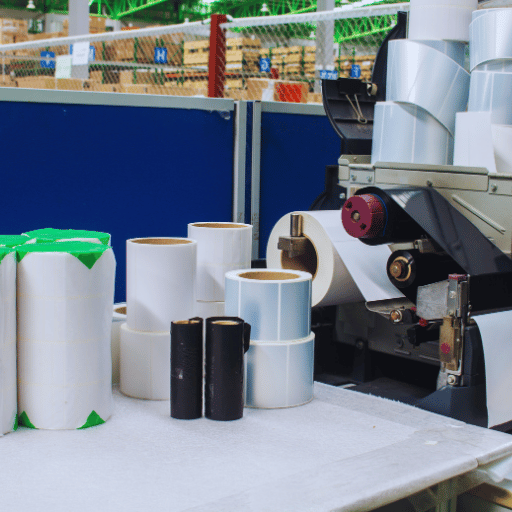
Asset tag, machine nameplate, tool-room ID, durable asset identification labels and durable barcode labels for warehouse, field equipment and white goods. Both for scuff resistance, and barcode readability despite repeated handling.
G-TC PET + G-AC9 + optional laminate

2. Outdoor signage and safety warning
Outdoor labels for equipment, safety warning labels and uv resistant sticker-format compliance markings that are subject to direct sunlight and outdoor weather, and durable id labels used in agricultural or municipal asset programs. UV stability is the primary stressor; a PET face with a uv-resistant topcoat is the suggested starting point for any weatherproof label that has to withstand multi-year outdoor exposure.
G-TC PET + G-AC9 + UV-stabilized topcoat

3. Cold-chain cryogenic and freezer
Freezer labels for abattoir food processing, the cold chain pharmaceutical aisles, frozen logistics. A reliable label has to grip on application even if the substrate is already cold, and be immovable by repeated freezing and thawing.
G-TC PET + G-HM3 cold-grip hot-melt
4. Automotive under-hood and aftermarket
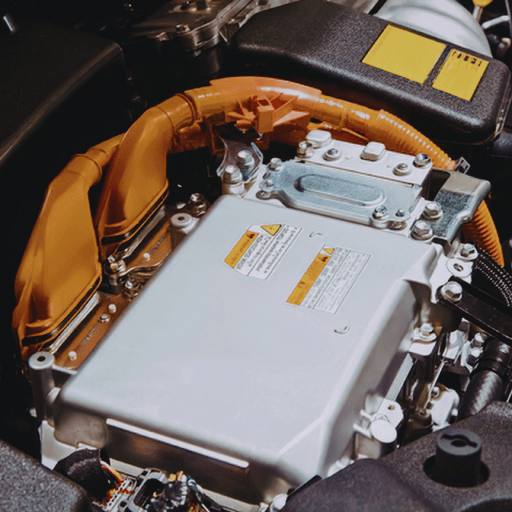
Engine-bay asset ID, under-hood compliance labels and aftermarket warning labels in high temperature service. Design constraint is continuous service at +80 C and short peaks above.
G-TC PET + G-AC9 thermosetting variant

5. Solar panel and renewable energy
Solar panel rated-plate tags, inverter compliance label and outdoor renewable equipment ID. Continuous direct UV for the design life of the panel (in many cases ten or more years for IEC 61215 lifecycle expectations) is the dominant stress.
G-TC PET+ G-AC9+ topcoat UV stabilizat+laminat

6. Marine and coastal equipment
Dock equipment ID, marine asset tags, IP67 wash-down service, coastal industrial labels. These labels will be subjected to humid conditions, salt fog and humidity cycling, therefore, salt spray performance plus humidity cycling is the design target.
G-TC PET + G-AC9 high-tack + marine laminate
Guanma Durable Label Materials vs Generic Industrial Adhesive Stock — Performance Comparison
In comparing a principal Guanma durable label material with a generic industrial pressure-sensitive stock, procurement teams need to compare six dimensions and not just unit price. Below, industry-typical benchmarks are used for the recommended Guanma combination ( G-TC PET + G-AC9) versus a generic indoor-grade pressure-sensitive label material; the trade-off is made visible in one view; per-SKU certified test reports are available with each sample shipment.
UV Resistance (ASTM G154 Cycle 1)
Guanma G-TC PET + G-AC9
Industry benchmark target ≥ 1000 hours, no significant fade
Generic indoor-grade stock
Typically 200-400 hours before noticeable fade
Service Temperature Range
Guanma G-TC PET + G-AC9
-30°C to +80°C continuous; PET face alone -70°C to +200°C; G-HM3 retains grip to -40°C
Generic indoor-grade stock
Often -10°C to +60°C; cold-grip and high-temperature reliability not specified
Salt Spray (ASTM B117, 5% NaCl)
Guanma G-TC PET + G-AC9
Industry benchmark target ≥ 480 hours, no edge-lift or barcode degradation
Generic indoor-grade stock
Typically not tested; not recommended for marine or coastal service
Adhesion Aged Peel (FINAT FTM-1)
Guanma G-TC PET + G-AC9
Industry-target ≥ 18 N / 25 mm width after standard aging
Generic indoor-grade stock
Typically 8-12 N / 25 mm; degrades faster under thermal cycling
Print Method Compatibility
Guanma G-TC PET + G-AC9
Validated for thermal transfer, UV flexo, water-based flexo, and digital inkjet
Generic indoor-grade stock
Often validated on one or two press technologies only
Document Pack
Guanma G-TC PET + G-AC9
TDS, SDS, RoHS, REACH SVHC declaration, CoC, change-control SOP
Generic indoor-grade stock
Often a one-page spec sheet; supplier qualification audit gaps common
Sibling Products — When to Choose Chemical-Resistant, Food Packaging, or CCK Release Liner Instead
The hard-wearing label material referenced on this page is formulated for outdoor weathering, UV, heat, abrasion, and general industrial service. Guanma’s brand catalog includes three sibling label material lines for neighboring applications. Select the line that is optimized for the dominant stressor in your environment.
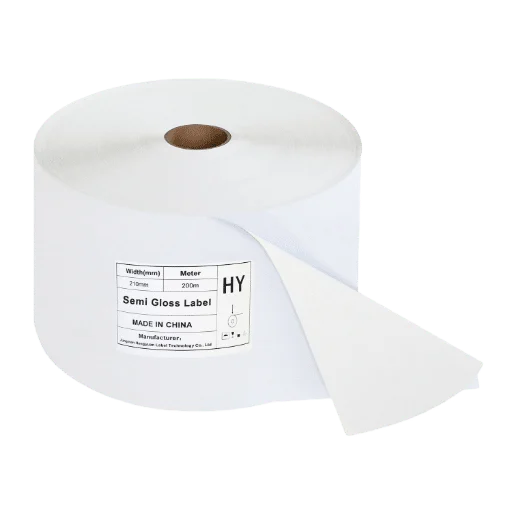
Chemical Resistant Label Materials
Select the chemical-resistant line when the dominant stressor on your label is solvent, oil, fuel, or aggressive cleaning chemistry as opposed to UV plus weather. This chemical-resistant line is formulated for industrial drum labels, lubricant containers, and chemical packaging where the label is exposed to chemical loads on every cycle.
View Specifications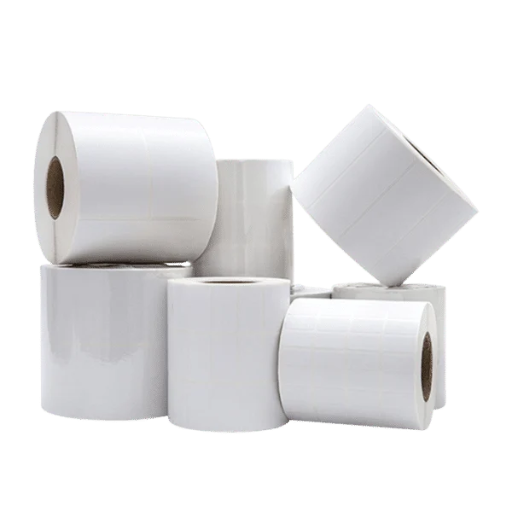
Food Packaging Labels
Select the pharmaceutical label material line when your application demands FDA 21 CFR Part 211 compliance, USP <661> packaging suitability data, ISO 10993 biocompatibility, low-migration adhesive characterization, or TSE / BSE declaration. Typical pharma-grade uses include vials, ampoules, syringes, IV bags, blister packs, and OTC drugs.
View Specifications
CCK Release Paper
Select the clay-coated kraft (CCK) release paper line when you are sourcing release liner on a stand-alone basis for use in your converting operation, rather than the full label-material stack. CCK release paper is the carrier supporting the adhesive layer when shipped ISO and qualified for label converting operations with their own coating or laminating equipment.
View SpecificationsProcurement Guide — MOQ, Lead Time, Sample Policy, and Custom Durable Labels Build-to-Spec
The procurement workflow below is designed for a short qualification cycle, not months. Guanma’s manufacturing and support facilities are based in Thailand and Vietnam and the company is in an active export program for in Southeast Asia, South America and Europe. Several characteristics influence a long-lasting label material order — facestock and adhesive choice, slit width and core size, print performance, label finish, and document pack — are outlined here for a converter or brand-owner procurement team to scope an RFQ for a stock SKU or customized labels.
Sample policy and qualification turnaround
For a new application or if a new facestock/adhesive combination requires approval, Guanma provides one free 100m trial roll in the required slit width and core size. Standard samples-to-decision timing is designed to be brief such that the qualification is not on the project’s criticalpath schedule. One CoC per lot of each sample roll is supplied along with a current TDS and SDS and any necessary regulatory declarations (RoHS, REACH SVHC) for the requested material.
MOQ and lead time factors
Minimum order quantity and lead time are driven by 3: standard SKU stock vs. build to spec custom specs, slit width & core configuration, destination region. Standard SKUs available in stock in Thailand or Vietnam ship quicker than custom spec material, which will have to go through a coating run. Regional lead time is shorter into Southeast Asia than into Europe or South America due to transit times. Please ask for a current quote for the combination you are scoping.
Procurement Factors Framework
Every of the below dimensions will alter the unit cost, as well as the lead-time for a proposed custom durable labels build-to-spec request. Guanma will differentiate with a written RFQ.
Facestock selection
This is characterized by the selection of top-coated PET, top-coated PP synthetic paper or Premium Coated Paper-PET which are the highest quality and therefore the more expensive options.
Adhesive class
Acrylic, permanent, hot-melt aggressive (cold chain or high tack) or water-borne general purpose
I. Coating weight and topcoat choice
Standard topcoat, UV- stable topcoat, chemical stable topcoat
Slit width and core size
Standard 76 mm core, custom slit width or special machine cores available upon request
Laminate option
Overlaminate film for enhanced UV, abrasion or chemical resistance
Limite du périmètre du pack documenté
Pack standard (TDS, SDS, COC) ou pack élargie (RoHS, REACH SVHC, change-control SOP, rapport de test métré),
Volume, and shipment region
Thailand Plant for SEA distribution, Vietnam for EU, SA distribution
Compliance and Test Standards — UL 969, ASTM G154, ASTM B117, FINAT FTM-1, IEC 60068-2-30, RoHS, REACH
Common standards cited in durable label material supplier qualification documentation include the below test methods, regulatory requirements, and component-recognition standards. Every entry includes an explanation of what the standard in fact specifies because several of the most-cited standards are test methods that do not give a definitive pass-fail outcome;cycle length, duration, and acceptance criteria must be specified on application.
UL 969
Marking and Labeling Systems
ASTM G154
Fluorescent UV exposure
ASTM B117
Salt spray (fog)
FINAT FTM-1
Peel adhesion 180°
IEC 60068-2-30
Damp heat cyclic Db
RoHS 2011/65/EU
Hazardous substance restriction
REACH EC 1907/2006
SVHC substance declaration

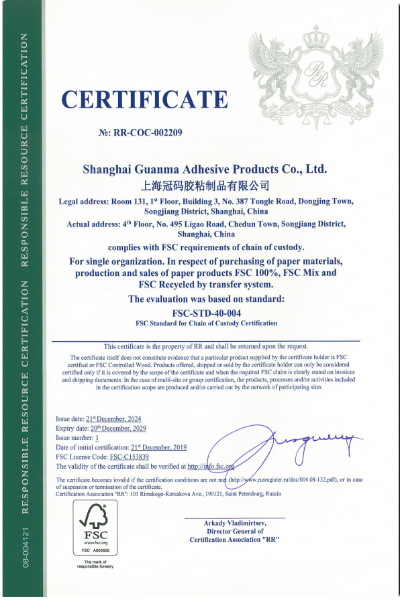
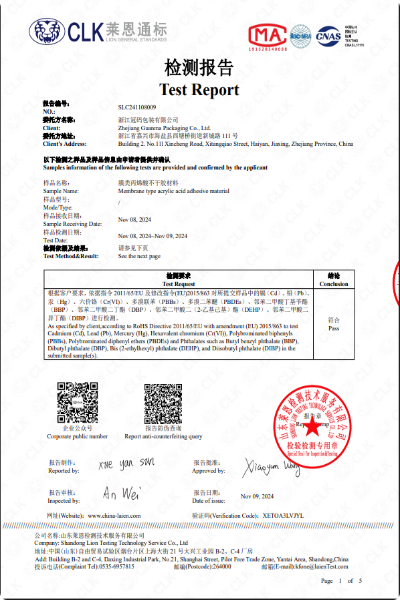
×
![Enlarged Standard]()
Interactive Engineering Tools
Durable Label Material Decision Matrix Selector
Tell the selector your environment, the dominant stressor, and your print method. The tool returns a Guanma recommended facestock plus adhesive starting combination, the relevant performance spec row, and engineering notes for sample qualification.
Launch SelectorDurable Label Material Test Standards & Compliance Checklist Generator
Generate an audit-ready checklist of test standards and regulatory documentation Guanma will provide for your application. Choose the application, destination region, and audit-trail requirements; the tool returns the document set and shows what fraction is included in the standard versus extended sample pack.
Generate ChecklistFrequently Asked Questions
The three material lines target different dominant stressors. Guanma’s durable label material is engineered for outdoor UV, heat cycling, weather, abrasion, and general industrial asset identification, where the label sees multiple stressors but no single one is overwhelmingly aggressive. The chemical-resistant label material line is engineered for direct, ongoing solvent or oil contact and is the right choice when chemical exposure is the dominant failure risk. The pharmaceutical label material line is engineered for FDA 21 CFR Part 211 compliance, USP <661> packaging suitability characterization, low-migration adhesive, and ISO 10993 biocompatibility — the regulatory framework, not the environment, drives that line. If your application sits between two lines (for example, an outdoor pharmaceutical refrigerator with solvent wipe-down), share the application detail and Guanma’s engineering team will recommend the right starting line; if you are scoping a brand-matrix decision across multiple labels for the same product family, request the cross-line decision worksheet too.
Begin with the dominant stressor from the Decision Matrix above (UV, cold, heat, chemical, abrasion, salt spray, oil, water immersion, or low-outgassing). For most outdoor weather and asset-tag applications, Top-Coated PET facestock plus Acrylic Permanent (G-AC9) is the right starting combination. For cold-chain deep-freeze (-40C continuous), Top-Coated PET plus Hot-Melt Aggressive (G-HM3) is the right starting. For cost-conscious splash-resistant outdoor service, Top-Coated PP synthetic paper plus Water-Based General Purpose (G-WB7) is within tolerance. If your multi-stressor environment features two or more combatants (e.g. UV plus chemical splash plus salt water), ask for a custom durable labels engineering review with application detail.
MOQ and lead time are a function of three parameters: standard SKU versus custom-spec build-to-order, slit width and core size, and shipment region. Standard SKUs in stock at the Thailand or Vietnam plant will ship overnight, or at least two days earlier, than custom-spec material that requires a coating run. Regional lead time is shorter into Southeast Asia than into Europe or South America because of transit. Ask for a current price quote with your facestock plus adhesive choice, slit width, core size, volume, and destination, and Guanma will respond with a specific MOQ and lead time.
Guanma supplies a free 100-meter qualification roll in your requested slit width and core size. Each sample roll arrives with a per-lot Certificate of Compliance, current Technical Data Sheet, current Safety Data Sheet, and the regulatory declarations relevant to the material (RoHS Directive 2011/65/EU declaration and REACH EC 1907/2006 SVHC declaration). For an extended qualification (RoHS plus REACH plus change-control SOP plus custom test report), ask for the extended document pack with your samples.
The recommended Top-Coated PET facestock was validated on Guanma’s own internal qualification roll (mill order) for thermal transfer printing (both wax and resin ribbon), thermal transfer with resin ribbon to meet chemical and abrasion resistance standards, UV flexible and water-based flexo press types, and digital inkjet ink types. Custom toppress may be available, or formulations may be tuned in consultation with the supplier to match a desired combination of ink and lexicon. Meet with your press vendor and request a print-method suitability memo before starting the qualification.
Service life is application-specific and driven by the regional UV index, the temperature cycling profile, and the acceptance criterion (no fade vs. no functional failure). Industry-typical benchmarks of the suggested Guanma Top-Coated PET plus Acrylic Permanent combination, which Guanma considers as a minimum internal qualification standard, are: at least 1000 hours of UV exposure under ASTM G154 Cycle 1 (UVA-340) before significant fade; continuous operation from 30C to +80C; at least 480 hours of salt spray corrosion resistance in ASTM B117. To translate the standards to a calendar-year service life, Guanma’s engineering team will model an anticipated service life using your application data. Ask for a pre-sales certification test report with your qualification roll.
Yes. Guanma provides high end durable label material in roll labels format with range of slit widths and the most common machine core sizes per customer demand (standard 76 mm and 152 mm cores; other core sizes available on request). State the slit width tolerance and core size at quote request so the production planning at the Thailand or Vietnam plant can sequence the slitting run.
Yes. Guanma maintains a written change-control SOP that issues a change notification before any formulation, supplier, or process change is put in place on a qualified durable label material. This document is what QA teams tend to look for in the supplier qualification packet when they set out to qualify Guanma as a supplier; we supply it, along with the change-notification SLA Guanma maintains for qualified-supplier customers, on demand.
Why We Built This Durable Label Material Reference
Most durable label material spec sheets in this category leave the buyer to interpret vendor brochure jargon into a real procurement decision.
The Working Tool Our 3 × 3 × 10 Decision Matrix and Performance Spec Row on this page is the working tool the Guanma engineering team uses internally when scoping a new outdoor, asset-tag, freezer, or industrial label scoping; we publish it here as a public reference so converters and brand-owner procurement teams can scope the qualification pre-sale.
Performance Targets UV, salt-spray, and service-temperature limits are industry-typical targets the recommended Top-Coated PET plus Acrylic Permanent combination is built to achieve; per-SKU certified test reports are available with each qualification lot shipment.