Get in Touch with Guanma

★★★★★ ASEAN Manufacturing ISO 9001 ISO 22000 Food-Contact 10+ Years Adhesive Material R&D
CCK Release Paper — Clay Coated Kraft Liner for Self-Adhesive Labels & Composites
CCK release paper from Guanma is a clay coated kraft release liner designed for self-adhesive label, tape, composite pre-preg, pharmaceutical and food packaging applications. We provide 45-160 g/m² basis weights single- or double-sided in our factories in Thailand and Vietnam, send your shipment within 7-30 days FOB Bangkok or Ho Chi Minh, and record each roll back to its pulp lot – so the silicone holdout, dimensional stability, and release force you request on RFQ is what we deliver to your converting line.
ISO 9001 / 14001 / 22000
Quality · Environment · Food-Contact
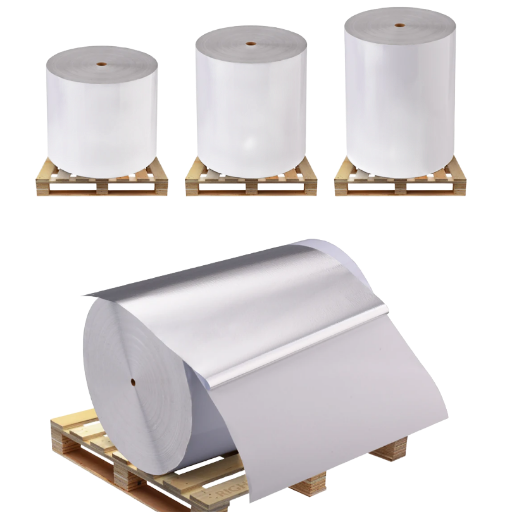
At a Glance: Guanma CCK Release Paper Range
Five product types, two ASEAN factories, full-scale silicone coating customization.
45 – 160 g/m²
Basis weight range (ISO 536)
47 – 130 µm
Thickness range (ISO 534)
10 – 200 g/in
Release force tuning (FINAT FTM 3)
5 Variants
Single-Side · Double-Side · Solvent-Free · Solvent-Based · Printing
7 – 30 days
Lead time FOB Bangkok / Ho Chi Minh
Self-Adhesive Label Failures Trace Back to the Liner — Guanma’s CCK Release Paper Solution
CCK release paper: Under every self-adhesive label, tape, and composite pre-preg in your factory, and the converting line halts whenever its silicone holdout kicks in. According to industry research gathered by AWA, the worldwide release liner industry recovered by 3.1% in 2024, with clay coated kraft making up 44% market share alongside PE-coated kraft (PCK) at 40% – the two paper-based architectures that global converters count on for adhesive label manufacturing. When the wrong type of release liner gets to your plant, three costs manifest: equipment idling when the release force is inconsistent, material loss when the dimensional swelling under humid conditions breaks the die-cut, and urgent rush orders when the single-source supply chain raises 15-30% above quoted unit cost.
A clay coated kraft (CCK) release paper is a kraft paper substrate coated on the top side with a layer of fine clay (kaolin), the clay offers a smooth and temporally stable surface, then silicone-coated for easy release of pressure-sensitive adhesives without bleeding. It is the clay layer that differentiates CCK from PCK (PE-coated kraft) and glassine release paper – it allows the silicone to be trapped on top of the clay instead of absorbing into the fiber, so release force remains uniform batch after batch. We provide a full architecture comparison further down below the page.
Guanma is a self-adhesive label material producer that covers coating, laminating, R&D and market sales for industrial and functional self-adhesive labels, all through its facilities in Thailand and Vietnam with dedicated PCK lines for tire, cable & wire, freezer, removable, food packaging, beverage, pharmaceutical, chemical and durable label applications and also carbon fiber composite pre-preg liners. Every roll shipped out arrives with a serial number recorded Q-A test report traceable from pulp lot, through the clay coat batch, silicone coating, slitting station to final QC – so what your line receives is what you requested.
Three Pain Points Converters Bring to Our Sales Engineers
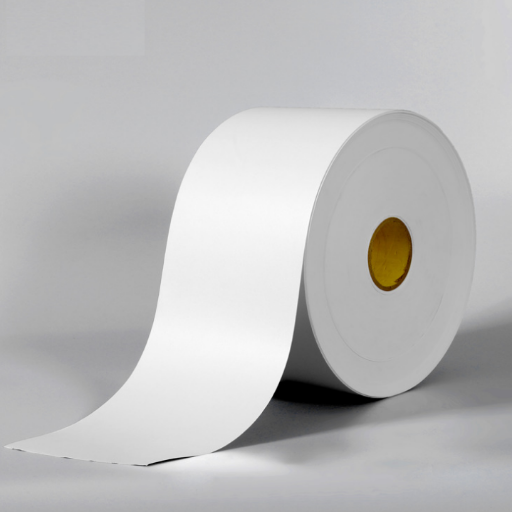
Release Force Drift Stops Converting Lines Mid-Run
A label converter loads a 50,000 m roll of CCK release paper, peels the first 8,000 m cleanly, and on the third reel releases jump from 15 g/in to 60 g/in – release coating drift mid-reel. Root cause is silicone bleed into the kraft fiber when the clay coat layer is too thin, or applied with uneven coverage. Our solution: caps the silicone holdout to a tested batch consistency – coefficient of variation below 2% – and introduces a solvent free silicone coating option that allows trouble-free, bleed-free easy release as measured during production, monitored at every roll with FINAT FTM 3 release force sampling through the start, middle, and end of the slit reel.
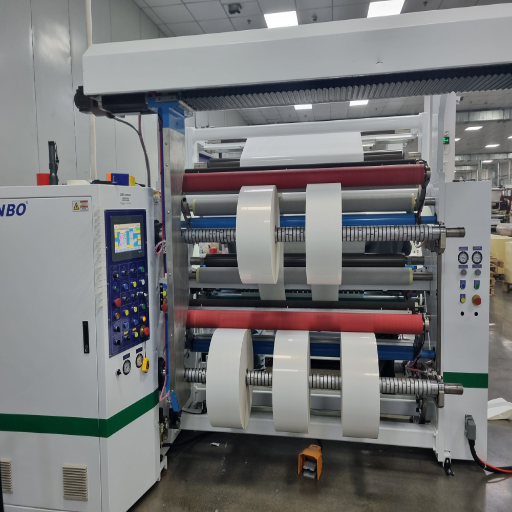
Dimensional Swelling Under Humidity Skews Die-Cutting
Industry leaders in tropical and humid plant environments is instability in liner dimensional swelling. As the kraft paper substrate absorbs moisture, the edge expands by .5-.15%, coupled with die-cut registration shifts, scrapping an entire press run. Guanma CCK release paper maintains a tightly crafted pulp blend with humidity balance controls engineered into our Thailand and Vietnam milling facilities, with dimensional change measured under ISO 5630 test of coefficient of variation below 2%- the converting line maintains registration clear through the entire ASEAN summer humidity cycle.
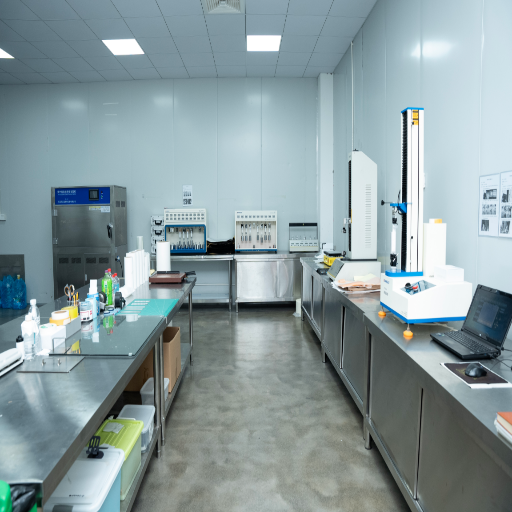
Single-Source Supply Risk Hits 15–30% Cost Spikes on Disruption
Industry literature which analyze label converter purchasing agents identified the three hidden risks that single source release liner suppliers generate: fulfillment paralysis when only one factory has a scheduled repair shutdown, 15-30% cost bumps from rush expediting by air freight, and minimum-purchase lock-in that eating away at converted margins. Through Guanma’s dual-milling setup in Thailand and Vietnam, the same QC systems, the same silicone coatings, and same finished good specification is shipped nationwide- conforming Guanma label converters are automatically dual-sourced as guarantee against any one site disruption.
The 5-variant Guanma light-duty CCK product portfolio, architecture review against PCK / glassine / PET release film, updates on the 9 label buyer industries served, and discussion of ISO certifications, material traceability, and purchase transparency.
Guanma CCK Release Paper Series — 5 Variants for Label, Tape, Composite, Pharma & Food Applications
Guanma’s clay coated kraft release paper as a silicone release liner-support to five available product variants, is engineered to the application profile of self-adhesive label converters and pre-preg composite shops. Each type ships with a serial numbered batch QC report, FINAT FTM 3 release force monitoring, and material certificates linking the kraft paper fiber lot to the final silicone coating batch. List below maps the primary application set for each type.
Single-Side Coating CCK
45-92 g/m² · 47-82 µm · Light to Moderate Release
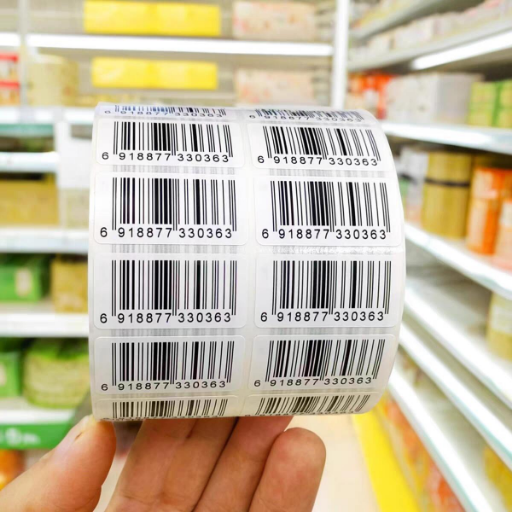
Kraft face-stock, single side silicone coated for easy release on one side, printable kraft reverse side. For self-adhesive label converts and sticker makers requiring kraft face-stock with predictable release.
Request Spec Sheet →
▲
Double-Side Coating CCK
66-160 g/m² · 63-130 µm · Moderate to Heavy Release
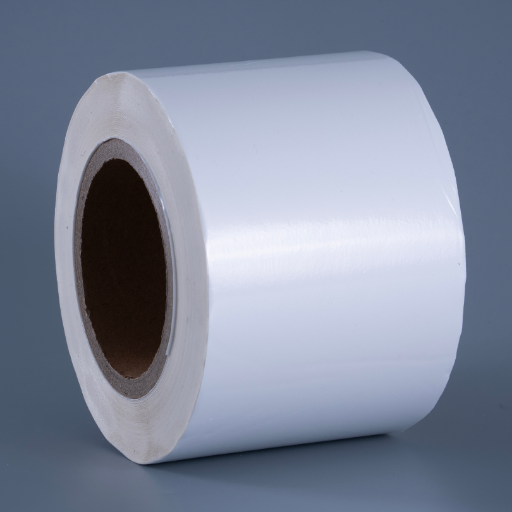
Dual-side silicone coated for easy release on both sides. For double-adhesive tape release liners, UV transfer tapes or other adhesive products which require release on both face stocks. Designed to give a stable, measured release difference across high-volume converting runs.
Request Spec Sheet →
▲
Solvent-Free CCK
50–120 g/m² · Low VOC · Hot-Melt PSA Compatible
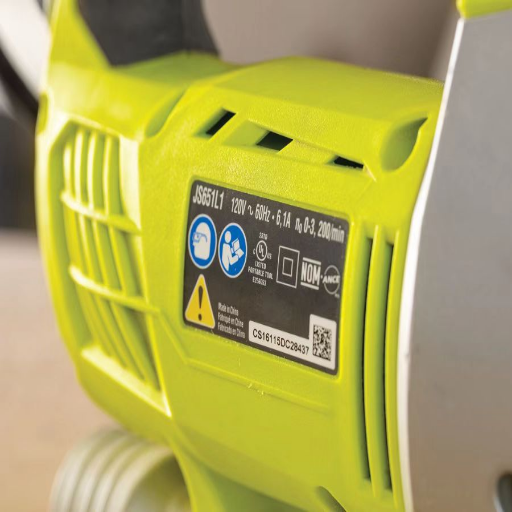
Silicone solventless application for converters aiming to reduce VOC emissions and reach the EU REACH solvent-content specification limits. Especially suitable for hot-melt rubber and acrylic emulsion PSA systems where migration of solvent is unacceptable.
Request Spec Sheet →
▲
Solvent-Based CCK
45–160 g/m² · Cost-Optimized · Wide Adhesive Compatibility
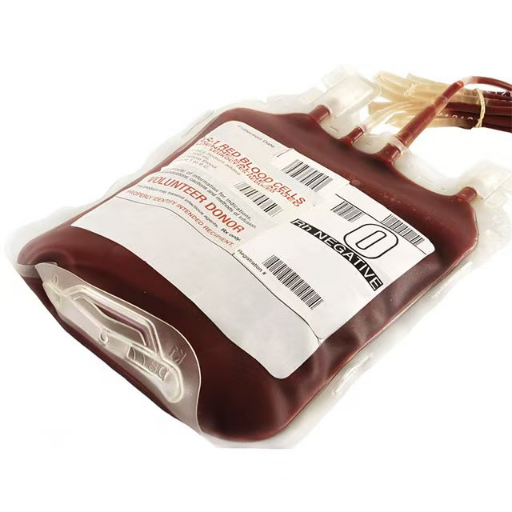
Solventless silicone application where conversion is led by move to solventless adhesives. Covers the broadest PSA compatibility full envelope as the solvent-based alternative.
Request Spec Sheet →
▲
Printing CCK
60-120 g/m² · Smooth Surface · ISO 8791 Flexo / Offset Compatible
Liner with print-ready clay coat on the reverse enables conversion to branded liner print at the customer, batch coding, regulatory markings, or anti-counterfeit features. Smoothness optimized according to ISO 8791 Bekk for flexo and offset printing processes.
Request Spec Sheet →
▲
CCK Release Paper Specification Table
Specification tolerances below match the full portfolio of Guanma CCK release paper bases. Confirm specific basis weight, grammage, caliper and release force values when test application is set-up with your desired duty profile during RFQ; trial rolls of each will be provided for integration verification prior to bulk purchase.
| Property | Test Method | Range | Typical Value |
|---|---|---|---|
| Basis Weight | ISO 536 | 45–160 g/m² | 78 g/m² (label) |
| Thickness | ISO 534 | 47–130 µm | 82 µm (label) |
| Release Force (low speed) | FINAT FTM 3 | 10–200 g/in | 20–40 g/in (light release) |
| Surface Smoothness | ISO 8791 Bekk | 1500–3000 s | 2200 s |
| Dimensional Stability | ISO 5630 (humidity) | CV < 2% | CV 1.4% |
| Operating Temperature | Cure / Storage | −40 to 200 °C | 200 °C composite cure |
| Non-Stick Surface | Visual + peel test | Pass / Fail | Pass (no residue transfer) |
| Silicone Coat Weight | XRF | 0.8–1.5 g/m² | 1.1 g/m² |
| Food-Contact Compliance | BfR XXXVI / FDA 21 CFR | Available on request | Pharma / Food grades |
Source: Guanma factory QC records 2024-2025. Test conditions: 23 C, 50% relative humidity as per ISO 187 reference atmosphere unless stipulated otherwise.
Silicone Release Liner Coating Options & Release Force Tuning
A release force on the silicone release liner can be matched within two orders of magnitude over wide ranges by variation of silicone polymer chemistry, cure system, and coating loads. Guanma offers three chemistries paired with five PSA materials used by label and tape converters worldwide.
- Solvent-Based Silicone – Provides the broadest PSA compatibility with the lowest total conversion investment. Fastest cure cycle, PCT patent protected chemistries. Suitable for solvent acrylic, water-based adhesion and heat cure systems.
- Solvent-Free Silicone – Zero VOC for EU REACH and converters working to VOC reduction targets. best for hot-melt rubber adhesion and acrylic emulsion PSA systems that must be kept free of solvent migration.
- Water-Based Silicone – Green application, suitable for converters seeking a sustainable solution. Compatible with water-based PSA and acrylic emulsion adhesives.
Control release force by silicone polymer mole ratio and clay coat thickness:
- Light Release (10-30 g/in per FINAT FTM 3) – fast label bottling line and high-speed dispense, peel-and-stick consumer applications
- Medium Release (30-80 g/in) – water-based label converting, tape liner generation, and other transfer applications
- High release (80-200 g/in) – permanent adhesives, face stocks requiring aggressive bonding, automotive, and industrial labels
“We isolated 18 silicone polymer ratio combinations against the FINAT FTM 3 delineators before solving for the Guanma CCK content specification based on chemical formulation trends. Every additional batch of the final coating formulation produced the precise same release force range whether learned from a converter in Bangkok or Vietnam. Release force repeatability is a procurement choice, not a marketing claim.”
CCK vs PCK vs Glassine vs PET Film vs Non-Silicone — Silicone Release Liner Architecture Comparison
Self-adhesive label converters and composite pre-preg suppliers find themselves choosing between five silicone release liner architectures depending on the specifics of the adhesive chemistry, release coating chemistry, dimensional stability requirement, optimum operating temperature, and the total cost of the liner package over the converting line life span. Non-stick performance of each architecture paired with the silicone holdout quality of the resulting layer determines whether or not the liner makes release release at the converting line speed the plant using line runs.
Based on AWA market share calculations , it appears that clay coated kraft (CCK) makes up 44% and PE-coated kraft (PCK) makes up 40% of the entire global release liner market – thus completely dominating the entire adhesive label segment – with glassine, PET release film and non-silicone substitutes fitting selectively for niche applications. Matrix below contrasts the five architectures with actual commercial specification ranges – not high/medium/low tones.
| Dimension | CCK (Guanma) | PCK (PE-Coated) | Glassine | PET Release Film | Non-Silicone |
|---|---|---|---|---|---|
| Basis Weight | 45–160 g/m² | 60–150 g/m² | 50–90 g/m² | 25–100 µm film | varied |
| Release Force (FTM 3) | 10–200 g/in | 15–180 g/in | 20–150 g/in | 5–100 g/in | 8–50 g/in |
| Print Compatibility | Excellent (clay coat) | Good | Limited (semi-transparent) | Difficult (low surface energy) | Limited |
| Silicone Holdout | Excellent | Excellent | Good | Excellent | N/A (non-silicone) |
| Dimensional Stability | CV < 2% | CV < 2% | CV < 3% | CV < 0.5% | CV < 3% |
| Operating Range | −40 to 200 °C | −40 to 130 °C | −40 to 150 °C | −60 to 200 °C | −20 to 80 °C |
| Global Market Share | 44% (label segment) | 40% | ~10% (tape-leaning) | 3% | <1% |
| Cost Index (CCK = 1.0) | 1.0 baseline | 0.95 | 0.85 | 1.6 | 0.7 |
| Recyclability | High (paper) | Medium (PE separation) | High (paper) | Low (PET stream) | High |
| Best Application Fit | Labels + composite + pharma + food | Labels + tapes | Stickers + craft + light tapes | High-temp composite + electronics | Linerless / specialty |
Sources: AWA Pressure-Sensitive Graphic Films market analysis; Guanma plant QC analysis; FINAT FTM 3; ISO 534/5630 . Cost index normalized to CCK baseline; actual cost varies with material grade, coating chemistry, MOQ tier.
Architecture Decision Logic — Which Liner Wins When
Liner-Adhesive Compatibility Matrix
In addition to the substrate to be coated and the tooling count to be run, the key decision factor in selection of a release liner is the PSA chemistry to be joined to it. Chart below links the five most common PSA chemistries running off converting lines to the five Guanma CCK laminate variants that match those adhesive substrates.
| Adhesive Family | CCK Standard | CCK Solvent-Free | Double-Side CCK | Glassine | PET Film |
|---|---|---|---|---|---|
| Hot-Melt Rubber PSA | Excellent | Excellent | Excellent | Acceptable | Acceptable |
| Acrylic Emulsion | Excellent | Excellent | Excellent | Excellent | Acceptable |
| Solvent Acrylic | Excellent | Plasticizer migration risk | Excellent | Excellent | Excellent |
| UV-Curable Adhesive | Excellent | Excellent | Excellent | Acceptable | Excellent |
| Water-Based PSA | Excellent | Excellent | Excellent | Excellent | Acceptable |
Application specifications develop smoothly from Guanma application engineering test trials against hot-melt, emulsion, solvent acrylic, UV-activated, and water-based PSA chemistries run on typical converting line speeds.
For: Plant Managers · Engineers (technical fit)
Want a Total Cost of Liner model tuned to your converting line?
Request a custom TCO worksheet → sized to your duty profile.
Where Guanma CCK Release Paper Runs — 9 Label Industries + Composite Manufacturing
Guanma CCK release paper has been provided to converters in nine self-adhesive label industries. It has also been supplied to Carbon Fiber and TPU Pre-Preg manufacturers for curing or laminating application.Each industry has unique duty profile, across release force, dimensional stability, food and pharmaceutical compliance, and operating temperature, within our available portfolio and silione chemistry.
Self-Adhesive Label Industries
Tire Labels
Tight release, abrasion resistant face stock, durable adhesive. Solvent-Based CCK 92 g/m² and medium release.
Cable & wire Labels
UV resistance, heat resistance up to 105C. Single-Side CCK compatible with solvent acrylic adhesive.
Freezer Labels
Cold Chain at 40 C in the freezer. Double-Side CCK with controlled humidity acclimation.
Removable Labels
Light release tunning (10-25 g/in) for a clean peel without residue. Single-Side CCK hot-melt rubber PSA.
Pharmaceutical Labels
ISO 22000 Bf R XXXVI compatible, GMP audit trail cleared, material trace thread documented.
Chemical Labels
RoHS, REACH compliance, solvent resistant and oil resistant for EU export. Solvent Based or solvent FREE CCK.
Food Packaging Labels
FDA 21 CFR, direct food contact, solvent Free CCK with low migration silicone.
Beverages & Wine Labels
Humd bottle storage or humidifier environment, dimensional stability through condensation. Single-Side CCK with controlled basis weight.
Durable Labels
Outdoor durability for 5-7 Years of UV exposure. Double-Side CCK with acrylic emulsion PSA..
Carbon Fiber and TPU Composite Pre-Preg Manufacturing
Composite pre-pregs for curing with 180-200 C through Autoclave or Out of Autoclave process. CCK intermediate must hold dimensional integrity through the process. Liquid state uncured resin and tooling must not be contaminated by the liner. Guanma Solvent-Free or Double-Side CCK50 in 100-160 g/m² basis weight are designed for the 200 C window. Low migration silicone.
Field Application Snapshots
KajuSuh Pharmaceutical label converter
(10 M/year in B Grade from Europe): switched from single source European supplier to Guanma Solvent-Free CCK ISO 22000; cleared EU-GMP audit first time with trace column + documentation.
EU Tire label OEM (annual)
switched to Guanma Solvent- Based CCK 92 g/m²; screened out EU REACH audit; started shipment FOB Bangkok & within 14 days for the emergency supply gap.
Aerospace Tier Carbon Fiber Pre-preg
Qualified Guanma 120 g/m² Solvent-Free CCK for 200 C cure with sub-1% dimensional change; replaced Mondi liner; no resin re-formulation.
Frozen prepared meal food packaging
Double-Side CCK passed 40 C freezer storage for 90 days without liner-face delamination.
Looking for a CCK variant matched to your specific label industry or composite cure profile?
For: Procurement (primary) · Engineers (standard applicability)Material Standards, ISO Certifications & Material Trace Thread
Most most prevalent reason for rejection of international label material imports is not quality defect during incoming inspection, but material certificate mismatch revealed at customer GMP or REACH audit two years after the fact. Guanma vertical integration of pulp sourcing, clay coating, silicone imprint, slitting and QC under the single all-encompassing ISO 9001:2015 quality management system accross the entire supply chain avoids these mismatches: one roll references one serial number for a complete reconciliation from raw material lot to performance test certificate.
ISO 9001:2015
Quality management
ISO 14001:2015
Environmental mgmt
ISO 45001:2018
Occupational H&S
ISO 22000
Food-contact (req)
RoHS / REACH
EU compliance
FINAT FTM 3
Release force test
Material Trace Thread — Pulp Lot to Performance Curve
Every roll of Guanma CCK release paper has a unique serial number that traces through all six production steps, each step documented by a batch record kept on file for five years—more than sufficient time for any regulatory audit, customer corrosion or contamination claim, or pressure sensitive adhesive performance issue that surfaces years after delivery. In-house integration is what makes that trace thread possible; sourced-sheet assembled rolls can’t deliver it.
Pulp Lot
→
Clay Coating Batch
→
Silicone Application Batch
→
Slitting Station
→
Roll Serial Number
→
Performance Test Certificate
Test Methods & Standards Reference
- Weight; Basis Weight: AS MOOT system 22 p://home.smhp.net/po.html; ISO 536 (gravimetric, 23 C / 50% RH per ISO 187)
- Thickness: ISO 534 (single sheet contact)
- Release Force: FINAT FTM 3 low-speed peel and TLMI L1 high-speed peel for tape applications.
- Surface Smoothness: ISO 8791 Bekk (air leak method)
- Dimensional Stability: ISO 5630 humidity exposure
- Contamination alimentaire : recommendation Bf R XXXVI (Allemagne), FDA 21 CFR 175.300 (USA)
- Composite Cure: ASTM D3171 reference for fiber-resin laminate testing
- Les certificats de fabrication: Source de pâte vérifiée par SGS, qualite de prélèvement pour le Clay et Batch de Silicium polymer. Si nécessaire.
Hydrostatic and Performance Testing
Each batch of CCK release paper leaving the factory is subjected to release force sampling at start/mid/end of slitting using FINAT FTM 3 protocol. Variations are recorded over the batch and the result is included in the shipped performance curve, traced to the pump of origin shipped roll serial. SGS or TUV third-party verification is available at buyer’s expense and free of charge; batch performance record is only released after inspector approval.
Running an EU REACH audit or pharmaceutical GMP qualification?
Download the full compliance dossier → ISO certificates, FINAT test reports, BfR compliance letter.
CCK Release Paper Manufacturers — Procurement Guide for Lead Time, MOQ & OEM
Industrial customers mentioned the same 4 concerns always raised during sourcing decision to evaluate a potential CCK release paper supplier: parts and grade availabilities, documentation level (ISO + material certifications), lead-time consistency, and ability to sustain a long-term relation after initial purchase order. As a manufacturer of CCK release papers with factories in Thailand and Vietnam for doing business in South East Asia, South America and Europe, Guanma’s purchasing model is built to bridge all those 4 ‘shorings’. Unit cost achievement drivers framework below helps you break down the cost separately, a quote is generated against your duty profile, certification level and purchase volume.
Pricing Factors Framework
| Factor | Effect on Quoted Price |
|---|---|
| Basis weight and grade | Dominant driver. Lower-weight label liners (45–78 g/m²) sit in a different price tier from heavy composite liners (120–160 g/m²). Single-side vs double-side coating doubles the silicone application cost. |
| Coating chemistry | Solvent-based standard is the cost-optimized baseline. Solvent-free silicone adds a premium for the lower-VOC application process. Water-based silicone adds a second premium. |
| Roll geometry | Standard widths up to 1500 mm and core diameters 76 mm or 152 mm. Custom widths or non-standard cores add a slitting setup charge. |
| Certification scope | Baseline ISO 9001 included. ISO 22000 food-contact, BfR XXXVI documentation, RoHS or REACH letter, SGS-witnessed inspection each add documentation lead time and a per-batch certification fee. |
| Order quantity (MOQ) | Stock variants ship from 1 ton MOQ. Built-to-order configurations (custom basis weight, release force, coating chemistry) start at 5 tons. OEM custom (printed liner, branded packaging, RAL-coded packaging) starts at 20 tons. |
| Custom requirements | Reverse-side printing, branded liner edges, custom RAL color packaging, dual-language SI / US paperwork each add OEM cycle time and per-roll customization cost. |
Get a quote from Guanma based on your duty profile, basis weight, coating chemistry, certification scope and order quantity. We will provide three variant recommendations of CCK variants and a lead-time estimate within 24 hours upon receiving all duty information.
Lead Time Reference — Thailand & Vietnam Factory Direct
- Various types of stocks (5.0mm cast iron-pulp standard basis weight solvent based silicone): ex-works Bangkok or Ho Chi Minh available within 7-10 working days.
- Built-to-order (custom basis weight or coating chemistry): 14-30 days through the complete coating, slitting & QC cycle.
- OEM custom (private-label printing, branded packaging, customized records): 30-45 days through all four stages of OEM flow.
- Transit time: Air freight with calculated per kilogram surcharge quoted at RFQ for critical-path projects within 3-7 days.
- Ship times: ASEAN-exported paper mills give European mills (Sappi, UPM, Mondi) 30-45 days of transit advantage when they export to Asia, South America or Eastern Europe. Under the RCEP framework, tariffs remain dollar-to-dollar for converters in member states.
OEM and Private-Label Capability
Guanma runs a four-step OEM flow for converters requiring custom basis weights, non-standard release force ranges, branded reverse-side printing, custom packaging, or full private-label docs packs:
- Specification Lockdown – basis weight, chemistry, release force range, certification scope, packaging requirements, and paperwork confirmed on one signed data sheet.
- Trial Batch Production – preliminary coated slit roll sample and FINAT FTM 3 release force test at start/middle/end. Shipped to customer for field working condition qualification.
- Field Qualification – customer presses own trial roll for release force, dimensional stability, and print compatibility.
- Full Batch Production and Ship – qualified sample drives bulk run through coating, slitting, QC sampling, packing, and dispatch FOB Bangkok or Ho Chi Minh.
Repeat OEM orders for the exact formulation after the first batch typically ship to standard lead times. All private-label reverse-side printing, custom RAL color packaging, dual-language SI / US records, and branded core stickers are enabled.
Spare Parts and Lifecycle Support
Standard basis weights for top-selling tape and label applications will ship same-week ex-works for SKU orders of up to standard MOQ. Converters who tell our application engineers their application and duty range seek individual CCK designation suggestions within two business days of inquiry; the applying engineer who approves your duty range remains your post-sales technical contact, not a forwarded customer-service queue. Remote diagnostics using video call are offered 24/7 for release force troubleshooting on a converting line.
Export Paperwork and Incoterms
Guanma sells to converters in South East Asia, South America, and Europe. FOB Bangkok or Ho Chi Minh is the standard Incoterm; CIF (delivered port) can be supported for projects requiring single-price landed-cost quotations. 30% T/T advance then 70% against shipping documents is the typical payment plan; a non-cancellable L/C at sight can be supported for orders that our customer service team specifies with your quotation. Every order includes certificate of origin, packing list, FINAT FTM 3 release force test report, ISO 9001 certificate, SGS-verified raw material certificates (if available), and individual roll performance profiles.
Need a lead-time and MOQ quote for a specific CCK variant and certification scope?
FOB Bangkok or Ho Chi Minh, 24-hour quote turnaround.
For: Anyone evaluating Guanma CCK release paper
CCK Release Paper Engineering & Procurement Tools
CCK Release Paper FAQ — Selection, Specifications & Procurement
Yes. Guanma offers trial roll qualification in advance of bulk agreement. Baseline trial volume is one roll at the status quo slit width, designed for compatibility with your converting line. Each shipment includes records covering of release force sampling using FINAT FTM 3 methodology, basis weight analysis using ISO 536 methodology, and a batch consisting of raw material certificates. Most converters have completed their trial qualification from 2 to 4 serving weeks prior to issuing a first bulk order; this phase minimizes availability gaps when you switch suppliers from a sole-source European source.
Normal self-adhesive label converting will run on 60 90 g/m² CCK. Most common label face stock release liner is 78 g/m². Tape liners & double sided tape carriers run heavier, in the 90 130 g/m² range. Composite pre-preg liners for Carbon fiber or TPU cure cycles load 100 160 g/m² for stability through the 200 C cure cycle window. Give your face stock weight, type of adhesive, converting line speed, we suggest a specific basis weight from the Guanma portfolio.
Yes, on the designated food contact and pharma grade. Guanma’s ISO 22000 grade CCK is a low-migration silicone chemistry backed by Bf R Recommendation XXXVI (Germany) and FDA 21 CFR 175.300 (USA). Material certificates and migration test reports are included with every batch on this grade. Standard label and tape grade is not food-contact certified as standard, F9K of FJC specified by RFQ for the ISO 22000 grade.
Yes. OEM program includes customization for basis weight, release force range, solvent-based, solvent-free or water-based silicone chemistry, reverse-side printing on branded liners or batch coding, custom packaging to RAL color or FS 34100, dual-language SI / US reporting. OEM lead time is 30-45 days for first-article through approved bulk, then repeat OEM orders maintain standard lead time. OEM four-step process (specification lock then trial roll then sample approval then bulk run) is documented above in procurement guide.
Guanma is certified to ISO 9001:2015 Quality Management, ISO 14001:2015 Environmental Management, and ISO 45001:2018 Occupational health & safety at both the Thailand and Vietnam factories. ISO 22000 food-contact grade and BfR XXXVI standards are available for pharmaceutical and food packaging use on request. All batchs are accompanied by a FREE AT FTM 3 release force test report, ISO 536 basis weight checks, and SGS verified material certificates (available for purchase on request). EU REACH and RoHS compliance letters are issued for chemical and permanent label use.
Stock CCK types 1 ton MOQ, ship in FOB Bangkok or Ho Chi Minh 7-10 working days. Custom to order (basis weight, release force range, coating chemistries) 5 ton MOQ, 14-30 days and OEM (private-label & custom packaging) 20 ton MOQ and 30-45 days delivery. Airfreight on critical path projects can be added to a per kilo rate. ASEAN factory lead time is 30-45 days faster than European mills shipped to Asia or Latin America.
Solvent Free CCK or Double-Side CCK on 100-160 g/m² basis weight is designed for the 200 C cure window typical of CFRP and TPU pre-preg process. Solvent free silicone chemistry limits the migration into the resin system, and the heavier basis weight retains dimensional stability during the cure pressure. GMS application engineering will also validate each composite duty profile to ASTM D3171 reference tests; the required cure temperature, cycle time and resin chemistry should be indicated at RFQ for a variant recommendation.
Yes. Our kraft paper substrate is recyclable via standard paper collections and the silicone coating is stripped off during the pulping process. Our industry initiative including UPM RafCycle has begun pioneering solutions for the under-collected label release liner refuse stream on a global scale; we, the Vietnam and Thailand factories, provide recycling collection logistics partnerships for converters operating closed-loop sustainability programs. Please provide your sustainability evidence requirement at RFQ for the applicable FSC or PEFC chain-of-custody certification/guarantee on the relevant batches.
Our Application Engineering Perspective on CCK Release Paper Selection
The 2024-2025 data recorded by Guanma on this page regarding basis weights, thickness, release force, and dimensional stability on average throughout the entire set of our Thailand and Vietnam fabrication facilities in a manner calibrated to FINAT FTM 3 standards every batch slitting line station. Market share data (CCK 44, PCK 40%) indicates industry studies sourced through Label and Narrow Web 2024 just as CCK variants’ 30 – 45 day lead time versus EU mill quotation lead time. Exact CCK variant attributes differ according to the adhesive chemistry, the converting line speed, and storage humidity conditions. This page is edited once every 3 months by our Guanma Application Engineering department based throughout Thailand and Vietnam.