Get in Touch with Guanma

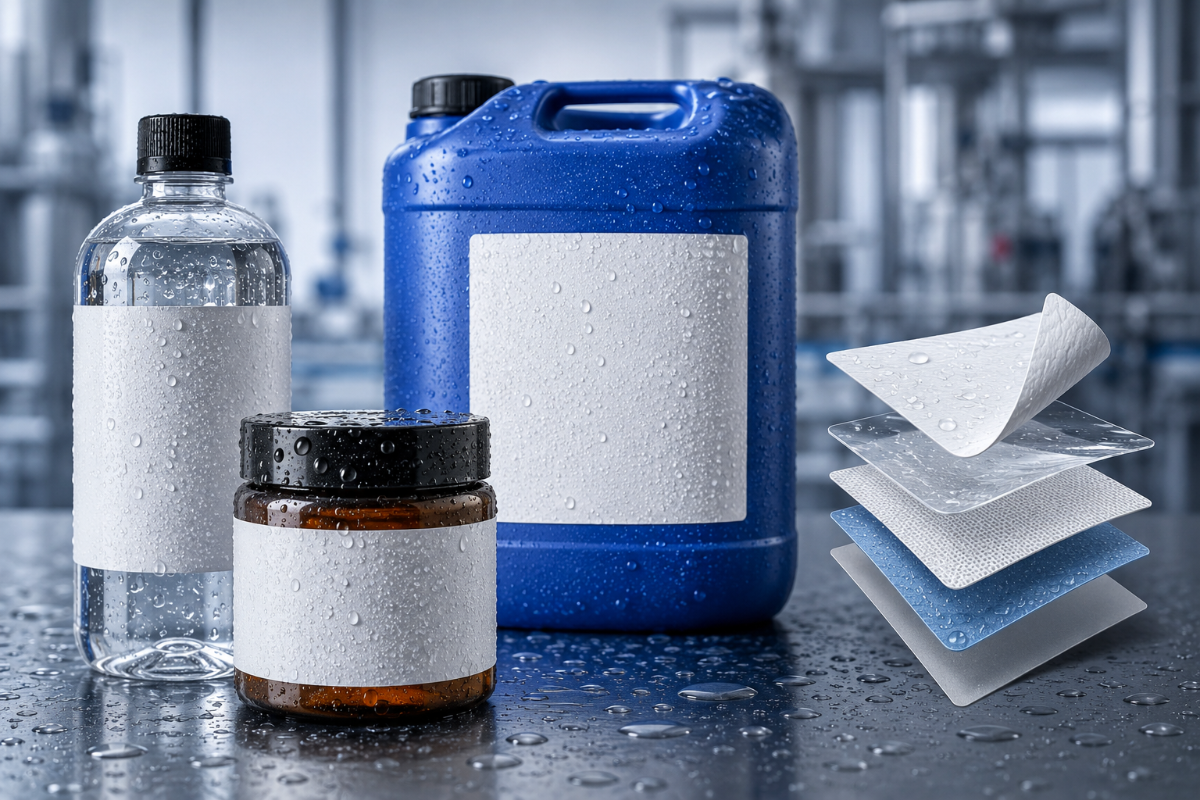
How Waterproof Labels Actually Work — Inside the Materials, Adhesives & Coatings That Survive Water
They look just like any other label and sit in the same printer tray. A blank paper sticker will turn to goo in a beer bucket while a polyester one can sit intact for a year on a chemical drum. Because there is no discernable difference in the print, the distinction between the two labels is the three-layers beneath. These are a film face stock, a pressure sensitive adhesive, and a (often) over lamination or topcoat. This guide takes these away and compares the four major facestocks(PET and PP synthetics, BOPP, vinyl), three adhesive chemistries(hot-melt, water based acrylic, solvent acrylic), and shows which need to go on bottles, freezing drums, tires and pharmaceutical vials. We also outline what is changing in 2026–2030 – wash-off systems, phenol-free thermal, and bio-based facestocks so procurement teams can start buying two purchase cycles prior.
Quick Specs — Waterproof Label Construction at a Glance
| Layer system | Facestock + adhesive + release liner |
| Facestock options | PET, BOPP, vinyl, PP synthetic paper, coated paper |
| Adhesive families | Hot-melt, water-based acrylic, solvent acrylic |
| Service temperature | −40 °C to +150 °C (varies by adhesive class) |
| Common test methods | ASTM D3330 peel; FINAT FTM 1; ISO 11997-1 cyclic UV |
| No formal “waterproof” standard | No ASTM/ISO body defines the term — buyers must spec test conditions. |
What Makes a Label “Waterproof”: The Three-Layer System
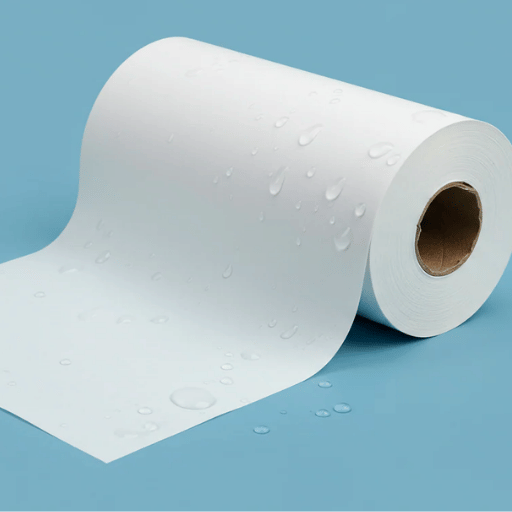
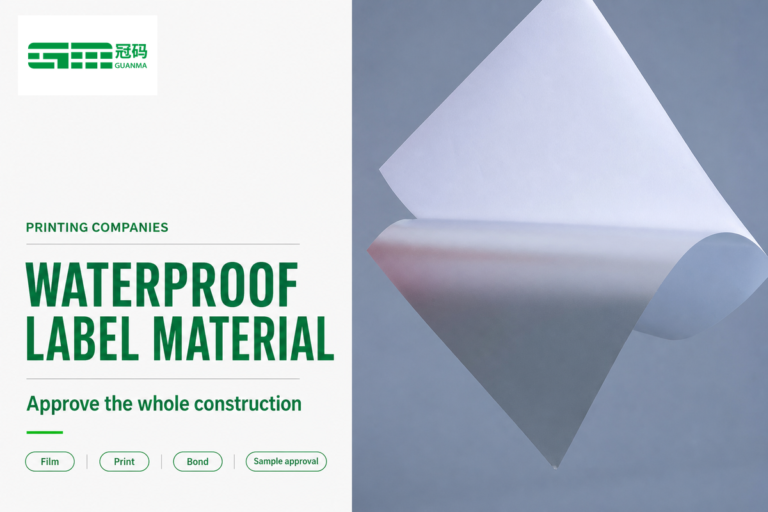
A waterproof label is a three-layer sandwich—each layer doing one job: keep water out, stay stuck, and release. Strip any one away and the label fails—hence why “waterproof paper labels” won’t last a month in a fridge door.
Layer 1 – Facestock is the visible printable area the consumer interacts with. To be waterproof, facestocks have to be non-porous films. Common solutions are PET facestocks, biaxially oriented polypropylene (BOPP), vinyl and synthetic papers like PP. Typical Calipers are between 50–100 µm. Coated paper labels can get splashed but once water reaches the edges the fibers wick and the ink blurs or washes away.
Layer 2 – Adhesive is the 15–25 µm pressure-sensitive film layer made of a hot-melt, a water-based acrylic or solvent based acrylic chemistry. Importantly, it is what prevents the water peeling off, not the facestock. If a label has a removable adhesive, it is easier for the end user to peel but, once the substrate is wet, it will be weaker.
Layer 3 – Release liner, silicone coated paper or PET film (60–90 µm) provides a carrying surface for the adhesive in the roll and is discarded at the point of application. The liner must be chosen carefully for high speed automatic applicators on bottling lines—the liner must be neither too thick nor too thin lest it tear in the separation knife.
📐 Engineering Note
Moisture migration across the facestock (measured as WVTR, Water Vapor Transmission Rate) indicates how much long term moisture creep will occur behind the label. PET sits around 5–15 g/m²/day at 38 °C, BOPP is similar, uncoated paper ranges from 20–50× higher. When using in frozen or humid environments, pair a low WVTR film face with a cold strength adhesive. Do not put paper faces inside refrigeration or freezing equipment.
Waterproof vs Water-Resistant vs Weatherproof — The Three-Tier Performance Model
Procurement jargon often equates “waterproof”, “moistureproof”, and “weatherproof.” They are not, and international standards have failed to provide a universally agreed definition. As documented by CTM Labeling Systems there are no thermal standards from ASTM, ISO, DIN or JIS. Some companies reference ISO 6425, the submersion standard for luxury-diving watches (freefall from plane until run out of air in 30cm of water for 50 hours), to prove waterproof. As indicated, this type of testing is one reason why our product classification system exists.
| Tier | Splash / Spray | Immersion | Outdoor / UV | Typical use |
|---|---|---|---|---|
| Tier 1 Water-resistant | 5 min splash OK | Not rated | Indoor only | Pantry jars, frozen food, indoor pharma |
| Tier 2 Waterproof | Continuous wet | 24 h immersion | Limited (≤ 6 mo direct sun) | Beverage bottles, bath and body, dishwasher items |
| Tier 3 Weatherproof | Continuous wet | Cyclic immersion | 2+ year outdoor (ISO 11997-1 cyclic) | Chemical drums, tire labels, outdoor asset tags, marine |
Depending on your needs which tier is right? (For a beer bottle that will sit in a 4 °C cooler, sweat, and then be recycled within 6 weeks, Tier 2 is sufficient. For a 200 litre chemical drum stored outside in Vietnam through two summers, only Tier 3 – vinyl or polyester face and solvent acrylic adhesive – will do.)
💡 Pro Tip
When suppliers advertise “waterproof” labels, be suspicious. Get the following answers. (1) splash or dunk, (2) hours of contact, (3) profile of UV exposure. If you can’t get specifics, make sure a sample passes a simple in-house dunk test before you buy a year’s supply.
Facestock Materials — PET, PP, BOPP, Vinyl & Synthetic Paper Compared
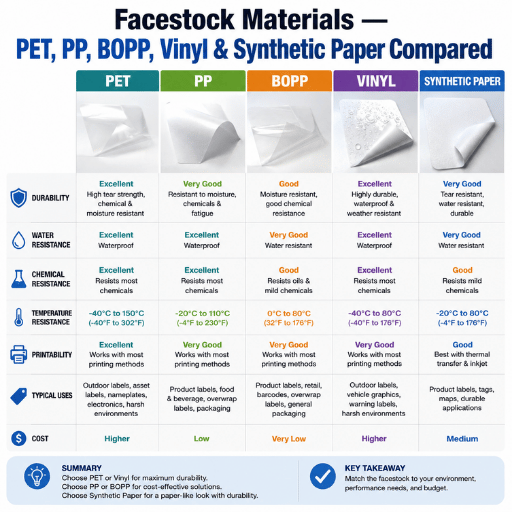
Facestock is the biggest engine in a waterproof label spec. Several films have different sets of performance tradeoffs in water resistance, temperature range, tear resistance, conformability, and cost. Choose poorly and you’ll pay 30-60% too much or will see the label peel off in outdoor use.
Is vinyl waterproof for labels?
Vinyl (plasticised PVC) is one of the few facestocks that is waterproof at the film level one hundred percent waterproof and stops water from wicking through. Together with permanent acrylic adhesive, it enables multi-year outdoor durability. Consequently vinyl labels dominate weather-proof asset tagging and equipment ID; inkjet print quality can be poor unless coated topcoat is added. BOPP or PET are generally more environmentally friendly options and sufficiently waterproof for most beverage and pharma applications.
| Facestock | Service temp | Tear / scratch | Cost index* | Best for |
|---|---|---|---|---|
| PET (polyester) | −40 to +150 °C | Highest | 3.0× | Pharma, durable assets, freezer drums, autoclave-adjacent |
| BOPP | −20 to +90 °C | Medium | 1.4× | Beverage, food, bath and body, cosmetics |
| Vinyl (PVC) | −30 to +80 °C | High; conforms to curves | 2.5× | Outdoor asset tags, equipment ID, marine |
| PP synthetic paper | −20 to +90 °C | Medium | 1.5× | Tear-resistant tags, plant labels, removable use |
| Coated paper | −10 to +70 °C | Lowest | 1.0× | Splash-only items; frozen food (with overlaminate) |
*Cost index: relative to coated paper baseline. Supply prices varies by region, film gauge, and adhesive combination.
Two rules follow from this table. First, BOPP is the go-to facestock for beverage and personal-care labels for a reason; it’s water resistant at a 1.4X gloss paper premium and works best for combined flexo+digital UV curing printing. Second, PET or vinyl are the only 100% waterproof materials; specify these wherever the label is likely to leave an air conditioned environment. BOPP labels and PET stocks together cover roughly 80% of B2B waterproof applications.
Adhesive Chemistry — How the Glue Survives Water, Oil & Cold
The adhesive does the donkey work in a waterproof label. Three pressure-sensitive chemistries range from hot-melt rubber, water-based acrylic emulsion, and solvent acrylic and behave differently on wet, cold, or oily surfaces.
| Adhesive | Service temp | Initial tack | Aging / UV | Chemical & oil |
|---|---|---|---|---|
| Hot-melt rubber | +7 to +48 °C | Very high | Limited | Low oil resistance |
| Water-based acrylic | −20 to +110 °C | Medium | Good (clear, no yellowing) | Medium |
| Solvent acrylic | −40 to +150 °C | Medium | Excellent (long-term) | High; resists oils, IPA, mild acids |
Anyone who believes “hot-melt is the industry choice” is wrong in the majority of waterproof applications. Data from the adhesive industry suggests hot-melt can be relied on between 7 °C and 48 °C. Fine if you are shipping cartons at room temperature, useless if you’re storing frozen drums or hot-fill beverages. Acrylic-emulsion chemistries are the genuine waterproof workhorse, with solvent acrylic the only family that holds across the −40 to +150 °C envelope recommended for B2B drums or pharma cold chain.
“In most cases, labels are not failing because of the adhesive. Five other factors take priority: substrate compatibility, surface energy, application temperature, cure window, storage environment. Cover all of these possibilities before you claim label adhesion is the problem.”
📐 Engineering Note
Service temperature is not minimum application temperature. A solvent acrylic rated to −40 °C in service generally still needs+5 °C or above for application – below that the bond just does not wet the substrate. For bottling lines that run cold install an air knife to blow condense off the bottle before the labeller, or move to a cold-grade hot-melt for application step only.
For this reason at Guanma our value proposition pairs hot-melt adhesive stock with high-speed room temperature lines while acrylic adhesive stock is recommended for any label crossing freezer or outdoor service.
Top-Coats & Lamination — The First Line of Defense for Print
A waterproof film with a smudged barcode is still a failed label. Two protective options rest on top of the printed image: a thin topcoat (2–5 µm, applied by the converter) or clear overlaminate film (25–50 µm, applied after printing).
Topcoats are most important for inkjet printing where dye based ink would otherwise sit on hydrophobic film and bead away the moment a wet finger touches the label. The topcoat provides an ink receiver and a wafer thin water barrier – once dry it encapsulates the ink and repels surface water. Laser toner and most thermal-transfer ribbons embed into the film and do not require a topcoat for splash protection.
Overlaminates are heavier and cost more, but they do confer abrasion, chemical and UV resistance – the difference between a label surviving a single wash cycle versus a commercial dishwasher through 200 cycles. Typical configurations: gloss BOPP overlaminate for beverage; matte polyester overlaminate for premium cosmetics; thick clear vinyl overlaminate for tire and chemical drum labels. For packaging projects involving private label cosmetics from NEXO Beauty Labs, qualify the label finish on the actual container with the intended handling, moisture and product-contact exposure.
💡 Pro Tip
Topcoat or laminate? Use this guide line: if the label will experience brief water contact and it is a one-use print, a topcoat will do; for any label likely to experience abrasion, repeated washing or chemical damage specify the overlaminate, even though it costs more.
Performance Under Stress — Heat, Chemicals, UV & Abrasion
Once a label leaves the warehouse it is subject four enemies in roughly this order of severity: temperature excursions, chemicals, ultraviolet light, and physical abrasion. Each requires a different material lever.
Are waterproof labels dishwasher safe?
Most “waterproof” labels are not, despite the marketing copy. Home dishwashers run at 60–75 °C with detergents above pH 11 and commercial machines add the high pressure rinse and 82 °C ‘sanitise’ cycle. A typical BOPP with water-based acrylic spec begins to shift at 90 °C and softens at 110 °C. On truly dishwasher-safe applicators spec a polyester face with solvent acrylic adhesive and polyester overlaminate; expect to survive 200 wash cycles before colour shift on direct-thermal print, far fewer if the inkjet is dye-based.
| Stress | Failure mode | Material lever |
|---|---|---|
| Temperature (cold) | Adhesive brittle, edge lift | Cold-grade acrylic, PET face |
| Temperature (hot) | Adhesive ooze, label slide | Solvent acrylic, PET face |
| Solvents (IPA, ethanol, oils) | Ink dissolves, edge lift | Solvent acrylic + overlaminate |
| UV (outdoor) | Ink fade, vinyl yellowing | UV-stable inks, polyester overlaminate |
| Abrasion (tires, drums) | Print scuff, face tear | Thick overlaminate, vinyl face |
⚠️ Common Mistakes
Three hot-gaps we see again and again in field-failure reports – and on community forums such as the OnlineLabels weatherproof discussion:
- Assuming water proof means chemical proof. A label that withstands moistures can still dissolve in motor oil or IPA. Spec the chemical separately.
- Failure to prepare the surface. Wiping the substrate with isopropyl alcohol before application more than doubled peel strength; an unwiped greasy bottle is the most common cause of labels peeling off after 2 weeks.
- Selection by default of the heaviest spec.: a 200 µm overlam on a 6-week beverage label is wasted spend and contradicts rPET recyclability
Real-World Applications — From Beverage Bottles to Industrial Drums
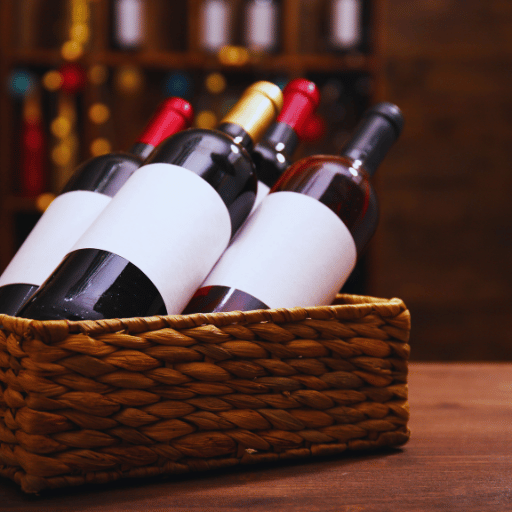
Picking the right waterproof label is mostly a translation problem: turn an application into the right facestock-adhesive-topcoat triplet. Below is the application-to-material decision map we use internally at Guanma when matching customers to a stock formulation
| Application | Facestock | Adhesive | Top protection |
|---|---|---|---|
| Beverage & wine bottles | BOPP (white or clear) | Water-based acrylic | Topcoat (gloss) |
| Bath, body, cosmetics jars | BOPP or PP synthetic paper | Water-based acrylic | Overlaminate (matte) |
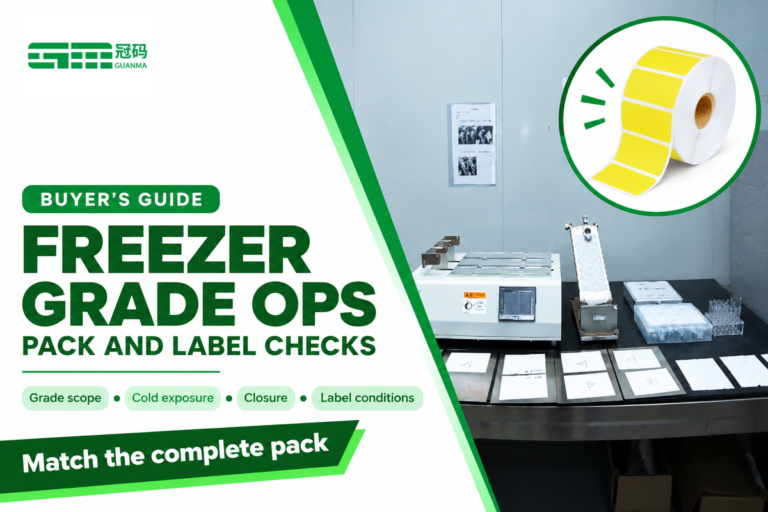
| Freezer labels & cold storage | PET | Cold-grade acrylic | Topcoat |
| Pharmaceutical labels & vials | PET (clear or white) | Solvent acrylic | Overlaminate (PET, autoclave-grade) |
| Chemical labels & drums | Vinyl or PET | Solvent acrylic (aggressive) | Thick clear overlaminate |
| Tire labels | PP synthetic paper or PET | High-tack hot-melt | Topcoat (abrasion-resistant) |
| Cable & wire labels | Vinyl (self-laminating) | Solvent acrylic | Self-laminating tail |
| Food packaging (frozen + thaw) | BOPP or PE film | Cold-grade acrylic | Topcoat (food-contact compliant) |
| Outdoor asset & equipment | Polyester or vinyl | Solvent acrylic | UV-stable overlaminate |
Two decisions punch above their weight in this matrix. First, do not specify hot-melt below +5 °C unless it is rated cold-grade – most generic hot-melts are room-temperature only. Second, on any chemical-contact application, treat overlaminate as mandatory rather than optional: the cost difference is 5-10 %, and rework is 10–20× the original label cost
Printing Compatibility — Inkjet, Laser, Thermal Transfer
A waterproof label only stays waterproof if the print stays put. Three printing technologies dominate the small-to-medium B2B world: inkjet, laser, and thermal transfer. Each demands a different facestock surface treatment
Can you print waterproof labels on a laser printer?
Yes — laser is in fact better suited to waterproof printing than inkjet for most applications. Laser toner is a thermoplastic powder that fuses into the film surface above 180 °C; once cooled, the bond is intrinsically water-fast and survives repeated wet handling. As OnlineLabels documents, “for laser printers, the toner is already waterproof so no additional coatings are needed.” Inkjet, by contrast, deposits liquid ink that needs a topcoat to lock the dye in place – and dye-based inks fade faster outdoors than pigment lasers.
In a small business doing on-demand labels, a colour laser plus polyester laser stock is the most reliable consumer-grade waterproof print path
| Facestock | Inkjet | Laser | Thermal transfer | Direct thermal |
|---|---|---|---|---|
| PET | Topcoat required | ✓ excellent | ✓ resin ribbon | Not applicable |
| BOPP | Topcoat required | ⚠ heat-sensitive at high settings | ✓ wax-resin ribbon | Not applicable |
| Vinyl | Topcoat required | ⚠ low-heat units only | ✓ resin ribbon | Not applicable |
| PP synthetic paper | ✓ with topcoat | ✓ good | ✓ wax-resin ribbon | Not applicable |
| Coated paper | ✓ native | ✓ native | ✓ wax ribbon | ✓ thermal coating |
Direct thermal deserves a footnote. Industry experience reports that “direct thermal labels darken over time, especially in light, making them poor for products needing both light and moisture resistance.” Use direct thermal only for short-life shipping labels (days to weeks); for anything longer, switch to thermal transfer with a resin ribbon on PET
What’s Changing in 2026–2030 — Sustainable & High-Performance Material Trends

Three forces are reshaping waterproof label material specs over the next four years: market growth in industrial labelling, regulatory pressure on legacy chemistries, and brand-owner demand for circular packaging
Market growth. The industrial weatherproof and waterproof labels market sat at USD 2.5 billion in 2024 and is projected to reach USD 4.2 billion by 2033, growing at roughly 6.5 % CAGR.
Broader waterproof label categories (including consumer) are forecast even higher – USD 11.91 billion by 2025 with double-digit CAGR. Implication for procurement teams: tighten three-year contracts with suppliers that can scale capacity, particularly for cold-grade acrylic stock where demand outpaces supply
Phenol-free thermal papers.
EU REACH restrictions on bisphenol A and increasingly on bisphenol S in thermal papers will take full effect by Q4 2027. Customers exporting to Europe should request a phenol-free thermal stock roadmap from suppliers now – switching mid-contract is expensive and ribbon compatibility may shift.
Wash-off label adhesives and bio-based facestocks. The next generation of PSA labelling trends from Beontag focus on three categories: wash-off adhesives that release cleanly from rPET in alkaline recycling baths (this will be required by 2030 under some EU/US-state PET bottle initiatives); phenol-free thermal as above; and bio-based facestocks that mix PLA and PHA. On the B2B converter side, the practical action is to qualify at least one wash-off SKU and one bio-based facestock by mid-2027 so if beverage & FMCG brand-owners arrive does not catch you flat.
If your 2026-2027 roadmap still assumes BPA thermal and standard hot-melt is “good enough” for European exports, plan a supplier qualification cycle this year – two purchasing cycles is the minimum runway to switch a stable label spec.
Frequently Asked Questions
Q: How can I make my labels waterproof?
View Answer
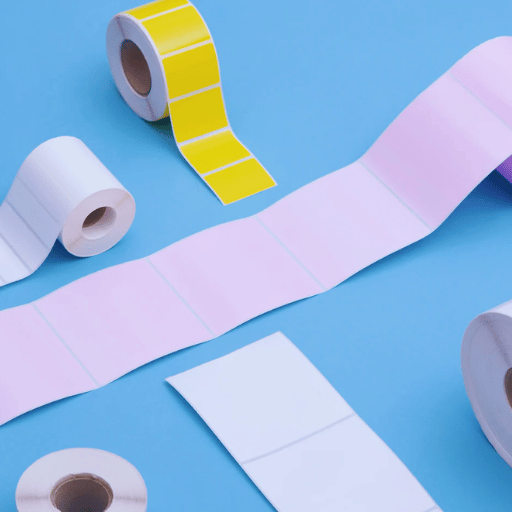
There are two pathways. Purchase pre-coated waterproof label stock – a film face (PET, BOPP, vinyl) with a permanent acrylic adhesive – and the label is waterproof upon production. Alternatively, take an existing paper label and seal it: spray a clear gloss water-based topcoat, or apply a clear gloss laminate sheet on top after printing. The pre-coated route provides dependable performance; the after-the-fact route is appropriate for one-off small batches but introduces labor and a failure point with the laminate edge.
Q: What kind of printer do I need for waterproof labels?
Reveal Answer
Volume determines the optimal solution. For less than 5,000 labels monthly, a colour laser printer with polyester laser stock is the most dependable home-office option because toner is inherently waterproof. Many label manufacturers provide a free design template library matching their stock sizes, which prevents the trial-and-error of custom artwork sizing. For 5,000 to 50,000 labels per month, thermal transfer printing with a resin or wax-resin ribbon offers the best cost per label and the print remains resistant to oils and IPA. For volumes exceeding 50,000 or when full-colour photographic quality is required, upgrade to industrial UV inkjet or flexo printing through a converter. Desktop inkjet printers can produce waterproof labels but only on stock with an inkjet topcoat – never directly on film, and selecting a compatible template prevents printer feed-jam and skew problems.
Q: Are waterproof labels recyclable?
Show Answer
Recyclability hinges on whether the adhesive separates cleanly from the substrate during recycling. Typical permanent acrylic on a PET bottle fails in this regard – it remains adhered and pollutes the rPET stream. Wash-off adhesives, formulated to detach in 60–80 °C alkaline baths utilized in PET bottle recycling, are the emerging solution. By 2030, numerous EU and US-state initiatives are projected to mandate wash-off labels on PET beverage bottles. To reflect this brand positioning, specifically request a wash-off PSA grade from suppliers instead of generic “recyclable” claims.
Q: Do waterproof stickers fade in direct sunlight?
Open Answer
Yes – waterproof and UV-stable are different specifications. A BOPP beverage label might last a year in a fridge but fade in three months on a south-facing window. A polyester face material with pigment-based UV-stable inks plus a UV-blocking overlaminate is the combination that survives outdoors fade for 2-5 years (per ISO 11997-1 cyclic exposure testing). On asset tags and outdoor equipment, demand an explicit UV-fade data table from the supplier – looking at a fresh roll does not tell you anything about long-term colour stability.
Q: How long do waterproof labels last on bottles?
View Answer
Shelf life on a typical beverage or personal-care bottle is 12-24 months, then one or two consumer use cycles. Frozen-storage labels last longer in the freezer (cold retards adhesive ageing) but may lift at thaw. Industrial drum labels with vinyl stock and solvent acrylic adhesive last routinely 5+ years outdoors. Substrate prep is the single most separating variable in application prep: a degreased substrate consistently outlives a contaminated one by a factor of two to three.
Match Your Application to the Right Material Stack
Guanma engineers self-adhesive label stock for tire, cable, freezer, pharma, chemical, and beverage applications across Southeast Asia, South America, and Europe. Tell us your substrate, application environment, and printing method – we will recommend a face/adhesive/topcoat series and ship you a sample pack.
About This Materials Guide
Guanma is a self-adhesive label stock manufacturer with coating, laminating, and R&D manufactories in Thailand and Vietnam. The face stock and adhesive lines, application temperatures, and application-to-material map in this article reflect more than ten years of making PET, PP synthetic paper, BOPP, and coated paper stocks and putting hot-melt, water-based, and acrylic adhesives against them. Performance numbers without a referenced source are typical industry ranges; application results depend on substrate, application data, and final use environment, and we advise a sample-and-test test protocol before specification acceptance. Reviewed by the Guanma engineering team.
References & Sources
- ASTM D3330-04(2018) — Standard Test Method for Peel Adhesion of Pressure-Sensitive Tape — American National Standards Institute
- ASTM D3330 Peel Adhesion Testing for Pressure-Sensitive Tapes – Adhesives Research Knowledge Base
- FINAT Test Methods (FTM) – FINAT, European Self-Adhesive Label Association
- Test Methods for Pressure-Sensitive Labels – Labels & Labeling, Label Academy
- The Ins and Outs of Waterproof Product Labels – CTM Labeling Systems engineering team
- Label Adhesion Failures: 5 Factors to Examine — Butler Technologies
- Hot Melt vs. Acrylic Tape — Service Temperature Comparison — Strouse Corporation
- Labeling Trends 2026: Wash-off, Phenol-free Thermal, Bio-based – Beontag
- Industrial Weatherproof and Waterproof Labels Market Size 2024–2033 — LinkedIn Pulse industry report
- Quality System Regulation Labeling Requirements – U.S. Food and Drug Administration
Related Articles
- BOPP vs PET Labels — Selecting the Right Facestock for Beverage and Cosmetics
- Cold-Grade Acrylic Adhesive — Specifying for Frozen and Refrigerated Applications
- Wash-Off Label Stock and rPET Recycling — A 2026–2030 Procurement Guide
- Thermal Transfer Ribbon Selection — Wax, Wax-Resin, and Resin for Waterproof Print
- Label Adhesion Troubleshooting — Five Factors to Check Before Blaming the Glue