Get in Touch with Guanma

ISO Certified
Label Solutions by Application
Pressure Sensitive Label Material Solutions for Every Industry
pressure sensitive labels start with the right material match: PET, PP synthetic paper or coated paper facestock, paired with hot-melt, water-based or acrylic adhesive, on a release liner suited to your press. Guanma engineers self-adhesive label stock combinations for tire, pharmaceutical, chemical, freezer, food, wine and durable label applications – manufactured at our Thailand and Vietnam facilities for fast regional supply across Southeast Asia, South America and Europe.
Solution Summary — Self-Adhesive Label Stock for Converters
Facestocks
PET / PP synthetic paper / coated paper / specialtyAdhesives
Hot-melt / water-based / acrylic / freezer-gradeLiner Options
Glassine / PET / PE / silicone-coatedCustomization
Free combination of facestock × adhesive × liner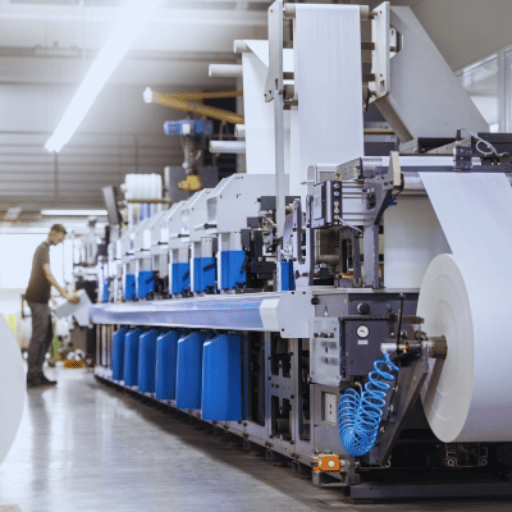
Service Range
−40°C to +150°C(acrylic premium)
Production
Thailand & Vietnamdual-factory
Markets Served
SE Asia · South America· Europe
Track Record
10+ years coating &lamination experience
The Adhesive–Facestock–Liner Mismatch That Costs Converters Customers
The Real Cost of Environmental Mismatch
A converter quotes a global beverage brand for 800,000 wine labels. Production runs. Three weeks later, condensation in the customer’s chiller display lifts label edges, and the brand pulls the order. A post-mortem points to one cause: a paper facestock paired with a water-based adhesive specified for a dry-shelf application, deployed on glass bottles in an ice bucket environment.
This pattern repeats across the label converting industry. Material waste, labor issues and machine downtime are where label converters lose the most profit, according to industry operations analysis . Root cause is rarely the press – it is a mismatch between the three layers of a pressure sensitive label and the application environment.
Single Point of Accountability
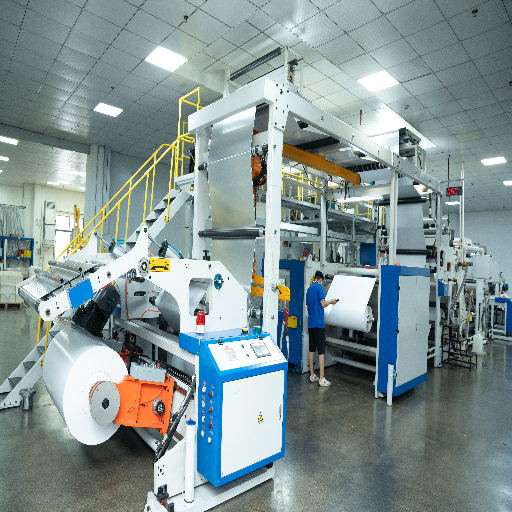
Guanma supplies the facestock-adhesive-liner combinations that match your customer’s actual environment, not the catalog ideal. We coat, laminate and slit the three layers in-house at our Thailand and Vietnam facilities, which means a single point of accountability for the bond your converter customer will see in the field. That control is verified by 10+ years of batch consistency testing against FINAT FTM and ASTM peel and shear standards. Our high-quality self-adhesive label solutions cover product labeling and label design requirements across converter operations, with application engineering expertise built into every facestock-adhesive specification.
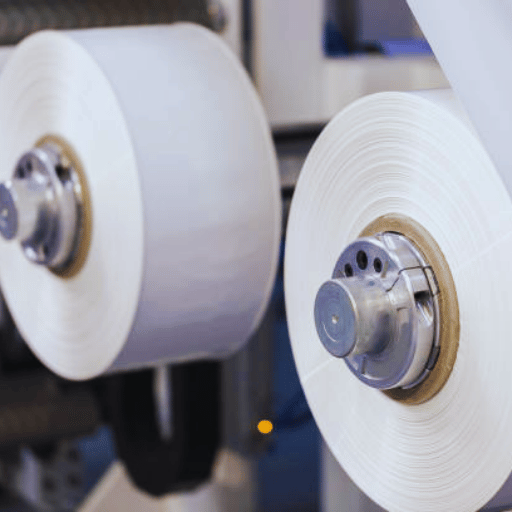
Three-Layer Construction
A pressure sensitive label is a self-adhesive packaging element that bonds to a substrate when pressure is applied, without requiring water, heat or solvent activation. Every label is a three-layer construction: a printable facestock (paper or film), an adhesive layer (the bonding chemistry) and a release liner (the protective backing). Each layer must be selected for the substrate, the environment and the production line speed – and an error in any single layer cascades into a customer complaint.
Guanma Pressure Sensitive Label Stock — Facestock × Adhesive × Liner Combinations
Most label material catalogs hide the combination logic behind separate product pages. Buyers end up emailing technical sales for every spec match. Our decision matrix puts the most common pairings in one view, so your R&D engineer can shortlist material combinations before a sample request. Whether you are building a custom label run for a consumer brand or qualifying ink and graphic reproduction for a new digital press, the matrix puts the most common pairings in one view. Our matrix below maps Guanma’s three primary facestocks against three primary adhesive chemistries, with the typical end-use that pairing supports.
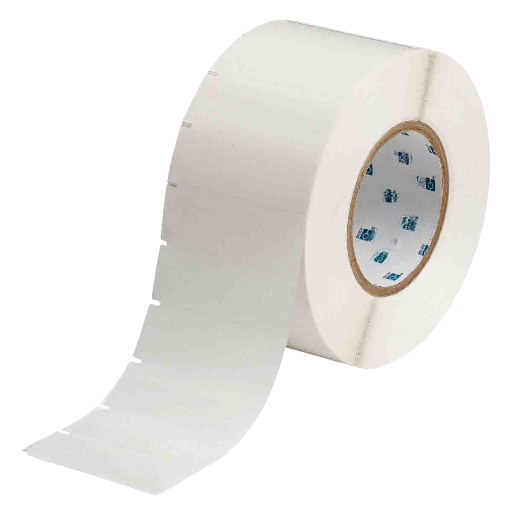
PET (Polyethylene Terephthalate)
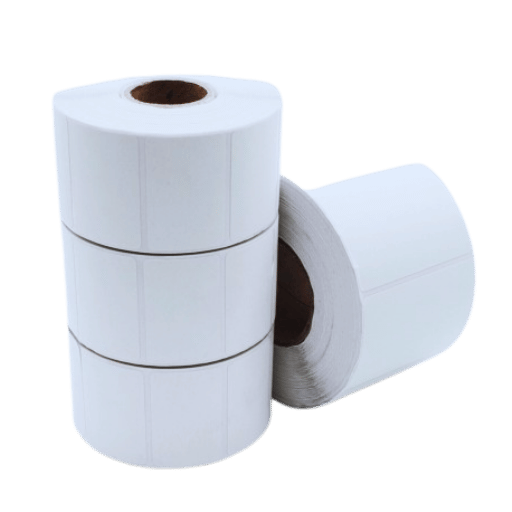
PP (Polypropylene Synthetic Paper)
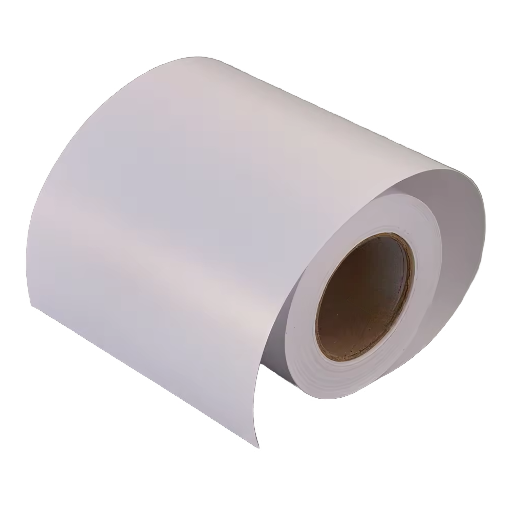
Coated Paper (Semi/Gloss/Matte)
Performance Specs by Application — 9 Industries Mapped to Material Combinations
Composition selection matrix: application engineers will refer to this user guide when answering for a converter application brief. It cross-references nine industry groups Guanma supplies, with facestock, numbered adhesive class, liner type, the design’s Key Performance Indicator(KPI), and the printing process in which the construction is designed to perform.
Application–Spec Selection Matrix
(Guanma reference data, validated against FINAT FTM and ASTM testing methodology)
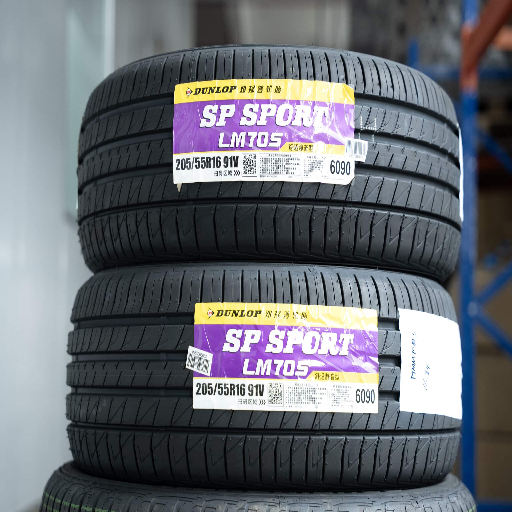

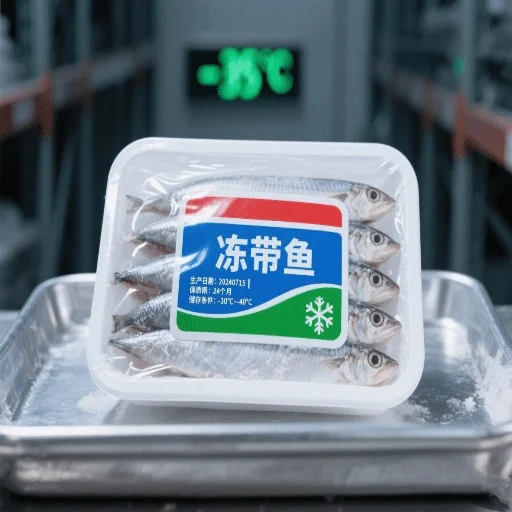

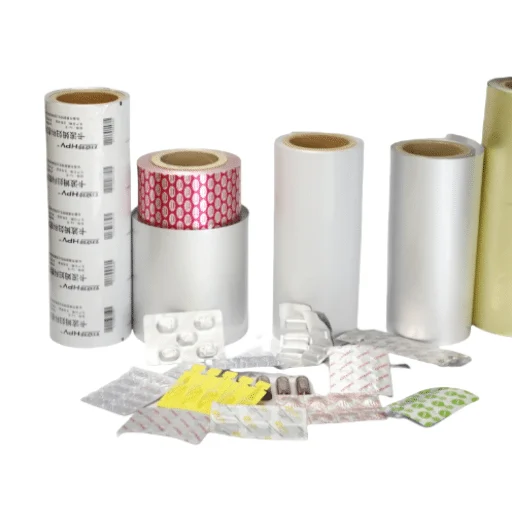
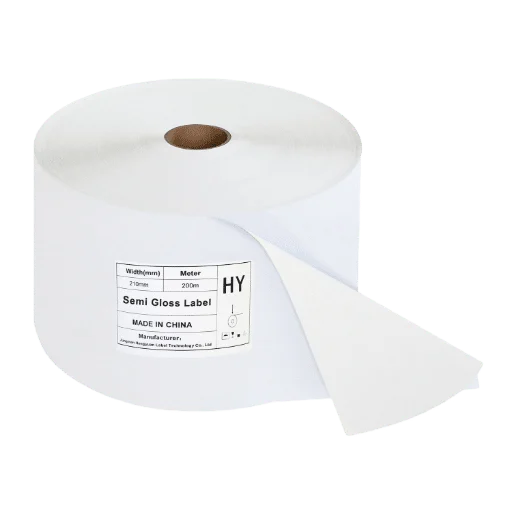
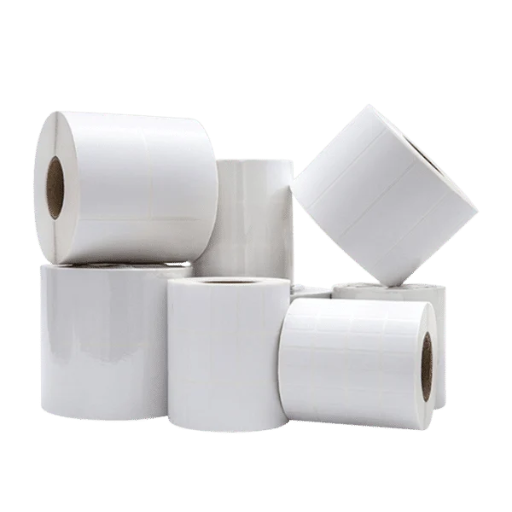
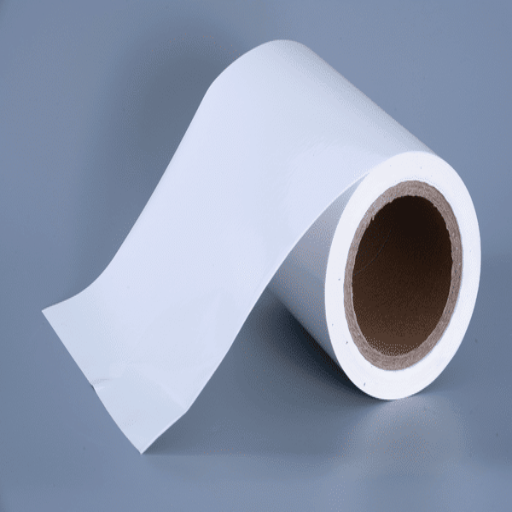
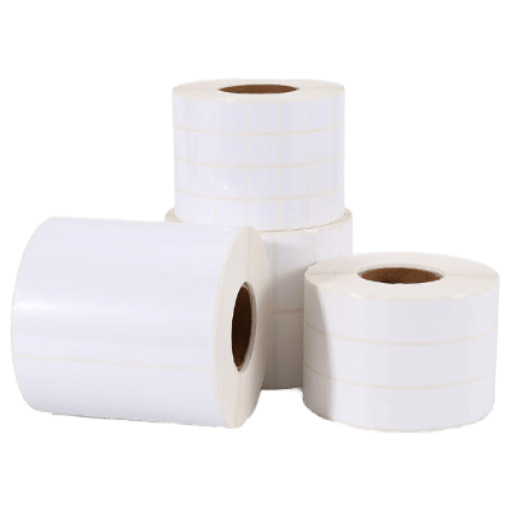
Engineering Note: Every performance KPI listed is a starting point for qualification testing on your press; field performance may require a tighter spec window, based on your customer’s substrate, application, and shipping/storage profile. Application engineers can supply a customized 3-lay construction outside this matrix if a converter needs an application-oriented construction. The matrix is merely a decision tree, not a printed catalog.
Get Instant QuoteGuanma vs Imported Label Stock — Lead Time, MOQ & Customization Compared
European and American label material brands have built great technical reputations over decades. In return, converters in South East Asia, South America and the eastern Fringe of Europe pay a price of supply chain distance, MOQ volumes adapted for high-volume Western converters, and a custom workflow that appreciates facestock-adhesive combo flexibility over catalogue SKUs. Use the below comparison with an industry reference, to see where Guanma entry option tiers win.
Head-to-Head Comparison: Guanma vs European/American Imported vs Other Asian Suppliers
| Decision Factor | Guanma (regional Asia) | European / American Imported | Other Asian Suppliers |
|---|---|---|---|
| Production location | Thailand & Vietnam dual-factory | EU / US, sea freight to SEA/SAM | China-based, single-factory typical |
| Lead time to SEA / SAM / EU markets | Regional warehouse, short transit | Multi-week transoceanic shipping plus customs | Shorter than EU/US, but single-factory risk |
| MOQ flexibility for custom combinations | Free combination of facestock × adhesive × liner | Built for high-volume catalog SKUs; custom MOQ premium | Variable; many still catalog-driven |
| R&D for specialty applications | In-house specialty (high/low temp, oil/grease, weatherability) | Strong R&D, longer custom turnaround | Limited in-house R&D typical |
| Adhesive testing methodology | FINAT FTM 1, 2, 8, 9 + ASTM D3330 / D3654 batch testing | FINAT / ASTM (industry standard) | Variable; spec sheet quality varies |
| Channel | Direct manufacturer to converter (no distributor markup) | Distributor or regional sales office | Direct or trader/agent |
| Brand recognition | Building (regional reputation in SEA/SAM/EU) | Established global brand | Variable |
Advanced Label Solutions by Application
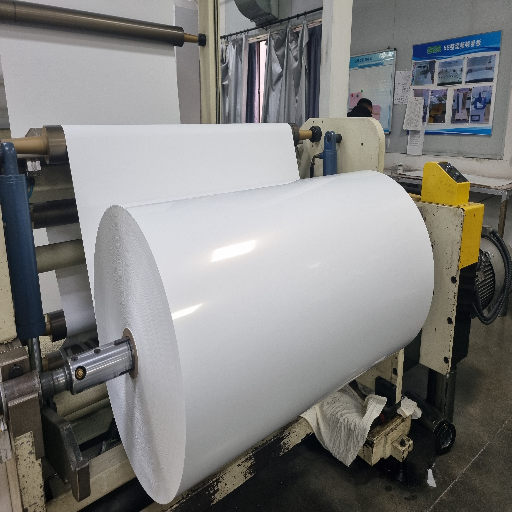
High-Speed Coating Line

Semi-Gloss Finishing Station

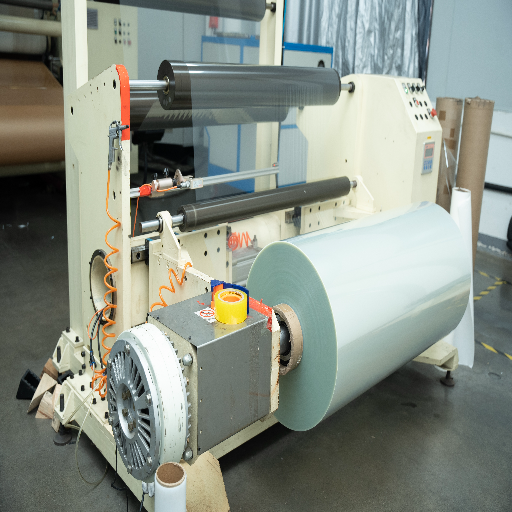
Precision Slitting Equipment
Quality Control Laboratory
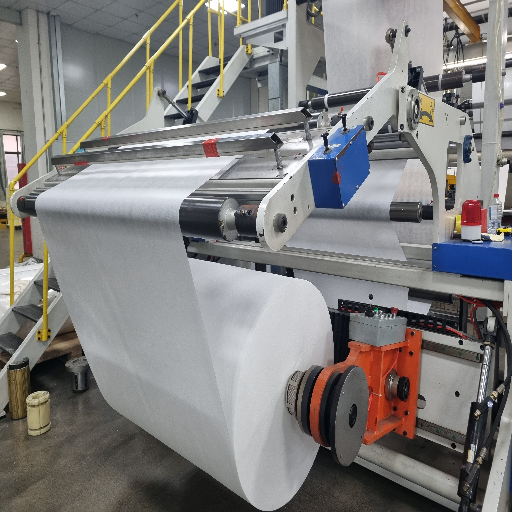
Automated Packaging System
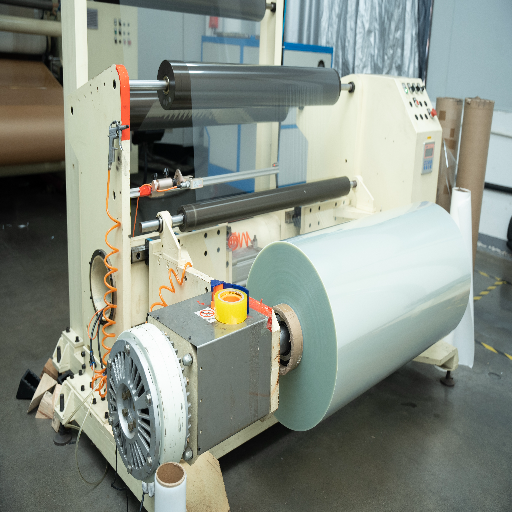
Adhesive Formulation Area
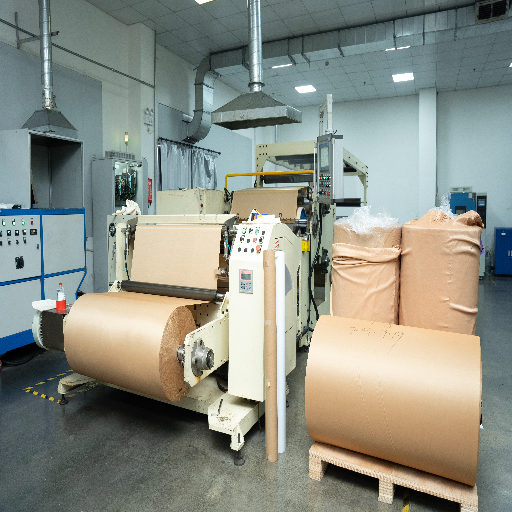
Jumbo Roll Storage
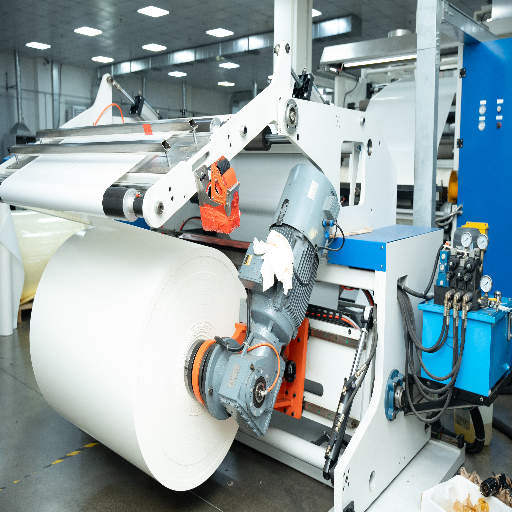
Global Logistics & Distribution
10+ Years of Coating & Lamination — Outcomes Across Customer Industries
Guanma’s manufacturing infrastructure have focused on batch uniformity during ten years of supplying label converters as a production partner to both global giants and regional specialists in the central Asian and eastern European markets. Our two factory locations in Thailand and Vietnam were carefully chosen to emphasize: redundancy (no customer should lose production because of a site failure) and regional proximity (warehousing locally can dramatically reduce the supply part of leadtime, during import into say, the Austrian or Turkish markets).
What this means for converter customers: a drinks label converter in Vietnam supplying a regional brand can run coated papers with waterbased adhesive to “no-label look” in a single batch of product dispatched from regional warehouse, in preference to a transoceanic container. A pharmaceuticals label converter in Brazil supplying primary packs can specify PET facestock with tamperevident acrylic adhesive, and qualify it, without delay, to European customs combination production cycles. A chemicals label converter in Eastern Europe supplying GHS-compliant drums labels can specify PET facestock with chemical resistant solvent acrylic, and qualify it, on their press, in a single sample cycle.
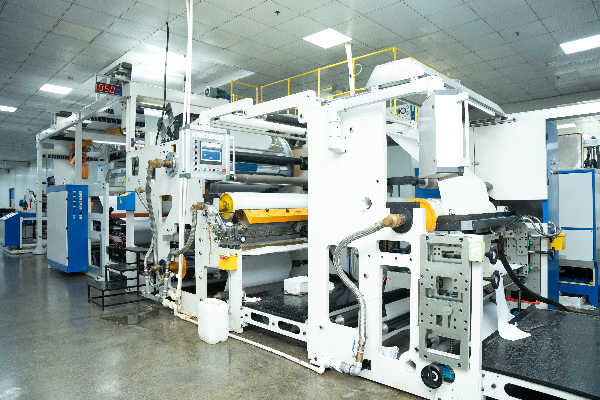
“No, the most difficult choice that a converter R&D engineer has to make isn’t in selecting a facestock or an adhesive in isolation, but in deciding to go for a triple-layer stack that will be produced for 2 years on a customer contract. Our material table is built, so that an engineer can work through the possibilities on his or her press, without having to requalify the whole lot from the beginning each time. That is what flexible coating capability means in reality.”
Quality Control & Compliance — Batch Consistency for Adhesive Performance
Adhesive performance variability is by far the most frequently sited reason for converter R & D teams reluctance to change label stock suppliers. A facestock that prints well and a liner that releases at the correct force are necessary but not sufficient – if the adhesive bond strength drifts from batch to batch, the converters customer experiences label failure in the field, and the converters R & D department experiences the chargeback. Guanma’s quality inspection protocol is based on the same FINAT and ASTM test procedures that European and American brands rely upon, applied to each coating batch.
Adhesive Testing Methodology
FINAT FTM 1
(180° peel adhesion at 300 mm/min) quantifies the permanence or peelability of self-adhesive pressure sensitive materials. Standard test for permanent vs removable classification.
FINAT FTM 2
(90° peel adhesion at 300 mm/min) measures angle-specific peel test for laminate adhesion measurement.
FINAT FTM 8
(shear adhesion / holding power) tests vertical-surface holding time under weighted load; verifies long-term bond stability.
FINAT FTM 9
(quick stick / initial tack) measures immediate-grab adhesion after first contact; predicts high-speed applicator performance.
PPCC Pin adhesion
for immediate-adhesion testing after the initial contact; predicts fast speed-application properties.
ASTM D3330
defines peel adhesion equivalent (180) used in the spec sheet cross-reference to Americans.
ASTM D3654
Shear adhesion equivalency for high temperature service.
Compliance & Regulatory Coverage
FDA 21 CFR food contact
REACH (EU chemical)
RoHS
GHS pictogram color stability
DOT 49 CFR 574.5 (tire labels)
FINAT FTM batch testing
ASTM D3330 / D3654
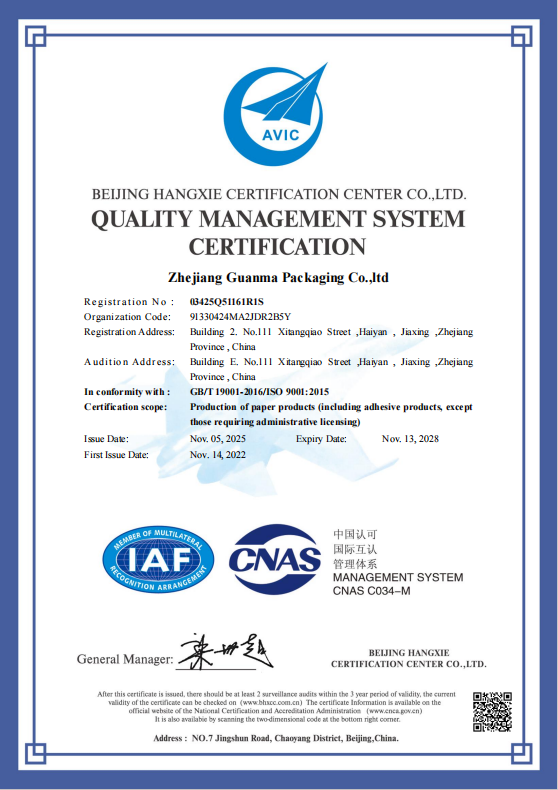
ISO 9001
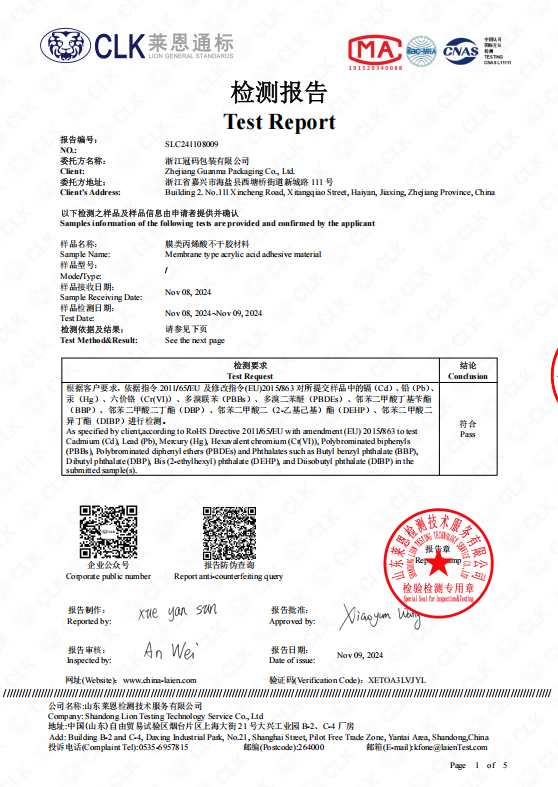
RoHS Test Report
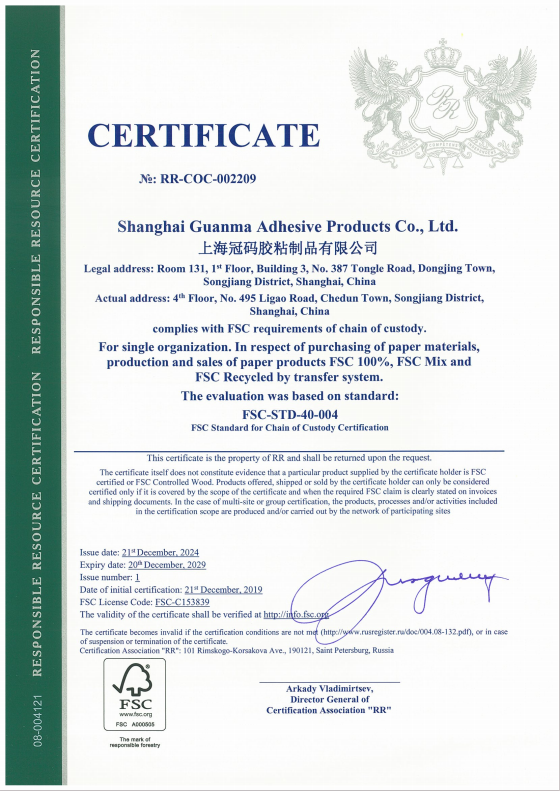
FSC COC
Each adhesive grade has a spec window. Every coating batch has a spec test against that window. Off-window batches don’t leave our plant; on-window batches are released with a lot record document. When your converter is ready to buy in large volume, their quality auditor should be able to request documentation for their own quality system.
Bring the smoker: Material safety data sheets, statement of food-contact suitability, REACH conformity, batch test reports come with standard orders. Any pharmaceutical or food-contact indicator will want to see a dossier.
×
Procurement Guide — MOQ, Lead Times, Sample Requests & Custom Quotes
Procurement decisions for label stock balance four cost dimensions that interact with each other: working capital tied up in inventory, freight and customs cost, supplier-side custom premium, and the carrying cost of stockouts when a converter customer brief arrives faster than your raw material can be replenished. A framework below shows how each dimension changes with sourcing strategy – not as a fixed price quote, but as a decision tree your procurement team can map against your own application volume.
Pricing Factors Framework (request quote for your spec)
Facestock grade:
PET commands a premium over PP synthetic paper, which commands a premium over coated paper. Specialty facestocks (textured papers, metallic foils, high-temperature constructions) carry their own premium.
Adhesive chemistry:
hot-melt is the cost baseline. Water-based emulsion acrylic carries a moderate premium for sustainability and aesthetics. Solvent acrylic and freezer-grade hot-melt carry premiums for performance. Silicone adhesives for extreme-temperature medical applications are 3-5 the standard cost baseline.
Liner type:
glassine is the cost baseline. PET liner adds for high-speed dispensing or thin-gauge requirements. PE liner adds for moisture resistance.
Order volume:
standard catalog combinations have lower MOQs; fully custom three-layer constructions carry minimum coating run requirements. Your application engineer will confirm the MOQ for your specific combination.
Customization scope:
standard slit widths and roll lengths run on standing schedules; non-standard slitting and core sizes may add a setup charge.
Lead Time & Sample Process
Regional supply through Thailand and Vietnam factories shortens lead time to Southeast Asia, South America and Europe’s eastern markets compared with sourcing from European or American suppliers. Specific lead-time ranges depend on your destination port, the construction’s standing inventory status, and freight terms – request a quote with your application parameters for a precise schedule.
For new converter relationships, we recommend starting with a sample kit of three facestocks paired with three adhesives (nine combinations on small rolls) so your R&D engineer can run press qualification before committing to a custom combination. Sample requests cover the dominant facestock-adhesive pairings for your target application; specialty constructions can be added on request.
Interactive Material Selection Tools
Facestock × Adhesive Decision Wizard
Pick your facestock, adhesive class and target application. We’ll output the recommended construction with key performance specs.
Launch Wizard →Application Quick Match — Industry to Recommended Material
Pick your end-use industry. We’ll show the Guanma-recommended facestock, adhesive, liner and key performance threshold for that application.
Launch Matcher →Label Compliance Checker
Pick your end-use industry to see the certifications and regulatory documentation typically required for label material in that application. Use this as a starting checklist when qualifying a supplier.
Launch Checker →Frequently Asked Questions — Buyer-Decision Questions Answered
In summary, they are the same product family, choosing one or the other name is a matter of industry or corporate convention. “Pressure-sensitive” which is the bonding mode (the label bonds at the press when pressure is applied, no need for water or heat). “Self-adhesive” if you want to stress the end-user characteristic (one does not need an additional glue). Among industry OEMs, a handful are using the combined Avery Dennison, Wausau Coated, Beontag, and Guanma catalog
“Construction” in a sense. The basic building block is the facestock + adhesive+ release liner! The various combinations depends upon our selection of the GF2, GF4 and liner.
If you are intended to use the adhesive for freezing (-18 C to -40 C), A freezer-grade hot-melt or all-temperature acrylic is specified. For hot applications (+40 C and +150 C) such as engine compartments and tire sidewalls, a solvent acrylic adhesive is specified. For humid environments such as ice buckets, chillers and beverage bottles, a water-based emulsion acrylic film or a hot-melt with PE film is specified. For ambient condition, a cost-effect emulsion acrylic default construction is specified.
For freezer applications (−18 to −40°C), specify a freezer-grade hot-melt or all-temperature acrylic. For high-temperature service (engine compartments, tire sidewalls, autoclave sterilization up to +150°C), specify a solvent acrylic adhesive. Humid applications such as ice buckets and beverage bottles would choose a water-based emulsion acrylic with film facestock or hot-melt with PE film construction. If you said all condition at the same time, then the default cost-effcient emulsion acrylic construction is specified.
Permanent adhesives provides best adhesion 10-20+ N/25mm and strongest toward a stubborn removal, used for product ID, shipping, asset tracking, etc. Removable adhesives with moderate initial tack can have controlled determination of ultimate adhesion 5-10 N/25mm and clean removal 6-12 months, used for retail pricing, promotional packaging and bakery container labels. Remoistening will allow multiple removals, for layout-guide applications and packaging instructions.
Minimum order quantity depends on whether the combination is a standard catalog pairing or a complex custom three-layer construction. Simple catalog combinations have manageable minimum order quantity because they are coated when standing because they are standard stand-by stock. Custom constructions always take longer; a minimum coating run may be specified. To get your MOQ for your specification, request a quote on facestock, adhesive and liner.
Delivery time depends on your destination port, construction already in stock or not, and freight term chosen. As an alternate solution to reduce your delivery distance and time, avail yourself of our regional supply through Thailand or Vietnam facilities to fast track the delivery to Southeast Asia, South America or Europe. To get your exact Estimated Lead Time for your specification, request a quote on volume and destination.
Definitely. We can provide sample kits with three facestocks oriented with three adhesives to produce nine combinations so your R&D engineer can run press qualification, peel and shear tests, and Q.C. approvals before you order a custom combination. For any other assemblies outside of our standard sample kit, just ask!
Yes. Food-contact label constructions ship with FDA 21 CFR compliance documentation; chemical and pharmaceutical label constructions ship with REACH compliance statements where applicable. Your application engineer will confirm the specific compliance dossier available for your construction at quote stage.
Yes. PET facestock with solvent acrylic adhesive is the standard combination for tire sidewall labels, automotive engine compartment labels and other high-temperature service applications. The combination supports continuous service in the −40°C to +150°C range, with DOT-compliant constructions available for tire identification per 49 CFR 574.5 (FMVSS 119).
PET facestock paired with a resin or wax-resin ribbon delivers the most durable thermal transfer print for industrial labeling, asset tracking and barcode applications. PP synthetic paper is a cost-efficient alternative for less demanding service lives. Coated paper (semi-gloss or matte) handles thermal transfer for retail price marking and shipping labels at lower cost.
Liner choice depends on three factors. First, the press dispensing speed: high-speed automated lines benefit from PET liner for thin-gauge and dimensional stability, while standard flexo and digital presses run reliably on glassine. Second, the moisture environment: PE liner adds moisture resistance for cold-chain or humid storage. Third, the release force window: silicone coating weight is tuned to your applicator’s pull-off requirement so the label releases consistently without pre-dispense or skip.
Guanma supplies the label material (facestock + adhesive + liner) for pharmaceutical and food packaging label applications. Actual printed and converted labels are produced by your converter customer; Guanma’s role is the upstream material supply with the FDA 21 CFR food-contact and pharmaceutical-grade adhesive constructions you need to qualify your finished label against your end-customer’s spec.
Industries We Serve
These nine application categories below represent the most common end-uses Guanma label stock supports across converter customers in Southeast Asia, South America and Europe. Each tile reflects the application versatility of Guanma’s facestock combinations and links to the recommended material combination from the Application-Spec Selection Matrix above.
01
02
03
04
05
06
07
08
09
Tire Labels
PET + solvent acrylic, DOT-compliant
Cable & Wire
PET/PP + LSE acrylic, abrasion resistant
Freezer Labels
PP + freezer-grade hot-melt
Removable Labels
PP/coated paper + removable acrylic
Pharmaceutical
PET + tamper-evident or autoclave-grade
Chemical (GHS)
PET/PP + chemical-resistant solvent acrylic
Food Packaging
Coated paper / PP + food-contact compliant
Beverage & Wine
Textured paper / clear PP + ice-bucket resistant
Durable Labels
PET + UV-resistant solvent acrylic
Ready to Match Your Application to the Right Material?
Request a sample kit, get a custom quote, or talk to a Guanma materials engineer.