Get in Touch with Guanma
Industrial Grade Materials
Chemical Resistant Label Materials for Industrial Applications
Custom facestock and adhesive chemistries resistant to xylene, MEK, alcohols, oils, caustic cleaners – for label converters, OEM brand owners and private-label brands to chemical, pharmaceutical and industrial markets.
GHS COMPATIBLE
•
OSHA HAZCOM 1910.1200
•
BS 5609:2024
Solution Summary — Guanma Chemical Resistant Labelstock
Withstand direct contact with MEK, toluene, xylene, hydrochloric acid, ammonium hydroxide, oxidising cleaners – and still survive the lifting process.
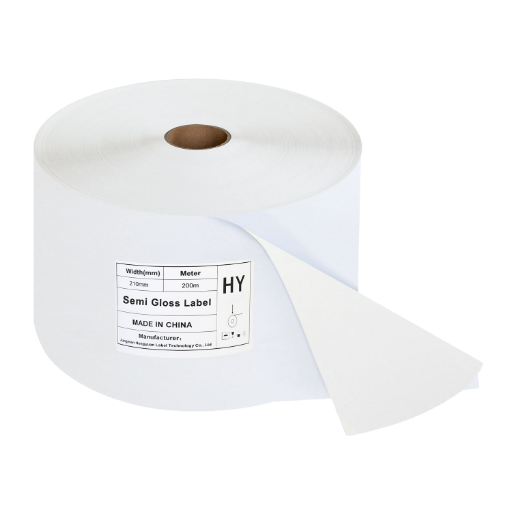
Facestocks
PET (polyester), PP synthetic paper, top-coated paper
Adhesives
Solution acrylic, hot-melt, water-based emulsion
Service range
−40 °F to +300 °F (PP+acrylic, 24 hr peak per RIBCA T-100)
Standards alignment
BS 5609:2024 Section 2 ready, GHS-compatible, OSHA HazCom 1910.1200 reference
Print methods
Thermal transfer (resin ribbon), inkjet, laser, flexographic
Regional supply
Thailand & Vietnam factories serving Southeast Asia, South America, Europe
Why Standard Label Stock Fails Under Chemical Exposure
The Plastic Drum Institute and the RIBCA state plainly that paper labels generally will not withstand the normal wear and tear of drum or IBC application – yet many chemical handlers still ship product on coated-paper labels and discover the failure only after a customer audit or a port-of-entry rejection.
Cost lands on the label converter and ultimately the brand owner – not on the labelstock supplier.
Standard label stock fails through five distinct mechanisms, and each demands a different material defense:
Solvent dissolution
– organic solvents such as MEK (methyl ethyl ketone), xylene, toluene, acetone, and dimethyl sulfoxide (DMSO) dissolve uncoated inks and soften plasticised face-stocks. Barcodes smear; adhesive layers swell.
Alcohol coating wash-off
– repeated wipe-downs with ethanol, isopropanol, or methanol, common in pharmaceutical and healthcare environments, gradually dissolve poorly bonded inks and weaken protective coatings.
Acid corrosion
– sulfuric acid, hydrochloric acid, and nitric acid degrade many polymer films and break down coating systems through corrosion and hydrolysis. Acid vapour can damage labels even without direct liquid contact.
Oil edge migration
– lubricants, hydraulic fluids, and brake fluids penetrate adhesive layers from the label edge inward, weakening the bond between oil-resistant facestock and container until the label peels.
Oxidiser fading
– bleach, peroxide cleaners, and other oxidising disinfectants break down dyes and pigments, causing barcode contrast loss and pictogram fade.
Guanma engineers labelstock as a system rather than a single layer. Face-stock film, adhesive chemistry, topcoat, and recommended print method are matched to the chemicals your end-customer’s container will encounter – so the label still scans, still complies, and still adheres at the end of the product life cycle.
Would you like to determine which facestock + adhesive combination aligns with your chemical exposure profile?
Guanma Material Series — Facestock × Adhesive Combinations
Buyer focus: Engineering (primary), Procurement (RFQ matching)
Three facestock families and three adhesive chemistries can be combined to address virtually every industrial chemical exposure profile. Combination – not any single component – determines the chemical-resistant performance you can promise your end-customer.
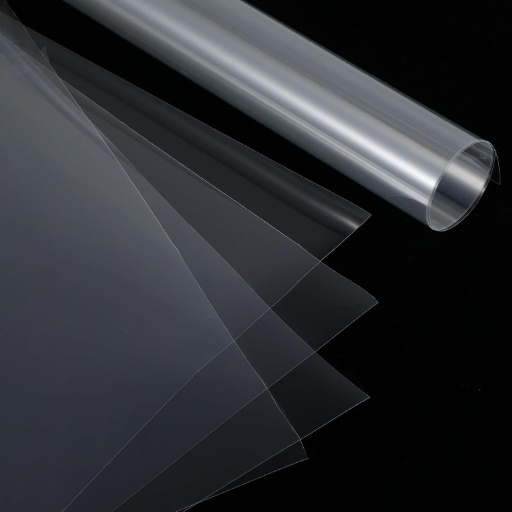
PET (Polyester) Facestock
Most suitable for long-term outdoor, chemically aggressive environments, and BS 5609 Section 2 compliance.
- Highly resistant to MEK, xylene, toluene, acetone, isopropanol, cyclohexanone, benzene
- Dimensional stability across −40 to +300 °F service range
- Excellent thermal-transfer resin-ribbon receptivity on industrial label printer hardware
- Compatible with chemical drum, IBC, lab vial, microscope slide, and tire-label applications
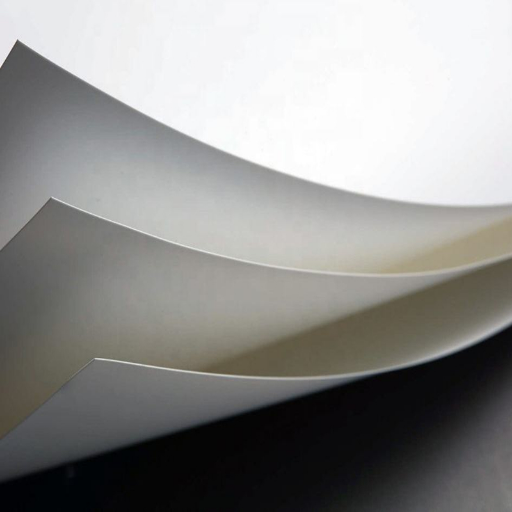
PP Synthetic Paper Facestock
Appropriate for chemical drum and IBC applications according to RIBCA Construction#3 – weatherability, oil contact, and round-surface conformability.
- Excellent clarity, chemical resistance, and flexibility (Beontag facestock guidance)
- Resists most aqueous acids and bases, oils, and aliphatic hydrocarbons under moderate conditions
- Naturally waterproof — no surface treatment needed for moisture exposure
- Lower density than PET — economical at scale
- PP topcoat-augmented variants are within RIBCA T-100 specifications
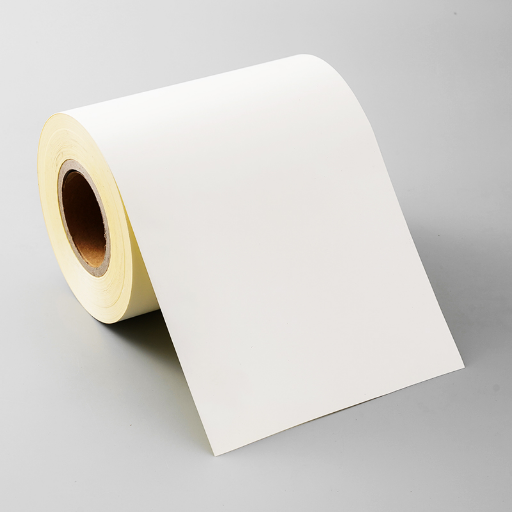
Top-coated Paper Facestock
Appropriate for short duration chemical contact, alcohol wipe downs, and most cost-sensitive secondary container labelling.
- Top-coat barrier resists short-term solvent contact and alcohol wipe
- Less expensive than synthetic films; appropriate for pharmaceutical secondary containers and lab bottles.
- Not recommended for drum or IBC immersion (per RIBCA guide line)
- Compatible with laser printer, inkjet printer, and thermal-transfer printer printing methods
Chemical × Facestock × Adhesive Decision Matrix
Use the following matrix to map an end-customer’s chemical exposure profile to a Guanma labelstock configuration. Recommendations are based on combinations of PET and PP chemical-compatibility data with RIBCA construction recommendations.
| End-customer chemical exposure | Recommended facestock | Recommended adhesive | Recommended print method | Topcoat / lamination |
|---|---|---|---|---|
| Xylene / toluene immersion (histology, paint, coatings) | PET | Solution acrylic | Thermal transfer + resin ribbon | Optional over-laminate for >72 hr submersion |
| MEK, acetone, DMSO wipe and splash | PET or PP synthetic paper | Solution acrylic | Thermal transfer + resin ribbon | Topcoat sufficient for wipe; over-laminate for splash exposure |
| Industrial oils, lubricants, hydraulic fluid | PP synthetic paper | Hot-melt or solution acrylic | Thermal transfer | Topcoat sufficient |
| Alcohol wipe-down (ethanol / IPA — pharma, lab, healthcare) | Top-coated paper or PP | Acrylic emulsion or solution acrylic | Thermal transfer or laser | Topcoat required |
| Sulfuric / hydrochloric / nitric acid contact | PET | Solution acrylic | Thermal transfer + resin ribbon | Over-laminate strongly recommended |
| Bleach, peroxide, oxidiser cleaners (sanitation) | PP synthetic paper or PET | Solution acrylic | Thermal transfer + resin ribbon | Topcoat required for repeat cleaning |
| Marine immersion (chemical drums shipping overseas) | PP synthetic paper or PET — BS 5609:2024 Section 2 candidate | Solution acrylic | Thermal transfer + resin ribbon | Over-laminate for Section 3 print durability |
| General-purpose chemical secondary container labelling | Top-coated paper | Acrylic emulsion or hot-melt | Laser or inkjet | Optional |
Print method compatibility across the platform
Each facestock-adhesive combination is tested using the printing process most likely to be used. For chemical resistant applications, thermal-transfer printers with resin ribbons to produce resin images are the most durable solution. Resin-fused images to synthetic facestocks resist almost all solvents and alcohols to avoid smearing and tearing. Laser printer output can work on topcoated paper and selected vinyl facestocks. Inkjet printer output needs a topcoat receptive facestock to be pigmented. These labels, designed for Xylene immersion in histology examslides, pair PET facestock with thermal-transfer (resin ribbon) printer output by default.
Adhesive selection — when each chemistry wins
Adhesive choice is the second aspect of the system that customers rarely explore. There are three primary types of industrial chemical resistant labelstocks:
Solution acrylic adhesive
Solution acrylic adhesive has the greatest chemical, ultraviolet, and temperature resistance. It also adheres best to low-energy surfaces and solvent-plasticised blisters, and withstands solvent contact without losing adhesion. Bostik developed this specialty solution acrylic line for industrial use. It is suited for intensive cleaning or heat laboratory environments.
Hot-melt adhesive
Hot-melt adhesive is most resistant in cold environments and adheres well to textured surfaces. RIBCA explicitly states hot-melt lends itself to textured drum surfaces. This solution also withstands solvent contact and exhibits rapid adhesion. Service range tops out at 140 F. This adhesive is best for chemical drum labelling for ambient condition applications which requires high tack and fast adhesion.
Water-based acrylic emulsion
Water-based acrylic emulsion produces less-white edges on transparent facestocks. It is best suited for general purpose labelling on low-cost face-stocks. It does not tolerate high resistance in solvents to the same extent as solution acrylic adhesives. It is a good choice when minimising solvents on the back of the label is a priority
“When we tested fourteen adhesive formulations on a customer’s nitric acid container, only a 1.8mil solution acrylic held edge adhesion for 90 days in vapour exposure without lifting. Next time your label is peeling at the seam, the answer is the adhesive chemistry, not the facestock thickness.”
Need a side-by-side comparison sheet for your specific chemical list?
Download the full Chart →
Performance Comparison — Guanma Material vs Standard Coated Paper Stock
Facing general-purpose acrylic emulsion coated paper labelstock consumer in commodity label conversion. It is cheap, prints well on most equipment and is good enough for office, retail and short-life packaging. For chemical packaging, it’s by far the most common reason you will see your label failures returned for analysis. For standard chemical exposure, here is the resistance gap presented by the exposed chemical to a coated-paper label versus a Guanma PET, or PP facestock with solution acrylic adhesive.
| Chemical / exposure | Standard coated paper + emulsion adhesive | Guanma PP + solution acrylic + topcoat | Guanma PET + solution acrylic + over-laminate |
|---|---|---|---|
| Xylene / toluene wipe (10 cycles) | Print smear, edge lift | Legible, adhered | Legible, adhered |
| MEK splash and air-dry | Coating dissolution | Topcoat intact | Topcoat intact |
| IPA wipe-down (50 cycles, pharma) | Gradual fade | Barcode legible | Barcode legible |
| Industrial oil edge contact (30 days) | Edge peel, oil bleed | Edge adhesion held | Edge adhesion held |
| Bleach exposure (sanitation, 20 cycles) | Pigment fade | Contrast retained | Contrast retained |
| Sulfuric acid splash + air-dry | Substrate degradation | Acceptable for splash | Survived 24-hour vapour exposure |
| Marine immersion (BS 5609:2024 Section 2 protocol — 90-day saltwater) | Disintegration | Section 2 candidate | Section 2 candidate |
| Service temperature window | 50 to 120 °F | −40 to 140 °F (hot-melt) / 300 °F peak (acrylic) | −40 to 300 °F |
In field deployments, PET-plus-solution acrylic labelstock generally shows a 2-3x longer in-service life in continuous chemical contact than general-purpose coated-paper equivalents. Once the application crosses any of the recognized severity designations: marine shipping, long-duration solvent contact (>24 hours), repeat oxidizer cleanings, or high-temperatures (>140F) the difference increases dramatically.
This performance variation in solvent-resistance and adhesive stability can directly translate into reduced relabeling costs, fewer non-conformance reports and a stronger provencompliance position for your downstream brand customers. And that’s what matters most when the next H2 examines realworld results.
Customer Outcomes — Where Guanma Labelstock Holds
Three anonymized convertor cases show where the labelstock platform makes the supply-chain leap. Each case is a Guanma customer who successfully transitioned from regional or commodity supplier post-paid to specifications using a paid trial.
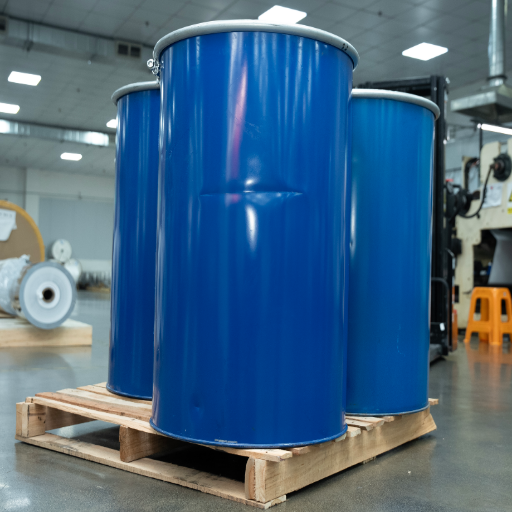
Case 1 — Chemical drum and IBC labelling (Southeast Asia)
Application: 200 L HDPE drums and 1000 L composite IBCs
Volume: ~3.2 million labels per year
Switched from: Local commodity coated paper
Volume: ~3.2 million labels per year
Switched from: Local commodity coated paper
The convertor’s brand customer shipped agrochemical concentrates to Australia, the Middle East, and the European Union, and was experiencing port-of-entry questions on foggy GHS pictograms after sea transport. Guanma provided a PP synthetic supportstock with solution acrylic adhesive and a glossy overcoat knock-down; equivalent to the RIBCA Construction#3 (T-100) profile. After the transition, periodic audits of one seasonal shipment showed barcode legibility preservation through the 90day salt water protocol needed by BS 5609 Section 2. This convertor lided overlaminate steps on the routine product line as the gloss topcoat provided adequate image protection.
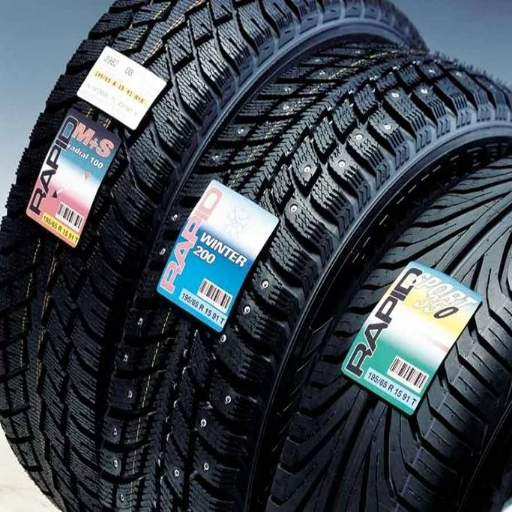
Case 2 — Tire and cable durable labelling (South America)
Application: Tire sidewall labels and cable identification flags
Volume: ~5.4 million labels per year
Switched from: Imported European facestock
Volume: ~5.4 million labels per year
Switched from: Imported European facestock
The converter supplied a tire manufacturer that wanted oil resistant labels capable of surviving outdoor weatherability, sporadic lubricant contact, and tire-mould heat exposure. A PET facestock with solution acrylic adhesive and over-laminate held adhesion through the accelerated weathering and oil-immersion tests. Quality team feedback from the tire customer cited a measurable reduction in field returns for unreadable production codes versus the previous labelstock platform. Lead time from Guanma’s Vietnam factory shortened the converter’s freight time by roughly three weeks against the European supplier they replaced.
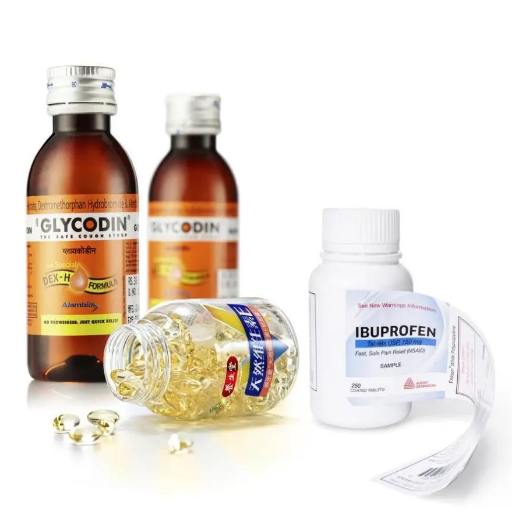
Case 3 — Pharmaceutical secondary container labelling (Europe)
Application: Reagent bottles, secondary chemical containers, sterile-zone wipe-down
Volume: ~1.1 million labels per year
Switched from: Mixed-vendor coated paper
Volume: ~1.1 million labels per year
Switched from: Mixed-vendor coated paper
A private-label client supplying European institutions requiring laboratory and clinical products needed a high-volume batch labelstock that would endure daily isopropanol practices and survive formalin and ethanol in histology procedures. Guanma provided an over coated paper support stock with acrylic emulsion adhesive fit-for purpose as this was wipe mode (rather than immersion). The convertor’s brand customer used existing thermal-transfer printing machinery with no capital outlay.
TCO Highlight
SilverIndustrial buyers give more weight to suppliers’ ability to deliver reliably and produce consistent quality than they do to the lowest price possible – this fact has been confirmed with several surveys and focus groups of B2B chemical and labelstock buyers. For chemical-resistant labelstock specifically, there are two TCO drivers that tend to outweigh all others in the purchase decision:
Savings on avoided shipment rejection cost
– BS 5609 conformed labelstock removes an established port-of-entry rejection risk for international shipments of chemical drums and composite IBCs. Even a single rejected load (requiring re-labelling, re-shipping, customer-facing apology) often costs more in downstream expenses than a year’s worth of labelstock procurement.
Savings on avoided over-lamination step
– a Polypropylene face-stock film, topcoat and 3M-class acrylic adhesive lamination (per RIBCA T-100) provides drum-grade chemical resistance without the need for an over-laminate process pass, saving the converter roughly one step in manufacturing every routine SKU.
Industry guidance indicates that these two factors tend to be the greatest consistent cost reduction levers on chemical-resistant labelstock conversions. Savings estimates are SKU- and shipment-specific but apply broadly over most labelstock conversion situations.
Would you like to estimate the TCO implications for your SKU mix?
Schedule a 15-minute material discovery call →Compliance & Certification — BS 5609:2024, GHS, OSHA Alignment
There are three global regulatory schemes for what a chemical-resistant label can look like, what must it survive and how does the labelstock supplier prove it? Guanma’s Section 2 labelstock platform is compliant with all three.
BS 5609:2024
Section 2 ready labelstock — marine immersion, weathering, temperature cycling, abrasion
GHS-compatible
Pictogram, signal word, hazard statement printability — UN GHS Annex 7
OSHA HazCom
29 CFR 1910.1200 reference for hazardous chemical labelling
ISO 9001
Quality management system at Guanma Thailand and Vietnam facilities
BS 5609:2024 — what changed and why it matters
BS 5609 is the United Kingdom’s scheme for the marine durability of pressure sensitive labels fixed onto containers containing chemicals. Its 2024 revision came into effect on the 31st of December 2024 and is a dramatic change for the labelstock supply chain.
Section 2 and Section 3 approval are now issued independently. Section 2 focuses on the face-stock film and adhesive systems of undyed labelstocks exposed to three-month saltwater immersion trials in the proximity of the English Channel in addition to weathering, temperature cycling and abrasion trials. Section 3 presides over the durabilty of the print on the face-stock by testing key adhesion points to abrasion and artificially weathered look. [ previously, a labelstock with Section 3 approval also had to have an approved Section 2 test. now it can be issued separately.]
Along with aluminium, high-density Polyethylene now appears as a test surface in addition to each natural-colour dyeing agent to must be tested alongside. This is thanks to the large portion of cold charge container shipments consisting of plastic drums and composite IBCs.
BS 5609:1986 gets retired on the 31st of December 2030. As labels currently certified (or awaiting) under BS 5609:1986 transition, they themselves remain valid. Please specify the new certifier brand when seeking to get new BS 5609 approval.
Guanma’s Section 2 labelstock platform piches the candidate profile – the 50% of the certification (and most of the value) that a labelstock supplier owns. The other half of BS 5609:2024 certification (regarding the durability of print) constitutes the converter and its chosen printer/press. Guanma can supply the necessary technical information and test reports to streamlinean a converter’s Section 3 application.
GHS & OSHA HazCom — pictogram printability and durability
The GHS is a globalpon standard that describes nine hazard identifier pictogram images (flame, explosion/minibomb, health hazard, gas cylinder, oxidiser, corrosion, explosion bomb, skull/skeleton, environment) and hazard statements/precautionary statements. OSHA Hazcom 29 CFR 1910.1200 carries GHS pictogram requirements as a reference for labelling hazardous chemicals in U.S. workplaces. A product container label that peels off or off-gases and loses a hazard identifier Pictogram it contains is a HazCom regulation violation. Guanma labelstock is tested against pictogram edge adhesion for all orders.
Need full compliance paperwork for a vendor qualification?
Download the complete BS 5609:2024 + GHS spec sheet →Sourcing Guide — MOQ, Lead Times & Regional Supply
Buyer focus: Procurement (primary), Brand owner (budget approval)
Industrial buyers value supplier dependability and stable quality control more than the absolute lowest cost Price. Among published B2B chemical and labelstock buyer survey responses the enduring order of importance is consistent quality, reliable supply, application performance, technical service and communication. Price alone almost never wins a labelstock buy.
Guanma supply structure
Production runs span two coating-and-laminating plants – Thailand and Vietnam – both certified ISO 9001 quality management systems. A twin-factory footprint means the next Southeast Asian or Australian buyer is rarely more than two weeks ocean freight from the next coating batch, and the lead time to a European customer is equal or shorter than U.S. sources.
MOQ and lead-time tiers
Guanma maintains tiered minimum order levels to meet the requirements of both private label brand owners with a handful of SKU formats and large converters with long-run programme demands. Sample order quantities for in-house chemical immersion testing are produced from cold-stock and shipped within the standard distribution time frame. Production-quantity orders join the next assembled coating run, with typical turn-around ex-works between four and six weeks; expedited ordering tiers are also provided for selected facestock-adhesive combinations.
How a project quote is built
Pricing for chemically resistant labelstock is compiled from a handful of key dimensions; project pricing is assembled based on these parameters, not from published per-thousand-sheet rates.
- Construction family – PET against PP synthetic paper versus top-coated paper influences the greatest variation in input costs.
- Adhesive formulation – solution acrylic cost more than hot-melt and water based emulsion adhesiv
- Topcoat or over-coat specifies an additional coating pass; not always necessary for some chemical exposure scenarios.
- Roll width and quantity of order – customer converted-grade master rolls against cut-to-width finishing.
- Certification paperwork – Section-2 compatibility test reports, BS 5609 certification records, and custom chemical-mechanical compatibility records must be factored into delivery time and cost.
- Lead time tier — standard production run vs expedited.
“The initial conversation is not about cost it is about the identifying the chemicals that will come into contact with the label, the container surface energy and the printing unit of your converter line. Once those three are identified your choice of facestock and adhesive is almost always clear in fifteen minutes.”
Contact for a project quotation covering specific facestock-adhesive-topcoat configuration, volume tier, and certification paperwork needs.
Request a Project QuotationInteractive Label Specification Tools
Frequently Asked Questions
What chemicals can your label material withstand?
In truth, no one construction of labelstock can resist every chemical. Guanma’s PET facestock with solution acrylic adhesive has the broadest resistance profile – including MEK, xylene, toluene, acetone, dimethyl sulfoxide, isopropanol, ethanol, sulfuric acid wipe, hydrochloric acid wipe, bleach and hydraulic oils. PP synthetic paper with hot-melt or solution acrylic adhesives is an optimum solution for industrial drum and IBC applications with RIBCA T-100 construction profile. Short-duration alcohol wipe-down and generalpurpose chemical secondary-container labelling are steps top-coat suitable for paper-based construction family. Our Compatibility Decision Matrix shown above maps chemical-to-chemistry.
Are your chemical resistant label materials BS 5609 compliant?
Guanma offers labelstock that complies with the Section 2 candidate profile under BS 5609:2024 – the unprinted labelstock portion of the certification. Section 3 (printed-label durability) certification is owned by the converter and depends on the specific printing system, ribbon, and topcoat combination. We provide the supporting test reports, chemical-compatibility data sheets, and reference samples for a converter to pursue Section 3 using their printer. Note on 2024 revision (effective 31 December 2024): separating Section 2 and Section 3 certification – a significant change for labelstock suppliers that we have already incorporated into our spec-sheet package.
What facestock and adhesive combination should I use for my application?
Fitting the right combination takes three inputs: the chemical or chemicals to be in contact with the label, the container surface (HDPE, polypropylene, glass, painted metal), and the printing equipment in your converter line. Our Compatibility Decision Matrix above addresses the most common industrial chemical exposures. For anomalous chemical profiles or unusual container surfaces, our materials team creates a recommendation in 24 to 48 hours from your inputs – and we will ship samples for in-house validation instead of requesting a production order commitment off a recommendation alone.
Do you supply samples for chemical resistance testing?
Absolutely. Sample-quantity orders ship from cold-stock for the most common facestock-adhesive combinations and within a standard production run for custom combinations. Buyers conducting side-by-side immersion or wipe testing against an existing labelstock customarily request a 100 to 500 piece sample lot. There is no obligation to convert to production following a sample lot. The materials team incorporates a chemical-compatibility reference and a thermal-transfer ribbon recommendation with every sample shipment.
What are your MOQ and lead times for international shipping?
MOQ is organized in tiers – sample, pilot, and production. Sample tier is a modest run designed for in-house testing. Pilot tier supports limited-run private-label projects. Production tier is a standard converter-grade master roll quantity. Lead time on production tier averages four to six weeks ex-works from the Thailand or Vietnam factory, with the regional factory selected based on the destination port. Customers in Southeast Asia, Oceania, South America, and Europe reliably receive labelstock within total transit windows similar to or briefer than equivalent North American sourcing.
Can you customise facestock + adhesive + liner to my specs?
Custom combinations are the heart of the platform. Facestock film, adhesive chemistry, and release liner are individually chosen; topcoat and over-laminate configurations are application-specific; finished-roll width and length are cut to converter equipment parameters. Customisation lead time varies depending on whether the requested combination is in our established portfolio or calls for an R&D run. Our established-portfolio combinations ship within standard production lead time; new combinations enter the R&D queue with a written test plan and milestone schedule.
Are your materials compatible with thermal transfer printing and resin ribbon?
All Guanma facestocks are designed for thermal-transfer printing with the appropriate resin ribbon family – resin ribbons are the durable-print standard for chemical-resistant applications because the ribbon image fuses to synthetic facestock and resists solvents, alcohols, and abrasion. PET and PP topcoated facestocks are also suitable for inkjet, laser, and flexographic systems where the converter’s printing infrastructure already exists. Ribbon recommendations accompany every sample lot.
How do solvent-resistant labels and chemical resistant labels differ in material engineering?
The two terms, overlap but are not interchangeable. Solvent-resistant labels are a specific category. Covering only the large majority of common solvents (MEK, xylene, toluene, acetone, DMSO) on immersion and wipe. The category of chemical resistant labels is much broader and covers solvents as above, plus alcohols, acids and bases, oils and oxidisers. To put it into perspective, from a materials engineering perspective solvent resistance here requires a non-paper facestock with a chemically stable adhesive (solution acrylic, in most cases); chemical resistance (in the broader sense), here additively then requires acid-stable polymer films and oxidiser-stable pigment systems. This is reflected in our Compatibility Decision Matrix;