Get in Touch with Guanma

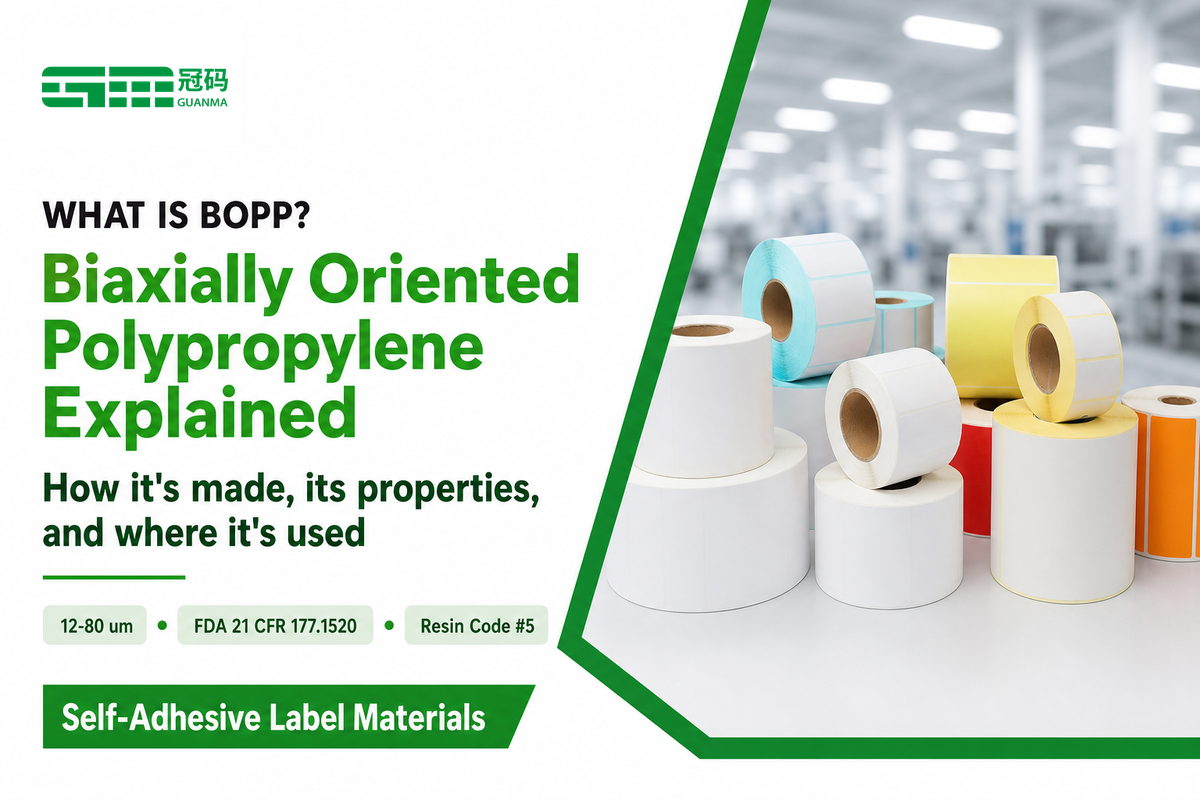
(Updated July 2026).
Biaxially oriented polypropylene is polypropylene film that’s been stretched in two directions during manufacturing, and most people just call it by its acronym: BOPP. If you asked any of our packaging engineers to name the film wrapping your shampoo bottle or sealing your snack bag, you’d likely get exactly that mouthful back, since it’s one of the most common plastic films in the world despite almost nobody knowing its name. Here’s what BOPP really is, how it gets made, what its qualities mean in the real world, and where on earth the ‘highly recyclable’ propaganda actually goes wrong.
Biaxially oriented polypropylene (bopp) is polypropylene film stretched in two directions during manufacturing, which makes it stronger, clearer, and more dimensionally stable than non-stretched PP. It’s the industry-standard facestock for labels, food packaging, and tape, and it meets FDA food-contact rules under 21 CFR 177.1520.
Key Facts
- However, not all bopp recycling proceeds identically – though crystal BOPP is typically grouped with polypropylene in waste streams. Pearlized and metallized BOPP grades are typically excluded from municipal recycling programs.
- bopp not a different plastic to the polypropylene – same resin, just drawn out in two directions. It’s that stretching that allow for the strength, transparency and barriers gains.
- Worldwide, the bopp film market size will approximately reach $31-33 billion during 2025-2026 on account of increasing consumption in food and beverages industry, per market research estimates, growing at roughly 6% a year.
- bopp’s FDA food-contact status is not a marketing claim – it originates from a particular regulation, 21 CFR 177.1520, covering olefin polymers.
- Almost none of the explainers make a difference between actual producers of crude bopp film (Uflex, Taghleef, Toray, Jindal, Cosmo) vs actual makers of the converted facestock on top of raw bopp film, and this would tell you who should actually answer your phone call.
Those numbers in a bopp data sheet are a target, not an assurance. Two rolls of the same-nominal-20-micron material from two different sources might be two microns out of gauge, and the customer notices it on the label press. We test every incoming roll; we never take a data sheet on faith.
Guanma technical team
What Is BOPP? The Straight Definition
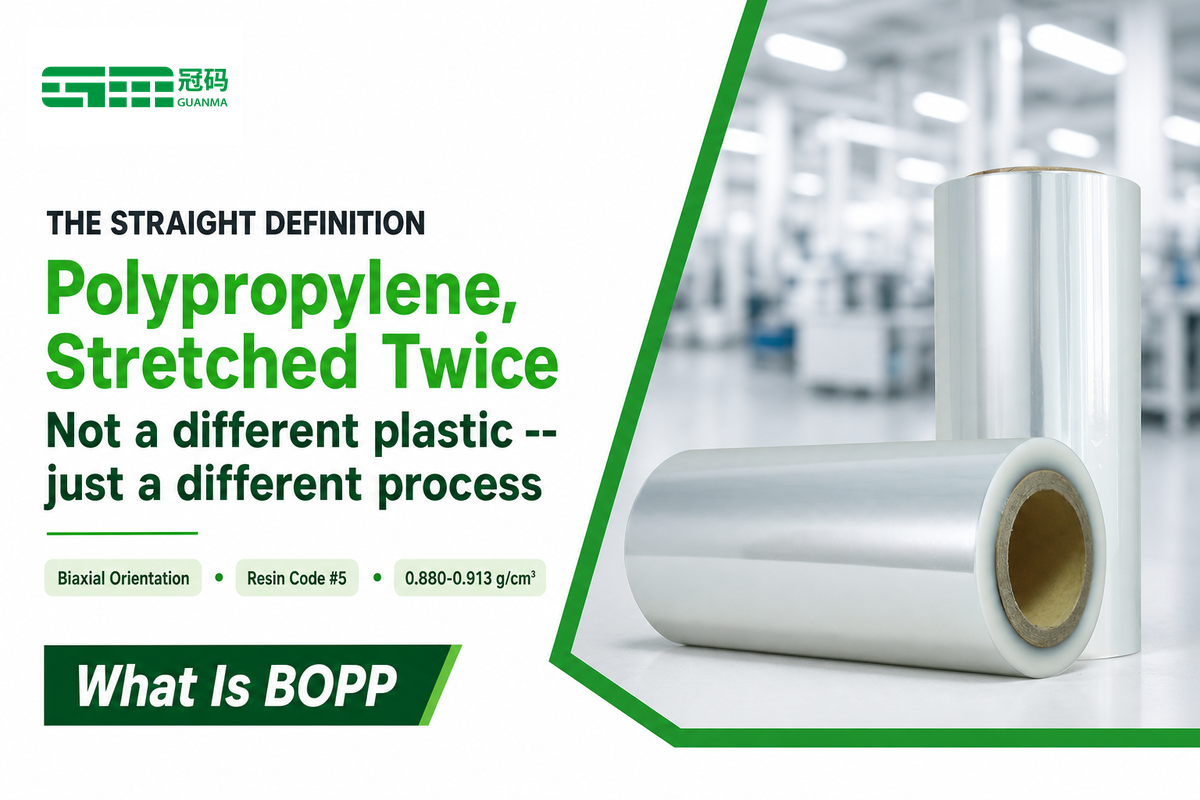
Quick Specs: BOPP at a Glance
- Base polymer: Polypropylene (PP), resin identification code #5
- Production technique Biaxially stretch of extruded PP sheet / tube
- Typical thickness: 12-80 microns (μm), depending on application
- Density: 0.880-0.913 g/cm³ (per 21 CFR 177.1520)
- The properties: high tensile strength, clarity, repellency of moisture, dirt and grease, UV stability, printability.
So, why do we call bopp?
That’s simply our name for the product which is a biaxially oriented polypropylene thermoplastic film produced by stretching a polypropylene resin, in both Machine and Transverse directions, in the extrusion manufacturing process. That two-way stretch explains it all and why a BOPP film offers advantages in clarity, strength and dimensional stability compared with plain PP film or PP sheet.
bopp is all around you, without many folks knowing it. It’s the clean, “glossy film” you see in cigarettes outerwrap, snack bags and candy wrappers, it’s the clear or white “facestock” beneath the ink of a lot of consumer product labels. It’s the base film in many packaging and printed tapes. Said to be the engineering reference of ScienceDirect in its treatment of biaxially oriented polypropylene, bopp film’s advantages include high tensile strength suitable for high-speed converting, “high gloss and clarity,” high flex-crack and puncture resistance throughout a broad temperature range, good water vapor, oil, and grease resistance – attributes due to the manufacturing process itself rather than special additive packages. That “barrier property” of BOPP films especially – their water vapor, oil, and grease resistance – is their key selling point as the predominant form of food packaging in contrast with plain, unstretched films.
💡 Key Takeaway
bopp itself, of course, is only polypropylene; not a special material. In “BOPP,” the “B” and “O” – meaning biaxially oriented – designate only a manufacturing step, not a unique chemistry.
How BOPP Is Made: The Two-Stretch Rule Behind Biaxial Orientation
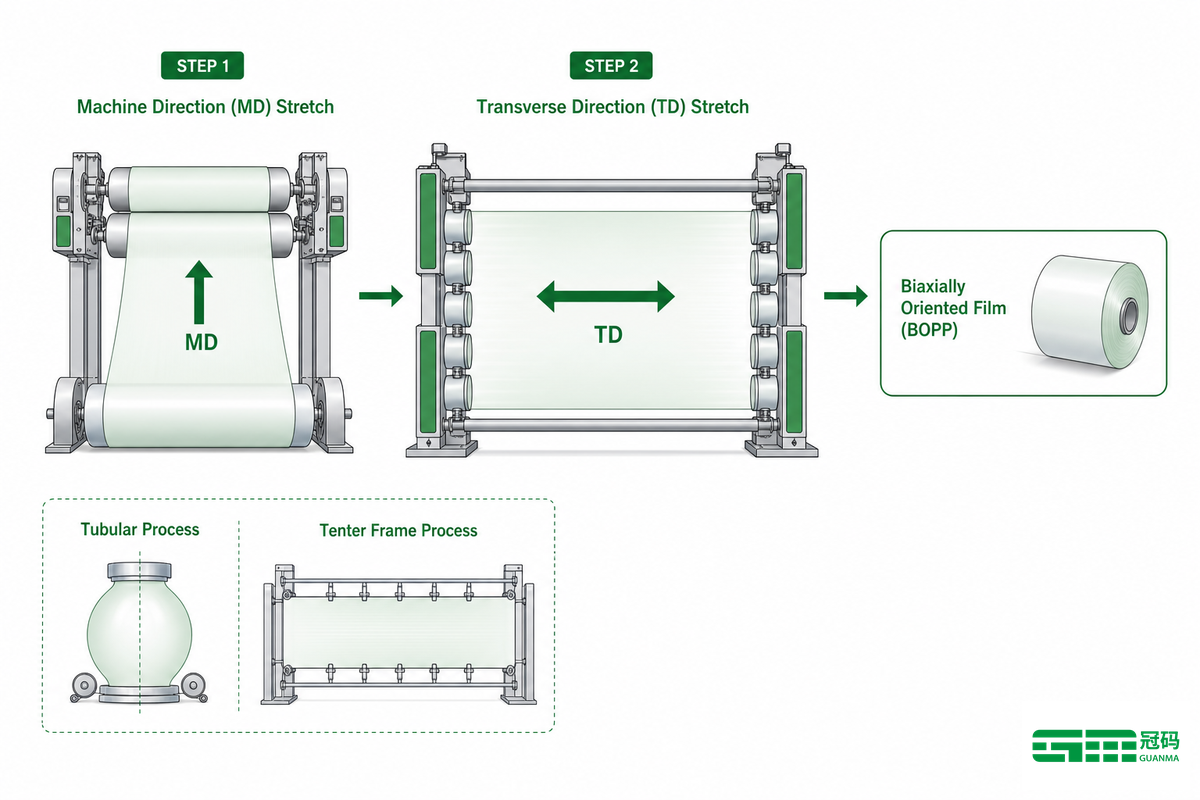
The “Two-Stretch Rule” for creating BOPP: ordinary polypropylene sheet passes through a two-stage stretching process that pulls it first in the “machine direction” (long axis of the packaging material) and then in the “transverse direction” (across its width). With either step eliminated, it isn’t BOPP — it’s OPP film (oriented in one direction only) or unoriented polypropylene.
That biaxial stretching step, in both directions, is what separates true BOPP from either of those. There are two common manufacturing process families that yield BOPP, and they can’t be used to produce the same results.
| Process | How It Works | Orientation Method | Typical Advantage |
|---|---|---|---|
| Tubular process | PP is extruded into a tube, then inflated and stretched into a bubble that sets the final thickness | Simultaneous (both directions at once) | Simpler line, often lower cost for commodity gauges |
| Tenter frame process | PP sheet is extruded flat, then stretched roughly 300-400% in two directions using a tenter frame | Simultaneous or sequential (sequential more common) | Finer control over gauge consistency and specialty coatings |
Process Mechanics. Process details adapted from Grand View Research’s “BOPP Films Market Report”. That 300-400 percent “stretch-ratio” figure is based on an industry-generated range and isn’t a verified value from lab testing, so take it as a rough direction of where those process extremes lie. This piece deliberately leaves out any attempt to give an accurate market share break between these two processes; since two different market analysis firms (Grand View Research and Market.us) have put forth contradictory reported figures (an estimated 52.4% tubular-dominant vs. 89.3% tenter-dominant) on this topic in the same year, such details should probably be viewed with appropriate suspicion.
Most technical writing will discuss the “tenter frame” method because of the high degree of control it offers for a converter; the sheet begins as a PP sheet that, once at temperature, is then individually pulled in both directions – simultaneously or, much more typically, consecutively. By contrast, the alternative (“tubular”) process involves extruding the molten material as a tube that expands like a bubble, thereby orienting it in both directions simultaneously during a single, one-piece process. One isn’t inherently “better” than the other-tubular is generally cheaper and more straightforward in terms of cost and setup for bulk commodity materials, and tenter frame offers tighter control of thickness and can handle more exotic surface properties.
So why does the matter stretch so much? It’s the same reason you could break a raw egg by gripping it firmly, but couldn’t easily break an egg you’ve encased tightly in a rigid structure; because it restructures the very inside of the plastic. In an unstretched state the tiny crystalline regions of polypropylene have random orientation, and that’s partly why cast PP film is relatively soft, tearable in no particular direction. Stretching in two directions forces the crystalline regions to orient along the directions of stretching, and *that* yields the tensile strength, clarity, and general good all-around-performance that’s the real benefit of polypropylene film and dimensional stability bopp – not something exotic in the resin itself. In fact, a foundational USPTO-published patent on biaxially oriented polypropylene film construction, US6033514A, describes what today is sold as biaxially oriented polypropylene film and states that good stiffness, strength, and optical properties were achieved because of that “orientation in both directions” step, not because they started with a different, special-purpose resin!
⚠️ Common Mistake
It should be noted, by the way, that some buyers when they are quoted by a vendor or a label converter may see “polypropylene film” and automatically assume it refers to bopp. If it has not been biaxially oriented, they may actually be quoted cast PP film, also known as CPP. CPP is a different film product with similar chemistry, but without the orientation step it is softer, generally has a better heat seal performance but inferior tensile strength and transparency compared to Biaxially Oriented PP Film (BOPP). *ALWAYS verify the film’s process, not just the generic resin type*.
The Resin-to-Film Property Jump: What Orientation Actually Changes
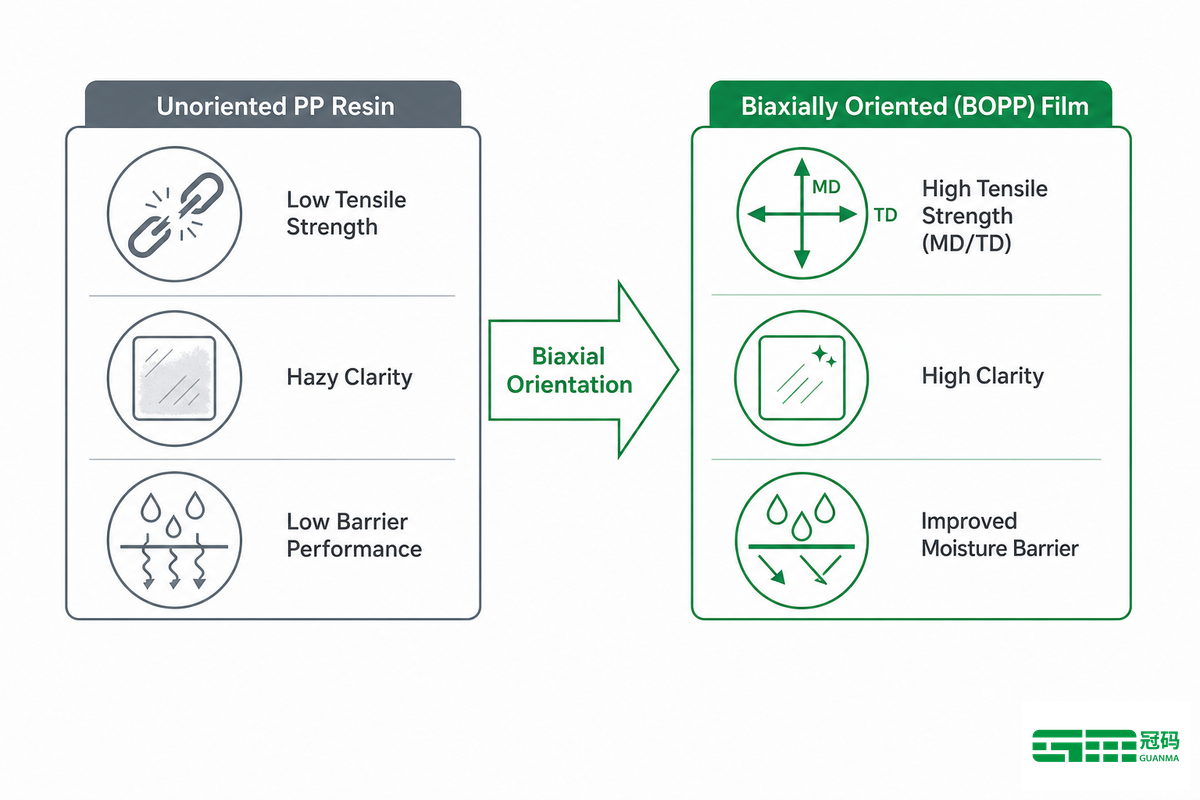
Think of the difference between a raw PP resin and a fully finished biaxially oriented polypropylene film as the “Resin-to-Film Property Jump”. Biaxially oriented film doesn’t just get “tougher” in some vague undefined way; orientation gives it genuinely improved mechanical properties on top of the existing properties of polypropylene. Modulus and tensile strength both go up, the barrier properties of BOPP — chiefly moisture resistance, for food product safety and shelf stability — tighten up, chemical resistance improves to the point converters call it good chemical resistance, and the optical properties gain high transparency instead of the haze of cast film. BOPP film’s “datasheet” is describing these enhanced properties, which only come into play after the plastic is physically deformed through the biaxial orientation process.
| Property | Typical BOPP Value | Source / Provenance |
|---|---|---|
| Density | 0.880-0.913 g/cm³ | 21 CFR 177.1520 (FDA regulatory value for the base olefin polymer) |
| Thickness range | 12-80 μm depending on end use | Cross-checked across 3 industry suppliers’ published thickness guides |
| Tensile strength (MD/TD) | Reported separately for machine direction (MD) and transverse direction (TD) — orientation makes the two directions behave differently, unlike cast film | Industry technical data sheets (single-source per grade — confirm with your supplier’s TDS, values vary by formulation) |
| Haze / clarity | Low haze (clear grades); engineered higher for matte/pearlized grades | ScienceDirect engineering reference; grade-dependent, “varies by supplier and grade” for exact % |
| Water vapor barrier (WVTR) | Reported at standardized test conditions (e.g., 38°C / 90% RH) in g/m²/day | Industry TDS format; exact figure is grade- and thickness-specific |
There’s one property worth singling out in a discussion of any film: thickness is frequently not derived from a data sheets but rather directly requested from a supplier by the end-user. Because of the versatility, bopp is produced across many film gauges depending on where it’s going to be applied:
| Thickness | Application Type | Why This Gauge |
|---|---|---|
| 12 μm | Snack and candy overwrap | Maximum yield per kilogram, light weight |
| 15 μm | Printing and lamination layer | Balance of stiffness and cost |
| 18 μm | Printing and lamination layer | Slightly higher stiffness than 15 μm |
| 20 μm | General packaging, labels | Better web stability and hand feel |
| 25 μm | Larger labels, stronger overwrap | Improved handling on faster lines |
| 30 μm | Matte and gloss packaging | Stronger surface feel for premium looks |
| 35 μm | Premium packaging, paper lamination | Added rigidity for board lamination |
| 40 μm | Tape film, stronger labels | Tensile strength for converting/processing |
| 50 μm | Specialty packaging | Dimensional stability at larger format |
| 60 μm | IML (in-mold labeling) | Holds shape during injection molding |
| 70 μm | IML, thick labels | Dimensional stability for molded containers |
| 80 μm | IML, thick labels | Maximum stiffness in the standard BOPP range |
Table summarizing film gauge versus typical application. Data cross-referenced across multiple leading suppliers’ film construction datasheets. (Tier 4)
Of those earlier property-table rows, two that warrant more than a superficial glance deserve more specific attention, since this is where the term “it depends” really matters, rather than being simply a fence-riding hedge-entry. First is the fact that bopp properties are listed individually for machine direction and transverse direction because the film is itself drawn in these two directions; in reality, a film that’s been drawn 4X MD and 4X TD won’t be perfectly balanced and thus exhibit slight variations in things like tensile strength, tear resistance, and shrink at each interface. This is the real world result of that “biaxial” in “biaxially oriented polypropylene” film: two stretch directions-two columns of numbers.
The second is BOPP surface finish: matte, glossy or clear. A USPTO filing (US6783848B2) describes a matte bopp film product and addresses surface formulations that will yield that “matte appearance,” i.e., that finish you seen on certain labels and on packaging packages-the product’s manufactured surface condition.
And testing of these properties is not hit or miss. As an example, tensile properties of bopp and other thin plastic films are often tested to ASTM D882, a standard for tensile properties of thin plastic sheeting, with a universal testing machine operated at constant crosshead speed. While ASTM D882 and its counterpart from ISO, ISO 527-3, are very similar they are not the same.
Different test speeds and specimen requirements between the standards mean tensile values measured under ASTM D882 cannot be directly compared to those tested under ISO 527-3; and if a supplier’s datasheet does not identify the method used, then ask before attempting comparison.
💡 Key Takeaway
If the 2 bopp quotes provide 2 different tensile numbers then you will need to determine if the 2 films were tested to the same standard (ASTM D882 vs. ISO 527-3) before you jump to the conclusion that one film is actually stronger.
BOPP vs. Plain Polypropylene: Why “Oriented” Changes Everything
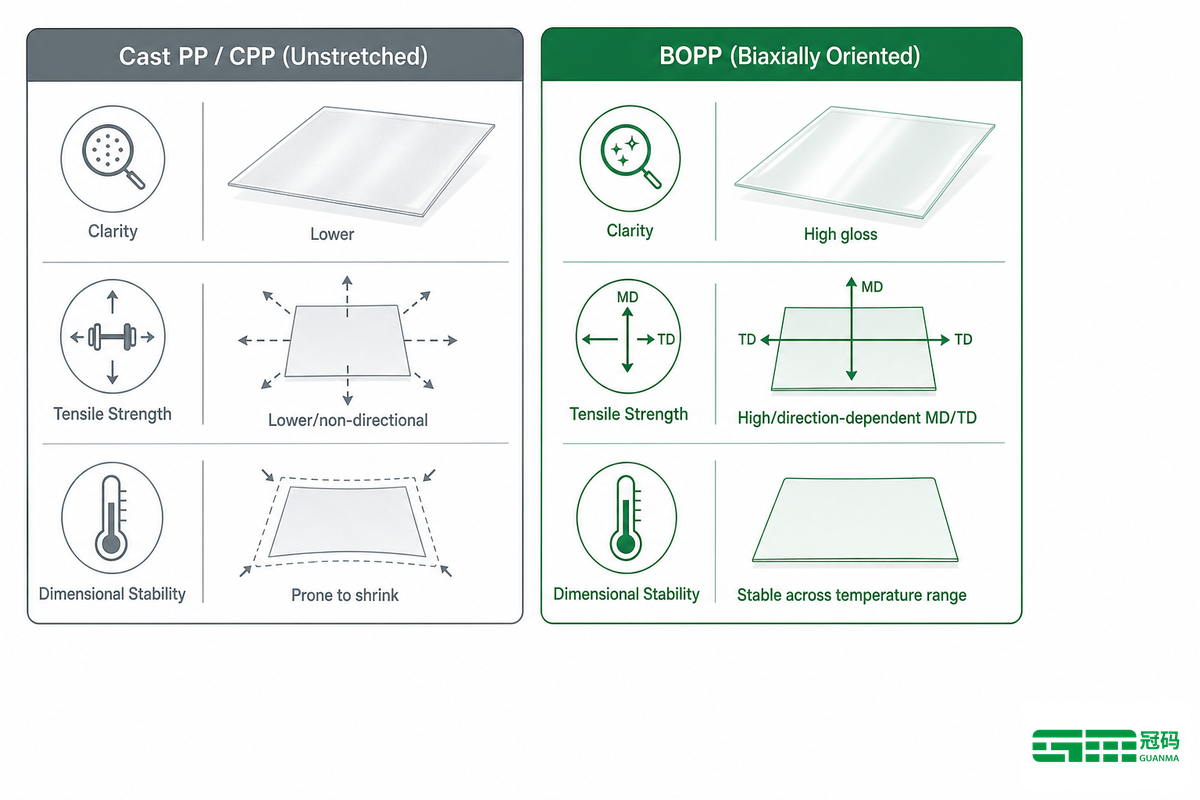
What Is the Difference Between PP and BOPP Material?
Polypropylene (PP) is the base resin — the same olefin polymer defined under FDA 21 CFR 177.1520 — used everywhere from injection-molded parts and woven sacks to cast film. BOPP is that same resin extruded into a sheet or tube, then stretched in two directions; the polymer itself never changes, only how its molecules are aligned. That single stretching step is the entire difference between plain PP and BOPP.
Unoriented PP film is naturally softer, blurrier, and more apt to tear unpredictably. Once biaxially stretched, the film is still the same resin – just stiffer, clearer and more dimensionally stable in specific directions that cast film will never match. Long story short – if a spec sheet says polypropylene film and doesn’t mention orientation, treat it as cast PP (CPP) not BOPP, since the two perform differently on either a label press or in packaging.
It’s also where bopp departs from the next closest thing to an oriented-film like it: BOPET, or biaxially-oriented polyester film, often just referred to by itself as a PET film or polyester film. Both use an almost identical process to orient the polymer base resin in both directions of motion, though the base resins differ (polypropylene in the case of bopp, polyester in the case of BOPET) and the difference impacts performance. BOPET films typically handle higher temperatures or better retain their dimensional stability at elevated temps than bopp while bopp offers the edge on cost and moisture-resistant applications.
For specific comparison versus PET for labels and packaging applications, please see our full PET vs. bopp labels comparison.
| Attribute | Unstretched PP Film / CPP | BOPP (Biaxially Oriented) |
|---|---|---|
| Clarity | Lower, hazier | High gloss and clarity |
| Tensile strength | Lower, non-directional | High, direction-dependent (MD/TD) |
| Dimensional stability | Prone to shrink/stretch under heat and handling | Stable across a wide temperature range |
| Best-known strength | Heat-sealability (CPP) | Printability + barrier + strength combination |
The 3-Question BOPP Litmus Test
Before specifying BOPP for a new application, ask:
- Does the part need to hold a precise shape or seal repeatably under heat? If yes and dimensional stability under heat is critical, compare against BOPET before committing to bopp.
- Does the application need heat-sealing without a separate sealant layer? If yes, plain CPP (or a bopp/CPP laminate) may outperform straight BOPP.
- Does the job need high clarity, print quality, and moisture resistance at a moderate cost? If yes to all three, bopp is very likely the right call, this is exactly the combination it’s built for.
Where BOPP Shows Up: Applications Across Industries
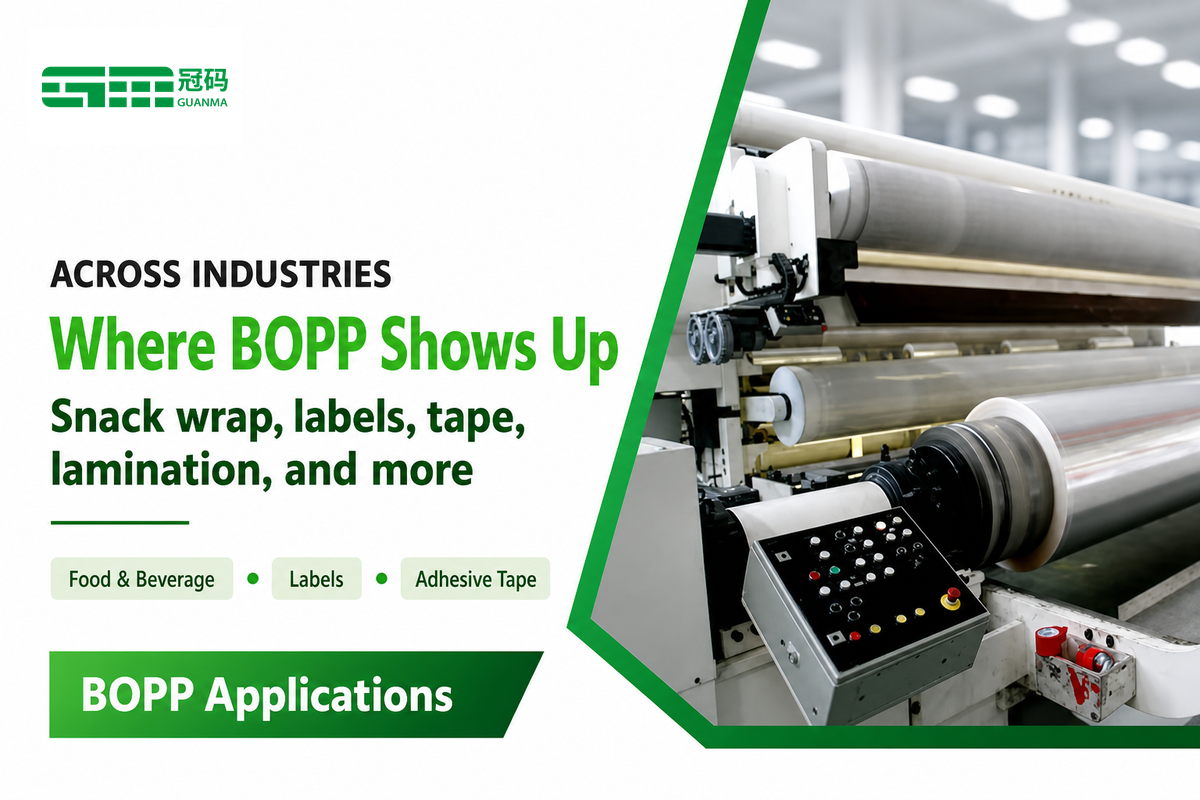
BOPP film shows up across food and beverage packaging, adhesive tape, decorative lamination, personal care packaging, and – most visibly for Guanma’s own customers – pressure-sensitive label facestock. Its combination of clarity, strength, moisture resistance, and printability makes it the default choice wherever a package or label needs to look good and survive handling without costing what BOPET or specialty films do.
What Is BOPP Film Used For?
BOPP film is used as the facestock, overwrap, or laminating layer anywhere flexible packaging needs clarity, strength, and moisture resistance at low cost. Typical uses include snack and confectionery overwrap, cigarette wrap, stand-up pouch facestock, pressure-sensitive tape backing, medical packaging overwrap, and book or carton lamination. It also serves as the primary label facestock for bottles, jars, and tubes, competing directly with paper label stock.
Among the finer distinctions: in a bopp vs vinyl matchup, bopp usually wins on cost for anything staying indoors, while vinyl earns its keep outdoors or under rougher handling. Clear BOPP labels can give certain products an “invisible” or “no-labels” appearance, while white BOPP (opaque grades) supports bolder graphics; metallized grades add an extra dimension of visual appeal at a small additional cost, without altering the fundamental film chemistry. Guanma’s own facestock spans the wide range of finishes label buyers expect, from crystal-clear to pearlized and metallized, and that combination of good moisture barrier properties and low cost is exactly why BOPP dominates snack and confectionery overwrap.
| Industry / Use | Typical BOPP Role | Why BOPP Fits |
|---|---|---|
| Food & beverage packaging | Snack overwrap, pouches, wrappers | Moisture/grease barrier, shelf-life extension, food-contact compliant |
| Adhesive tape | Carrier film for packing and printed tape | Tensile strength, tear resistance, printability |
| Lamination / decorative | Book/carton lamination, gift wrap, foil-stamped surfaces | High gloss, clarity, accepts post-lamination finishing |
| Labels (facestock) | One row here — for full label-grade selection depth on custom BOPP labels (white/clear/silver/metallic/matte BOPP facestock), see our BOPP label film guide and the BOPP label film facestock Guanma supplies. | Printability, moisture resistance, cost-to-durability balance |
| Personal care & household | Bottle/tube wraps, sachets | Chemical resistance to detergents, oils, solvents |
Is BOPP Safe? Food Contact, FDA Status, and What Resin Code #5 Means
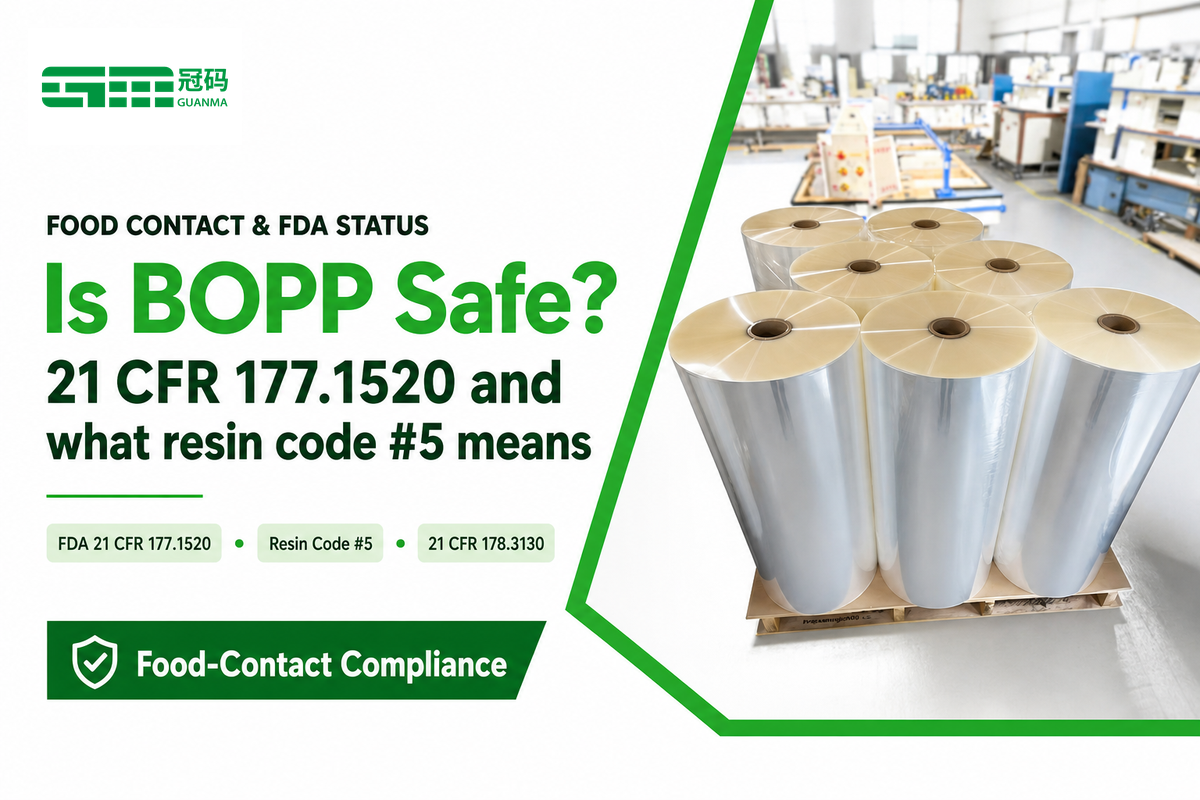
Is BOPP Plastic Safe?
Yes – BOPP is safe for its intended food-contact and packaging applications, and that isn’t marketing language but a legally defined status. BOPP’s polypropylene resin falls under FDA 21 CFR 177.1520, the regulation covering olefin polymers used in food-contact applications. That regulation sets hard limits on the resin’s density (0.880-0.913 g/cm³), melt point (160-180°C), and extractable content under specified test conditions.
Specifically: no more than 6.4% by weight extractable by n-hexane at reflux, and no more than 9.8% by weight extracted by xylene at 25°C. Separately, 21 CFR Part 175 governs the adhesives and coatings that contact food in a finished BOPP package, while 21 CFR 178.3130 details the permitted antistatic and antifog additives – each with its own limit, typically 0.1% to 0.5% depending on film and food type.
That level of specificity is rare. Most competitor explainers gesture at “FDA compliance” or cite an industry association’s best-practice guidance without naming the actual governing regulation, leaving the real question unanswered.
💡 Key Takeaway
“Food-grade bopp” isn’t the same: does the resin comply with 21 CFR 177.1520, are adhesives / coatings compliant with Part 175 and are additives within the allowable limits?
And the resin identification code?
The same as all polypropylenes: polypropylene has the code #5 inside the “chasing arrows” triangle. Code #5 represents the resin family, it doesn’t specify that a particular film or label is accepted for Recycling at my community site, which will be the next section of our article.
Can BOPP Be Recycled? The Honest Answer
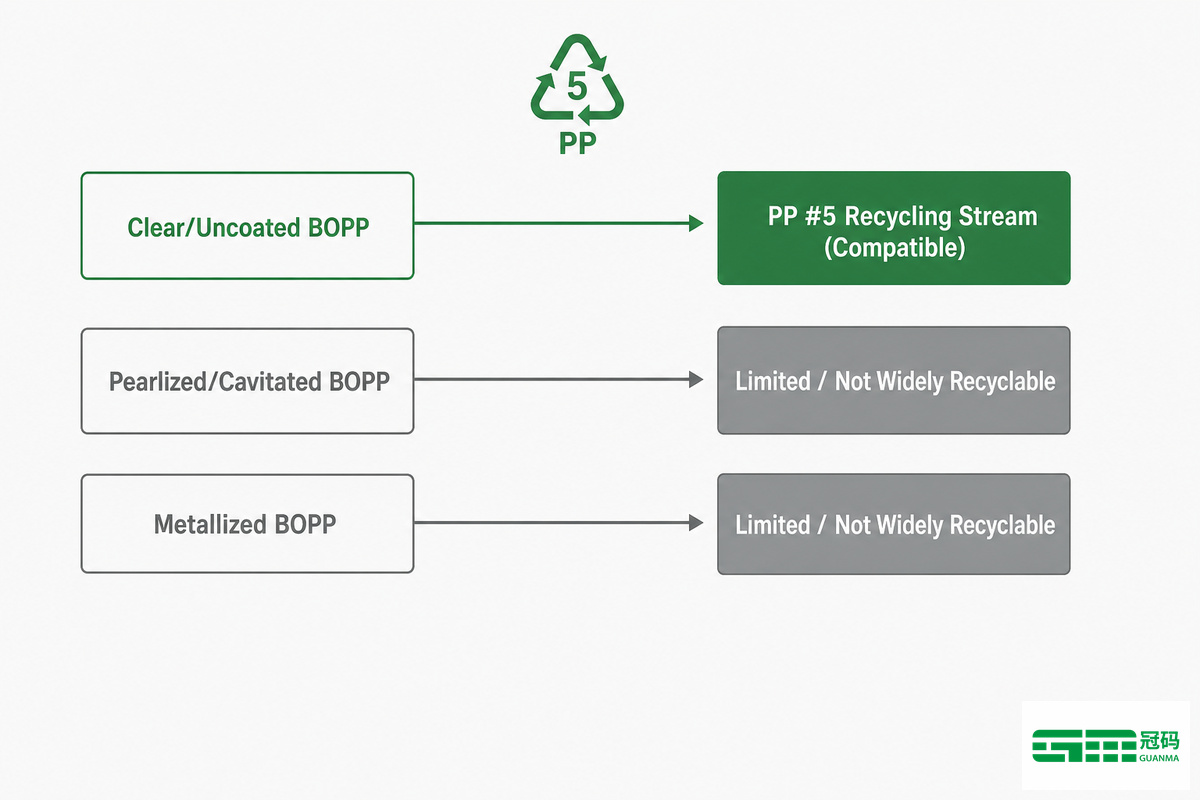
This is where most “what’s bopp” content gets it wrong. The simple fact is – it depends on your grade and your local facility, and the answer isn’t universally yes.
Basic, uncoated bopp plays nicely with the polypropylene (#5) recycling stream, and it can even be mechanically processed with other PP scrap. But there are two common forms of bopp that make that an issue. According to industry trade publication Packaging Strategies: Pearlized bopp – a cavitated, opacified type used for premium labels and overwraps – “is generally not recyclable in its present form,” the same problem that has spurred suppliers to develop polyethylene film alternatives that are ready for recycling, for use in certain applications. Metallized bopp, the grade with an ultrathin layer of vacuum-deposited aluminum, has similar recycling challenges because the aluminum need to be separated from the plastic film during reprocessing, a step that few municipal recycling facilities can handle.
And then there’s the case of bopp film applied as a label onto a PET bottle: if not separated during sorting, the bopp can contaminate the pet recycle stream. This isn’t a theoretical failing.
Those challenges don’t mean the hope for BOPP recycling has been abandoned. Suppliers across the industry have been actively working on solutions. This past June (2026), PureCycle Technologies revealed that Innovia Films had succeeded in producing white, cavitated bopp film with more than 40% post-consumer recycled content from PureCycle’s PureFive Choice resin for snack, confectionery, and roll-fed label applications, addressing that historical problem with pearlized/cavitated BOPP. Much of the driving force behind these efforts are regulatory -California’s SB 54 (which mandates reduced virgin plastic content) and EU regulations on packaging, among others.
These have put pressure on flexible film manufacturers to secure the recycled-content supply required to meet virgin plastic reductions, so the fact that a supply chain is developing is another key sign that recycled-content BOPP is shifting from lab experiment to genuine commercial reality, not just aspirational talk. Borealis, another prominent resin producer, has entered into collaborations with converter Polibak, specifically focusing on increasing the amount of recycled content in BOPP film and its end-of-life circularity, proving this isn’t a case of isolated supplier action.
| BOPP Grade | Recyclability Reality |
|---|---|
| Clear, uncoated BOPP | Compatible with PP (#5) recycling streams where available |
| Pearlized / cavitated BOPP | Not widely recyclable in standard form — check with your recycler before assuming otherwise |
| Metallized BOPP | Complicated by the metal layer — facility-dependent |
| BOPP label on a PET bottle | Can contaminate PET stream if not removed during sorting |
Who Makes BOPP Film: The Manufacturer Landscape
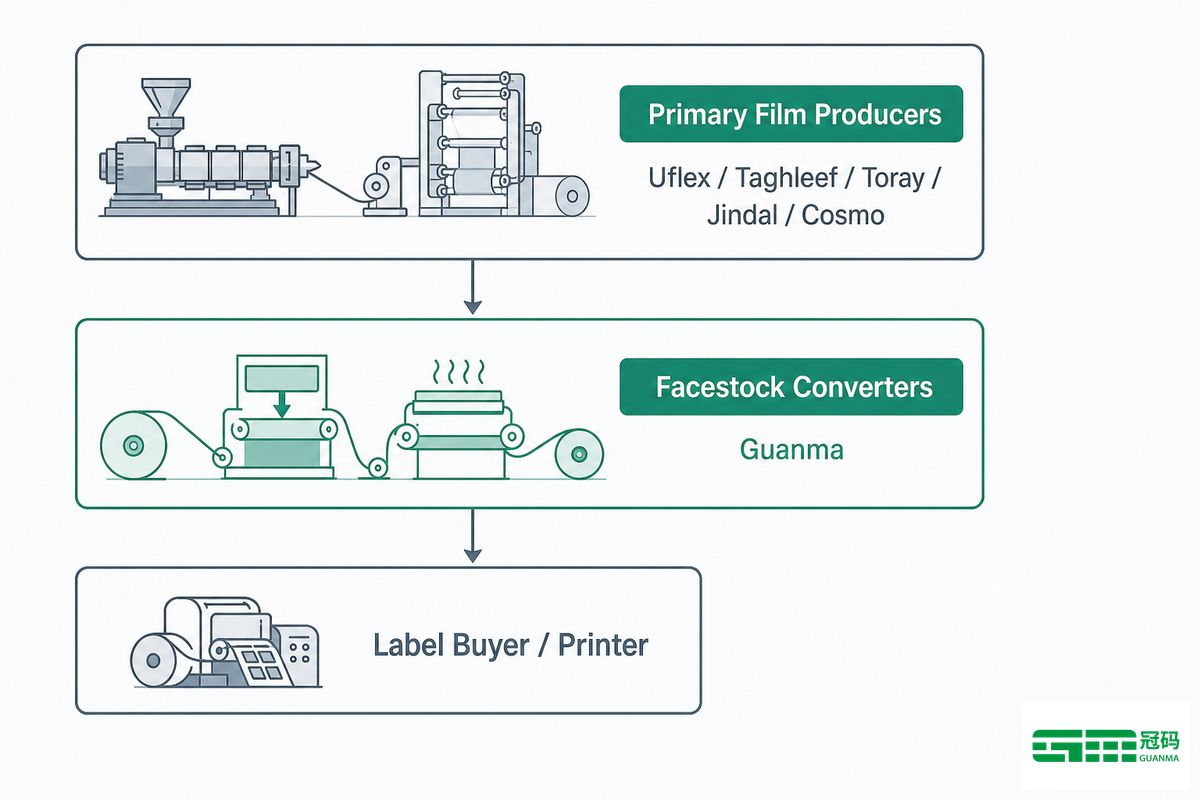
BOPP manufacturing splits into two distinct tiers that most explainers blur together. Primary producers run the extruders and biaxial-orientation lines that turn resin into large rolls of base film – global names like Uflex (Flex Films), Taghleef Industries, Toray Industries, Jindal Poly Films, and Cosmo Films, including divisions such as Taghleef’s AET Films.
Below that tier sit facestock converters, who buy base bopp film (and other films) from primary producers, laminate it to a release liner, slit and rewind it, and add adhesive before selling ready-to-print label facestock. Guanma operates at this tier: alongside coating and laminating, it selects specific adhesive grades to turn base bopp into pressure-sensitive label facestock, rather than running the extruders and orienters that make the film itself. That distinction – film producer versus facestock converter – determines whether a buyer should be shopping for raw film or finished, adhesive-backed facestock.
Which Supplier Do You Actually Need?
| If you need… | Talk to… |
|---|---|
| Raw BOPP film in bulk (converting into your own products) | A primary film producer (Uflex, Taghleef, Toray, Jindal, Cosmo, etc.) |
| Finished, adhesive-backed BOPP label facestock ready to print and apply | A facestock converter (like Guanma) that pairs BOPP film with the right adhesive and liner for your application |
BOPP Industry Outlook: What’s Changing Through 2026
More pertinent than market growth, for a labels buyer this year, is an understanding of the drivers behind supplier search behavior and R&D investment. Google search volumes for “bopp film manufacturers” and “bopp film suppliers” are up sharply Y/Y to date through mid-2026, growing ~2.5x vs. prior periods on their own, in sync with actual supplier consolidation activity and recent investment in recycled content development – e.g. the PureCycle/Innovia recycled-BOPP trial highlighted above, itself a direct response to regulatory drivers like California’s SB 54 Plastic Pollution Prevention and Packaging Producer Responsibility Act. For a buyer, then, the implications are that the present juncture is as good as any to proactively reassess and re-vet the base BOPP supplier partners you use, not merely resting on the previous sourcing round; be sure to query potential suppliers on their sustainability roadmaps and recycled content status (and any active exploration thereof), because this is no longer a hypothetical; these discussions are a real point of differentiation, at this point.
Sustainability is a key driver behind both of these trend streams, alongside the related concept of recycled content. On the biodegradable front, this involves R&D into bopp with a biodegradable additive package; the total plastic films market is expected to grow from ~$1.3B in 2025 to $2.0B by 2035 (4.5% CAGR); BOPP producers, along with some other players, are pursuing additive solutions rather than wholly-new base polymer chemistries. To provide further context, the broader bopp films market, encompassing raw films and beyond, is projected to be valued in the ~$31-33B range in 2025-26, expanding at ~6% a year – healthy, but uninspired, and of limited utility on its own for a buyer determining who to call. But what’s happening beneath that headline market-size figure, the investment in recycled and bio-additive development, warrants consideration for any 2026 label procurement.
💡 Key Takeaway
In short, if you expect to have any bopp sourcing requirements in 2026/2027, put questions about your prospective supplier’s recycled content roadmaps and biodegradability test programs near the very top of your questionnaire – the discussion has shifted far beyond mere boilerplate ESG considerations.
FAQ
Q: What does BOPP stand for?
View Answer
BOPP stands for biaxially oriented polypropylene. It is polypropylene that has been extruded into a film, and then stretched in both machine direction and across machine (transverse) direction during the manufacturing (either tubular or tenter frame process). This two direction stretch makes it a more rigid film with better clarity and dimensional stability than unstretched polypropylene film.
Q: What is the difference between BOPP and BOPET?
View Answer
(OPP vs. bopp vs. PET vs. BOPET). Both are made by biaxially stretching a base resin, but the resin is different. OPP/bopp use polypropylene resin, whereas PET/BOPET use polyester resin. This difference is evident in performance, with BOPET generally offering superior heat resistance and dimensional stability, while bopp typically costs less and offers better moisture resistance. Learn more in our PET vs. BOPP labels comparison.
Q: Can BOPP film be printed on?
View Answer
Yes – This film is highly print-friendly with excellent printability. Because BOPP is less naturally prone to accepting inks, it normally undergoes a special corona treatment step in the process to increase surface energy. That treated film then accepts most common printing methods including flexo, roto-gravure, and digital, and can take both water- and solvent-based inks. Quality and adherence depends on the grade and how fresh the film is since its last corona-treatment.
Q: Is BOPP the same as OPP?
View Answer
No. OPP refers to “Oriented Polypropylene,” meaning it has been stretched in a single direction (usually machine direction). BOPP indicates that the film was stretched in *both* machine and transverse directions. While the terms are often used interchangeably in casual conversation, commercially BOPP is the much more common product of the two.
Q: What is BOPP label material?
View Answer
BOPP label stock is bopp film finished into a adhesive-backed face stock (i.e. coated with a pressure sensitive adhesive and paired with a release liner) ready for printing application. See our BOPP label film guide for grades and finishes.
Q: Is BOPP cheaper than PET?
View Answer
Yes, generally – as polypropylene resin is less expensive than polyester. Typical cost comparison: bopp label material sits at mid-range pricing versus BOPET/PET film at mid- to high-end. bopp is a very cost-effective choice for most retail applications where the container isn’t exposed to extremes. However, PET film is better at resisting stretching and maintaining clear dimensional stability under intense heat or significant temperature fluctuation, which is when it merits its cost premium. We can provide more specific cost comparisons based on your particular specifications in our PET vs. BOPP comparison.
Sourcing BOPP label facestock for your next production run?
Why We Write This
Because we work at Guanma converting our bopp, PET and synthetic-paper facestocks into finished ready-to-use pressure sensitive labelstock from our facilities in Thailand and Vietnam, the work we do on a day to day basis involves qualifying incoming BOPP from many different suppliers, as opposed to documenting the material from external perspectives. Thisguide comes to you with that perspective as well – and we’ll be clear upfront: we’re not one of the primary BOPP resin manufacturers.
References & Sources
- Biaxially Oriented Polypropylene, an overview — ScienceDirect Topics
- 21 CFR 177.1520, Olefin Polymers — U.S. Electronic Code of Federal Regulations
- 21 CFR Part 175, Adhesives and Components of Coatings — U.S. Electronic Code of Federal Regulations
- BOPP Films Market Size, Share & Trends Analysis Report, 2026-2033 — Grand View Research
- ASTM D882, Standard Test Method for Tensile Properties of Thin Plastic Sheeting — ASTM International
- Articles Tagged with “BOPP film” — Packaging Strategies
- PureCycle, Innovia Films Partner to Successfully Produce White, Cavitated BOPP Film Using PureFive Choice Recycled Polypropylene — PureCycle Technologies
- 21 CFR 178.3130, Antistatic and/or Antifogging Agents in Food-Packaging Materials — Cornell Law School Legal Information Institute (e-CFR)
- US6033514A, Biaxially-Oriented Polypropylene Films — USPTO / Google Patents
- US6783848B2, Matte Biaxially Oriented Polypropylene Film — USPTO / Google Patents
- Biodegradable Plastic Films Market Trends and Size 2035 — Towards Packaging
- Borealis and Polibak Boost the Circularity of BOPP Film — Borealis Group