Get in Touch with Guanma

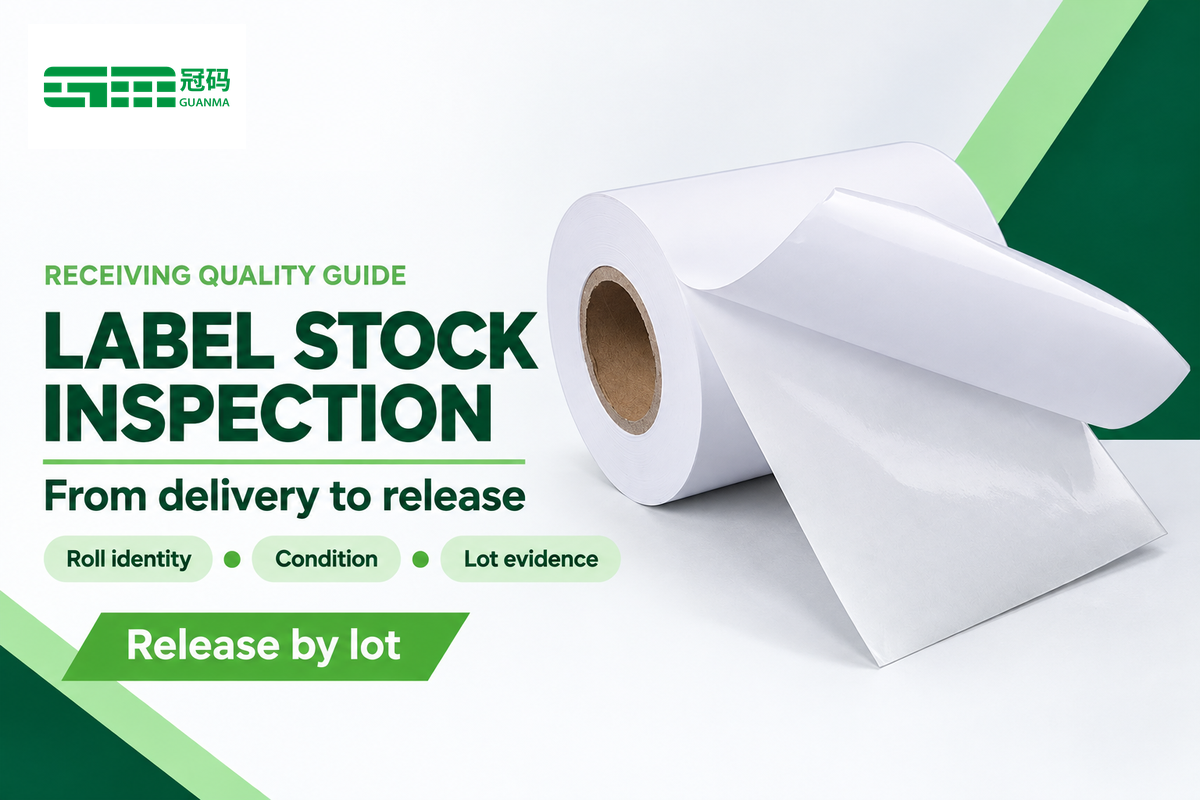
A truck arrives with two pallets of label stock. The press needs the first roll before lunch. The packing list balances, but the rolls come from two supplier lots. An incoming goods inspection gives the warehouse a way to track the received goods while the press crew waits for a clear release decision.
Label stock incoming inspection matches the delivered grade and supplier lot to the purchase specification, assesses roll condition and dimensions, and reviews any required test results. Document the decision for each identifiable lot prior to releasing the rolls for production.
Receiving inspection checklist
- Match the certificate to the stock prior to interpreting the numbers.
- Keep the supplier lot and roll IDs separate.
- Check against order requirements: web width, core fit, roll diameter, winding direction, and visible damage.
- Release a passing lot, if identifiable and separable, from the rest.
What to Check Before Releasing Label Stock
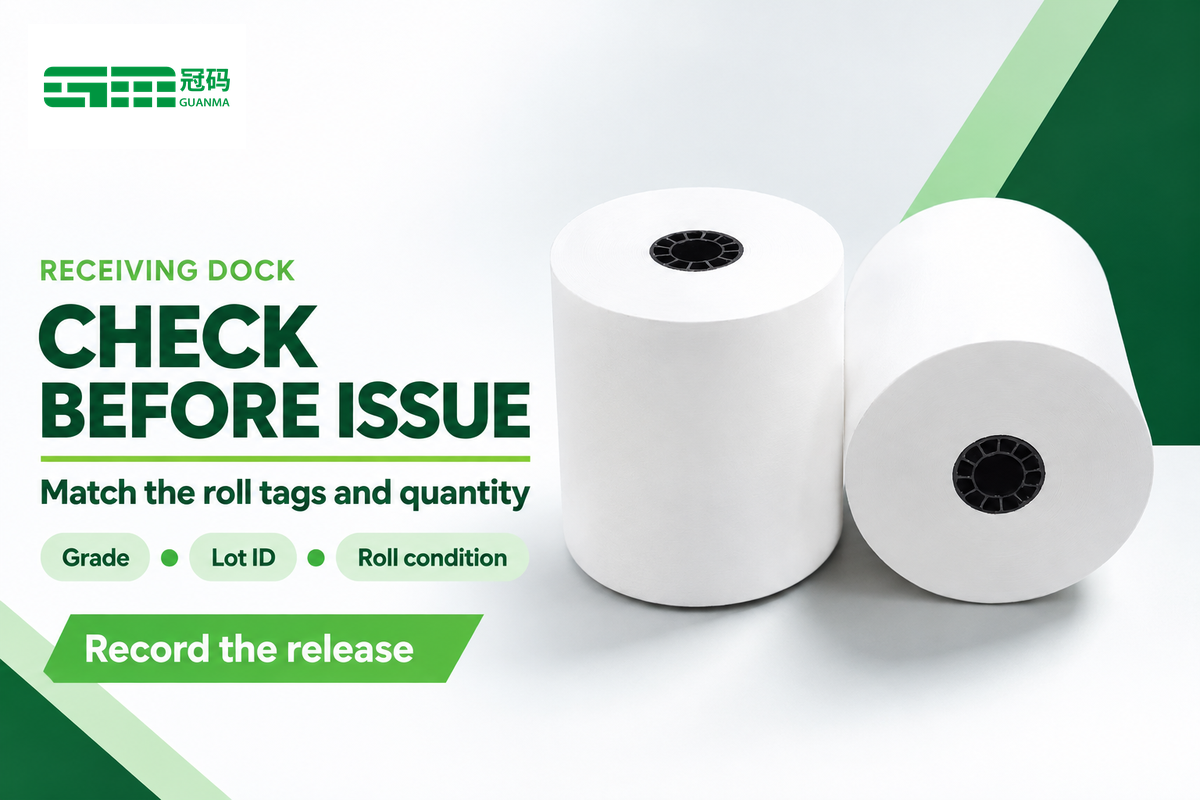
Inspect the delivery in two passes. Use a visual inspection to verify the supplier lot labels, check freight condition and verify the correct quantity against the purchase order and packing list. The next quality inspection considers the lot documents, measured values and condition of the incoming materials to determine which stock can be issued.
The two checks identify different errors in the supply chain. In the quality control process, record incorrect quantities by lot so a shortage on one pallet stays visible even when the shipment total balances. A receipt clears the delivery transaction in the warehouse. Quality assurance needs to assess the condition of the stock, lot evidence and the conditions governing release. If the outer wrap is torn, a roll is wet or a pallet has shifted, a delivery photograph with the roll tags should be taken. Enter the affected rolls and the exception in the inspection report. That record separates damage found at delivery from product quality problems discovered on the press. A hold at the receiving dock prevents an unidentified roll from entering available stock. The NIST acceptance sampling overview explains that the main purpose of an acceptance sample is to support a decision on that lot.
To manage incoming stock that’s still awaiting review, open the inspection record with the receipt date, purchase order, material code, specification revision, supplier lot, individual roll IDs and quantity. A receiving workflow may run on paper, in an ERP system, or in different inspection systems. Give production the release status that quality control approved. To ensure accurate stock counts, reconcile the roll IDs and quantities at every handoff. Before using receiving automation, decide how the system routes an unmatched barcode or duplicate roll ID to a manual check.
Match the Purchase Specification, Roll Label and Batch Documents
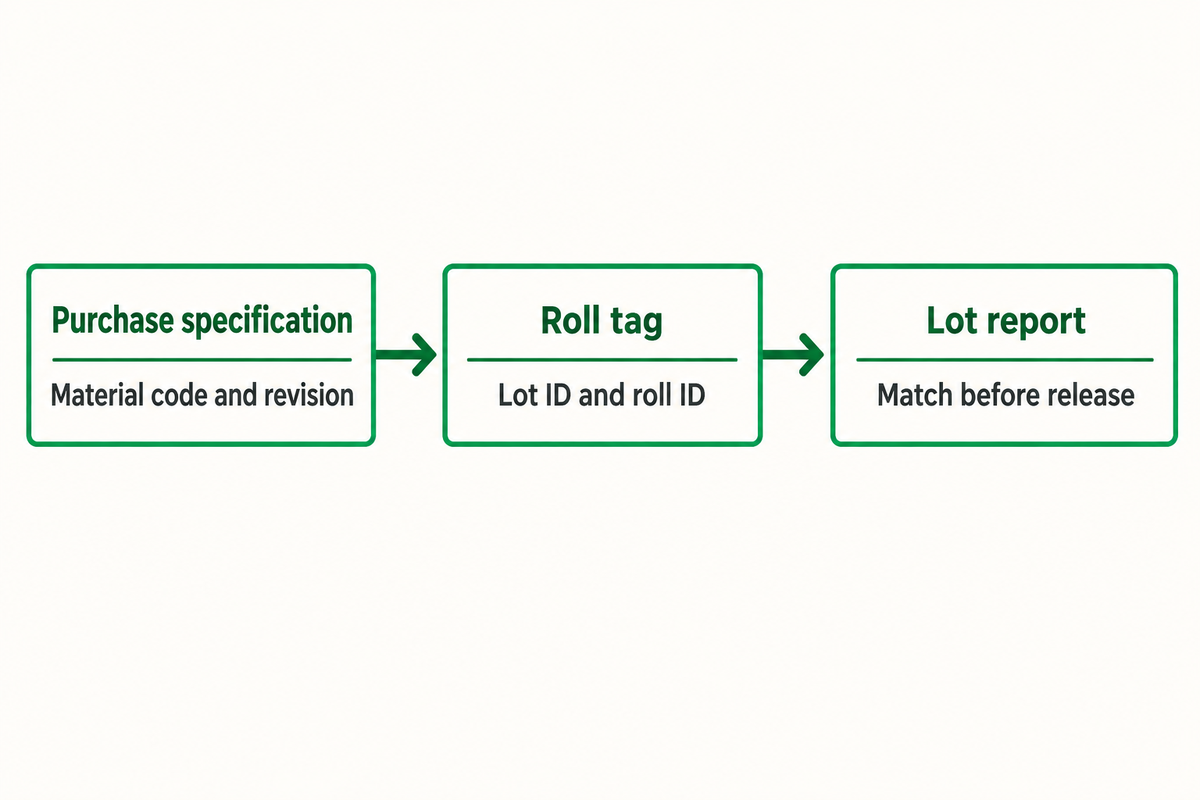
The purchase specification sets the quality standards for this order. The American Society for Quality defines incoming verification as checking purchased materials against the agreed specification. See which results apply using the supplier report and the roll tag. A certificate of analysis usually reports measured values for an identified lot. Suppliers may use certificates of conformity or conformance (CoC) to declare that the lot or grade meets specific requirements.
First, review the construction. Compare the face material and finish, adhesive grade and release liner to ensure they meet the approved construction. Similar SKUs can share the same roll width and use a different liner. When the certificate names a master roll and the delivery contains slit rolls, ask the supplier for the cross-reference that preserves traceability between them.
| Record type | Match this to the delivery | What to do when it differs |
|---|---|---|
| Purchase order and controlled specification | Material code and revision, construction, dimensions, test methods and acceptance limits. | Confirm the approved version before comparing results. |
| Packing list and roll tag | Quantity, supplier lot and individual roll identifier. Keep the packing reference with the receipt. | Separate mixed lots. Hold rolls whose identities cannot be reconciled. |
| Certificate of analysis | Lot or master-roll ID, reported property, result, unit and method. Match the slit rolls to the reported lot. | Request traceable results in the agreed units and method. Escalate a genuine discrepancy. |
| Certificate of conformance | Declaration covering the grade, quantity or lot required by the purchase order. | Request measured results if the specification calls for them. |
| Technical data sheet | Material description and reference data for the grade. | Check the controlled specification for acceptance limits. Request batch results where required. |
| Receiving inspection record | Roll IDs inspected, measurements, condition, photos and disposition. | Route unresolved checks to the quality approver before issue. |
| Approved sampling plan | Sample unit, lot selection, sample size and decision rule for the current inspection level. | Get the applicable plan before choosing samples or recording a release. |
| Delivery damage record | Photos of the pallet and packaging, defect location and visible roll identifiers. | Keep the suspect rolls available for review and report the affected quantity. |
| Approved deviation | Authorization, specification exception, affected lot, quantity and any restricted use. | Hold affected stock until the authorized reviewer records a disposition. |
Compare the test conditions as well as the units. A result measured on a different test surface, at a different peel angle or after different specimen conditioning needs review before you compare it with an acceptance limit. For audit readiness, retain the approved purchase order revision along with the inspection records. The quality audit will be guided accordingly.
Inspect Roll Width, Core Fit and Winding
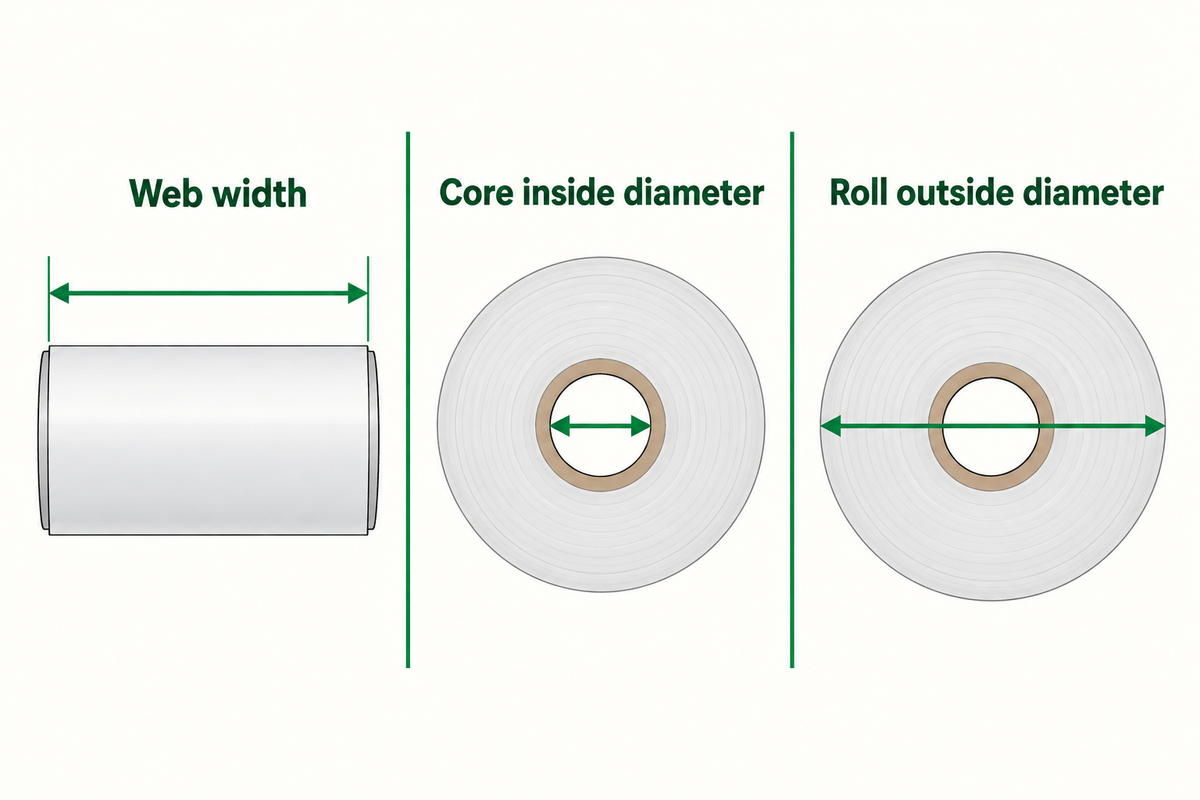
Conduct dimensional checks on the parts of the roll that have to fit the press. Record the measured web width, core inside diameter and roll outside diameter as separate fields. Check the unwind orientation with the order drawing, then inspect the roll faces, edges and core for defects.
A roll can pass the width check and still fail to fit on the unwinder. If there’s little clearance on the press, flag maximum outside diameter as a critical quality check on that order.
Measure the web width at the positions in the inspection plan. Identify the testing equipment and its calibration status when the procedure requires it. For caliper, confirm whether the limit applies to the face material or the whole laminate. Naming the layer on the inspection sheet helps ensure the inspector compares the reading with the intended limit. ISO 187:2022 addresses conditioning and test atmospheres for pulp, paper and board. For the stock you are inspecting, follow the agreed method and note the sample condition beside the reading.
Compare face-in or face-out winding with the approved unwind drawing. Look at both sides of the roll for a crushed core, torn edges, layers that protrude sideways, loose winding or adhesive squeezed onto the edge. For grades with a stated shade requirement, check color consistency under the agreed viewing conditions. Photograph the defect alongside the roll tag. Keep clear labels on any rolls you separate so the photographs can be traced back to the inspected materials. Leave the cause open until the supplier or your converting team investigates.
When the purchase order requires a splice flag check, check the splice flags and their locations. For setting the limit on an order, use the roll splice specifications guide and agree on how the supplier will identify each splice.
| Roll check | What to write down | How to assess it |
|---|---|---|
| Web width | Reading and measurement position | Use the ordered width and tolerance. |
| Core inside diameter | Reading at the core opening | Compare with the required press fit. |
| Outside diameter | Reading across the roll | Compare with the unwinder clearance on the order. |
| Unwind | Face-in or face-out | Match the approved drawing. |
| Roll edges | Protruding layers or torn edges | Photo both faces and note the damaged side. |
| Core | Crush or deformation | Photo the core next to the roll identifier. |
| Packaging | Tear, wet wrap or a shifted roll | Log the delivery exception before unwrapping. |
| Adhesive at the edge | Location and affected roll ID | Record the observation and preserve the sample. |
| Splice marks | Observed flag and position | Use the order’s splice and flag requirements. |
Sample Each Supplier Lot Separately
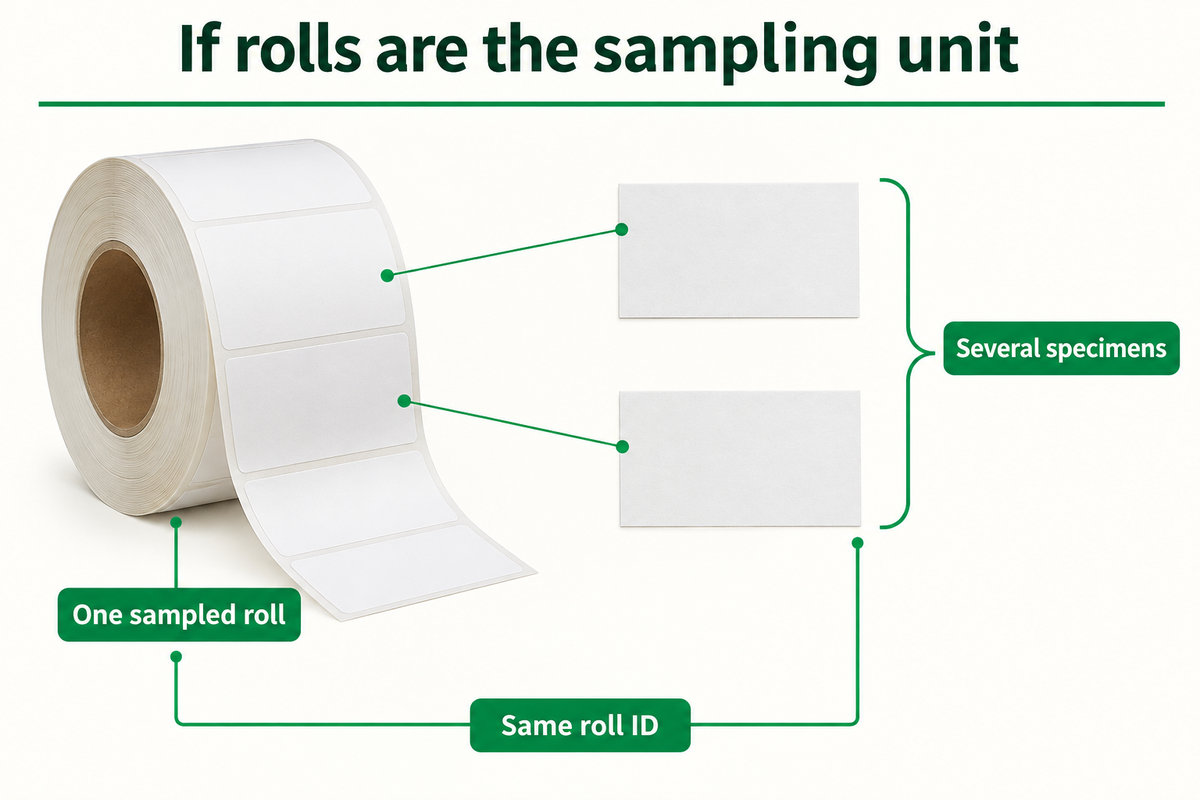
A single receipt can cover a delivery, with a separate inspection record for each supplier lot. Follow the approved sampling plan for which lots to test, how to select rolls and the number of observations to make. Keep the lot traceable even when the approved inspection frequency changes.
A risk-based plan can increase inspection after repeated failures when its switching rules call for tighter checks. ISO 2859-3:2005 describes a formal skip-lot procedure for acceptance inspection by attributes. Use it only when your documented plan calls for it.
What counts as one sample in a roll inspection?
When your plan specifies rolls as the sampling unit, several specimens from one roll count as one sampled roll. NIST treats lot acceptance sampling as the basis for a decision on the lot selected. Capture the roll IDs and any locations specified in the plan. If the plan calls for random selection, select from the full list of roll IDs. Use the planned decision rule for the lot in question.
If the plan contains an acceptance quality limit (AQL), find its sample size and decision numbers via the approved plan.
If the inspection procedure requires a retain sample, label it with the receipt, supplier lot, roll ID, sample location and date. With the other quality checks, document where the sample is stored. For a mixed pallet with missing tags, quarantine the suspect units that cannot be separated until you can restore the lot mapping. A packing list arranged by pallet and lot can help resolve that logistical problem without delaying rolls with readable tags.
Which Tests Are Needed at Receipt?
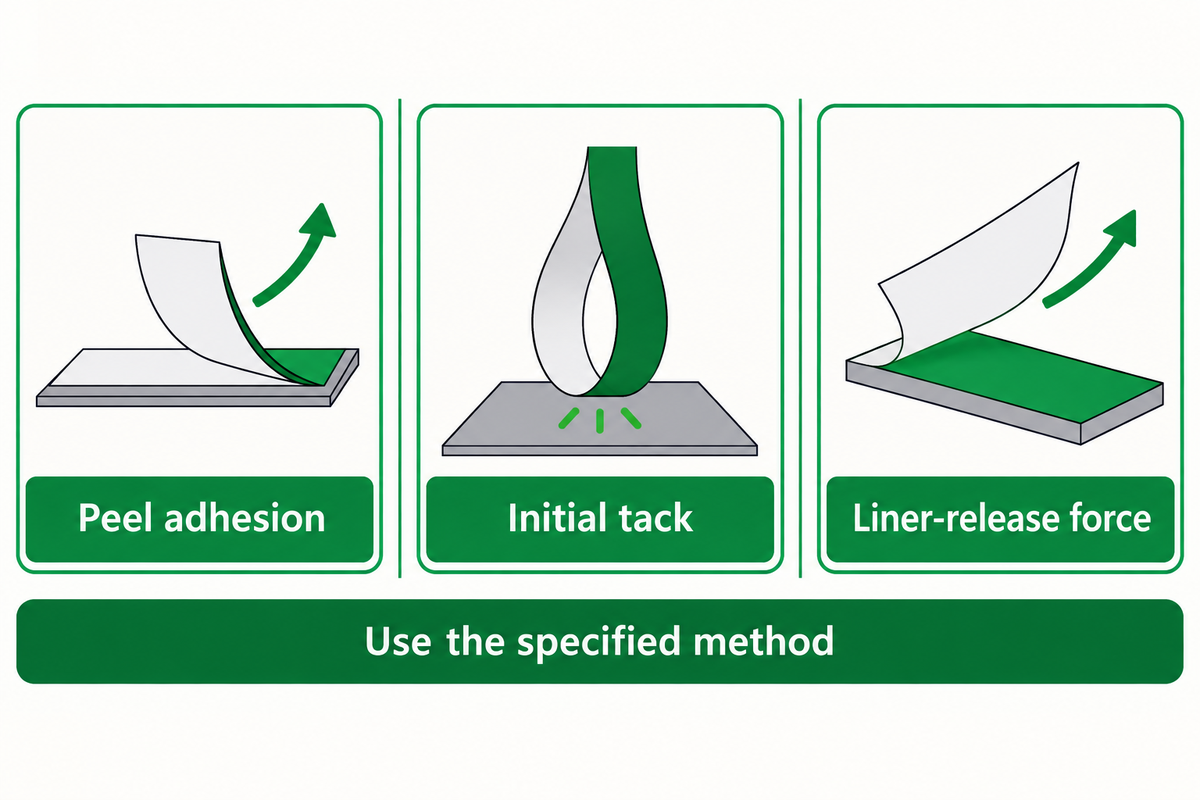
Peel adhesion, initial tack and liner-release force are three separate tests. Order the tests specified in the purchase specification or the approved escalation plan, then record the method, test surface, conditions and acceptance limit. Keep the results in separate fields so a passing peel test cannot be used to clear a missing release measurement.
ASTM D6252/D6252M-98(2025) measures 90-degree peel adhesion of pressure-sensitive label stock and can support acceptance when the purchase specification gives a minimum or maximum value. The test measures adhesion under specified conditions. To assess the tensile strength of a specified liner or face material, use the separate method named in the order. Determining the reason for variation in adhesion or validating a new end use requires evidence for that separate decision.
According to the FINAT Technical Handbook, peel adhesion, release force and loop tack tests are separate tests. A hand peel test on a roll may indicate an anomaly in the roll. For acceptance, use the specified release test or have the quality approver assess an allowed alternative. A new face stock, adhesive grade, or liner, or a new end use may require qualification before it’s accepted for routine receiving. For custom label printing, use the applicable in-process or final inspection plan to check die strike on die-cut stock and ink rub on labels printed with UV inks. A first article inspection may be part of qualifying a new construction. Normal receiving tests are based on the approval criteria for incoming rolls.
Make the Release, Hold or Reject Decision
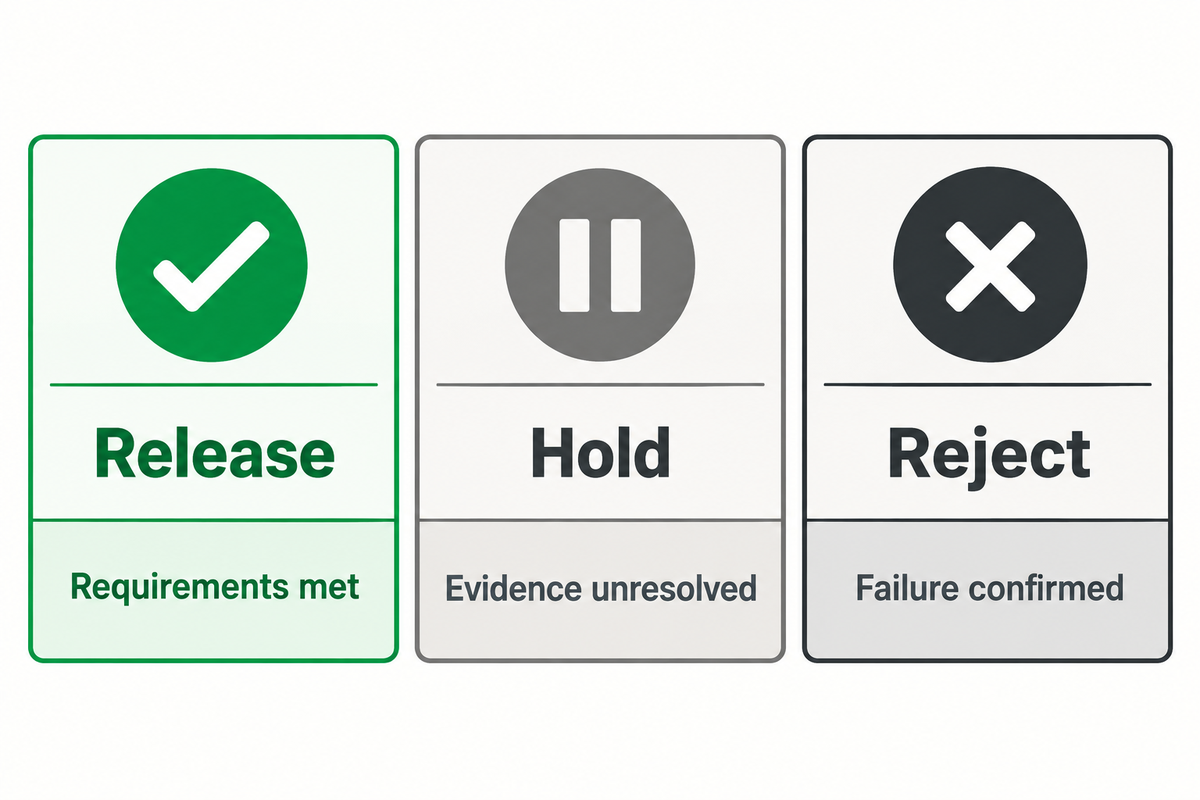
Release lots with a documented approval after confirming that the materials meet specifications. Use a hold status to signify missing or inadequate information, unexplained measurements or unidentified stock. Once the authorized reviewer confirms a nonconformity, record the agreed disposition, whether it is a return, a rejection or a permitted rework with a recheck. Under an approved double-sampling plan, the NIST handbook describes taking a second sample after an inconclusive first stage and combining the results for the decision.
Assign a physical hold location and record it in the warehouse system to reduce the risk of an accidental issue.
| Status | When to use it | What to record next |
|---|---|---|
| Release | Identity, condition, dimensions and required test evidence satisfy the purchase criteria. | Approved lot and roll IDs, inspector, date and release decision. |
| Hold | A tag is missing, a value is outside the agreed limit pending review, or a required report cannot be matched. | Hold quantity, roll IDs and location. Assign the recheck, document request or escalation. |
| Reject | The authorized reviewer confirms the lot or rolls fail the requirement and approves rejection. | Specification revision, affected roll IDs and quantity, defect location, measurements or photos, and supplier disposition. |
Two-lot example. Lot B contains a sampled roll that’s wider than the purchase specification allows. Record the reading and hold Lot B for the prescribed recheck. Assuming Lot A has completed its inspection and the lot tags allow for separation of the lots, the quality approver can release Lot A. A mixed pallet with no readable lot tags needs to be kept on hold until the rolls can be identified.
When reporting a nonconformance, provide the supplier with the purchase revision, roll and lot IDs, defect position and affected quantity. Include the original and recheck readings or photos as appropriate. In the quality management system, keep affected rolls on hold until a reviewer records the disposition, and keep finished goods made from those rolls on the same investigation record if production has used the material. If the same defect repeats, ask the supplier for corrective action with the affected lot IDs and the evidence to review on the next delivery. For a supplier review, use a consistent basis for defect rates. Calculate the observed defect rate by dividing the number of failed rolls by the number of rolls inspected. Keep that distinction for inspection history for continuous improvement, or for reviewing a supplier’s corrective action.
Compare Supplier Quotes on Usable Stock
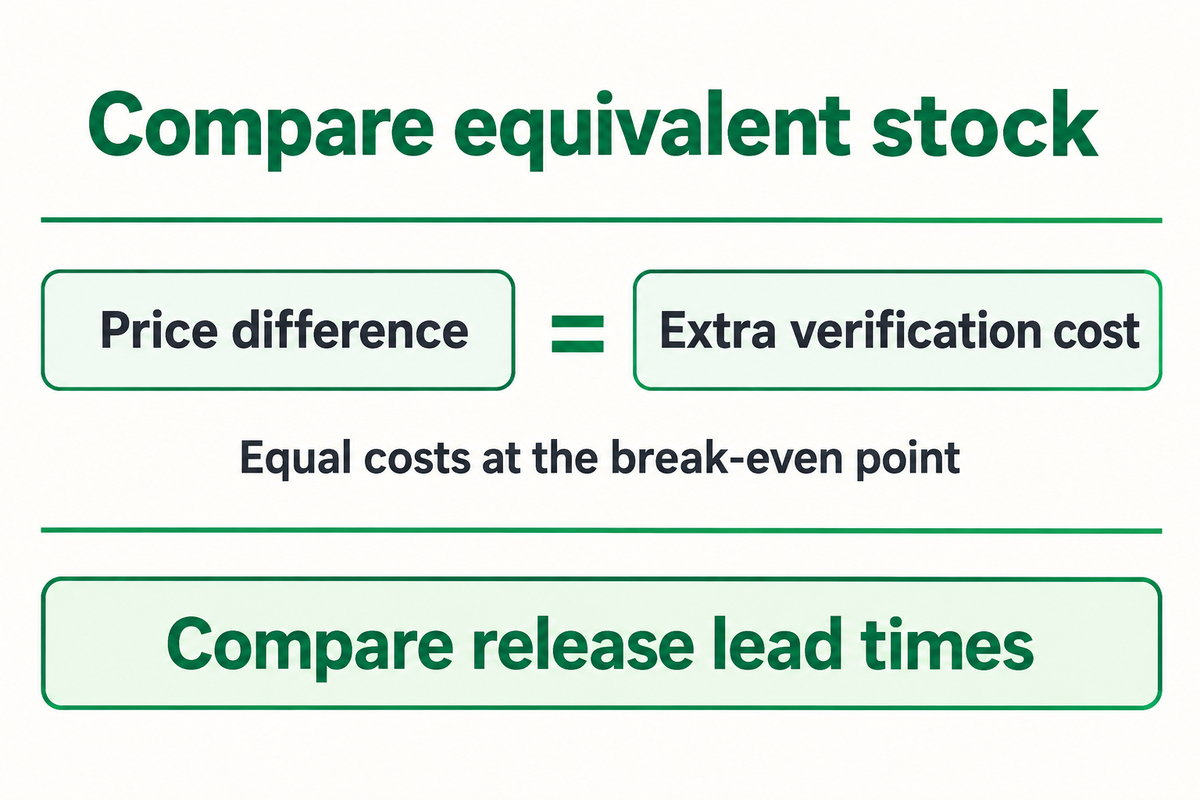
Procurement can compare the delivered price and receiving verification cost for equal quantities of the same construction and roll specification. Before comparing totals, make sure both offers can supply the required evidence. Include lab fees and the manual effort of checking the records when your quality plan permits buyer tests as a substitute for a supplier result. The American Society for Quality counts incoming verification as an appraisal cost.
The difference between the higher and lower delivered prices is the extra verification cost the lower price can absorb before the total costs are the same. When the extra verification costs exceed the difference in price, the lower quote costs more to clear. Compare release lead times separately to avoid costly expediting. If the purchase order requires a supplier certificate and won’t accept a substitute, specify when the certificate is due and match it to the delivered lot before release.
Specify the Next Order with Your Supplier
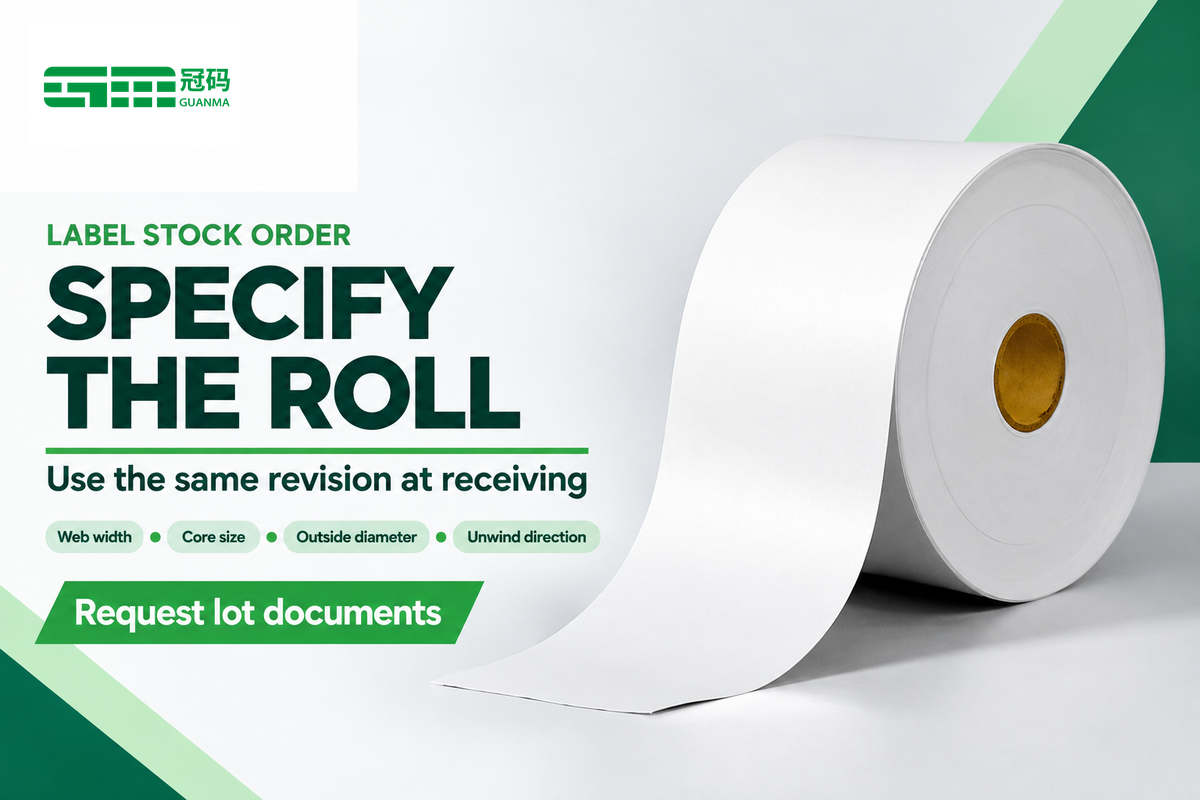
Provide the supplier the approved material code or construction, press width, core size, outside diameter and unwind direction. Have the purchasing department state any required tests, limits and lot documents on the order. For orders serving regulated industries, name any industry-specific documents the buyer requires and state which roll or lot each must cover.
An agreement in writing provides the receiving inspector and the supplier the same basis to work with when a report is missing or the press faces production delays. If the quality of incoming stock has varied from lot to lot, use the recent hold records to ascertain which tests or acceptance limits aren’t clear.
Guanma lists coated and thermal paper grades in its self-adhesive paper range. If you need a roll slit to a given width for a particular press, include that width and the roll build in your request. If possible, send a sample of the stock or the current spec revision. That way the discussion will begin with the grade that you currently run.
Frequently Asked Questions About Label Stock Incoming Inspection
Can I release one supplier lot if another lot in the same shipment fails?
Yes, if the passing lot has completed its own checks and the rolls can be separated and identified with confidence. Record the disposition by lot and ensure warehouse controls prevent the held rolls from being issued. When a common defect can affect both lots, or the roll labels can’t be matched to the supplier lot records, hold the connected stock until the scope is resolved.
Does a certificate of analysis replace my physical roll checks?
Keep the physical checks. A certificate of analysis reports results for the material and tests identified on that document. You still need a physical check to find a core crushed in transit or a roll cut to the wrong width. Match the certificate to the delivered lot and purchase revision, then follow the receiving plan for the physical checks and any sampling the specification requires.
What if the supplier sends a certificate of conformance when the order requires actual test values?
Hold the affected lot and request the missing lot-specific results or the evidence your agreement accepts. Check that the results cover the required properties, units and test methods and that their lot identifiers match the material you received. A quality approver may evaluate a documented deviation where the purchasing rules allow it, with any limits on which rolls may be used recorded in writing.
Is 90-degree peel required on every shipment?
No. Run 90-degree peel when the approved specification or escalation plan calls for it. The test method identifies how to measure peel adhesion. Your purchase specification sets the limit.
What should I keep when a roll fails inspection?
Keep the supplier’s roll label and record the receipt, purchase specification revision, lot and roll IDs, quantity affected, inspection method, and the reason the material was placed on hold. Take photos of the damage and packaging before discarding anything. Identify each retained sample by roll and mark the defect’s position so the supplier can locate it.
Record which rolls stayed on hold and which were issued. If affected stock already reached the press, tell production which lot or roll IDs to stop and trace. Close the record after the authorized person records the disposition and the supplier’s response where applicable. Keep the photos and documents according to your site’s retention rules.
Discuss your next label stock order
Send your current specification or a sample to Guanma, along with the press width and requirements, to begin the discussion.
References & Sources
- ISO 187:2022 Paper, Board and Pulps International Organization for Standardization
- Lot Acceptance Sampling Plans National Institute of Standards and Technology
- ISO 2859-3:2005 Skip-Lot Sampling Procedures International Organization for Standardization
- D6252/D6252M-98(2025) Peel Adhesion of Pressure-Sensitive Label Stocks ASTM International
- FINAT Test Methods FINAT