Get in Touch with Guanma

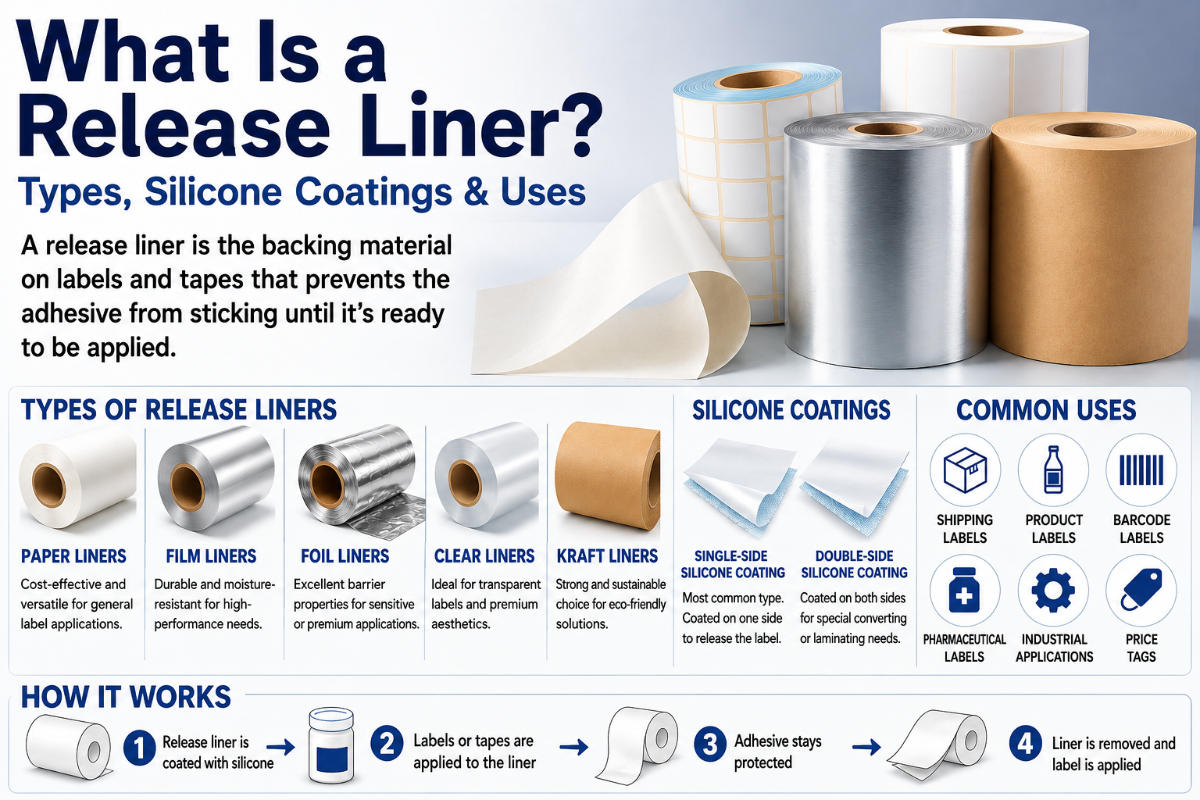
What is a release liner? At its most basic, a release liner is a silicone-coated backing sheet that carries pressure-sensitive adhesive and keeps it from adhering to anything until use. You probably touch a release liner nearly every day – it is that glossy sheet that your label, sticker or tape peels away from (and typically throws away). But that disposable backing sheet holds the key to whether a label dispenses smoothly, die cuts cleanly and survives a high-speed converting line. This guide covers what a release liner is, how the release coating works, key types, reading release force specs and identifying the liner surface.
Quick Specs: Release Liner at a Glance
| Function | Protects and carries a pressure-sensitive adhesive; also the die-cutting bed and dispensing carrier |
| Common substrates | Glassine, SCK & CCK kraft papers, poly-coated kraft, PET polyester film, BOPP, HDPE |
| Release coating | Silicone (most common) or non-silicone; applied and cured on one or both sides |
| Release force range | Roughly 0.05–3.0 N/in (ultra-light to extra-tight), measured per FINAT FTM 3 / FTM 4 |
| Typical caliper | Paper liners ~35–135 gsm; PET film liners ~12–125 µm (≈0.5–5 mil) |
| Main uses | Labels, tapes, medical dressings, graphics, composite prepreg, hygiene products |
What Is a Release Liner?
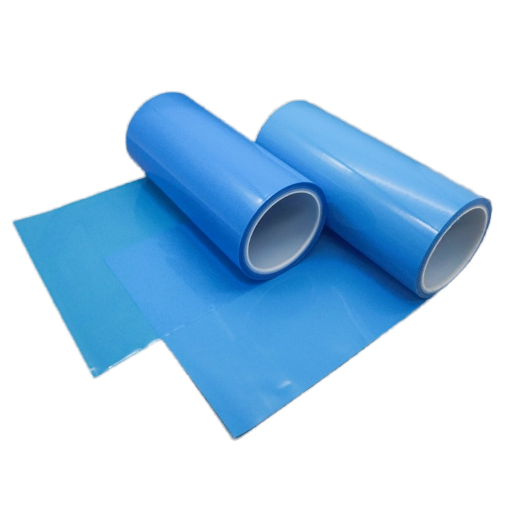
sticky material so it can be put to use at the right time. The standard definition of a release liner describes it as a substrate used to prevent a tacky surface from prematurely adhering, coated on one or both sides with a release agent. Without it, your sticky product — label, tape, or sticker — would bond to whatever it touched, including itself.To picture what a release liner is, look at where it sits. In a typical pressure-sensitive construction (from top to bottom):
- Facestock: That’s your top (often printed) layer, usually made of paper, PET or polypropylene. This layer will become your final visible label, product or sticker.
- Adhesive: this is the pressure-sensitive glue that will permanently bond the label to its final substrate.
- Release coating: A microscopically thin coating, typically made of silicone, where the adhesive will make its resting place.
- Release liner: The backing sheet (again, paper or film) upon which everything else is applied and is protected.
Actually, a release liner does three different jobs simultaneously – a feature most basic definitions neglect. The release liner’s duties are: 1. Protect the adhesive: The liner shields the adhesive layer from contamination (dust, debris etc.). 2. Cutting surface: When the pressure-sensitive label is “die cut” (formed into a specific shape using rotary cutting dies), the liner forms the cutting surface against which the cutter presses – cutting through the facestock but not the liner so the waste “matrix” material can be peeled away cleanly, leaving the labels intact. 3. Dispensing mechanism: The release liner is the surface upon which labels are conveyed through the labeling process. Failure to perform well in any one of these tasks can result in scrap, process delays or the application of labels incorrectly. In essence, a liner’s value is in a workhorse’s capacity to do three tasks effectively, and it warrants careful selection just as much as the facestock it bears.
💡 Key takeaway
Treat a release liner as the engineered cutting board and transporter it really is, rather than the scrap material it sometimes ends up as.
How Does a Release Liner Work? The Silicone Release Coating
A release liner works by creating two very different ‘bonds’ within the construction: a strong one between the facestock and the adhesive above, and a deliberately weak one between the adhesive and the release liner beneath it.
A quick answer is “silicone is too low-energy for an adhesive to stick to.” It is correct but incomplete. Silicone is a low-surface-energy material thanks to its low polarity and flexible polymer backbone, so a pressure-sensitive adhesive cannot easily wet it. But low surface energy alone does not explain silicone’s performance — polytetrafluoroethylene (PTFE) has an even lower surface energy than silicone, yet it makes a worse release coating.
Interfacial slippage is the real explanation. Even once the silicone is cured into a crosslinked network, its polymer chains stay mobile — the surface behaves a little like a liquid, so when you pull the laminate apart the adhesive can glide across it at the nano-scale instead of snagging. Because the adhesive slides rather than grips, very little energy is absorbed during separation and the peel force stays low. PTFE, despite its lower surface energy, has a higher-friction surface that the adhesive cannot slide across as freely — and that is exactly why a release coating engineer reaches for mobile silicone polymer rather than a “slicker”-sounding fluoropolymer.
“Low surface energy is necessary but not sufficient. The defining trait of a silicone release coating is that its chains stay mobile after cure, so the adhesive shears off rather than tears off.”
Most release coatings are applied as a thin film — typical coat weights run around 0.8–1.3 g/m² — and then cured. Addition cure is the dominant method: a base silicone polymer couples with a crosslinker in the presence of a platinum catalyst, building a network of durable Si-O-Si links. Critically, the coating must not only crosslink to itself but also anchor to the substrate beneath it; a coating that does not anchor can rub off and contaminate the adhesive. Modern lines mostly use solventless silicone systems, with solvent-based and emulsion systems kept for specific cases.
Release Liner vs. Release Paper vs. Backing Paper: Terminology Cleared Up
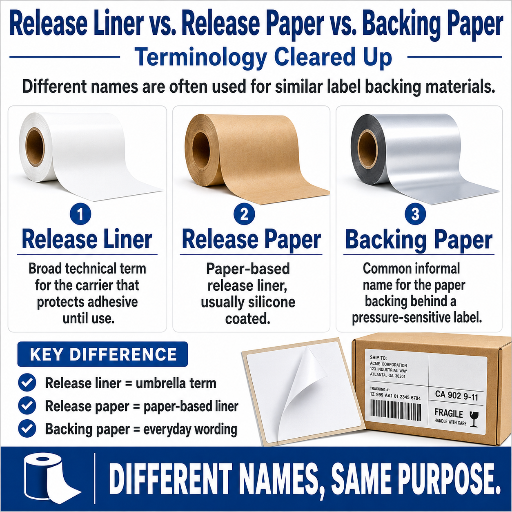
If you have looked into these products, you will have found the same item called five different names. Here is the simple truth: release liner, release paper, and backing paper are used interchangeably across the label and adhesive industry — and so are “liner paper” and “carrier paper.” There is no strict technical boundary between the words.
As a guide, these words do have slightly different connotations which can be helpful in specifying and purchasing:
| Term | How it is typically used |
|---|---|
| Release liner | The broad, preferred industry term — covers both paper and film carriers. |
| Release paper | Often implies a paper-based liner specifically, though many sources still use it for any liner. |
| Backing paper / backing liner | Consumer-facing wording — what most people call the sheet they peel a sticker from. |
| Carrier / liner paper | Emphasises the dispensing role — the sheet that “carries” labels through a machine. |
A common convention: release refers to the action, separation of the liner from a sticky substrate, while liner refers to the object—the carrier sheet bearing the release agent. When a supplier refers to “release paper” or “release liner”, they are generally talking about the same type of material, so check the specific substrate (paper or polymer film) and release level rather than expect the wording alone to distinguish them.
Different Types of Release Liners by Substrate
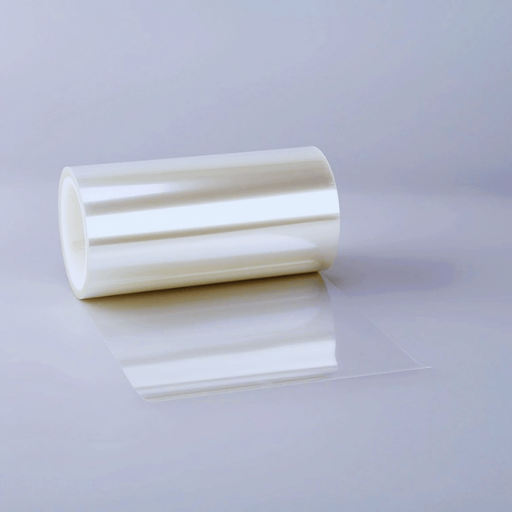
Release liners generally fall into one of two broad families – paper and film – but the decision has a bearing on transparency, temperature stability, dimensional stability and price. Mainstream applications mostly rely on paper liners, and when you’re looking for precision, transparency or thermal resistance, there’s film. Either is generally supplied in roll format although flat sheeting is also available for specialised uses. The following table provides an overview of the most common types.
| Liner type | Family | Typical caliper | Notable property | Typical use |
|---|---|---|---|---|
| Glassine | Paper | ~50–100 gsm | Smooth, dense, economical | Mainstream prime & VIP labels |
| SCK (super-calendered kraft) | Paper | ~60–80 lb (≈98–130 gsm) | Strong, calendered for smoothness | General-purpose labels, tapes |
| CCK (clay-coated kraft) | Paper | Wide range | Heat tolerant, holds silicone well | Graphic arts, hot-melt, tapes |
| Poly-coated kraft (PCK) | Paper + PE | Varies by coat | Layflat, moisture resistant | Humidity-sensitive applications |
| MG / MF kraft papers | Paper | Light–medium | Machine-glazed finish | Cost-driven, lighter labels |
| PET / polyester film | Film | ~12–125 µm | Dimensional stability, clarity | Electronics, precision die-cut |
| BOPP / PP film | Film | Thin gauge | Clear, conformable | No-label-look, graphics |
| HDPE film | Film | Thin gauge | Tough, tear resistant | Industrial & tape liners |
Caliper values provided are typical of the industry, actual caliper will vary by manufacturer and grade. Source: PSTC technical papers and supplier specification ranges.
What Is a PET Release Liner?
A PET (polyethylene terephthalate) release liner uses a polyester film as the carrier instead of paper. Its advantage is dimensional stability: polyester barely moves with tension or humidity, so the liner holds its shape through long production runs and tight-tolerance die-cutting. PET film liners are also thin and uniform in caliper, and that absence of waviness matters whenever labels must register accurately, label after label — for example when a clear film facestock runs on a clear liner for electronics, medical, or automotive assembly. PET film release liners carry a clear price premium over paper, but in high-precision applications that premium pays for itself.
What Is a Paper Release Liner?
A paper release liner uses kraft papers — glassine, SCK (super-calendered kraft), CCK (clay-coated kraft), and poly-coated kraft — as the carrier, all of which accept a silicone coating readily. Paper liners dominate mainstream labelling because they are economical, widely available, and run well on conventional presses. Glassine, made dense, smooth, and strong by intensive calendering, is the most common paper release liner for prime labels; clay-coated and poly-coated grades add heat tolerance and moisture resistance. How well a paper liner holds its silicone coating — its “silicone holdout” — is a studied property of these substrates (Western Michigan University research on silicone holdout for release papers). The drawbacks of paper are that it is less dimensionally stable than film when exposed to humidity, and that standard silicone-coated paper liners are difficult to recycle through ordinary paper streams.
Silicone vs. Non-Silicone Release Systems
Most release liners use a silicone release coating — it is the benchmark for clean, consistent release. But “all liners are silicone” is a misconception, and the exception is not a minor footnote.
The fundamental rule: a silicone-based adhesive can never be used against a silicone-coated liner — silicone bonds to silicone, so the liner would not release at all. Products built with silicone PSAs — common in high-temperature tapes, medical, and electronics — therefore require a non-silicone release system, most often a fluorosilicone coating engineered specifically for that job. Other non-silicone liners use materials such as flat or embossed LDPE for medical, tape, and composite applications.
✔ Silicone release coatings
- Lowest, most consistent release force
- Wide cure options (solventless, solvent, emulsion)
- Proven across labels, tapes, graphics
- ✗ Will not release a silicone adhesive
⚠ Non-silicone release systems
- Fluorosilicone — the answer for silicone adhesives
- LDPE and other coatings for medical/composite
- Fastest-growing market segment
- ✗ Typically higher cost than standard silicone
When deciding on a release liner, the first question is not whether it is paper or film — it is what adhesive chemistry the liner has to release. Get that wrong and no amount of liner-caliper or release-force tuning will fix the resulting release problem.
Understanding Release Force: The 5-Tier Release Force Spectrum
Release force is by far the most important release liner specification — it is the force needed to peel the pressure-sensitive label off the liner. If it is too low, the liner sheds labels prematurely before they reach the dispensing head; if it is too high, the web jams the dispensing equipment.
One way to make a spec more legible is to work on it a tier at a time. The chart below offers a 5-tier release-force spectrum which assigns standard application-enabled release force ranges. Work with this chart, not against it.
| Tier | Typical range | What it enables |
|---|---|---|
| Ultra-light | ~0.05–0.15 N/in | Delicate facestocks, automatic high-speed dispensing |
| Light | ~0.15–0.5 N/in | Most automatic labeling lines, prime labels |
| Medium | ~0.5–1.5 N/in | Hand-applied labels, mixed converting |
| Tight | ~1.5–3.0 N/in | Aggressive adhesives, transfer tapes |
| Extra-tight | >3.0 N/in | Specialty industrial, very high-tack systems |
Ranges are industry standard for representative films/ papers/ laminations under typical testing conditions; confirm your specific material via manufacturer data sheets.
What trips up buyers constantly is that release force is speed-dependent. A laminate that peels easily by hand can read very differently on a 200 m/min press. That is why the industry tests it two ways, using the standardised test methods published by FINAT, the European self-adhesive label association.
📐 Engineering Note
FINAT FTM 3 is the low-speed release force method: the laminate is peeled at a 180° angle with a jaw-separation speed of 300 mm/min, averaging at least five readings taken at 10 mm intervals. FINAT FTM 4 measures high-speed release force, covering roughly 10–300 m/min. Because the two methods give different numbers, a release-force value is meaningless without its test method and speed — always quote, or ask for, the condition, e.g. “0.3 N/in per FTM 3.”
How to Tell Which Side Is the Release Side
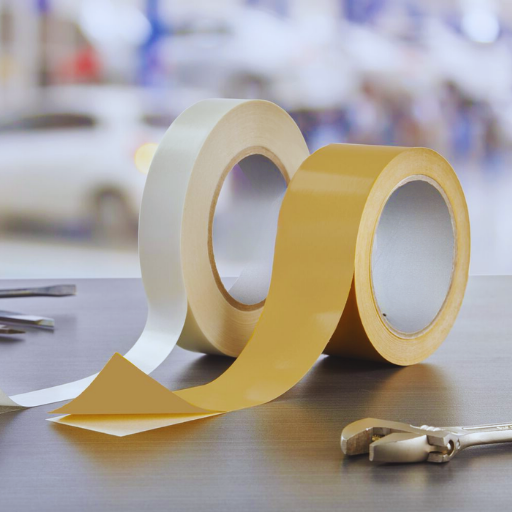
When using a single coated laminate, it has but ONE side with a silicone release liner face – the coated side – and one side without… a side that should never have printing, coating, etc., applied to it! How do you tell without lab test equipment quickly and reliably?
The 3-Test Silicone-Side Check
- PEN/ WATER BEAD TEST. Simply draw a line with a water based marker, or put a drop of water. If it beads up, you’re on the silicone release face; if it wets the paper and absorbs readily, you’re on the other face. This is the absolute “gold standard”.
- SHEEN TEST. Angled light will show a glossier face (silicone side) versus a less lustrous paper face. Less foolproof, but useful.
- NAIL-GLIDE TEST. Put your thumbnail down on one face, then glide down it. One face is noticeably more slippery and has less drag.
When the three agree, you have it made. Many manufacturers simply mark the face-of the coated side of the label-using a marker or square print, so you may be able to rely on that if it’s always consistent. A word of warning, many inks inhibit silicon locally, so always mark a scrap of liner, not an edge to print.
⚠️ Common mistake
Double coated differential liner – On this type of laminate, with different level release coating on both sides (e.g. ‘tight’ vs. ‘easy’ side), there is of course no ‘uncoated’ side. In either case, water would bead… in which case you really must have manufacturer’s designation to know which side to press or print.
Can You Print or Write on a Release Liner?
If the liner material has a single-sided print coating, you can print on the back; most of the labels are marked with a batch number or an instruction. However, you should never print on the silicone side since inks and the coatings cannot wet the release coating in the same way as the label paper surface will do; this results in poor transfer, peeling or smear, or even smudged. Besides, if you use a harsh ink, it may break the coating and leave an uneven print pattern on the liner.
If any of the printing will have to be done on the liner face, ensure to communicate this to the manufacturer beforehand – they would have to apply printability coating over the silicone as the only workable alternative, unless one could use the uncoated liner back. It’s also one of the easiest mistakes that is usually made in the process.
Where Release Liners Are Used: Applications Across Industries
There are release liners wherever a sticky item must be prevented from stickiness until the very moment you need to use it. Job, substrates, and the release factor can all vary, but the actual function does not.
Major application areas
- Pressure-sensitive labels are the largest use, with the liner serving as the die-cutting bed and dispensing medium for product, logistics, and prime labels.
- Double-sided and transfer tapes must incorporate a liner to enable access to the second layer of adhesive.
- These application methods depend on producing an clean and residue free product; sometimes non siliconised carriers are used in the case of medical products, wound dressings, drapes and topical patches
- film and paper release liners flatten out for bubble free application for vehicle graphics and large-format graphics.
- For composite applications, prepreg materials and aerospace lay-up rely on specialty release film and liners.
- Sealing tapes, adhesive closures, and self-adhered construction membranes are all packaged with a carrier in hygiene and building.
It’s an interesting trend: As the application becomes more severe, the release liner move from paper to film, and from commodity to highly engineered. A low-cost shipping label may be well-served by glassine; a medical patch or an electronics component will specify a PET release liner with a tight, very predictable release profile. The release liner quietly enables self-adhesive products of every kind, and as a category of self-adhesive label materials it warrants every bit the same attention as facestock or adhesive. Because the ideal liner depends so heavily on the end use, it often helps to approach selection from the application itself — browsing label solutions organised by application, from pharmaceutical and chemical-drum to freezer and beverage labelling.
Release Liner Sustainability and the Recycling Challenge
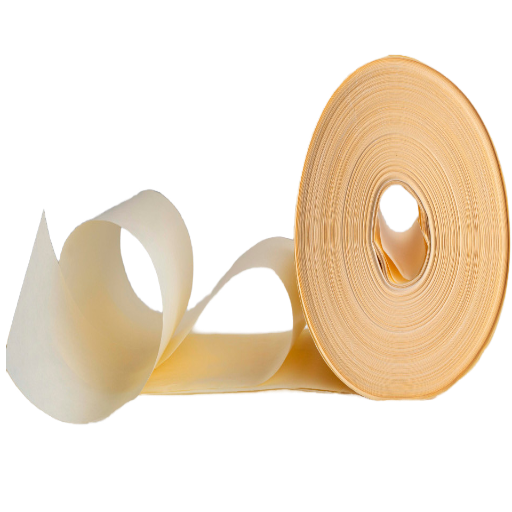
This poses a release liner sustainability crisis, and it’s turning into the key story of the sector, for 2026 and beyond. Ironically, the very silicone layer which makes a liner effective also means they are nearly impossible to recycle: any leftover silicone deposits in the normal waste paper cycle and so the spent liner, with its matrix “chip”, typically ends up in a landfill or incinerated.
These figures frame the scale. According to FINAT and the CELAB-Europe recycling initiative, roughly 1.6 million tons of label liner is sold worldwide each year — about a quarter of it in Europe — of which only around 20% is currently recycled. To change that, FINAT and four major labelstock suppliers — Arconvert-Ritrama, Avery Dennison, Herma, and UPM Raflatac — formed CELAB-Europe, a cross-industry consortium targeting a circular model for more than 75% of used liner and matrix material in Europe by 2025.
Two trends are moving forward side-by-side. The first is the increasing uptake of linerless labels – eliminating the liner altogether – into logistics and retail applications, which will create a long-term substitution threat to traditional liners, although they are currently restricted due to adhesive processing/application. The second trend is recycled content for liners, with suppliers already releasing 120 gsm PE-coated Kraft utilizing 100% recycled content and silicone providers coming out with recycled-silicone coated lines.
Even though the wider release liner market continues to grow at an estimated around US$19.6 bn in 2025 reaching close to US$21 bn in 2026 the volumes of material to handle continue to grow.
💡 What to do about it
When setting the target for label sourcing 2026, take advantage of the dialogue to ask your supplier 2 targeted questions – do you have liner take-back/recycle solutions in place and can you supply either the recycled-content and/or thinner-caliper liners?
Weighting liners is the latest sustainability target and it is time to start doing something real about it, not just talking about it.
Frequently Asked Questions
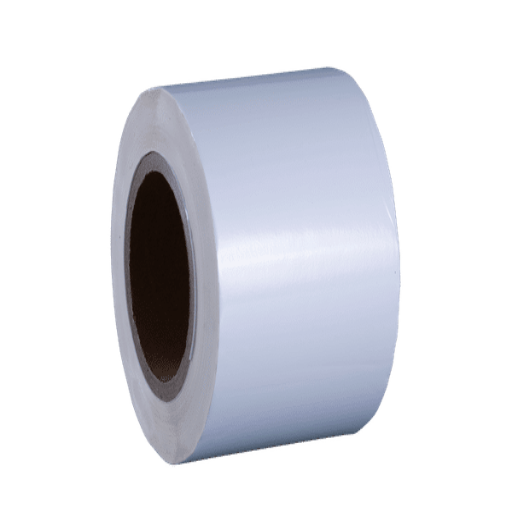
Q: What is a release liner made of?
View Answer
Every release liner is constructed from two components – a substrate and a release coating. The substrate is either a paper, like glassine, supercalendered kraft, clay-coated kraft or poly-coated kraft paper, or a plastic film, including PET polyester, BOPP or HDPE. The producer then applies and cures a thin release coating – usually a silicone (though a non-silicone or fluorosilicone system may be used) – on one or both sides of the substrate.
The substrate offers both physical strength and stability in dimension, while the coating provides a low friction surface for efficient release.
Q: Is a release liner the same as release paper?
View Answer
For everyday industrial applications, yes, treat them as the same word – release liner, release paper, backing paper, carrier paper are all terms for basically the same item. The only nuance is that release paper may also imply that you want a release liner that is paper based as opposed to a film liner. When ordering, just ensure that you specify the substrate and release level and not the name that a vendor calls the product.
Q: Can release liners be recycled?
View Answer
Not through mainstream recycling processes. The silicones present in release liner spoil mixed paper recycling; therefore the overall label liner recycling rate is less than 20% and the majority ends up in landfills. Separate, specialised systems are required to deal with used liners: CELAB-Europe, powered by FINAT, is currently establishing collection and recycling facilities aiming for >75% circular use of used liner and matrix material in Europe by 2025. specialised recycling centres exist where the release liner and matrix paper or PET can be separated from the silicones.
Q: What is matrix or skeleton waste?
View Answer
Matrix waste refers to the excess facestock material (that the die-cut labels haven’t adhered to) and adhesive released after die-cutting. When die cutting the labels and adhering them to a liner, this forms a large category of waste material which along with spent liner, are targeted by recycling schemes.
Q: Why does my label adhesive sometimes stick to the liner?
View Answer
There are several possible culprits: Under-cure or damage to the release coating. The material simply hasn’t been heat-treated enough to develop its optimum releasing properties. – An incompatible release liner: if your release level is too strong for your adhesive (too “tight”), the liner simply doesn’t want to give up the face. – Deep die-cut: a liner run too hot, too much force, or even die-over-anvil conditions in some instances can cause the adhesive to flow into the liner or even pass completely through the siliconized layer and cause loss of release at that point. – Silicone to silicone. What will not work at all is a silicone-adhesive run onto a silicone release liner. – Liner caliper variation: If the loss of release is intermittent as opposed to constant, this likely is the problem. The liner’s thicker areas shift the die-to-anvil gap and cause intermittent problems.
Q: What thickness is a standard release liner?
View Answer
There is no single standard. Paper liners typically range from 35 to 135 grams per square meter, while film release liners run from about 12 to 125 microns (roughly 0.5 to 5 mils) in caliper. Ultimately the caliper depends on your press, your die, and the application — but what counts most is that it stays consistent.
Q: Does the release liner affect die-cutting?
View Answer
Significantly. The liner is the bed the rotary die cuts against, so the die must penetrate the facestock and adhesive but stop at the liner surface. If the liner’s caliper varies, the precise die-to-anvil gap shifts — thick spots prevent a full cut, thin spots let the die strike through. Inconsistent liner caliper is a well-known cause of intermittent label-lift failures, and converting-process issues account for a large share of pressure-sensitive label quality faults. A uniform, correctly specified liner is essential to clean die-cutting.
Specifying a release liner for your labels?
Guanma manufactures coated label stock with paper and film release liners matched to your facestock, adhesive, and converting line — including custom release levels and sample rolls.
Why We Wrote This Guide
Guanma is a coating and laminating manufacturer of pressure-sensitive label stock — facestocks, adhesives, and release liners. We wrote this guide because many buyers of self-adhesive materials overlook the humble but decisive release liner: they scrutinise facestock and adhesive, then treat the liner as an afterthought, even though caliper consistency and the right release value decide whether a converting line runs clean. The figures here are drawn from published standards and industry research, not sales material.
References & Sources
- Release Liner — Wikipedia
- FINAT Test Methods (FTM 3 & FTM 4 Release Force) — FINAT, European self-adhesive label association
- Recycling — FINAT Sustainability
- CELAB-Europe — Circular Economy for Self-Adhesive Label Materials
- Paper-Based Release Liners — Technical Papers — Pressure Sensitive Tape Council (PSTC)
- Assessing Silicone Holdout for Release Papers — Western Michigan University, ScholarWorks
Related Articles
- Release Paper & Liner — Glassine, CCK & Silicone-Coated Solutions — substrate range, release tiers, and sourcing
- Self-Adhesive Film & Label Materials — facestock and adhesive selection guide
- Label Solutions by Application — release liner and labelstock choices matched to each industry use case
- Guanma — Self-Adhesive Label Stock Manufacturer — coating and laminating capabilities