Ponte en contacto con Guanma

Certificado ISO 9001 e Industrial
Etiquetas duraderas y para exteriores
Etiquetas duraderas diseñadas para la identificación de activos industriales, de calor, de calor y de rayos UV en exteriores
Sustrato de etiqueta resistente autoadhesivo ‘con revestimiento superior de PET, papel sintético de PP y papel recubierto de alto brillo fijado a adhesivos acrílicos permanentes, termofusibles y a base de agua ‘diseñado para señalización exterior, etiquetas de activos, almacenamiento en congelador de cadena de frío, automoción debajo del capó y equipos marinos y solares.
- Cumplimiento UL 969
- ASTM G154 (Resistente a los rayos UV)
- ASTM B117 (Spray de sal)
- FINAT FTM-1 (Alta Adhesión)
- IEC 60068-2-30 (Calor húmedo)
- Control de cambios SOP
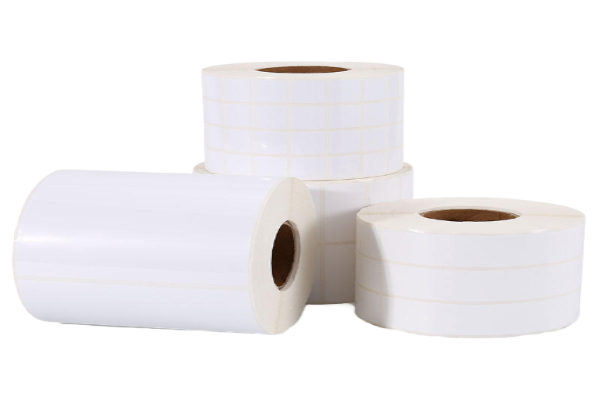
3 × 3 × 10
Facestock × Adhesivo × Medio Ambiente
10+ ani
I+D de Recubrimiento + Laminado
2 Plantas
Fabricación Tailandia + Vietnam
Paquete completo
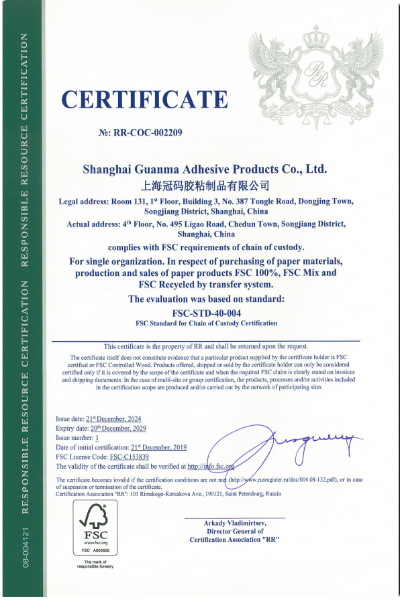
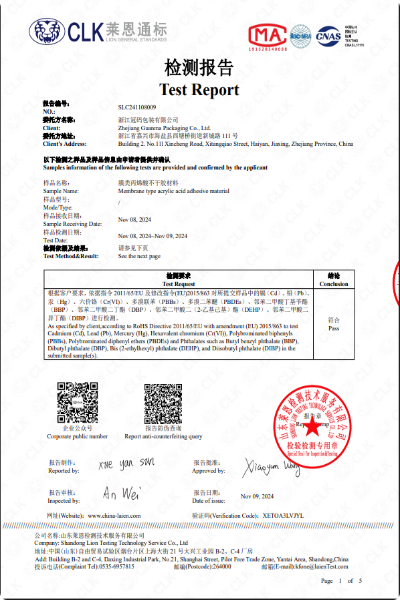
TDS, SDS, RoHS, REACH, CoC
Por qué fallan las etiquetas adhesivas estándar en entornos industriales y exteriores
Las etiquetas duraderas tienen identificación de activos, advertencias de seguridad, información regulatoria y de marca sobre equipos expuestos al aire libre, a temperaturas extremas, a productos químicos y a abrasiones repetidas durante años seguidos. Los modos de falla de campo de estas etiquetas ocurren en la capa de material mucho antes de que cualquier impresora elija inicialmente una cinta. Los aclares de los tambores de la industria son francos al respecto: la durabilidad de la impresión de etiquetas industriales preimpresas es la consideración más importante en la elección del material de las etiquetas; perder el 1 por ciento de la línea de mil millones de tablas por año se convierte en efectivo en el libro de adquisiciones a través de chatarra, trabajo de reetiquetado, tiempo de inactividad y hallazgos de auditoría.
Cuatro modos de falla a nivel de material son responsables de la mayoría de las quejas de etiquetas industriales y exteriores. Desvanecimiento UV y amarillamiento del sustratoconstate una capa superior de poliéster o policapa sin estabilizadores UV añadidos perderá su ventana óptica dentro de 6 a 18 meses de luz solar directa continua, dependiendo del índice UV local. Flujo frío de adhesivoñona un adhesivo de caucho termofusible a granel que es funcional a temperatura ambiente puede fluir lejos de la línea de unión y salir del sustrato a -20 °C, provocando que la etiqueta se desprenda de un recipiente congelado. Delaminación de películas de embalaje y/o arrastre dimensional-alrededor de 80 °C, muchos adhesivos acrílicos permanentes ablandarán y encogerán el material frontal del papel o lámina, lo desencogerán y distorsionarán nuevamente y harán que el código de barras sea ilegible. Abrasión, humedad y degradación química-una etiqueta que debe limpiarse con un desengrasante, cepillarse repetidamente con herramientas o aserrarse con agua salada en cada turno no resistirá el material frontal de un producto genérico. Se debe diseñar un material de etiqueta resistente a la intemperie e impermeable contra el ciclo del agua además de esas otras tres tensiones de diseño, no solo adherido con una capa diminuta de película adhesiva.
El costo oculto de elegir una etiqueta de papel barata para una aplicación industrial
La decisión del área de compras de operar conscientemente con una etiqueta sensible a la presión basada en papel, apropiándose así de ahorros de material, mientras la operación posterior, menos duradera, es un patrón fallido que puede representar otra oportunidad perdida para el análisis de fallas. Los estudios de costo total de propiedad de la industria indican que, en líneas de alto volumen, cuando las etiquetas de papel fabricadas o usadas para mercados industriales de contención química o para exteriores provocan el desecho del producto con etiqueta defectuosa, más el desperdicio de material para etiquetas, este escenario elimina el ahorro en el precio unitario en un plazo de un año. Un proveedor de etiquetas de papel LOS para el programa de seguimiento de ID de activos para exteriores de un cliente, que puede observar que la mitad de la tirada se desprende en 6 meses, arriesga no solo el contrato, sino también la presencia en futuras cotizaciones. La elección del material para una aplicación de alta durabilidad es la elección del TCO, no la del precio unitario.
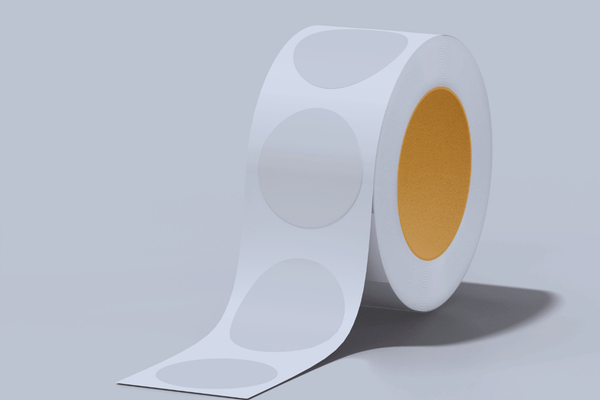
Cada modo de falla se resuelve en una de las cinco capas de la pila de material de etiquetas: química frontal (Papel sintético PET versus PP versus papel estucado), clase adhesiva (acrílico permanente versus agresivo termofusible versus a base de agua), imprimación, recubrimiento superior y liner de liberación. Sustituir un material genérico de etiquetas sensibles a la presión para interiores (diseñado para cajas de cartón o tiendas minoristas en supermercados) por una línea industrial duradera. Un material de etiqueta duradero no es una etiqueta de marketing; es una combinación documentada de material frontal, adhesivo y capa superior con datos de prueba relevantes para el campo, suministrados como etiquetas de rollo en anchos de hendidura y tamaños de núcleo personalizados, listos para la operación de impresión del convertidor.
Aplicación destacada « Donde se especifican las etiquetas duraderas de Guanma
Decision Matrix muestra 6 grupos de aplicaciones donde la combinación más frecuente de especificaciones de convertidor y propietario de marca identifica un material de material frontal de etiquetas duraderas de Guanma. Cada grupo de aplicaciones se aplica a un punto de partida adhesivo y frontal sugerido con una característica de rendimiento general que probablemente interese a la marca o al usuario final. Esta lista no es exhaustiva; Si su aplicación no aparece, solicite una cotización de especificaciones de etiquetas duraderas personalizadas, incluida la descripción de su entorno, y un ingeniero de Guanma puede asesorar sobre una combinación inicial.
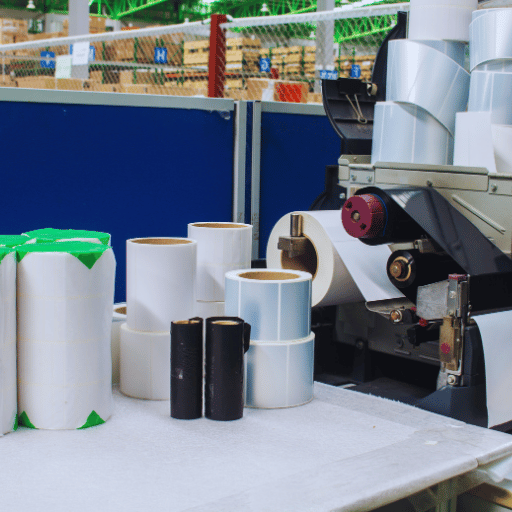
1. ID de activos y equipos industriales
Etiqueta de activos, placa de identificación de la máquina, ID de la sala de herramientas, etiquetas de identificación de activos duraderas y etiquetas de códigos de barras duraderas para almacenes, equipos de campo y electrodomésticos. Tanto por su resistencia al desgaste como por su legibilidad a pesar de su manipulación repetida.
G-TC PET + G-AC9 + laminado opcional

2. Señalización exterior y aviso de seguridad
Etiquetas para exteriores para equipos, etiquetas de advertencia de seguridad y marcados de cumplimiento en formato de etiqueta adhesiva resistentes a los rayos UV que están expuestos a la luz solar directa y a las condiciones climáticas para exteriores, y etiquetas de identificación de alta durabilidad utilizadas en programas de activos agrícolas o municipales. La estabilidad UV es el principal factor de estrés; un frontal de PET con un recubrimiento superior resistente a los rayos UV es el punto de partida sugerido para cualquier etiqueta resistente a la intemperie que deba soportar una exposición de varios años para exteriores.
G-TC PET + G-AC9 + capa superior estabilizada a los rayos UV

3. Criogénico de cadena de frío y congelador
Etiquetas de congelador para el procesamiento de alimentos en mataderos, pasillos farmacéuticos de cadena de frío, logística congelada. Una etiqueta confiable debe agarrarse a la aplicación incluso si el sustrato ya está frío y ser inamovible mediante congelación y descongelación repetidas.
G-TC PET + G-HM3 termofusible con agarre en frío
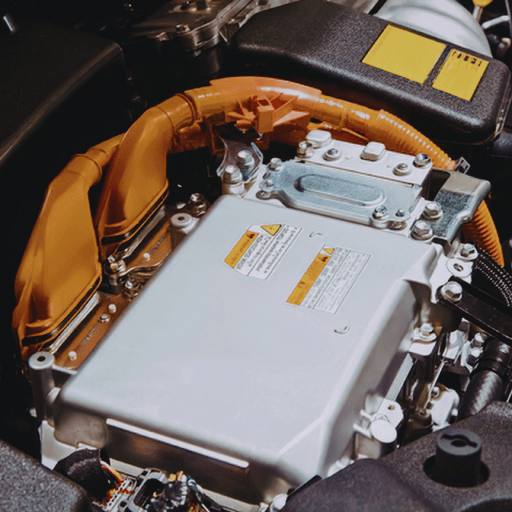
4. Bajo capó y posventa de automóviles
Identificación de activos del compartimento del motor, etiquetas de cumplimiento debajo del capó y etiquetas de advertencia del mercado de accesorios en servicio de alta temperatura. La restricción de diseño es un servicio continuo a +80 C y picos cortos por encima.
Variante termoestable G-TC PET + G-AC9

5. Panel solar y energías renovables
Etiquetas de placa nominal de paneles solares, etiqueta de cumplimiento del inversor e identificación de equipos renovables para exteriores. UV directo continuo durante la vida útil del diseño del panel (en muchos casos, diez o más años para las expectativas del ciclo de vida de IEC 61215) es la tensión dominante.
G-TC PET+ G-AC9+ capa superior estabilizadora UV+laminat

6. Equipos marinos y costeros
Identificación de equipos de muelle, etiquetas de activos marinos, servicio de lavado IP67, etiquetas industriales costeras. Estas etiquetas estarán sujetas a condiciones de humedad, niebla salina y ciclos de humedad, por lo tanto, el objetivo del diseño es el rendimiento de la niebla salina más los ciclos de humedad.
G-TC PET + G-AC9 high-tack + laminado marino
Guanma Durable Label Materials vs Adhesivo Industrial Genérico Stock « Comparación de rendimiento
Al comparar un material de etiqueta duradero principal de Guanma con un stock industrial genérico sensible a la presión, los equipos de adquisiciones deben comparar seis dimensiones y no solo el precio unitario. A continuación, se utilizan puntos de referencia típicos de la industria para la combinación recomendada de Guanma (G-TC PET + G-AC9) versus un material de etiqueta genérico sensible a la presión de grado interior; la compensación se hace visible en una vista; Los informes de prueba certificados por SKU están disponibles con cada envío de muestra.
Resistencia a los rayos UV (ASTM G154 Ciclo 1)
Guanma G-TC PET + G-AC9
Objetivo de referencia de la industria ≥ 1000 horas, sin desvanecimiento significativo
Stock genérico de calidad interior
Normalmente, entre 200 y 400 horas antes de que se desvanezca notablemente
Rango de temperatura de servicio
Guanma G-TC PET + G-AC9
-30°C a +80°C continuo; Cara de PET sola -70°C a +200°C; G-HM3 mantiene el agarre a -40°C
Stock genérico de calidad interior
A menudo -10°C a +60°C; No se especifica la confiabilidad de agarre en frío y alta temperatura
Spray de sal (ASTM B117, 5% NaCl)
Guanma G-TC PET + G-AC9
Objetivo de referencia de la industria ≥ 480 horas, sin elevación de bordes ni degradación del código de barras
Stock genérico de calidad interior
Normalmente no se prueba; no recomendado para servicio marino o costero
Peeling envejecido por adhesión (FINAT FTM-1)
Guanma G-TC PET + G-AC9
Objetivo de la industria ≥ 18 N / 25 mm de ancho después del envejecimiento estándar
Stock genérico de calidad interior
Normalmente 8-12 N/25 mm; se degrada más rápido bajo ciclos térmicos
Compatibilidad del método de impresión
Guanma G-TC PET + G-AC9
Validado para transferencia térmica, flexo UV, flexo a base de agua y inyección de tinta digital
Stock genérico de calidad interior
A menudo validado únicamente con una o dos tecnologías de prensa
Paquete de documentos
Guanma G-TC PET + G-AC9
TDS, SDS, RoHS, declaración REACH SVHC, CoC, SOP de control de cambios
Stock genérico de calidad interior
A menudo una hoja de especificaciones de una página; Las lagunas en la auditoría de calificación de proveedores son comunes
Productos relacionados — Cuándo elegir en su lugar un material resistente a productos químicos, para envases de alimentos o un liner de liberación CCK
El material de etiqueta resistente al que se hace referencia en esta página está formulado para intemperie en exteriores, rayos UV, calor, abrasión y servicio industrial en general. El catálogo de marcas de Guanma incluye tres líneas de materiales de etiquetas hermanas para aplicaciones vecinas. Seleccione la línea optimizada para el factor estresante dominante en su entorno.
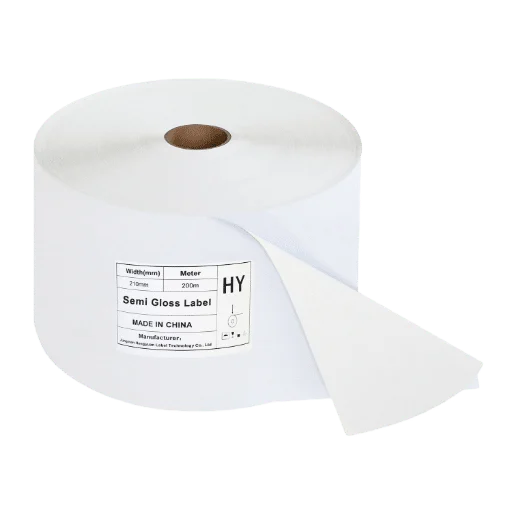
Materiales de etiquetas resistentes a productos químicos
Seleccione la línea resistente a productos químicos cuando el factor estresante dominante en su etiqueta sea solvente, aceite, combustible o química de limpieza agresiva en lugar de UV más clima. Esta línea resistente a productos químicos está formulada para etiquetas de tambores industriales, contenedores de lubricantes y envases de productos químicos donde la etiqueta está expuesta a cargas químicas en cada ciclo.
Ver especificaciones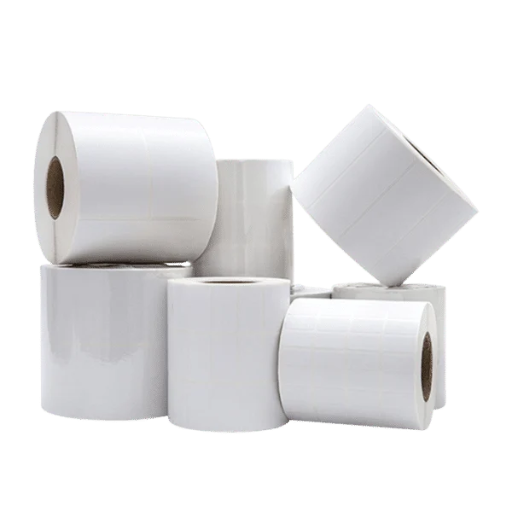
Etiquetas de envases de alimentos
Seleccione la línea de material para etiquetas farmacéuticas cuando su aplicación exija cumplimiento de FDA 21 CFR Parte 211, datos de idoneidad del embalaje según USP , biocompatibilidad ISO 10993, caracterización del adhesivo de baja migración o una declaración de TSE / BSE. Los usos farmacéuticos habituales incluyen viales, ampollas, jeringas, bolsas intravenosas, envases blíster y medicamentos de venta libre.
Ver especificaciones
Papel de liberación CCK
Seleccione la línea de papel antiadherente kraft recubierto de arcilla (CCK) cuando obtenga el revestimiento antiadherente de forma independiente para usarlo en su operación de conversión, en lugar de la pila completa de material de etiqueta. El papel antiadherente CCK es el soporte que soporta la capa adhesiva cuando se envía ISO y está calificado para operaciones de conversión de etiquetas con su propio equipo de recubrimiento o laminado.
Ver especificacionesGuía de adquisiciones « MOQ, plazo de entrega, política de muestra y etiquetas duraderas personalizadas de compilación según especificación
El flujo de trabajo de adquisiciones a continuación está diseñado para un ciclo de calificación corto, no para meses. Las instalaciones de fabricación y soporte de Guanma tienen su sede en Tailandia y Vietnam y la empresa está en un programa de exportación activo para el sudeste asiático, América del Sur y Europa. Varias características influyen en un pedido duradero de material de etiquetas: elección de material frontal y adhesivo, ancho de hendidura y tamaño del núcleo, rendimiento de impresión, acabado de etiquetas y paquete de documentos « se describen aquí para que un equipo de adquisiciones de convertidor o propietario de marca alcance una solicitud de cotización para un SKU original o etiquetas personalizadas.
Ejemplo de política y recuperación de cualificaciones
Para una nueva aplicación o si una nueva combinación de revestimiento/adhesivo requiere aprobación, Guanma proporciona un rollo de prueba gratuito de 100 m en el ancho de hendidura y el tamaño del núcleo requeridos. El tiempo estándar de toma de decisiones está diseñado para ser breve, de modo que la calificación no esté en el cronograma de ruta crítica del proyecto. Se suministra un CoC por lote de cada rollo de muestra junto con un TDS y SDS vigentes y cualquier declaración reglamentaria necesaria (RoHS, REACH SVHC) para el material solicitado.
MOQ y factores de tiempo de entrega
La cantidad mínima de pedido y el tiempo de entrega dependen de 3: stock de SKU estándar versus especificaciones personalizadas, ancho de rendija y configuración central, región de destino. Los SKU estándar disponibles en stock en Tailandia o Vietnam se envían más rápido que el material de especificaciones personalizadas, que tendrá que pasar por un proceso de recubrimiento. El tiempo de entrega regional es más corto en el sudeste asiático que en Europa o América del Sur debido a los tiempos de tránsito. Solicite una cotización actualizada para la combinación que está analizando.
Marco de Factores de Adquisiciones
Cada una de las siguientes dimensiones alterará el costo unitario, así como el tiempo de entrega de una solicitud propuesta de construcción de etiquetas duraderas personalizadas según las especificaciones. Guanma se diferenciará con una solicitud de cotización escrita.
Selección frontal
Se caracteriza por la selección de PET con recubrimiento superior, papel sintético PP con recubrimiento superior o PET con papel recubierto premium, que son las opciones de mayor calidad y, por tanto, las más caras.
Clase adhesiva
Acrílico, permanente, agresivo en caliente (cadena de frío o alta adherencia) o de uso general a base de agua
I. Peso del recubrimiento y elección de la capa superior
Capa superior estándar, capa superior estable a los rayos UV, capa superior estable a los químicos
Ancho de hendidura y tamaño del núcleo
Núcleo estándar de 76 mm, ancho de hendidura personalizado o núcleos de máquina especiales disponibles bajo pedido
Opción laminada
Película sobrelaminada para mejorar la resistencia a los rayos UV, la abrasión o los productos químicos
Limite du périmètre du pack documente
Paquete estándar (TDS, SDS, COC) ou paquete largie (RoHS, REACH SVHC, control de cambios SOP, rapport de test metré),
Volumen y región de envío
Planta de Tailandia para distribución SEA, Vietnam para distribución UE, SA
Normas de cumplimiento y prueba « UL 969, ASTM G154, ASTM B117, FINAT FTM-1, IEC 60068-2-30, RoHS, REACH
Los estándares comunes citados en la documentación de calificación de proveedores de materiales de etiquetas duraderas incluyen los siguientes métodos de prueba, requisitos reglamentarios y estándares de reconocimiento de componentes. Cada entrada incluye una explicación de lo que la norma de hecho especifica porque varias de las normas más citadas son métodos de prueba que no dan un resultado definitivo de aprobación-falla; La duración, la duración y los criterios de aceptación del ciclo deben especificarse al momento de la solicitud.
UL 969
Sistemas de marcado y etiquetado
ASTM G154
Exposición fluorescente a los rayos UV
ASTM B117
Sal en aerosol (niebla)
FINAT FTM-1
Adhesión al pelado 180°
IEC 60068-2-30
Db cíclico de calor húmedo
RoHS 2011/65/UE
Restricción de sustancias peligrosas
ALCANCE CE 1907/2006
Declaración de sustancia SVHC

×
![Estándar ampliado]()
Herramientas de ingeniería interactivas
Selector de matriz de decisión de material de etiqueta duradero
Dígale al selector su entorno, el factor estresante dominante y su método de impresión. La herramienta devuelve una combinación de inicio de adhesivo y material frontal recomendada por Guanma, la fila de especificaciones de rendimiento correspondiente y notas de ingeniería para la calificación de la muestra.
Iniciar selectorGenerador de listas de verificación de cumplimiento y estándares de prueba de materiales de etiquetas duraderas
Genere una lista de verificación lista para auditoría de estándares de prueba y documentación regulatoria que Guanma proporcionará para su aplicación. Elija la aplicación, la región de destino y los requisitos del seguimiento de auditoría; la herramienta devuelve el conjunto de documentos y muestra qué fracción está incluida en el paquete de muestra estándar versus extendido.
Generar lista de verificaciónPreguntas frecuentes
Las tres líneas de materiales se orientan a distintos factores de estrés predominantes. El material para etiquetas de alta durabilidad de Guanma está diseñado para UV para exteriores, ciclos térmicos, intemperie, abrasión e identificación general de activos industriales, donde la etiqueta afronta múltiples factores de estrés, pero ninguno es abrumadoramente agresivo. La línea de material para etiquetas resistentes a productos químicos está diseñada para el contacto directo y continuo con solventes o aceites, y es la opción correcta cuando la exposición química es el riesgo de falla predominante. La línea de material para etiquetas farmacéuticas está diseñada para el cumplimiento normativo de FDA 21 CFR Part 211, la caracterización de idoneidad de envases USP <661>, adhesivo de baja migración y biocompatibilidad ISO 10993 — el marco regulatorio, no el entorno, determina esa línea. Si su aplicación se sitúa entre dos líneas (por ejemplo, un refrigerador farmacéutico para exteriores con limpieza mediante solvente), comparta los detalles de la aplicación y el equipo de ingeniería de Guanma recomendará la línea inicial adecuada; si está definiendo una decisión de matriz de marcas para varias etiquetas de la misma familia de productos, solicite también la hoja de trabajo de decisión entre líneas.
Comience con el factor de estrés predominante de la Matriz de decisión anterior (UV, frío, calor, productos químicos, abrasión, niebla salina, aceite, inmersión en agua o baja desgasificación). Para la mayoría de las aplicaciones de intemperie y etiquetas de activos para exteriores, el frontal de PET con recubrimiento superior más Acrílico permanente (G-AC9) es la combinación inicial adecuada. Para congelación profunda de cadena de frío (-40C continua), PET con recubrimiento superior más Hot-Melt agresivo (G-HM3) es el punto de partida adecuado. Para servicio para exteriores resistente a salpicaduras y sensible al costo, el papel sintético de PP con recubrimiento superior más Uso general a base de agua (G-WB7) está dentro de la tolerancia. Si su entorno con múltiples factores de estrés presenta dos o más factores (p. ej., UV más salpicaduras químicas más agua salada), solicite una revisión de ingeniería de etiquetas personalizadas de alta durabilidad con los detalles de la aplicación.
La cantidad mínima de pedido y el tiempo de entrega son función de tres parámetros: SKU estándar versus construcción bajo pedido con especificaciones personalizadas, ancho de hendidura y tamaño del núcleo, y región de envío. Los SKU estándar en stock en la planta de Tailandia o Vietnam se enviarán durante la noche, o al menos dos días antes, que el material personalizado que requiere un proceso de recubrimiento. El tiempo de entrega regional es más corto en el sudeste asiático que en Europa o América del Sur debido al tránsito. Solicite una cotización de precio actual con su facestock más la elección de adhesivo, ancho de hendidura, tamaño del núcleo, volumen y destino, y Guanma responderá con un MOQ y un tiempo de entrega específicos.
Guanma suministra un rollo de calificación gratuito de 100 metros en el ancho de hendidura y el tamaño del núcleo solicitados. Cada rollo de muestra llega con un Certificado de Cumplimiento por lote, una Hoja de Datos Técnicos vigente, una Hoja de Datos de Seguridad actual y las declaraciones reglamentarias relevantes para el material (declaración de la Directiva RoHS 2011/65/UE y declaración REACH EC 1907/2006 SVHC). Para una calificación extendida (RoHS más REACH más SOP de control de cambios más informe de prueba personalizado), solicite el paquete de documentos extendido con sus muestras.
La carátula de PET con revestimiento superior recomendada se validó en el propio rollo de calificación interno de Guanma (orden de la fábrica) para impresión por transferencia térmica (tanto cinta de cera como de resina), transferencia térmica con cinta de resina para cumplir con los estándares químicos y de resistencia a la abrasión, flexibilidad UV y agua. tipos de prensa flexográfica a base de agua y tipos de tinta de inyección digital. Es posible que haya disponible una prensa superior personalizada o que las formulaciones se puedan ajustar en consulta con el proveedor para que coincidan con la combinación deseada de tinta y léxico. Reúnase con su proveedor de prensa y solicite un memorando de idoneidad del método de impresión antes de comenzar la calificación.
La vida útil es específica de la aplicación y está impulsada por el índice UV regional, el perfil del ciclo de temperatura y el criterio de aceptación (sin desvanecimiento versus sin falla funcional). Los puntos de referencia típicos de la industria de la combinación sugerida de PET recubierto superior de Guanma más acrílico permanente, que Guanma considera como un estándar de calificación interno mínimo, son: al menos 1000 horas de exposición a los rayos UV según ASTM G154 Ciclo 1 (UVA-340) antes de un desvanecimiento significativo; operación continua de 30C a +80C; al menos 480 horas de resistencia a la corrosión por niebla salina en ASTM B117. Para traducir los estándares a una vida útil de un año calendario, el equipo de ingeniería de Guanma modelará una vida útil anticipada utilizando los datos de su aplicación. Solicite un informe de prueba de certificación de preventa con su lista de calificación.
Sí. Guanma proporciona material para etiquetas de alta durabilidad de alta gama en formato de etiquetas en rollo o bobina, con una gama de anchos de corte longitudinal y los tamaños de mandril o tubo interior de máquina más comunes según la demanda del cliente (mandriles o tubos interiores estándar de 76 mm y 152 mm; otros tamaños de mandril o tubo interior disponibles a solicitud). Indique la tolerancia del ancho de corte longitudinal y el tamaño del mandril o tubo interior al solicitar la cotización para que la planificación de producción en la planta de Thailand o Vietnam pueda secuenciar la tirada de corte longitudinal.
Sí. Guanma mantiene un SOP de control de cambios escrito que emite una notificación de cambio antes de que se implemente cualquier cambio de formulación, proveedor o proceso en un material de etiqueta duradero calificado. Este documento es lo que los equipos de control de calidad tienden a buscar en el paquete de calificación de proveedores cuando se proponen calificar a Guanma como proveedor; lo suministramos, junto con la notificación de cambio que SLA Guanma mantiene para clientes proveedores calificados, bajo demanda.
Por qué creamos esta referencia de material de etiqueta duradera
Las hojas de especificaciones de materiales de etiqueta más duraderas de esta categoría dejan que el comprador interprete la jerga de los folletos del proveedor en una decisión de adquisición real.
La herramienta de trabajo Nuestra fila de especificaciones de rendimiento y matriz de decisión 3 × 3 × 10 en esta página es la herramienta de trabajo que el equipo de ingeniería de Guanma utiliza internamente al determinar el alcance de una nueva etiqueta de activos, congelador o exterior; Lo publicamos aquí como referencia pública para que los convertidores y los equipos de adquisiciones de propietarios de marcas puedan determinar la preventa de calificación.
Objetivos de desempeño Los límites de temperatura de servicio, pulverización de sal y UV son objetivos típicos de la industria para los que está diseñada la combinación recomendada de PET con recubrimiento superior más acrílico permanente; Los informes de prueba certificados por SKU están disponibles con cada envío de lote de calificación.
Tendencia ahora