Get in Touch with Guanma

Synthetic Paper
Synthetic Paper for Self-Adhesive Labels
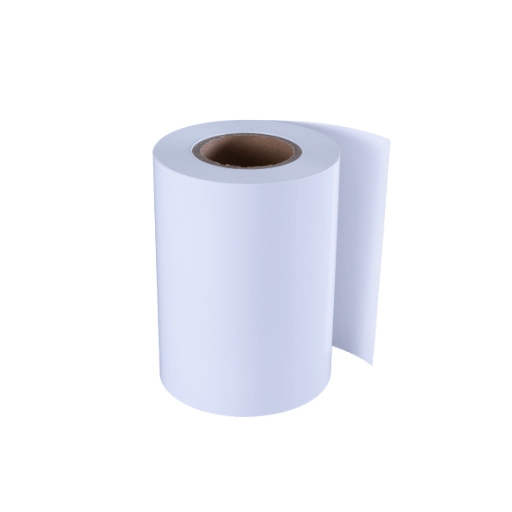
Tear-proof waterproof BOPP facestock. Conventional paper won’t cut it in these industrial labels. BOPP face stock with your choice from more than 9 adesive systems and various liner options.
Get Instant Quote
3
Thickness Options
(54 / 75 / 100μm)
9+
Adhesive Types
(Acrylic to Freezer-Grade)
5
Print Methods
(UV / Flexo / Screen / TTR / Digital)
−10 to +60°C
Application
Temperature Range
1530mm
Max Roll Width
(Custom Slitting)
Why Synthetic Paper for Your Labels?
Standard coated paper facestocks fail the instant they come into contact with moisture—ink smears, edges curl and the adhesive bonds weaken. In freezer facilities, paper labels crack within weeks. Chemicals spill on chemical drums and solvent dribbles affect both the print and the substrate.
Synthetic paper overcomes the failure modes. Biaxially- or mono-axially-oriented polypropylene (BOPP), the facestock is a resin-based polymer, bringing the printability of paper and the toughness of film, with every sheet being resistant to water, holes, tears, and to the effects of chemicals between 10C and +60C operating temperatures. Its semi-gloss white surface receives UV, flexo, screen, thermal transfer, or digital inks with no laminating – simplifying your conversion machinery and reducing your cost per label.
Engineering Note
The tear resistance of BOPP synthetic paper is due to biaxial orientation- the polypropene film which is produced by co-extrusion is extended in both MD and TD directions. Molecular orientation counterbalances edge tear propagation during die cutting and dispensing.Compared to HDPE synpaper, BOPP have est.50% thickness.
Synthetic paper is the ideal bridging material for label converters and brands sourcing facestock material, offering a long-lasting performance close to that of film labels at a price comparable to commodity paper labels.
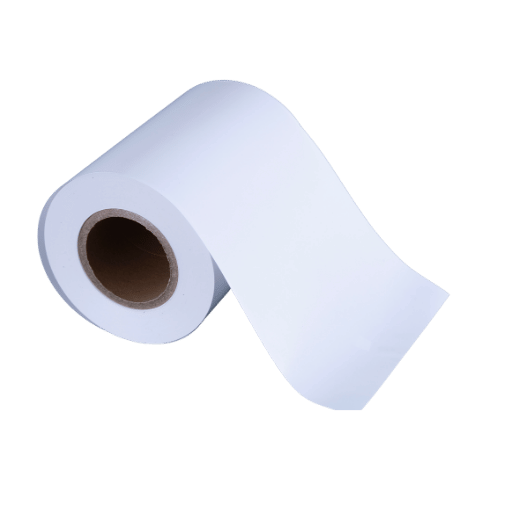
BOPP vs HDPE Synthetic Paper — Performance Comparison
The synthetic papers market is evenly fragmented between two classes of polymers: biaxially oriented polypropylene (BOPP) and high density polyethylene (HDPE). Would you go for BOPP or HDPE depending on the applications requirements?
Property
BOPP Synthetic Paper
HDPE Synthetic Paper
Base Polymer
Polypropylene (PP), biaxially stretched
High-density polyethylene (PE)
Typical Thickness
54–100μm (2.1–3.9 mil)
150–250μm (5.9–9.8 mil)
Density
~0.91 g/cm³
~0.95 g/cm³
Tear Resistance
High — biaxial orientation prevents tear propagation
Very High — greater material mass
Water Resistance
Excellent — zero moisture absorption
Excellent — zero moisture absorption
Flexibility
High — conforms to curved surfaces (bottles, tubes)
Lower — more rigid, suited to flat substrates
Print Compatibility
UV, flexo, screen, TTR, digital inkjet
Flexo, offset; limited inkjet compatibility
Opacity
Good (with surface coating)
Excellent (inherent to material)
Primary Applications
Self-adhesive labels, tags, packaging wraps
Maps, ballots, outdoor signage, book covers
Recyclability
PP #5 — recyclable
PE #2 — recyclable
Guanma Product Line
Full range: 54 / 75 / 100μm with 9+ adhesive options
Contact us for availability
The world standard for self-adhesive label applications is BOPP. it is used by all label manufacturers from Yupo in Japan, to small, regional Japanese converters, and global players from South America to China. BOPP is thinner than other webs of similar strength, decreasing material cost per m2, has added flexibility over other plastics for conformability to curved surfaces, and suitable for printing with all the major commercial printing processes. At Guanma our synthetic paper products are produced on BOPP webs with our own proprietary adhesive coating process.
Sourcing Tip
Always ask for sample printability test rolls from synthetic paper suppliers, before placing large volume orders. Ink adhesion can differ greatly with surface coating formulas, particularly in a thermal transfer and ink jet applications. We offer free sample rolls for the converter qualification process.
Self-Adhesive Synthetic Paper | Available in 54μm, 75μm, and 100μm Thicknesses
Guanma synthetic paper is produced in three thickness grades. One semi-gloss white BOPP facestock, identical in surface energy (for all inks), is used for all three grades.
54μm (~2.1 mil)
Approx. Weight
~60 g/m²
Rigidity
Flexible, conformable
Recommended Applications
Wrap-around bottle labels, curved surface labels, high-speed dispensing
75μm (~3.0 mil)
Approx. Weight
~80 g/m²
Rigidity
Balanced
Recommended Applications
General-purpose labels, product tags, shipping labels
100μm (~3.9 mil)
Approx. Weight
~110 g/m²
Rigidity
Rigid, sturdy
Recommended Applications
Industrial nameplates, durable hang tags, outdoor-rated labels
Thick gauges are fine for the application when using a label converting process in a warm environment. Thin gauges work well at high speeds using a rotary die-cut process and approximately follow the contour of small diameter containers. Thicker gauges are used for hang tags and nameplates where stiff labels will endure handling and removal of curling. Our application engineering team can suggest the best thickness for your ideal die-cutting process and dispense speed.
Roll Specifications
Color: Semi-gloss white
Standard widths: 1000 / 1020 / 1080 / 1530mm
Custom slitting: Can slit to your specified width
Core 76mm (3) standard
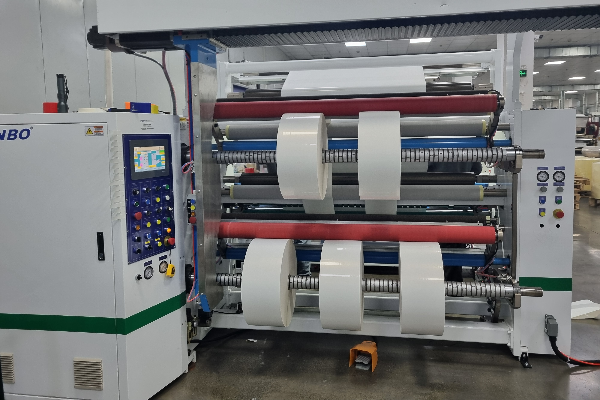
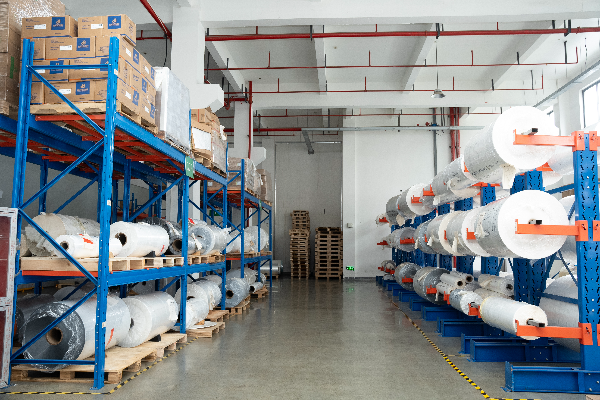
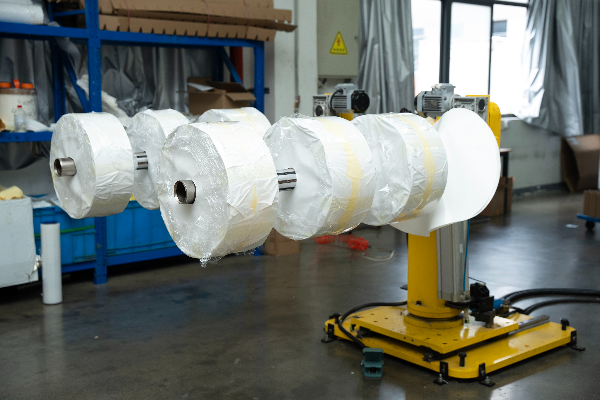
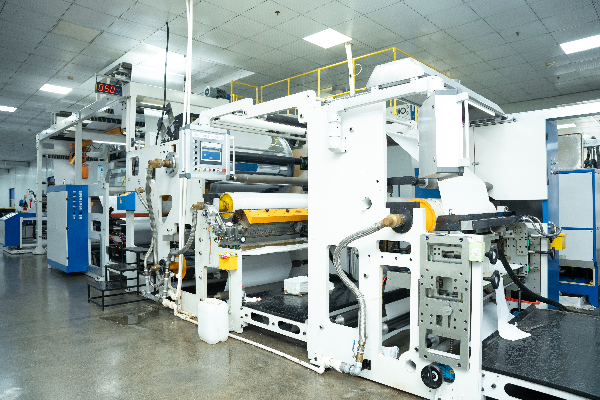
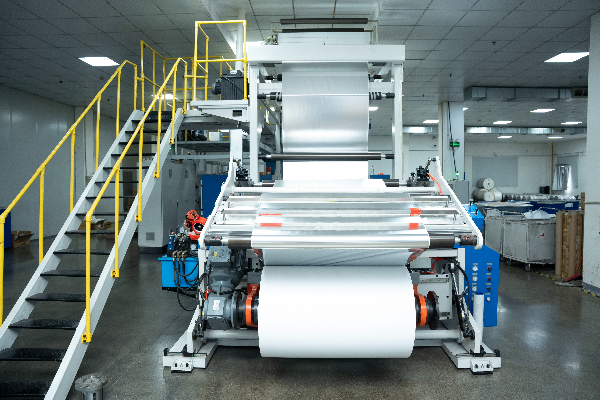
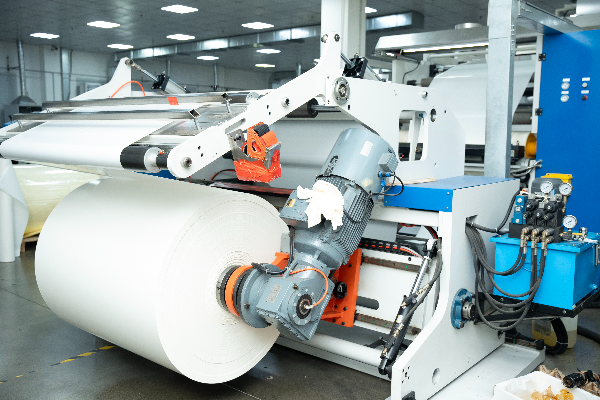
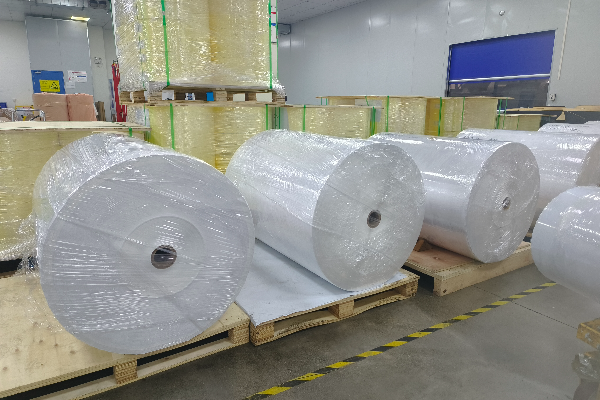
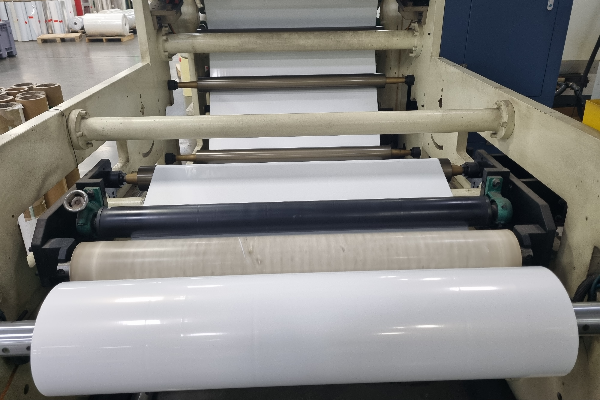
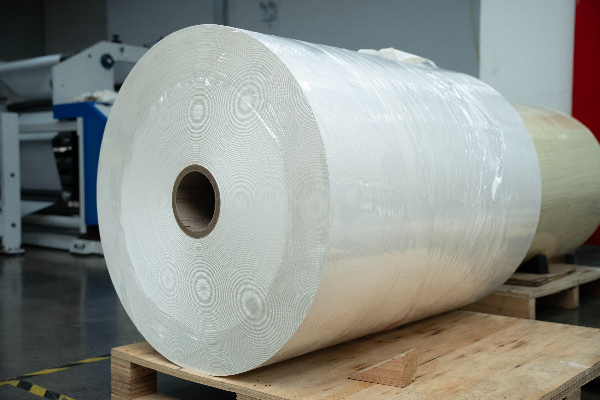
Synthetic Paper Factory Gallery
Advanced Manufacturing & Production Equipment

Adhesive Systems and Liner Configurations for Polypropylene Synthetic Paper
Self-adhesive label materials are multi-component constructions. Facestock alone does not guarantee good label performance — in many applications, the correct adhesive specification matters more than the substrate choice. Guanma makes self-adhesive label adhesives in our own facility, so we can control the formulation, coat weight, and curing process.
| Adhesive Type | Bond Character | Temperature Range | Target Application |
|---|---|---|---|
| Acrylic (permanent) | Permanent, builds over 24h | −20°C to +80°C | General industrial labels, indoor/outdoor |
| Water-based | Permanent, food-safe formulation | +5°C to +50°C | Food packaging labels, beverage labels |
| Hot-melt | High initial tack, immediate bond | −10°C to +60°C | High-speed production line application |
| Rubber-based | Aggressive on rough/textured surfaces | −5°C to +70°C | Corrugated cartons, textured plastics |
| Removable | Repositionable, clean removal | +5°C to +40°C | Retail promotional labels, wet wipe lids |
| Freezer-grade | Permanent at extreme cold | −40°C to +50°C | Frozen food, cold chain logistics, pharma cold storage |
| Tire labeling | Extreme initial tack on rubber | −20°C to +80°C | Tire sidewall labels (DOT/ECE compliance) |
| High-temperature | Permanent bond at elevated heat | −20°C to +200°C | Under-hood automotive, engine components, sterilization |
| Oil-resistant | Maintains adhesion in oil/solvent contact | −10°C to +70°C | Chemical drums, lubricant containers, GHS labels |
Release Liner Options
The self-adhesive facestock is always combined with a release liner to protect the adhesive from dehydration during transit and to ease handling in converting. This topcoat factor determines the precision of die-cutting, ease of application, and level of waste scrap due to blown liner.
| Liner Type | Available Weights | Characteristics |
|---|---|---|
| Glassine Paper | 60 / 80 / 100 g/m² | Smooth release, economical, standard for most label applications |
| CCK Paper (Clay Coated Kraft) | 80 / 100 / 120 / 140 g/m² | Higher caliper stability, better lay-flat for thick adhesive builds |
| Custom Liners | On request | PET film liners, kraft liners for specific converting requirements |
Combination Guide
Our portfolio of facestock, adhesive, and topcoat options can be freely mixed and matched to get the prefect value into your label stock construction. We don’t sell ready-labeled SKUs; we custom-build your synthetic paper for your application. Tell our R&D team what you need, and we will recommend the right face/stick/liner combination from our 10+ years of experience with plastic substrates.
Synthetic Paper Specifications
Technical Data & Parameters
| Thickness | 54μm, 75μm, 100μm, |
|---|---|
| Color | White |
| Adhesive | Acrylic,Water-based adhesive,Hot-melt adhesive,Permanent adhesive,Rubber-based adhesive,Tire labeling adhesive,Freezer-grade adhesive,Removable adhesive,High-temperature resistant adhesive,Oil-resistant adhesive |
| Release liner | Glassine paper (60 / 80 g/100g/ m²) CCK paper (80 g/ 100g / 120g / 140g / m²) Other liners available on request |
| Printing compatibility | Suitable for UV, flexographic, screen, thermal transfer, and digital inkjet printing with appropriate surface coating. |
| Width | 1000/1020/1080/1530mm, cutting avaliable |
| Application temperature | From -10°C to +60°C (depending on adhesive) |
Synthetic Paper Printing Compatibility
Synthetic paper requires a surface primer for reliable print adhesion, and Guanma applies application-specific topcoats at the time of manufacture. Our synthetic paper arrives ready to print without additional primer or pre-treatment at your press.
Print Method
Compatible
Notes
Flexographic
✅ Yes
Most common method for label production. Standard corona-treated surface sufficient.
UV Printing
✅ Yes
Excellent adhesion with standard UV-curable inks. No additional coating needed.
Screen Printing
✅ Yes
Ideal for spot colors, metallic inks, and thick ink deposits on tags.
Thermal Transfer (TTR)
✅ Yes
Requires thermal-receptive top coating. Specify at order for variable data printing.
Digital Inkjet
✅ Yes
Inkjet-receptive coating required. Compatible with water-based and UV inkjet heads.
Guanma can supply hybrid coating systems engineered for flexo and TTR presses running the same or separate jobs (e.g. variable data overprint). Contact us with your press configuration for an ink-compatible topcoat specification.
Applications for Printing on Synthetic Paper
Synthetic paper label stock is suitable for the following industries and operating environments. Briefly describe your application, and we will make a specific warranty recommendation.
Industry
Application
Why Synthetic Paper?
Recommended Adhesive
IndustryAutomotive
ApplicationTire labels, under-hood ID
Why Synthetic Paper?Oil resistance, heat tolerance to +200°C
Recommended AdhesiveTire labeling / High-temp
IndustryWire & Cable
ApplicationWrap-around cable markers
Why Synthetic Paper?Flexible 54μm conforms to small diameters, tear-proof
Recommended AdhesiveAcrylic permanent
IndustryFood & Beverage
ApplicationFreezer labels, bottle wraps
Why Synthetic Paper?Moisture-proof, FDA-compatible adhesive options
Recommended AdhesiveFreezer-grade / Water-based
IndustryPharmaceutical
ApplicationBlood bag labels, vial labels
Why Synthetic Paper?Chemical resistance, sterilization compatible
Recommended AdhesiveHigh-temp / Acrylic
IndustryChemical
ApplicationDrum labels, GHS labels
Why Synthetic Paper?Solvent and acid resistance, BS5609 durability
Recommended AdhesiveOil-resistant
IndustryLogistics
ApplicationShipping tags, warehouse labels
Why Synthetic Paper?Tear-proof, scannable barcodes under harsh handling
Recommended AdhesiveHot-melt / Acrylic
IndustryConsumer Goods
ApplicationCosmetics, household, restaurant menu labels
Why Synthetic Paper?Waterproof, high print quality, premium finish
Recommended AdhesiveAcrylic / Removable
Synthetic Paper Label Material Selector
Answer four questions about your labeling application and we will recommend the optimal BOPP synthetic paper configuration for your needs.
Please select an option for each field before generating a recommendation.
Your Recommended Configuration
Recommended Facestock
Recommended Adhesive
Release Liner
Surface Coating
Application Temp Range
Configuration Notes
Frequently Asked Questions
Is synthetic paper waterproof?
Absolutely – thanks to the high crystallinity of polypropylene, no moisture is absorbed. The print remains clear and the adhesive bonds rigid even after extended submersion in water.
What is the difference between BOPP and HDPE synthetic paper?
HDPE (high-density polyethylene) offers the highest opacity, more dimensional stability, and better tensile strength. BOPP (biaxially oriented polypropylene) offers better printability, lower flexural rigidity, and is available in the widest range of thicknesses (54-100m). Both types are suitable for all conventional printing methods, and BOPP is the most popular for the widest variety of self-adhesive applications. See our comparison chart to review properties.
Can synthetic paper be printed with thermal transfer?
Yes, when paired with the right surface coating. Specify “TTR-compatible” at order time, and we ship synthetic paper with a thermal-receptive top coat matched to your ribbon printer.
What adhesive should I choose for my application?
Selection depends on three factors: 1) the surface characteristics of your substrate (smooth glass vs. textured HDPE), 2) the temperature range during and after application, and 3) whether the label should be removable or permanent. Our extensive adhesive functions table maps available adhesive systems to these three criteria. Send us your application parameters for a custom recommendation; we will respond within 1 business day with a technical data sheet and sample availability.
Is synthetic paper recyclable?
BOPP (biaxially oriented polypropylene) facestock is made from polypropylene resin — 100% recyclable as PP #5. A finished label stock construction (facestock + pressure-sensitive adhesive + release liner) will require separation prior to recycling.
What is the application temperature range?
Application temperature range varies between our adhesive systems. Guides are between +10C and +60C. Our freezer adhesive performs at -40C, while our high-temperature adhesive retains permanent bond up to +200 C. Service temperature range (after application) is normally broader than application range. Please see our technical data sheet for additional details.
Can I customize the facestock-adhesive-liner combination?
Yes this is one of the key benefits of working with Guanma. We do not sell standard SKUs. Everything is customized to your order: pick your facestock basis weight (54/75/100m), choose the adhesive (9+ available) type and the release liner (glassine or CCK with various basis weights). There is a minimum order requirement. Please contact us regarding this.