Get in Touch with Guanma

ISO Compliant
Freezer Labels
Freezer Label Materials Engineered for −40°C Performance and Below
Cold Resistant Adhesive for −40°C & Below — supplied as raw self-adhesive label stock for OEMs, converters, and brand owners across Southeast Asia, South America, and Europe.
Freezer labels engineered for −40°C and ULT freezer applications are the foundation of reliable cold-chain identification. When a label fails on a frozen carton, vial, or pallet, the cost is not the label — it is the rebate, the recall, the lost batch traceability, and the operator hours spent re-labeling at temperature. Guanma supplies coated, laminated, and converted freezer-grade label stock that is purpose-built for this risk profile, with three facestock families and three adhesive systems matched to your application temperature, surface humidity, and printing method.
−40°C Tested
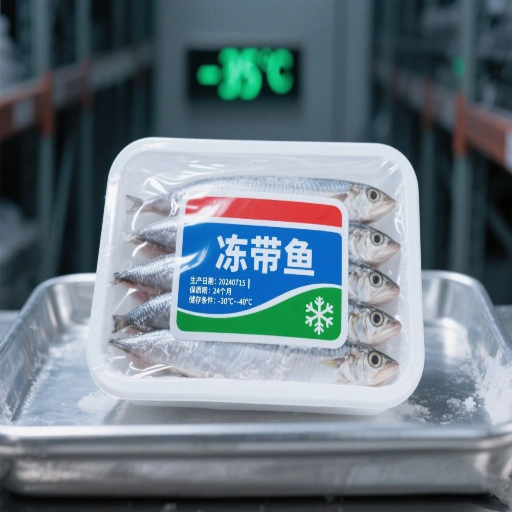
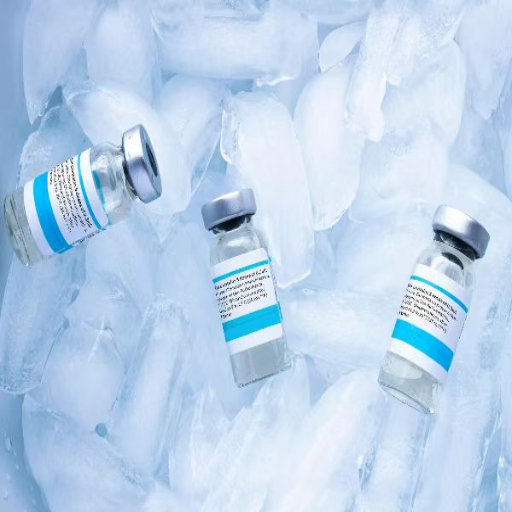
−40°C to −80°C
Standard service range — specialty grade rated for −196°C vapour-phase LN2 available on request.
3 × 3
Facestock families (PET / PP synthetic paper / coated paper) × adhesive systems (hot-melt / water-based / acrylic).
SEA · SA · EU
Active export markets — Thailand & Vietnam production with consistent regional lead times.
Cold Storage Application Challenges — and How Guanma Engineers the Solution
Standard pressure-sensitive labels were never built for cold storage. The same emulsion acrylic adhesive that holds reliably on a room-temperature corrugated carton begins to lose initial tack below roughly −10°F (−23°C), and many commodity stocks are explicitly restricted from freezer service by their manufacturers [1]. Plasticizers in low-grade vinyl harden, paper liners absorb humidity and warp during thaw cycles, and weak topcoats smear under frost or alcohol cleaning. As reported by laboratory and warehouse operators, the result is the same set of failure modes:
Operational Realities
Two practical realities shape every freezer label specification we ship. First, you cannot pretend a frozen surface is a clean room substrate — ice crystals, condensate, frost re-bloom, and surface oil from packaged product all interfere with adhesion. Second, the cost of getting it wrong is asymmetric: a label that costs cents fails an entire batch worth thousands. Guanma materials are designed around both realities, which is why our customers are mostly converters and OEMs running consistent volumes — not buyers searching for the lowest unit price on a one-time purchase.
Layer-by-Layer Engineering
Each failure mode is addressed by Guanma freezer label materials at the layer where it occurs. The facestock is selected so it does not warp, embrittle, or absorb moisture during repeated thaw cycles. The adhesive system is engineered to retain peel strength on dry, wet, and already-frozen substrates down to −40°C in standard grade and −80°C in our ULT grade. Each topcoat protects against frost build-up, alcohol and IPA wipe-down, and oil contact in food and pharmaceutical settings. These performance envelopes are validated against ASTM D3330 peel adhesion methodology [2] and align with the freeze-thaw cycling protocols typically applied in pharmaceutical stability testing — 3 to 5 cycles between −20°C / −80°C and 2–25°C ambient [3].
"Most cases of labels falling off vials come from the same set of issues: adhesives fail in cold storage, especially −20°C and −80°C. Alcohol exposure makes it worse."
"We treat freezer label stock as a small-margin, high-consequence component. The wrong adhesive at −40°C does not just peel — it migrates, leaves residue, and contaminates the next operation. Our R&D group tests each new formulation through a minimum of five freeze-thaw cycles before it ships to a converter."
Guanma Freezer Label Stock — Facestock and Adhesive Selection
Audience: Application Engineer (primary) · Procurement Manager (RFQ matching)
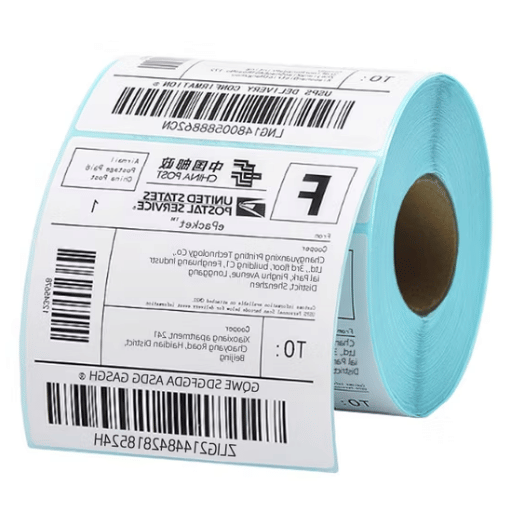
A freezer label is a three-layer system: facestock, adhesive, and liner. The facestock receives the print and carries the printed information through cold storage; the adhesive bonds the label to the substrate at application temperature and holds it through the freeze-thaw envelope; the liner controls dispensing on print-and-apply equipment. Specifying any one layer in isolation is how converters end up with labels that print perfectly in the warehouse but curl off the carton at −40°C. Below is how Guanma matches our three facestock families to our three adhesive systems for cold-temperature applications.
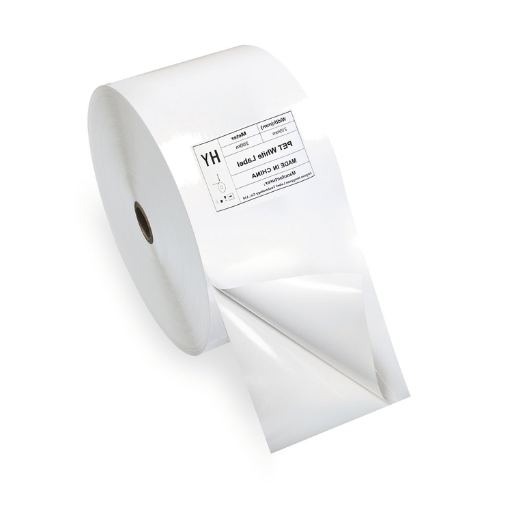
PET FACESTOCK
White / Clear Polyester (PET)
Dimensionally stable from −80°C to +150°C. PET is the polyester-family facestock used by industry leaders for ULT freezer and cryogenic-adjacent applications, because it does not embrittle below −40°C and resists tearing during thaw cycles [4].
Best for: pharma cold chain, ULT freezer racks, biobanks, −80°C laboratory containers, blood and plasma logistics.
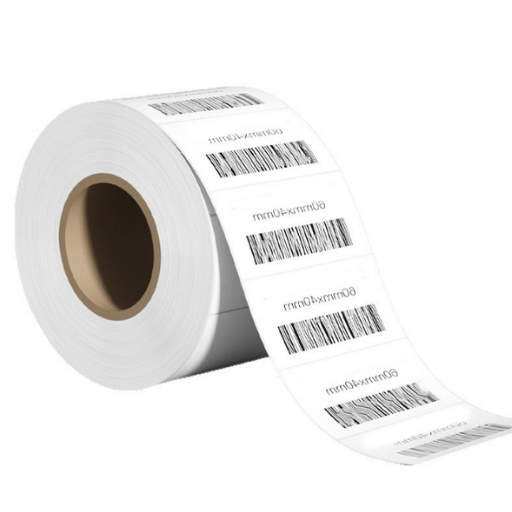
PP SYNTHETIC PAPER
White / Clear Polypropylene (PP)
Tear-resistant and moisture-proof, available in matte and semi-gloss finishes, with a print-friendly surface energy that performs well on direct-thermal, thermal-transfer, and inkjet printers. Cost-effective alternative to PET when service temperature stays at or above −40°C and oil exposure is moderate.
Best for: frozen food packaging, freezer-grade roll labels for retail, removable freezer labels, cold-storage warehouse pallets.
COATED PAPER
Coated Freezer-Grade Paper
The most cost-effective for dry frozen environments. This matt or semi-gloss coating will fend off more of the moisture uptake than an uncoated paper label and the paper substrate can often be recycled in many waste streams.
Recommended for: Ice cream and Meat cartons, deli containers, dry frozen logistics where surfaces are flat and humidities are low.
Adhesive Systems — Pressure-Sensitive Bonding for Cold Service
The adhesive has the responsibility of completing what the facestock is unable. We provide three pressure-sensitive adhesives: hot-melt rubber-based adhesive, water-based emulsion acrylics, and solvent acrylics, all possessing varying degrees of initial tack, chemical resistance, and ability to bend at lower temperatures. Below is the chart showing which adhesive is best suited for specific applications.
Decision Matrix — Application Conditions to Recommended Combination
Cross check your service temp, application surface humidity, and end use environment; and determine the right Guanma facestock + adhesive combination. This matrix is a guide line - and for production-volume orders we recommend a custom spec sheet tailored to your printer, liner, and converting equipment.
| Service Temperature | Surface Condition | Application Environment | Recommended Combination |
|---|---|---|---|
| −20°C to −40°C | Dry at application | Frozen food carton, dry storage | PP synthetic paper + hot-melt rubber adhesive |
| −20°C to −40°C | Wet / condensate | Pharma cold chain, frozen seafood | PET + acrylic adhesive (water-based) |
| −40°C to −60°C | Already frozen at application | Cold-chain logistics, frozen meat re-label | PET + aggressive hot-melt adhesive |
| −60°C to −80°C | Dry / lightly frosted | ULT laboratory freezers, biobanks | PET (ULT grade) + solvent acrylic adhesive |
| −80°C to −196°C (specialty) | Vapour-phase LN2 | Cryogenic vials, microtubes, IVF straws | Specialty PET ULT grade + solvent acrylic (custom test required) |
| −20°C to −40°C | Oil-contaminated | Frozen prepared meals, fatty meat | PP synthetic paper + oil-resistant acrylic |
| −20°C to −40°C | Frosty / iced surface | Cold-room warehouse, frozen pallets | Coated freezer-grade paper + aggressive hot-melt |
| Removable required | Dry at application | Returnable packaging, deli rotation | PP synthetic paper + removable acrylic |
| BS5609 marine drum | Salt-water immersed | IMDG chemical drum labels | PET (BS5609 grade) + permanent acrylic [5] |
Nine of the most common freezer-grade specifications we ship, but it is not exhaustive. Specialty grades for solvent-resistant pharmaceutical labels, food-direct-contact labels under FDA 21 CFR 175.105 [6], and aggressive-tack adhesives for textured outdoor cold-storage drums are available on request. For converters running their own thermal-transfer or inkjet printers, we also confirm liner release force and dispensing geometry to match your equipment — reducing the substitution risk that often forces operators to retreat to durable industrial label stock from a different category.
Audience: Application Engineer + Operations Manager (most relevant) Procurement (cost framing)
Guanma vs Commodity Freezer Labels — Performance Comparison
Industrial freezer labels split into two materially different categories that often share shelf space but not service temperature. Most off-the-shelf "freezer-safe" stock is rated to roughly −20°F (−29°C) and is built for kitchen and retail use. Industrial freezer-grade stock — the category Guanma supplies — is rated to −40°C as a baseline and to −80°C in ULT grade. Performance differences below are the reason commodity stock fails in industrial and laboratory cold storage long before its rated temperature.
| Performance Dimension | Commodity Freezer-Safe Stock | Guanma Freezer-Grade Stock | Guanma ULT Grade |
|---|---|---|---|
| Rated service temperature | −20°F to room (−29°C and warmer) | −40°C to +110°C | −80°C to +120°C |
| Freeze-thaw cycle tolerance | Typically not specified | 5+ cycles, −40°C / 25°C, no edge lift | 5+ cycles, −80°C / 25°C, no edge lift [3] |
| Adhesion to already-frozen surface | Weak — requires thaw | Aggressive hot-melt grade adheres at −20°C without thawing | Solvent acrylic adheres directly at −80°C |
| Frost / ice readability | Print smears under frost wipe-down | Topcoat resists frost re-bloom and IPA wipe | Topcoat resists frost, IPA, and dry-ice transport handling |
| Alcohol / IPA chemical resistance | Print degrades after 1–2 wipes | Print stable under repeated IPA wipe-down | Solvent-resistant topcoat for laboratory cleaning protocols |
| Peel adhesion test method | Often unspecified | ASTM D3330 Method A, 180° peel [2] | ASTM D3330 Method A, validated at low temperature |
| Liner release for print-and-apply | Not always tuned | Tuned to converter specification | Tuned to converter specification |
Core Failure Drivers
The two parameters that drive most of the real-world failure rate are freeze-thaw cycle-imposed tolerance and adhesion to an existing frozen surface. A label may pass a first application at room temperature or freezer room conditions and survive the first freezing step to emerge intact after thaw, only to lift at the second or third freezer-thaw cycle when most quality related complaints are generated. Our stock is qualified through a minimum of five freeze-thaw cycles applying temperature ranges outlined in pharmaceutical stability protocols [3], representing between roughly six and twelve months of typical industrial cold-chain service by logistics frequency.
Performance Cost Framework
Labels rated for −40°C and ULT freezer applications often reduce label rebate, re-labeling labor, and traceability rework cost compared to commodity −20°C-only label stock. Saving size depends on three workflow variables: freeze-thaw cycle frequency, application volume, and the consequence of label failure in your specific quality system. Cold-chain converters often report that the per-unit material cost premium is recovered within a single rejected-batch event in regulated environments. Request a custom analysis with your specific parameters for an application-specific framework.
Application Scenarios — from Frozen Food to Cryogenic Lab
Audience: Operations Manager (primary) · Application Engineer (technical fit)
Guanma freezer label stock spans six broad application categories across our Southeast Asia, South America, and European customer base. Each category carries its own surface, temperature, and regulatory profile, and the recommended facestock and adhesive combination differs accordingly. The list below maps each application to the relevant section of the Decision Matrix and identifies the cold-chain compliance considerations that apply.

1. Frozen Food Packaging — Meat, Seafood, Ready Meals, Ice Cream
Frozen food cartons and stand-up pouches are applied at −20°C to −30°C and kept at −18°C to −25°C, with intermittent thaw exposure during retail handling. Surface contamination is the dominant variable — oil from prepared meals, condensate from rapid thaw, and the textured surface of vacuum-pouched seafood all reduce adhesion. Specifications shipping to this market use PP synthetic paper with oil-resistant acrylic adhesive, and must comply with FDA 21 CFR 175.105 indirect food contact rules [6] as well as the equivalent EU and ASEAN regulations.
2. Pharmaceutical Cold Chain — Vaccines, Biologics, Diagnostics
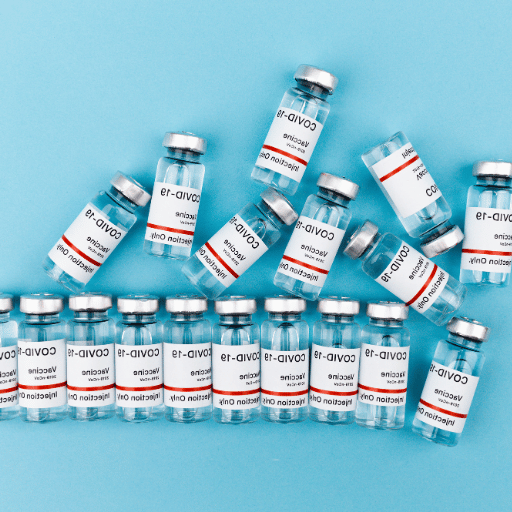
Pharmaceutical cold chain spans −20°C standard refrigeration through −80°C ULT freezer storage and, for select biologics and IVF samples, vapour-phase liquid nitrogen. Regulatory profile is dense: GMP labelling traceability, tamper-evident requirements, and freeze-thaw stability testing protocols all apply [3]. We ship PET facestock into this segment, with acrylic adhesives for general cold chain and solvent acrylic for ULT and specialty applications.
3. Industrial Cold Storage — Warehouse Pallets, Cold Rooms, Logistics
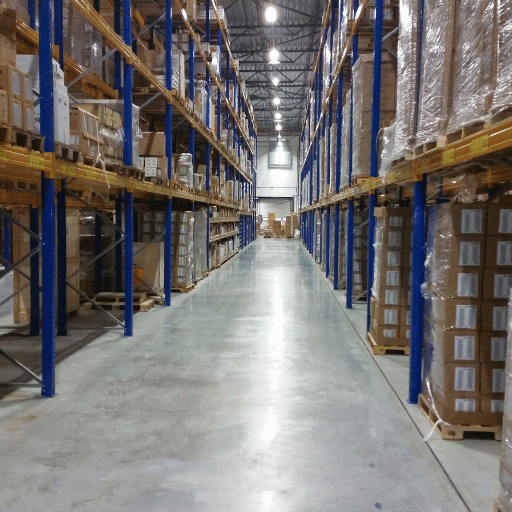
Cold-room and warehouse pallet labels endure the ugliest combination of temperature, humidity and mechanically demanding conditions. Forklift scrub abrasion, frost re-bloom on aluminium pallet beams and the substitute-risk dilemma (operators switching to permanently-markered cartons when labels fail) set this segment. Coated freezer-grade paper with aggressive hot-melt adhesive appears to be the Guanma standard, however customers in this segment regularly specify BS5609-compatible label media for export-route drums carried long-distance by sea.

4. Cryogenic and ULT Laboratory — Vials, Microtubes, Cell Culture Plates
Laboratory operators routinely report that commodity stock fails on vials at −20°C and −80°C, that ice build-up obscures printed text, and that ethanol or IPA wipe-down during clean cycles smears or strips the print. Guanma ULT-grade PET with solvent acrylic adhesive — the same material category that laboratory inventory teams typically describe as cryo labels — is engineered to address each of these failure modes, and the topcoat is selected for compatibility with thermal-transfer ribbons rated for laboratory autoclave sterilisation cycles. For ultra-low temperature cryogenic storage applications, the ULT-grade PET facestock holds peel adhesion through repeated freeze-thaw cycles between −80°C and ambient. Specialty PET grades for vapour-phase liquid nitrogen storage at temperatures as low as −196°C / −196°C are available on request for biobank, microcentrifuge, and IVF straw labelling, where the ultra-low service envelope and solvent-resistant topcoat together define the boundary between freezer-grade and cryogenic label categories.

5. Cold Chain Logistics — International Reefer Containers and Air Freight
Export cold chain combines extreme thermal cycling (−25°C reefer container to +35°C tropical port apron) with salt-spray exposure during sea freight. BS5609-certified label stock [5] is mandatory for chemical drums under IMDG, and increasingly specified by food and pharma exporters for product traceability through long-haul cold chain. Guanma BS5609-grade PET is shipping into this segment from Thailand and Vietnam to South American and European receivers.
6. Pet Food, Specialty Frozen Goods, and Functional Frozen Products
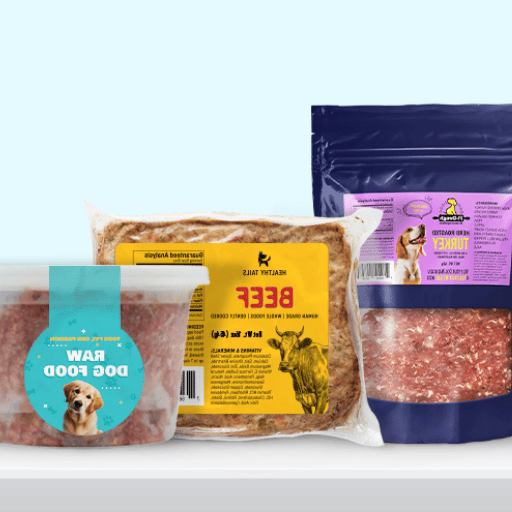
Premium pet food, frozen pharmaceuticals for animal health, plant-based frozen meal alternatives, and functional frozen beverage products together form a fast-growing application segment. The cold-chain profile is closer to retail frozen food than industrial cold storage, but brand owners typically demand higher-grade facestock and tighter print quality control because the label is also a brand surface. PP synthetic paper or coated freezer-grade paper with food-contact-compliant acrylic adhesive is the dominant specification.
Audience: Procurement Manager (primary) · Application Engineer (standard applicability)
Certifications and Compliance — BS5609, GHS, FDA, RoHS, REACH
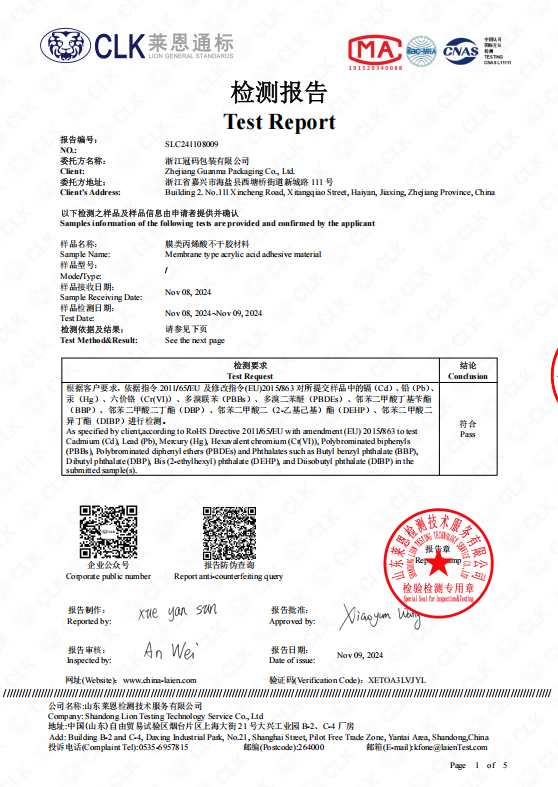
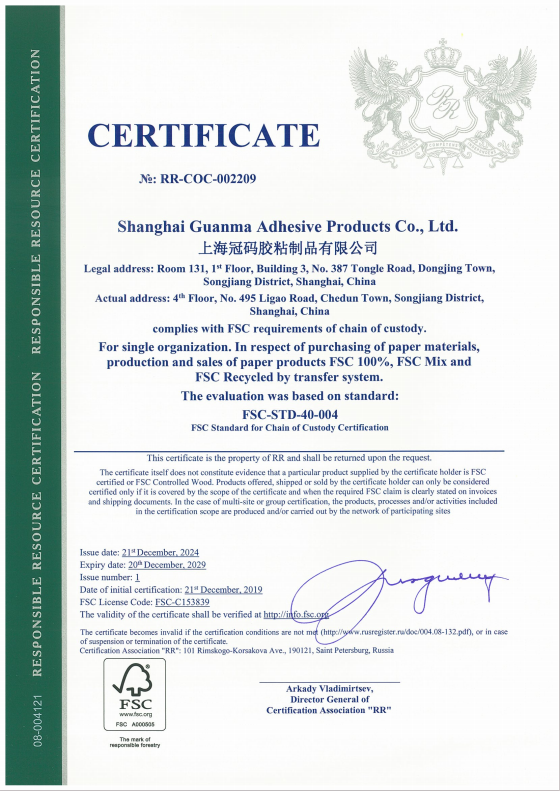
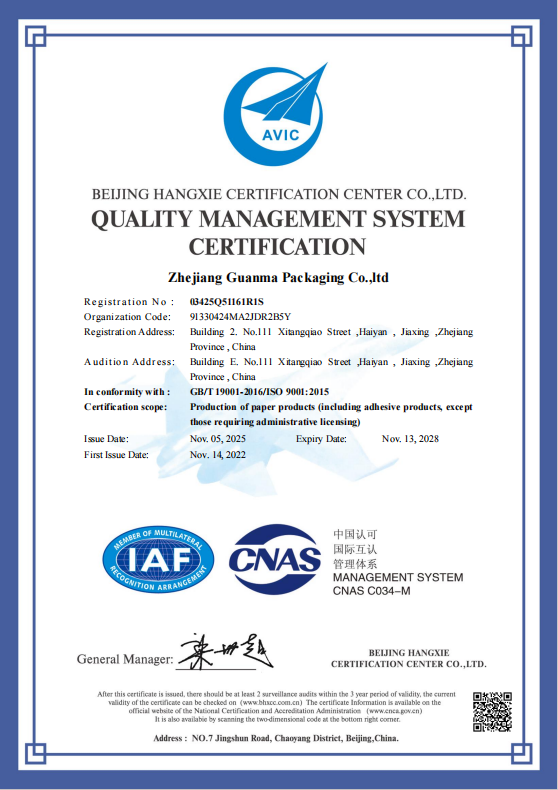
Cold-chain freezer labels attach to chemical drums, labels for food use strictly regulated by the latest versions of FDA 21 CFR 175.105 and relevant EFSA legislation because of their inclusion in a consumer sale, as well as tracking labels and component labels in strictly controlled environments (cold storage or sterile clean rooms) as contained herein. Moreover, none of the above is vendor to the global cold storage markets nor mandated by the above appliances and markets to stock the same kinds of high-performance label medias on which Guanma designs and converts in excess of 100 registered crafts.
BS 5609
Marine drum label durability — 3-month salt-water submersion + UV + temperature cycling, Sections 2 and 3 [5]
GHS
Globally Harmonised System for chemical hazard labels — pictogram, signal word, and statement durability
FDA 21 CFR 175.105
Adhesives for indirect food contact — trace-amount limits at seams and edges [6]
RoHS 2011/65/EU
Restriction of hazardous substances in electronic and electrical equipment labels
REACH EC 1907/2006
European Union chemical safety registration — substance-of-very-high-concern reporting
Beyond Generic Compliance
Compliance is not the same as marketing. Each Guanma freezer label specification ships with the test methods cited: ASTM D3330 for peel adhesion, ISO 4892 for artificial weathering durability, BS 5609 sections for marine immersion, and FDA 21 CFR 175.105 for adhesive food contact - so that your quality team can verify the documentation rather than depend on a generic compliance statement. To our converter customers serving clients in regulated industries; this documentation is what prevents a downstream audit result from becoming a costly re-qualification exercise.
Procurement Guide — MOQ, Lead Time, Regional Supply
Audience: Procurement Manager (primary) · Operations Manager (budget approval)
Purchasing freezer label stock is seldom a single vessel bi-lateral transaction. OEM brand owners and converters run six- to twelve-month consumption forecasts, specify and qualify a primary and a secondary supplier, and negotiate a lead-time service level along side the unit price. Below, our procurement framework illustrates how Guanma fulfills Northern hemisphere, Latin American and South East Asia clients from our Thailand and Vietnam facilities.
Pricing Factors Framework
Final freezer label material pricing is driven by the parameters of your specification rather than a published list price. Several dimensions below have the largest effect on per-linear-metre cost — for a binding quotation aligned to your facestock grade, adhesive system, liner type, MOQ, and shipping route, request a custom spec sheet.
Facestock grade − PET (premium grade), PP synthetic paper (mid-range), coated freezer grade paper (economy)
Adhesive system − solvent acrylic (highest cold-temperature performance) tends to be the most expensive; hot-melt and water-based emulsion systems are less costly
Liner type − PET liner for highspeed converting versus glassine for sheet-form labels
MOQ tier − 500-metre roll trials are priced at sample tier; manufacture tiers (5,000 m / 50,000 m+) attract incremental volume discount
Compliance level − standard datasheet versus full BS5609 test report or FDA 175.105 declaration package
Customisation − standard die-cut sizes versus custom converting (slitting, sheeting, perforating, custom liner release)
Regional Lead Time
7–14 days
Southeast Asia
From Thailand or Vietnam — Indonesia, Malaysia, Philippines, Singapore, Vietnam domestic
25–35 days
South America
Brazil, Chile, Colombia, Peru — sea-freight from Bangkok or Ho Chi Minh hub
30–40 days
Europe
EU customs and last-mile included — Hamburg, Rotterdam, Antwerp consolidation
For just-in-time inventory operating customers, Guanma is able to maintain intermittent stock programmes on standard-grade specifications - efficiently removing the time constraint between production and call-off. Custom ULT-grade and BS5609 specifications ship from Thailand on a build-to-order basis, with first-article approval normally functioning within two to three weeks prior to serial shipment. For procurement teams placing orders across the broader self-adhesive label material category; our same-platform tire label stock and cable and wire label stock depart the same regional facilities under this same lead-time service.
Global B2B Industrial Supply
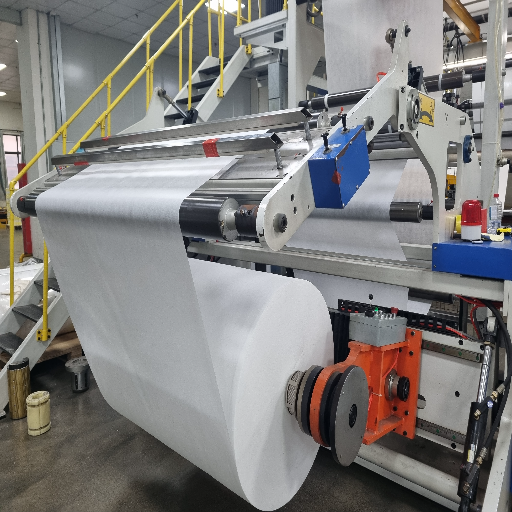
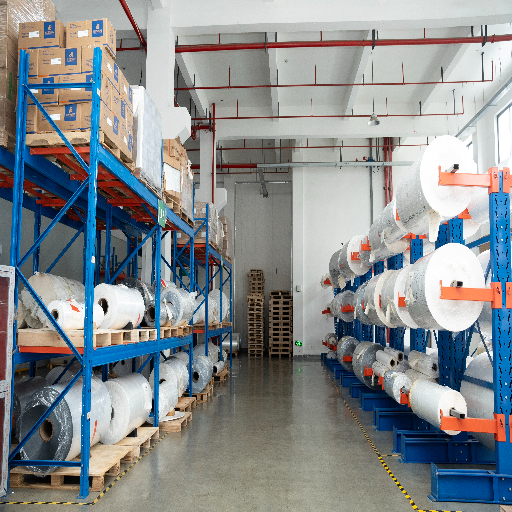
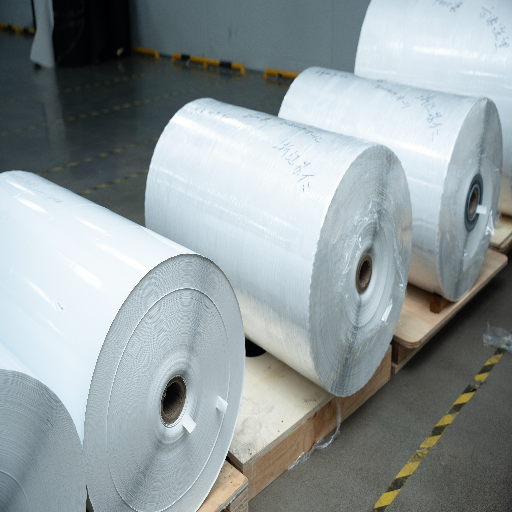
Precision-Engineered Freezer Label Materials for Global Industrial Applications

Frequently Asked Questions
Audience: All buyer roles — Application Engineer, Procurement, Operations
For −40°C as a baseline, PET is the most reliable choice across pharmaceutical, ULT laboratory, and BS5609 marine cold chain because polyester does not embrittle below −40°C and resists tearing during thaw. PP synthetic paper is appropriate where service temperature stays at or above −40°C and oil exposure is moderate (frozen food, retail freezer-grade roll labels). Coated freezer-grade paper is the economic choice for dry frozen environments with flat surfaces, such as ice cream cartons and meat trays. Each facestock in the Decision Matrix above pairs with the appropriate adhesive for your specific surface and humidity profile.
Our freezer-grade and ULT-grade label stock is validated through a minimum of five freeze-thaw cycles between −40°C / −80°C and 2–25°C ambient, in line with the freeze-thaw stability protocols used in pharmaceutical and biopharmaceutical testing [3]. In practical industrial cold chain, this corresponds to roughly six to twelve months of duty cycling depending on logistics frequency. Custom higher-cycle qualification is available on request for applications such as IVF straw labelling and biobank long-term storage.
BS 5609 is the British Standard for self-adhesive labels used on chemical drums shipping by sea under International Maritime Dangerous Goods (IMDG) rules [5]. Section 2 tests the blank label material against three months of mid-tide salt-water immersion plus artificial weathering and temperature cycling; Section 3 extends the test to printed labels. You need BS 5609 if your freezer labels go onto a drum, IBC, or container that ships by sea and falls within IMDG dangerous-goods scope. For domestic-route frozen food and pharma labels, BS 5609 is typically not required — FDA 21 CFR 175.105 indirect food contact compliance is the more relevant standard [6].
Thermal-transfer printing with a wax-resin or full-resin ribbon is the most durable choice across all three Guanma facestocks because the printed image is bonded to the label by heat, which makes it resistant to frost wipe-down, IPA cleaning, and ribbon abrasion. Direct thermal is appropriate for short-life applications such as supermarket frozen food date stickers, but the printed image fades faster under UV and frost re-bloom. Inkjet on a freezer-rated topcoat (water-based or UV-cured ink) is suitable when colour graphics or variable barcodes are required at higher resolution. Printer-and-ribbon pairing is confirmed with each customer during the spec sheet stage.
Freezer-grade labels are rated for industrial cold storage from −20°C through −40°C and cover most frozen food, cold-chain logistics, and standard pharma refrigeration. Cryogenic labels are a more specialised category rated for ULT freezer service at −80°C and below, including dry-ice transport and vapour-phase liquid nitrogen storage at −196°C. Cryogenic labels generally use solvent acrylic adhesive on PET facestock and may add features such as wrap-around self-laminating layers, blackout covers for re-labelling at −80°C, or RFID inlays. Guanma's standard PET ULT grade covers the −80°C envelope; specialty PET grades for vapour-phase LN2 are available as a custom build.
Guanma aggressive hot-melt and solvent acrylic adhesive systems are engineered to bond to already-frozen substrates without thawing the product first — a common requirement in cold-room re-labelling and in laboratory protocols where thawing the sample is not permitted. Our aggressive hot-melt grade applies reliably down to roughly −20°C ambient on a frosty corrugated or polymer surface, and the solvent acrylic ULT grade applies down to −80°C on cryogenic vials and containers. For frost-rebloom environments such as cold-room aluminium beams, we recommend the coated freezer-grade paper plus aggressive hot-melt combination from the Decision Matrix.
Yes - the topcoats on Guanma PET and PP synthetic paper facestocks resist repeated isopropanol (IPA) and ethanol wipe-downs without smearing the printed picture. This is the most common cause of vial labels becoming unreadable in laboratories. Solvent-resistant grades are recommended when aggressive cleansing protocols are used, or when there may be contact with the label surface in solvent-based cleansings (e.g. biopharmaceutical clean-room, chemical drums). Compatibility with your cleansing protocol is confirmed at the spec sheet stage.
Start with an aggregated custom spec sheet to record your service temperature, the application surface, printer model, liner choice, compliance reference needs and your forecast volume. Based on this information, Guanma's R&D and application technologists recommend a facestock+adhesive+liner combination, ship a 5-meter sample roll for converter approval, and simply give you a No-Obligation Quote - minimum order quantity (MOQ) tiered against your forecast is 500 meters for testing (trial), 5000 meters for the initial production tier, and a 50,000 meter production tier. For prototypes involving specialty chemistries, the first-article qualification takes 2-3 weeks before serial shipping.
Standard-grade rolling-stock specifications ship within 7-14 days to South-east Asian destinations, 25-35 days to South American ports and 30-40 days to Europe through the warehouse in Hamburg, the port of Rotterdam, or the port of Antwerp. Specialty ULT and BS5609 specifications ship build-to-order with a 3-week first-article qualification before serial shipping. Custom A4 samples and bridging order ship via air freight in three to five days.
Guanma freezer label adhesives meet FDA 21 CFR 175.105 indirect food-contact regulation [6]. This regulation explicitly follows the application of the adhesive to the container, without any contact with the food itself. Direct food-contact regulation comes through 21 CFR 175.300 and 175.320, with project-specific compliance review; please tell us if this is required at the spec sheet stage so the correct chemistry is then specified.
Ready to specify a freezer label material that performs at −40°C and below?
Just tell us your service temperature, application surface, printer model, and forecast volume. The Guanma R&D team will recommend a facestock, adhesive, and liner combination, ship a free sample roll, and quote a custom MOQ tailored to your specific parameters.