Get in Touch with Guanma

ISO 9001:2015 + FSC available
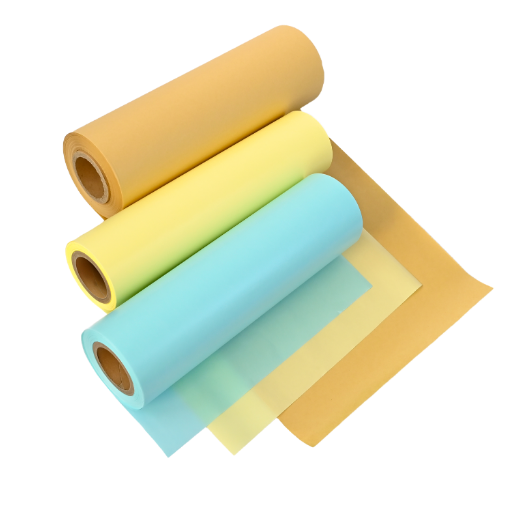
Glassine Release Liner for Self-Adhesive Labels — Guanma SCK 35-120gsm
Glassine release liner built for label converters that need predictable die-cutting and high-speed dispensing across Tire, Cable, Pharmaceutical, Food and Durable label applications. Guanma supercalendered SCK glassine ships in 60 / 72 / 80 / 100 gsm standard grades plus custom 35-120gsm, with 0.85-1.2 g/m² silicone coating weight controlled within the industry-tight ±0.03 g/m² NIR-measured precision band — sample reels ready in 10 working days from Thailand or Vietnam.
Solution Summary — Why Converters Move to Guanma SCK Glassine
- Spec range published upfront: 35-120gsm SCK glassine, 0.85-1.2 g/m² silicone, one-side or two-side coatable — no inquiry forms before specs.
- Die-cutting and dispensing are tuned together: highly calendared sheet density paired with controlled silicone holdout enables clean release at automatic high-speed dispensing.
- Recyclable and EU-compliant: Guanma glassine matches the substrate class proven recyclable under EN 13430 in the 2024 CELAB x CTP study (1.3% screening rejects vs 7.1% for CCK).
- Configuration is the product: Pair Guanma facestocks (PET / PP synthetic / coated paper) with hot-melt, water-based, or acrylic adhesives over this glassine liner — one supplier, one accountable spec sheet.
- Regional supply, not just shipping: Production at both Thailand and Vietnam plants — Southeast Asia delivery in 7-10 days, full export to South America and Europe in 25-45 days.
10+ Years
in self-adhesive label stock
40+
countries delivered
TH + VN
production plants
10-Day
sample policy
When Standard Release Liners Fail Your Label Line
— Pain → Solution
A glassine release liner is the supercalendered paper carrier that holds a self-adhesive label until application — its job is to enable easy release of the label at exactly the right force, every roll, every reel, every shift.
When the liner is wrong, three failures show up on the converter floor: erratic die-cutting that scraps printed face material, dispensing breaks that stop high-speed labelers mid-run, and silicone bleed that contaminates the non-stick surface where downstream printing depends on a clean release coating.

Pain compounds at scale.
A typical pressure-sensitive label industry consumes over 500,000 metric tons of release liner substrate per year, with paper-based liners running at an average 60 lb/3000 ft² basis weight (98 g/m²). Even small variability — 5-10% on silicone coating weight — translates into reel-level rejection costs the converter never recovers.
Worse, opaque supplier behavior makes the problem invisible: Top-ranked release liner brochures in 2026 still hide MOQ, price, and lead time behind “contact us” forms, leaving converters to discover spec mismatches only after a sample run.
Guanma SCK Glassine Release Liner — Specification & Grade Guide
Guanma SCK glassine release liner is a supercalendered kraft paper substrate, treated to high density and surface smoothness, then silicone-coated on one or both sides to control release force. Four standard grades cover the working range that 90%+ of self-adhesive label applications require, with custom 35-120gsm available for specialty work. Paper-based liners account for 55.67% of the global release liner market, and silicone-coated grades account for 62.50% — the SCK glassine class sits at the intersection of both leading segments.
Guanma SCK Glassine Release Liner — Standard Grade Specifications
| Grade | Basis Weight | Caliper | Silicone Coat Weight | Release Force (FTM-3) | Typical Application |
|---|---|---|---|---|---|
| GM-G60 | 60 g/m² | 1.7 mil | 0.85 g/m² | 8-12 cN/inch | Pharmaceutical, Food, Cosmetic primary labels |
| GM-G72 | 72 g/m² | 2.0 mil | 0.85 g/m² | 10-15 cN/inch | Cable & wire, Beverage, Medium-duty industrial |
| GM-G80 | 80 g/m² | 2.2 mil | 0.95 g/m² | 12-20 cN/inch | Tire labels, Freezer labels, High-speed dispensing |
| GM-G100 | 100 g/m² | 2.8 mil | 1.0 g/m² | 15-25 cN/inch | Durable outdoor, Chemical drum, Heavy industrial |
| Custom | 35-120 g/m² | 1.0-3.5 mil | 0.7-1.5 g/m² | Per spec | Specialty applications |
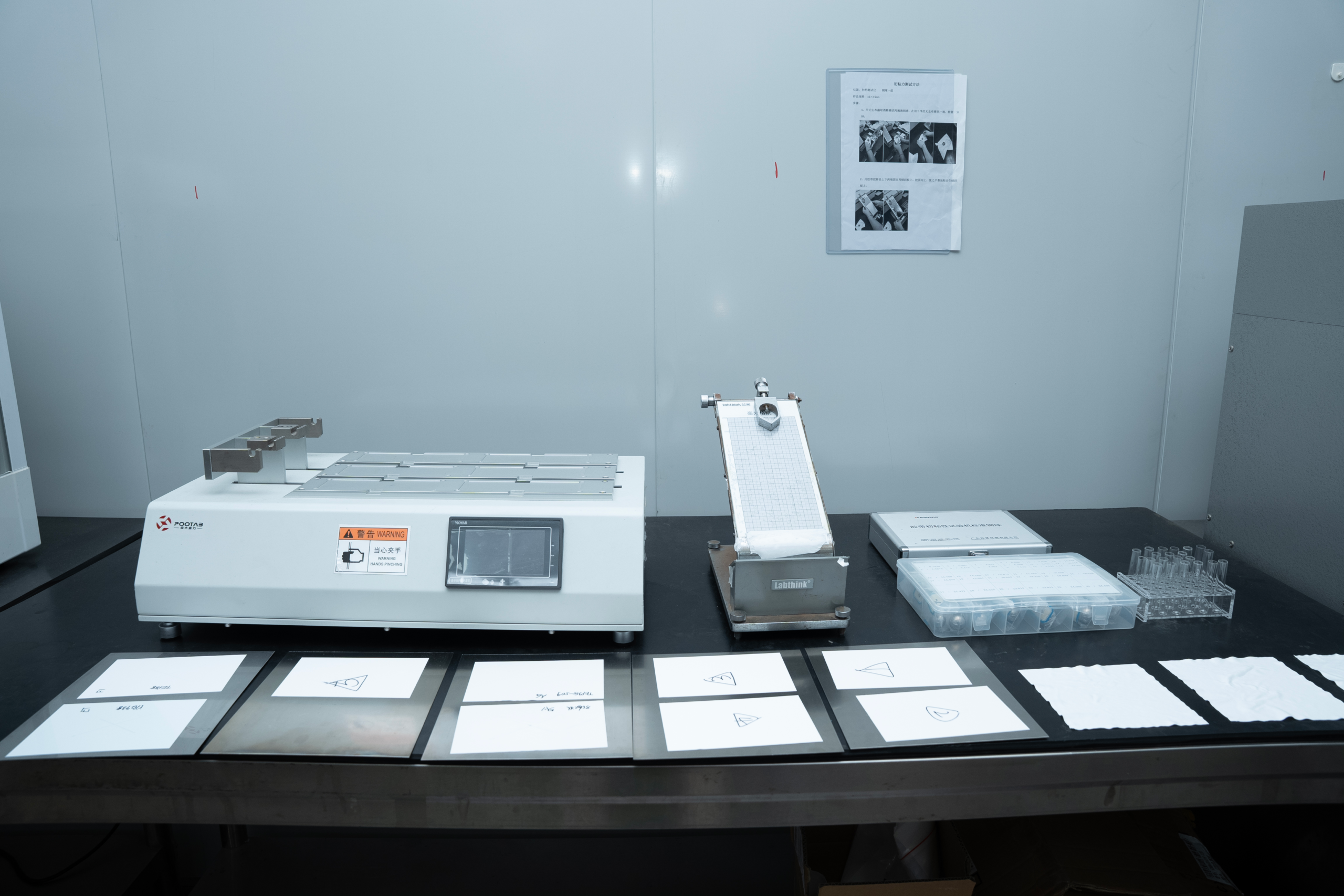
Silicone coating weight is where converter quality control either holds or fails. Industry research from Mahlo America records that release coating basis weight falls in the 0.5-3 g/m² range, and historical X-ray fluorescence measurement methods carried 21% variability at a 1 g/m² target — a tolerance the modern converter cannot accept. Guanma's coating lines run NIR in-line monitoring with ±0.03 g/m² accuracy, validated against laboratory XRF at FINAT FTM-3 standard release force testing. This produces reel-to-reel coating weight consistency tight enough that downstream printing and dispensing parameters carry over without re-tuning between batches.
Engineering Note — Why Supercalendering Matters
Highly calendared SCK glassine is what enables clean die-cutting through the face material without telegraphing fiber irregularities. Lower-density paper-based liners (machine-finished kraft, MFK) save cost upfront but show up as die-strike inconsistency during the 2nd or 3rd order. Guanma SCK is supercalendered to 1.10-1.15 g/cc density — the working range for high-speed automatic label converters running at 200+ m/min line speed.
Glassine vs PET vs Kraft vs CCK — Substrate Comparison Matrix for Self-Adhesive Labels
Converters weighing a substrate change face four credible release liner classes: glassine (supercalendered kraft, paper-based), CCK (clay-coated kraft, paper-based), PET film, and machine-finished kraft (MFK). Each wins for a different reason, and the choice is rarely about the liner alone — it is about how the liner pairs with the facestock, adhesive, and downstream conversion line. Our data table below maps the trade-offs on dimensions converters actually price against.
| Dimension | Guanma SCK Glassine | PET Film Liner | CCK Liner | MFK Kraft Liner |
|---|---|---|---|---|
| Basis weight range | 35-120 g/m² | 20-75 µm (~28-105 g/m² equiv) | 30-120 g/m² | 50-150 g/m² |
| Cost per linear meter (60gsm equiv) | $0.012-0.018 | $0.028-0.045 | $0.018-0.028 | $0.010-0.014 |
| Die-cutting cleanness | Excellent (high density) | Excellent | Good | Variable (fiber telegraph) |
| High-speed dispensing (200+ m/min) | Yes | Yes (best at >300 m/min) | Yes | No (split risk) |
| Temperature resistance (continuous) | Up to 110 °C | Up to 150 °C | Up to 110 °C | Up to 90 °C |
| Recyclability (EN 13430) | Yes — 1.3% rejects (CELAB) | Plastic stream only | Yes — 7.1% rejects (CELAB) | Yes |
| Translucency (visual inspection) | High | Medium-High | Low | Low |
| Best-fit applications | Pharma, food, beverage, tire, cable, durable | Electronics, medical wound care, transdermal | Industrial, double-sided tape, specialty | Low-cost office labels only |
Two findings deserve attention. First, glassine is roughly 35-40% lower cost per linear meter than PET film at equivalent basis weight, which is why label converters serving high-volume pharmaceutical and beverage applications standardize on glassine despite PET's superior heat tolerance. Second — and this is the contrarian finding most release liner brochures bury — glassine actually outperforms CCK on recyclability per the 2024 CELAB x Centre Technique du Papier study: 1.3% screening rejects against EN 13430 versus CCK's 7.1%. Both substrates pass EU recyclability standards, but converters chasing 2030 sustainability commitments now have a quantified reason to choose glassine over CCK where adhesion and surface chemistry permit. For an in-depth glassine vs kraft material comparison, see our technical knowledge article on key differences.
~30-40%
lower liner material spend over 5 years
5-Year Material Cost Snapshot — SCK Glassine vs PET Liner
A label converter running 50,000 km/year of liner-equivalent throughput typically saves 30-40% on liner material cost when standardizing on SCK glassine versus PET, before factoring conversion-line speed advantages or recyclability disposal-cost differentials. Industry baseline (SNS Insider 2025) reports paper-based liners hold 55.67% of release liner market share — converters consistently pick paper-based for cost-sensitive high-volume work, reserving PET for thermally aggressive applications.
Application Fit Matrix — gsm + Silicone Weight Recommendations by Industry
Quickest way to specify a release liner wrong is to chase a single number — converters that ask only for "60gsm glassine" routinely receive a liner that fails their actual line because silicone coating weight, release force band, and facestock pairing were not specified together. Our matrix below pairs the four standard Guanma SCK glassine grades with application classes Guanma serves — Tire, Cable & Wire, Freezer, Pharmaceutical, Food Packaging, Beverage & Wine, Medical bandage and dressing, and Durable outdoor labels — based on real conversion-line performance rather than catalog generalities.
| Application Class | Recommended Grade | Silicone Weight | Recommended Facestock | Adhesive Pair | Why this combination |
|---|---|---|---|---|---|
| Tire labels | GM-G80 | 0.95 g/m² | PET face (gloss) | Hot-melt rubber-resin | Sustained 110°C-curing tolerance + abrasion-resistant face |
| Cable & wire labels | GM-G72 | 0.85 g/m² | PP synthetic paper | Acrylic permanent | Tear resistance + chemical/oil contact survivability |
| Freezer labels | GM-G80 | 0.95 g/m² | PET coated face | Cold-temperature acrylic | Below-zero adhesion holds; PET face resists frost-cycle delamination |
| Removable labels | GM-G60 | 0.85 g/m² | Coated paper | Removable acrylic / water-based | Lighter liner enables clean low-tack release without face damage |
| Pharmaceutical labels | GM-G60 | 0.85 g/m² | Coated paper (matte) | Acrylic permanent | FDA 21 CFR 175.105 grade available; high translucency for on-line inspection |
| Chemical drum labels | GM-G100 | 1.0 g/m² | PET film (white) | Aggressive acrylic | Resistance to oil, solvent, and outdoor weather; thicker liner survives BS5609 test cycle |
| Food packaging | GM-G72 | 0.85 g/m² | Coated paper / PP | Water-based food-safe | Direct & indirect food contact compliance; recyclable in mixed-paper streams |
| Beverage & wine | GM-G80 | 0.95 g/m² | Coated paper (gloss) | Wet-strength acrylic | Ice-bath wet adhesion; high-speed bottle-line dispensing without pre-loosen |
| Durable / outdoor | GM-G100 | 1.0 g/m² | PET face | Aggressive permanent acrylic | UV-stable face + heavy liner for stable die-cut on textured outdoor substrates |
| Medical bandage / dressing | GM-G60 | 0.85 g/m² | Coated paper / PE film | Skin-safe acrylic / hot-melt | Low release force enables clean peel during clinical use; FDA-compliant adhesive product chemistry |
This matrix surfaces a less-discussed truth about release liner specification — silicone coating weight matters more than basis weight for application performance, but basis weight matters more for line speed and die-cut quality. Mahlo America's research on in-line silicone measurement records that 1.10-2.0 g/m² is the production silicone target band at one major North American converter; Guanma's 0.85-1.0 g/m² targets sit at the lower end of that band, optimized for the lighter-tack adhesive systems that dominate pharmaceutical and food labeling. Converters running heavy-duty industrial adhesives should request the high-silicone (1.0-1.5 g/m²) custom band.
Quality, Compliance & Sustainability — ISO 9001 / FSC / Food Contact / EN 13430
Capex-tier release liner sourcing is no longer just a quality conversation — it is a compliance and disposal-cost conversation, and EU buyers in particular evaluate suppliers on documented recyclability before placing first orders. Guanma's certification stack covers the four trust gates that label converters and brand owners run during supplier qualification.
ISO 9001:2015
FSC Chain of Custody (on request)
FDA 21 CFR 175.105
RoHS 2011/65/EU
EN 13430 — recyclability per CELAB x CTP study
FINAT FTM-3 / FTM-4 release force testing
Food contact compliance is a frequent pre-qualification gate that release liner suppliers handle inconsistently. The GM-G60 and GM-G72 grades are available in FDA 21 CFR 175.105 grade for indirect food contact applications — the regulatory basis used by US food packaging brands — and equivalent EU 10/2011 plastic-contact compliance papers are provided on request for direct-contact label work. This compliance is not added later; it is engineered into the silicone resin selection at the coater stage, with batch certificates released alongside every shipment.
Recyclability is the story most release liner suppliers undersell.
The 2024 CELAB x Centre Technique du Papier study, sponsored by the European self-adhesive label industry consortium, ran 60 g/m² glassine and 125 g/m² CCK release liners through ISO 5263-1 lab-scale pulping plus a pilot-scale mixed-paper recycling cycle. Both passed EN 13430.
A headline finding — buried by suppliers who sell both glassine and CCK without preference — was that glassine generated 1.3% screening rejects against CCK's 7.1%. Glassine is not just "as recyclable" as CCK; it is measurably better in the standard pulping and screening sequence used by EU paper recycling plants.
Configure Your Stack — Facestock × Adhesive × Liner Combinations
Most common buying mistake in self-adhesive label material is treating face, adhesive, and liner as three separate purchases. Performance that matters — print quality, conversion line speed, end-use durability, recyclability — emerges from the combination, not the components. Guanma's product line is engineered as a configuration matrix, not a catalog of independent SKUs.
Custom Combinations
Outside the standard combinations, R&D will run a 30-day customization window on facestock-adhesive-liner trios — particularly for high/low temperature resistance, oil/grease environments, outdoor weatherability, or aggressive adhesion targets that the standard catalog does not address.
Our customization advantage is what separates Guanma from the brochure-ware end of the market. A label converter running a new automotive engine bay tag does not need a 95-page selection PDF — they need a sample reel within ten working days, with a spec sheet recording basis weight, silicone coat weight, release force band, facestock thickness, adhesive peel value, and food/RoHS compliance scope. Guanma's coating, laminating, and R&D operations are integrated into a single quality flow, which is what makes the ten-day sample policy feasible without compromising the certificate of analysis that ships with every reel.
Procurement Guide — MOQ, Pricing Factors, Lead Time, Sample Policy, Regional Delivery
Most release liner brochures stop short of pricing and procurement detail because they assume the buyer will fill out a form. That assumption costs hours that label converter procurement teams cannot afford during a qualification cycle. Procurement detail that follows is what Guanma publishes upfront — every dimension a buyer needs to advance an internal supply-chain decision before sending a sales inquiry.
MOQ and minimum reel sizes
Standard MOQ is one master roll (1.5 m core width, ~3,000-4,500 linear meters depending on basis weight) for stock grades. Custom basis weight or color formulations carry a 5,000 linear meter minimum across all grades. Slit-roll MOQ depends on the converter's slitting program and is negotiated per quote. Sample reels for qualification testing — A4 size or 100 m short reel — are released free of charge on first inquiry.
Pricing factors
Glassine release liner pricing is driven by basis weight, silicone coating weight, color, FSC certification scope, and origin port. The working USD price band for stock grades is approximately $0.12-$0.45 per linear meter for the 60-100gsm range, with custom 35-120gsm formulations and FSC-certified rolls priced at the upper end. Specific quotes are configured against the buyer's volume mix, facestock pairing, and shipping country. Quotes are returned within 48 hours of receiving an application questionnaire.
Lead time and regional delivery
Standard production lead time is 25 working days from confirmed order to ex-works at either the Thailand or Vietnam plant. Sea freight to Southeast Asia destinations adds 7-10 days; South America and Europe add 25-45 days depending on port. Air freight is available for sample reels and rush production at incremental cost. Guanma's Thailand and Vietnam dual-plant configuration was specifically designed to absorb peak-season demand surges (label converters serving Q4 holiday packaging) without splitting orders across multiple shipments.
Sample policy
Free A4 sample within ten working days for any of the four standard SCK glassine grades — no quote pre-condition. Custom formulation samples ship within 30 days of approved spec, with sample fees credited against first production order. Converters serving regulated end-uses (pharmaceutical, food contact) can request the corresponding compliance documentation pack with the sample.
Warranty and after-sales
Each shipment carries a certificate of analysis recording batch-level basis weight, silicone coat weight, release force band, and visual inspection results. Out-of-spec material is replaced free of freight cost when reported within 30 days of receipt. Long-term supply consistency is maintained by Guanma's dual-plant production model — a single batch failure does not cascade into a converter line stoppage when production capacity exists at a sister plant in a different country.
Sibling Products — When Glassine Isn't the Right Fit
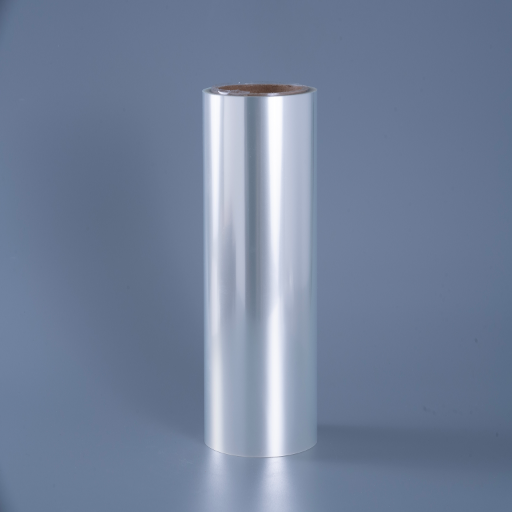
PET Film Release Liner
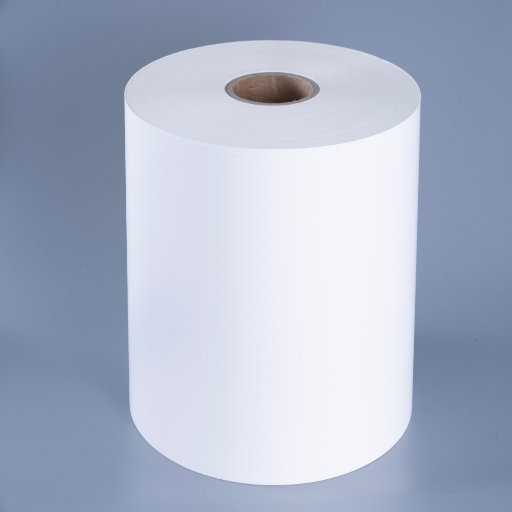
High-TemperatureSCK glassine covers 90%+ of self-adhesive adhesive product label work, but applications running continuous service above 110°C, electronics-grade cleanliness, or transdermal medical bandage and wound-care need a PET film liner instead. Guanma's PET liner sibling line includes 23 µm and 30 µm grades with one-side or two-side silicone coating; the same facestocks and adhesives configure against PET as against glassine.
CCK Release Liner
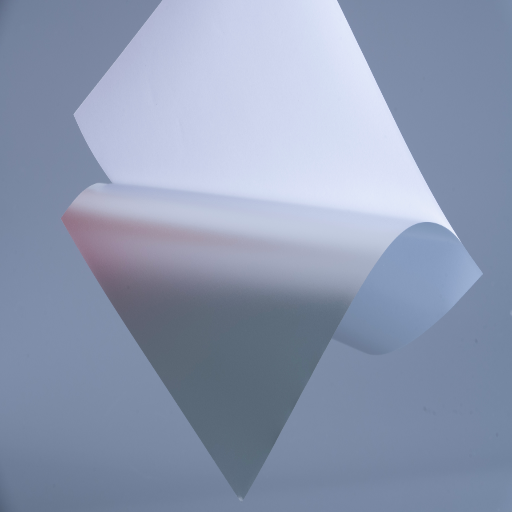
Double-Sided TapesClay-coated kraft (CCK) is the right choice for double-sided tape constructions where the liner must resist humidity flatness loss across both sides, and for specialty industrial bonding applications where CCK's surface chemistry pairs better with specific adhesive systems than glassine does. CCK availability spans 80-135 g/m² with single-side siliconization standard.
Non-Silicone Release Liner
Silicone-SensitiveSome pressure-sensitive adhesive formulations interact unfavorably with traditional silicone release coatings. Our non-silicone release liner sibling product addresses this with an alternative chemistry — used in tier-one electronics assembly and silicone-sensitive medical adhesives.
Most label converters end up running a portfolio across all three liner classes — glassine for high-volume primary labels, PET for thermal and electronics work, CCK for tape conversions. Guanma's single-supplier model across the three liner classes simplifies the qualification paperwork and certificate-of-analysis workflow that procurement teams maintain.
Glassine Release Liner Engineering Tools
FAQ — What Label Converters Ask Before Switching Liner Suppliers
SCK glassine is paper-based, supercalendered for high density and surface smoothness, and silicone-coated for controlled release; it costs roughly 35-40% less per linear meter than PET film at equivalent basis weight and is recyclable in mixed-paper streams under EN 13430. PET film liner offers higher temperature tolerance (up to 150°C continuous versus 110°C for glassine) and better dimensional stability under humidity changes — the right choice for electronics, medical wound-care, and high-temperature industrial work. Guanma supplies both classes; the application matrix above maps which class fits each label use-case.
For high-volume primary labels (pharmaceutical, food, cosmetic) running on coated paper or PP synthetic facestocks, GM-G60 (60 g/m²) at 0.85 g/m² silicone coat weight is the right starting point. For tire labels, freezer labels, and high-speed dispensing applications running PET face material, GM-G80 (80 g/m²) at 0.95 g/m² silicone coat weight is the standard. Heavy industrial drum labels and outdoor durable applications use GM-G100 (100 g/m²) at 1.0 g/m². The application fit matrix in this page maps each industry to a recommended grade plus silicone weight plus facestock pair.
Stock grade MOQ is one master roll (~3,000-4,500 linear meters depending on basis weight) with 25 working days production lead time. Custom basis weight or color formulations carry a 5,000 linear meter MOQ with 30 working days production lead time. Free A4 samples ship within ten working days for any of the four standard SCK grades. Sea freight from Thailand or Vietnam adds 7-10 days for Southeast Asia, 25-45 days for South America and Europe.
FSC Chain of Custody papers are available on request for all standard SCK grades; specifying FSC adds approximately 5-8% to the per-meter price. Our GM-G60 and GM-G72 grades are available in FDA 21 CFR 175.105 grade for indirect food contact, and equivalent EU 10/2011 papers are provided on request. Food-contact compliance is engineered at the silicone resin selection stage and verified at batch-level certificate of analysis.
Both. One-side coating is standard for self-adhesive label applications where only the adhesive-facing surface needs release control. Two-side silicone coating is available for double-sided tape constructions, transfer tape applications, and specialty industrial conversions where both surfaces of the liner need controlled release behavior. Two-side coating uses asymmetric coating weights — the easy side at 0.85 g/m² and the tight side at 1.0-1.2 g/m² — to enable sequential release at the converter line.
Three name-brand suppliers serve the same product class but typically without the regional supply optimization, MOQ transparency, and 10-day sample policy that mid-volume label converters in Southeast Asia, South America, and Europe ask for. Guanma's published spec range (35-120gsm SCK with 0.85-1.0 g/m² silicone) sits within the same band as Mondi's 35-120gsm SCK and Ahlstrom's Silca™ Glassine 50-163gsm. Cost-side advantage comes from Guanma's Thailand and Vietnam production base; qualification advantage comes from publishing spec, MOQ, and lead time on the product page rather than behind a sales form.
Glassine release paper is the silicone-coated industrial substrate engineered to release a self-adhesive label cleanly at controlled force — what this page documents. Glassine backing paper, in non-industrial contexts, refers to translucent acid-free paper used for art protection, jewelry storage, and craft packaging — a fundamentally different product without silicone coating, despite sharing the glassine substrate class. If you arrived here looking for the second use, the consumer/art glassine market is served by paper distributors rather than self-adhesive label material manufacturers.
Yes — free A4 size sample within ten working days of inquiry for any of the four standard SCK glassine grades, with no quote pre-condition. Each sample includes a certificate of analysis recording basis weight, silicone coat weight, release force at FINAT FTM-3 testing, and visual inspection results — the same paperwork that ships with production rolls. Custom formulation samples ship within 30 days, with sample fees credited against the first production order.
Four standard grades target the following release force bands at FINAT FTM-3 (180-degree peel, slow speed): GM-G60 at 8-12 cN/inch, GM-G72 at 10-15 cN/inch, GM-G80 at 12-20 cN/inch, and GM-G100 at 15-25 cN/inch. Each batch ships with a certificate of analysis documenting the as-tested release force at FINAT FTM-3 standard speed, and FINAT FTM-4 high-speed (300 m/min) release values are available on request for converters running at over 200 m/min line speed.