Get in Touch with Guanma

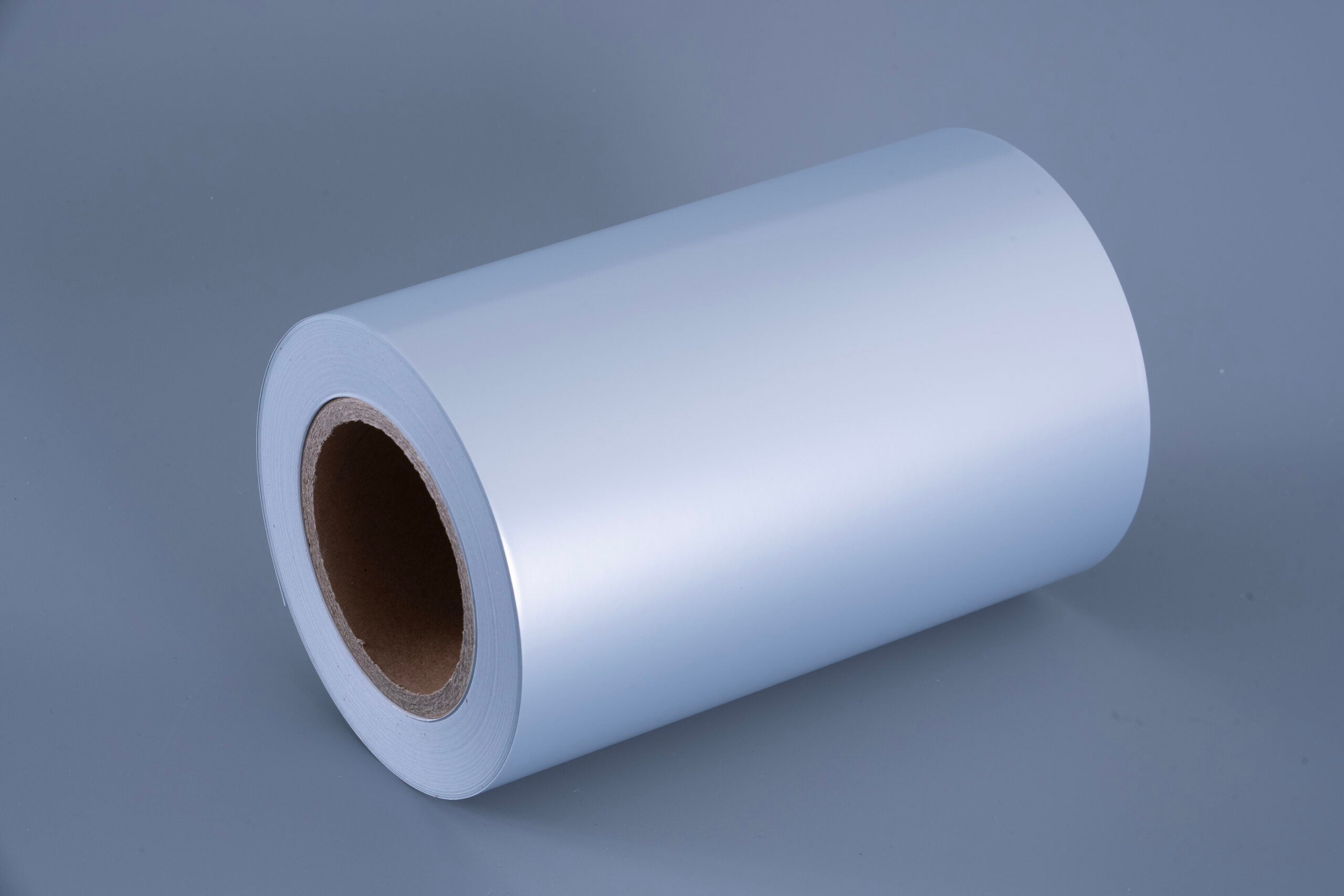
PET Adhesive Film
Industrial-Grade Self-Adhesive Polyester Label Stock
Guanma PET adhesive film combines a dimensionally stable polyester facestock with application-specific adhesive and release liner options. Specify the finish, print surface, adhesive, and roll width for durable labels exposed to chemicals, heat cycles, abrasion, or outdoor weathering.
Get a Custom Quote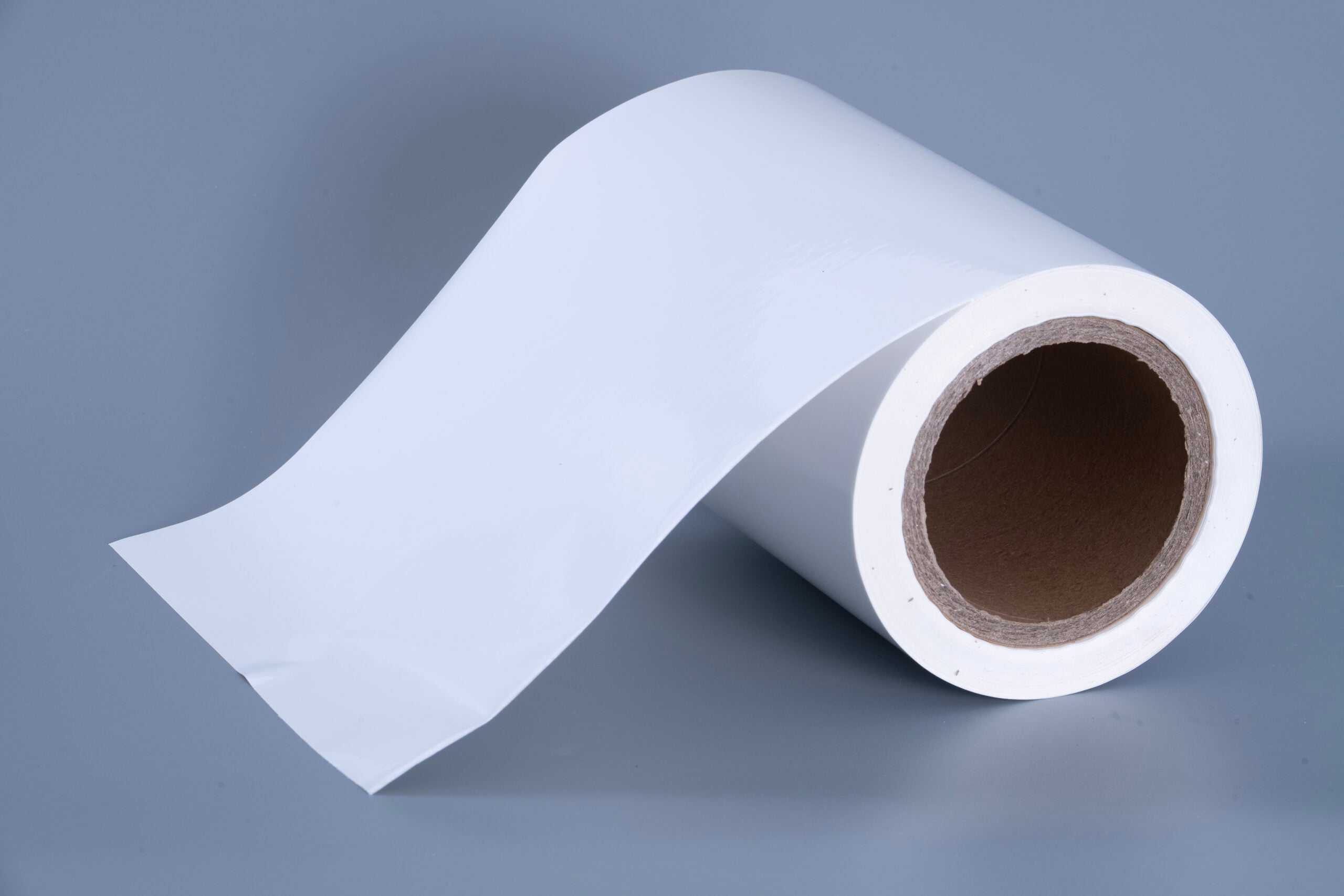
Custom Gauges
Thickness Options
Clear / White / Silver
Surface Finishes
Multiple
Adhesive Systems
Application-Specific
Temperature Range
5
Print Methods
Custom Slitting
Roll Widths
When Paper Labels Fail — Why Manufacturers Switch to PET Film
Engineering Note
Biaxial orientation aligns polymer chains in both the machine and transverse directions, improving tensile strength and dimensional stability. The usable temperature range of a finished label is governed by the entire construction—not the PET facestock alone—so confirm test data for the selected topcoat, adhesive, and liner.
Why PET Film for High-Durability Labels?
PET film is selected when labels must retain their shape, barcode readability, and printed information through moisture, handling, abrasion, chemicals, or outdoor exposure. Its low dimensional change helps registration remain stable during printing, die cutting, and dispensing.
Clear PET supports a no-label look, while white and metallized PET provide opacity or a technical finish. Flexographic, UV, screen, thermal-transfer, and digital printing are available when the PET surface is supplied with the correct treatment or topcoat for the selected ink system.
Engineering Note
Untreated PET has a low-energy, non-porous surface. Corona treatment or an application-specific primer increases surface energy and helps ink or topcoat anchor to the film. The required treatment must be matched to the printing process and verified by an adhesion test.
For the finished label, the adhesive and release liner matter as much as the PET facestock. Surface material, texture, application temperature, service temperature, and chemical exposure should be tested together before a production order.
PET vs BOPP Label Film — How to Choose
PET and BOPP are both filmic label facestocks, but they solve different problems. PET is selected for dimensional stability, durable identification, and demanding exposure. BOPP is selected for conformability, packaging efficiency, and high-volume container labeling.
Property
PET Label Film
BOPP Label Film
Base Polymer
Polyester (PET)
Polypropylene (PP)
Available Gauges
Multiple gauges; confirm by finish and application
Multiple gauges; confirm by packaging format
Dimensional Stability
High — suited to durable identification and precise registration
Moderate — balanced for flexible packaging labels
Heat Performance
Higher potential; verify the complete label construction
Moderate; verify facestock and adhesive limits
Chemical Resistance
High with a compatible topcoat and adhesive
Good for many packaging environments
Conformability
Lower — best on flat or large-radius surfaces
Higher — well suited to bottles and curved containers
Print Compatibility
Flexo, UV, screen, TTR, and digital with the correct topcoat
Flexo, UV, gravure, and digital with suitable treatment
Appearance
Clear, white, metallized, and matte options
Clear, white, glossy, and opaque options
Primary Applications
Industrial ID, electronics, chemical, automotive, and outdoor labels
Food, beverage, personal-care, and general packaging labels
Recycling Review
Assess the complete facestock, adhesive, ink, and liner construction
Assess compatibility with the package and local recycling stream
Guanma Supply
Custom PET facestock, topcoat, adhesive, and liner combinations
Custom BOPP constructions for packaging and labeling
Choose PET adhesive film when the label must preserve printed data and dimensional accuracy through handling, chemicals, outdoor exposure, or elevated temperatures. Choose BOPP when flexibility, packaging appearance, and high-speed application are the main priorities.
Sourcing Tip
Request print and adhesion samples using your actual ink, ribbon, substrate, and application conditions. A material name alone does not confirm performance; qualify the complete label construction before volume production.
PET Adhesive Film Grades and Surface Finishes
Guanma supplies PET adhesive film in multiple gauges and surface finishes. The final facestock, topcoat, adhesive, and liner are selected as one construction, with exact gauge and roll details confirmed against the application and converting process.
Clear PET Film
Appearance
Transparent / gloss
Key Benefit
High clarity and dimensional stability
Recommended Applications
No-label-look graphics, inspection windows, electronics
White PET Film
Appearance
Opaque white
Key Benefit
High-contrast print and barcode readability
Recommended Applications
Industrial ID, asset labels, chemical containers
Metallized and Matte PET Film
Appearance
Silver / metallized or low-glare matte
Key Benefit
Durable technical or premium finish
Recommended Applications
Equipment labels, electronics, durable branding
Select the PET grade according to surface geometry, label size, dispensing speed, print method, required rigidity, and service environment. Guanma can recommend a starting construction, but production approval should follow printing, die-cutting, dispensing, and adhesion trials on the actual substrate.
Roll Specifications
Finishes: clear, white, metallized, and matte options
Gauges: multiple options; confirm for the selected finish
Custom slitting: supplied to the agreed converting width
Core and winding direction: confirm at quotation
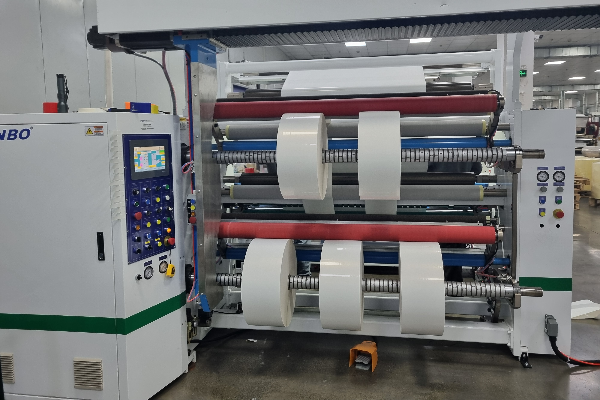
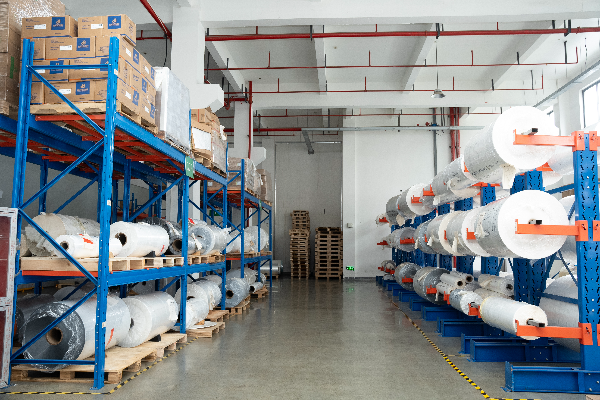
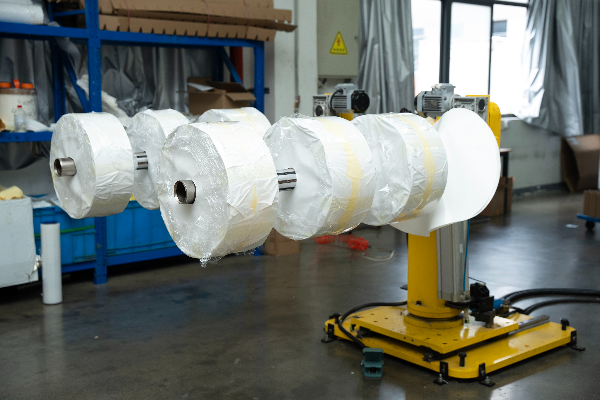
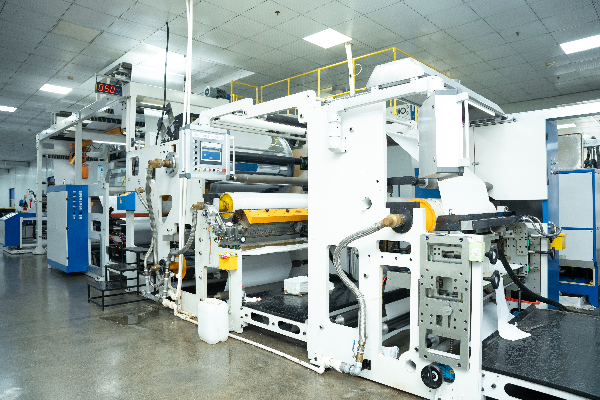
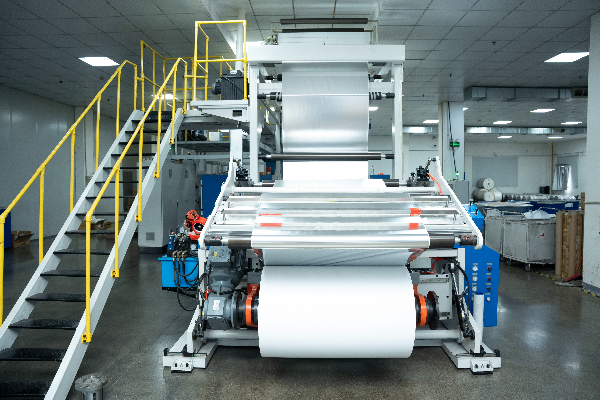
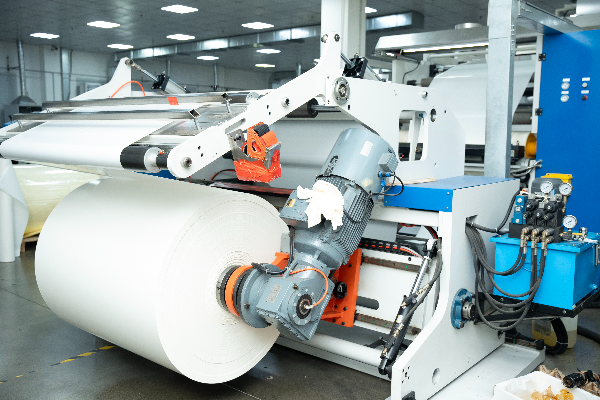
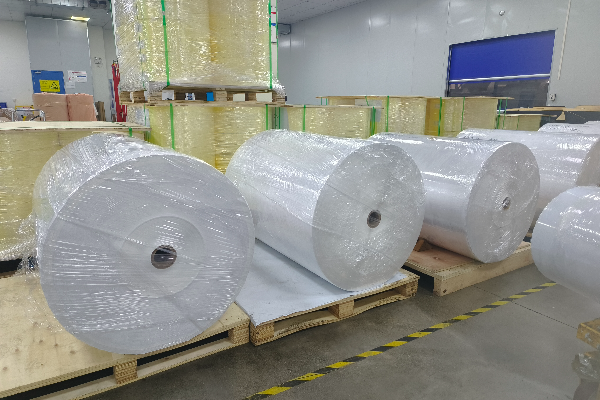
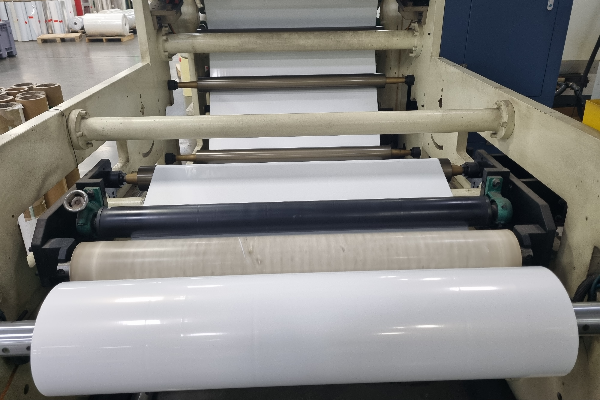
PET Adhesive Film Production & Quality Control
Coating, Laminating, Slitting & Inspection

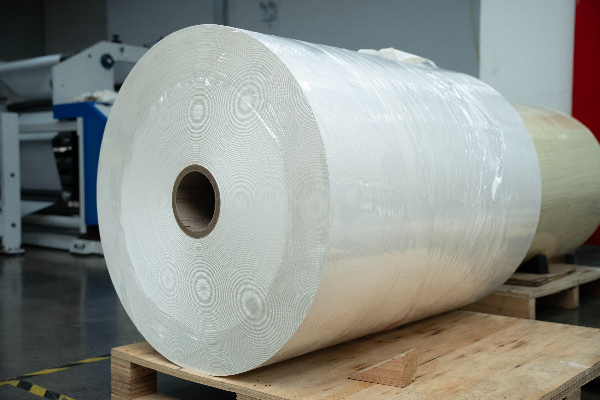
Adhesive Systems and Liner Configurations for PET Film
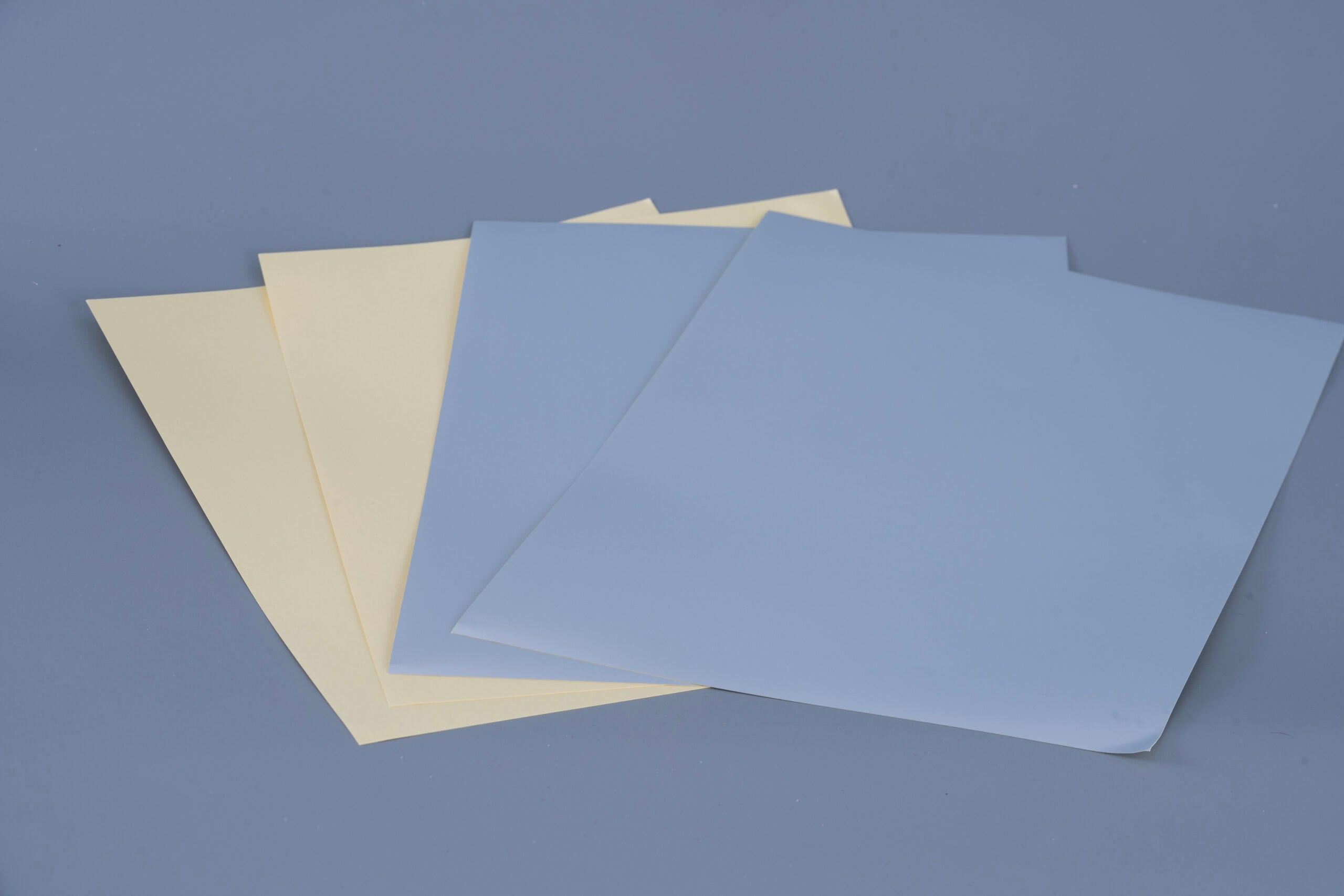
A PET label is a multi-component construction. Facestock alone does not determine performance: adhesive chemistry, coat weight, topcoat, substrate, application temperature, service environment, and release liner must be specified together. Guanma can coat, laminate, and slit a PET construction for application testing.
| Adhesive Type | Bond Character | Selection Condition | Target Application |
|---|---|---|---|
| Acrylic (permanent) | Durable bond; builds after application | Clean, higher-energy surfaces | Industrial ID, electronics, and qualified outdoor labels |
| Water-based acrylic | Balanced coating and converting profile | Smooth packaging and label substrates | Consumer goods and general labeling |
| Hot-melt | High initial tack | Low-surface-energy surfaces or fast dispensing | Logistics, packaging, and difficult containers |
| Rubber-based | Aggressive bond on rough or textured surfaces | Irregular surfaces; verify migration and compatibility | Industrial containers and textured plastics |
| Removable | Repositionable or clean-removal construction | Smooth, controlled surfaces after removal testing | Temporary identification and promotional labels |
| Freezer-grade | Permanent cold-service construction | Confirm application and service temperatures by product TDS | Cold-chain, frozen goods, and laboratory logistics |
| Tire labeling | High initial tack on rubber | Test on the exact rubber compound and contamination level | Tire sidewall identification and process labels |
| High-temperature | Permanent bond for elevated-temperature service | Confirm the complete construction by product TDS | Under-hood, equipment, and heat-exposed identification |
| Oil-resistant | Maintains bond during oil or solvent contact | Test against the exact fluid, dwell time, and temperature | Chemical drums, lubricant containers, and GHS labels |
Release Liner Options
The release liner protects the adhesive and supports converting, die cutting, matrix stripping, and dispensing. Liner basis weight, stiffness, release level, and lay-flat performance should be matched to the adhesive coat weight and application equipment.
| Liner Type | Available Options | Characteristics |
|---|---|---|
| Glassine Paper | Multiple basis weights | Smooth release and efficient high-speed converting |
| CCK Paper (Clay Coated Kraft) | Multiple basis weights | Higher stiffness and improved lay-flat for heavier constructions |
| Custom Liners | On request | PET film or kraft liners available on request |
Combination Guide
PET facestock, topcoat, adhesive, and liner options can be combined for a specific use case. Send the substrate material, surface texture, label size, print process, application method, and exposure conditions so Guanma can recommend a test construction rather than a one-size-fits-all stock.
PET Adhesive Film Specifications
Technical Data & Parameters
| Thickness | Multiple gauges available; confirm for the selected finish and application |
|---|---|
| Color | Clear, white, silver / metallized, and matte options |
| Adhesive | Permanent acrylic, water-based acrylic, hot-melt, removable, and application-specific systems |
| Release liner | Glassine, CCK, and film liners; basis weight confirmed at quotation |
| Printing compatibility | Flexographic, UV, screen, thermal transfer, and digital printing with a compatible PET topcoat |
| Width | Master rolls and custom slitting; confirm available width and winding direction |
| Application temperature | Depends on the selected adhesive and substrate; confirm application and service ranges from the product TDS |
PET Adhesive Film Printing Compatibility
PET is a non-porous film, so print adhesion depends on surface treatment, topcoat, ink chemistry, and curing conditions. Specify the print process when ordering so Guanma can match the PET surface to the press, ink, ribbon, and durability requirement.
Print Method
Compatible
Notes
Flexographic
Conditional
Specify ink chemistry, target surface energy, and PET topcoat; run a tape-adhesion test.
UV Printing
Conditional
Use UV ink formulated for film and a matched topcoat; confirm cure and adhesion.
Screen Printing
Conditional
Use PET-compatible ink and surface treatment; verify solvent and scratch resistance.
Thermal Transfer (TTR)
Conditional
Requires a thermal-transfer-receptive topcoat and matched ribbon; test barcode grade.
Digital Inkjet
Conditional
Requires an inkjet-receptive coating matched to the water-based or UV ink system.
Guanma can match PET topcoats for flexographic, UV, screen, thermal-transfer, and digital printing. Before production, qualify ink adhesion, barcode readability, abrasion resistance, and chemical resistance on the final construction.
Applications for PET Adhesive Film
PET adhesive film is used where printed identification must remain dimensionally stable and readable through demanding handling or exposure. Final performance depends on the selected PET finish, topcoat, adhesive, liner, substrate, and qualification test.
Industry
Application
Why PET Film?
Recommended Adhesive
IndustryAutomotive
ApplicationUnder-hood ID and component traceability
Why PET Film?Dimensional stability and durable print after construction testing
Recommended AdhesiveHigh-temperature or permanent acrylic
IndustryWire & Cable
ApplicationCable flags and durable wire identification
Why PET Film?Tear resistance and print retention for handled cables
Recommended AdhesivePermanent acrylic
IndustryElectronics
ApplicationBattery, device, and PCB tracking labels
Why PET Film?Thin, stable facestock for high-contrast variable data
Recommended AdhesivePermanent acrylic / application-specific
IndustryLaboratory & Pharma
ApplicationVial, sample, and laboratory tracking labels
Why PET Film?Clear or white PET with a matched variable-data topcoat
Recommended AdhesiveApplication-specific acrylic
IndustryChemical
ApplicationDrum, container, and secondary GHS labels
Why PET Film?Moisture and chemical resistance after exposure testing
Recommended AdhesiveOil-resistant / permanent acrylic
IndustryIndustrial Equipment
ApplicationNameplates, calibration, and asset identification
Why PET Film?Stable barcodes and durable equipment identification
Recommended AdhesivePermanent acrylic
IndustryOutdoor Assets
ApplicationUtility, solar, equipment, and asset labels
Why PET Film?Dimensional stability with a UV- and weather-matched topcoat
Recommended AdhesiveOutdoor-grade permanent acrylic
PET Adhesive Film Configuration Selector
Answer four questions about your labeling application and receive a starting PET facestock, adhesive, liner, and topcoat configuration for sample testing.
Please select an option for each field before generating a recommendation.
Your Recommended Configuration
Recommended Facestock
Recommended Adhesive
Release Liner
Surface Coating
Temperature Qualification
Configuration Notes
Frequently Asked Questions
What is PET adhesive film?
PET adhesive film is a pressure-sensitive label construction made from a polyester facestock, a selected adhesive, and a release liner. PET provides a stable, durable print surface for industrial identification, electronics, chemical containers, automotive parts, and other demanding applications.
How is PET adhesive film different from BOPP label film?
PET offers higher dimensional stability and is commonly chosen for durable identification, chemical exposure, electronics, and heat-sensitive applications. BOPP is generally more conformable and is widely used for bottles, food, beverage, and personal-care packaging. The final choice should be tested on the actual substrate.
Can PET adhesive film be printed with thermal transfer?
Yes, when the PET facestock has a thermal-transfer-receptive topcoat and is paired with the correct ribbon. Test barcode grade, abrasion resistance, and ribbon anchorage before approving a production construction.
Which adhesive should be paired with PET film?
Adhesive selection depends on the substrate material, surface texture and energy, application temperature, service temperature, chemical exposure, and whether the label must be permanent or removable. Guanma can recommend a test construction after receiving these conditions.
Is PET adhesive film waterproof and chemical resistant?
PET film is non-porous and moisture resistant, but finished-label performance also depends on the ink, topcoat, adhesive, edges, and substrate. For chemicals or solvents, test the exact fluid, concentration, contact time, and temperature on the complete label construction.
What temperature range can PET adhesive film handle?
There is no single temperature range for every PET adhesive film. Application temperature and in-service temperature are controlled mainly by the selected adhesive and the complete construction. Confirm both ranges on the product technical data sheet before ordering.
Can the PET facestock, adhesive, and liner be customized?
Yes. Guanma can combine clear, white, metallized, or matte PET with application-specific topcoats, permanent or removable adhesives, and glassine, CCK, or film liners. Gauge, width, core, winding direction, and release level are confirmed during quotation and sample qualification.