Entre em Contato com Guanma

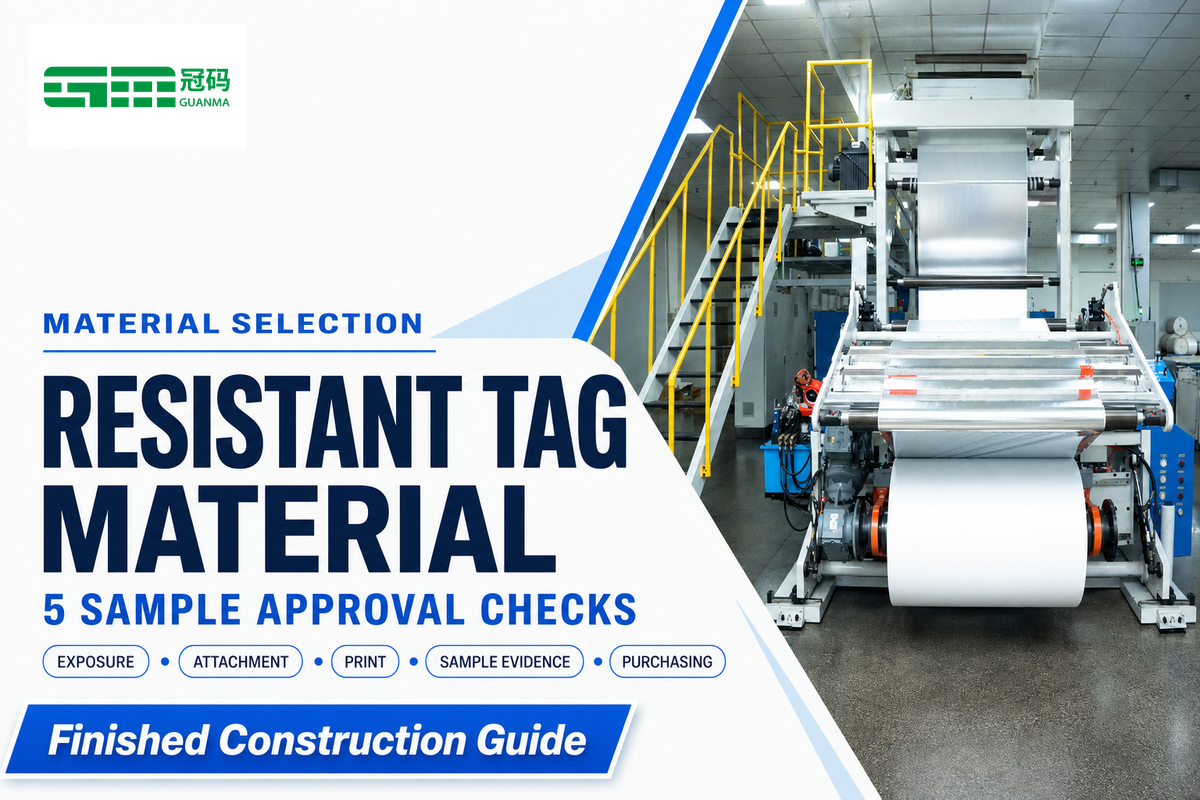
Um material de etiqueta resistente é apenas um ponto de partida Para finalizar uma escolha, defina a exposição, o anexo, a imagem impressa, as verificações de amostras acabadas e os controles de compra Uma etiqueta pode permanecer no item enquanto o código de barras se torna ilegível; uma folha com aparência sonora também pode deixar o orifício ou fixador não testado.
Este guia ajuda os avaliadores técnicos a selecionar construções e decidir quais evidências ainda estão faltando Ele cobre etiquetas penduradas primeiro, com uma rota separada para etiquetas adesivas Os exemplos são dados publicados específicos do fornecedor e registros hipotéticos de compradores claramente marcados Não são resultados de testes Guanma ou um ranking universal de durabilidade.
Levantamento chave
Aprove o material, a imagem impressa e o anexo como uma construção terminada Um nome de família material ou um teste em um espécime diferente não estabelece que sua etiqueta passará.
Escolha primeiro uma etiqueta suspensa ou uma etiqueta adesiva
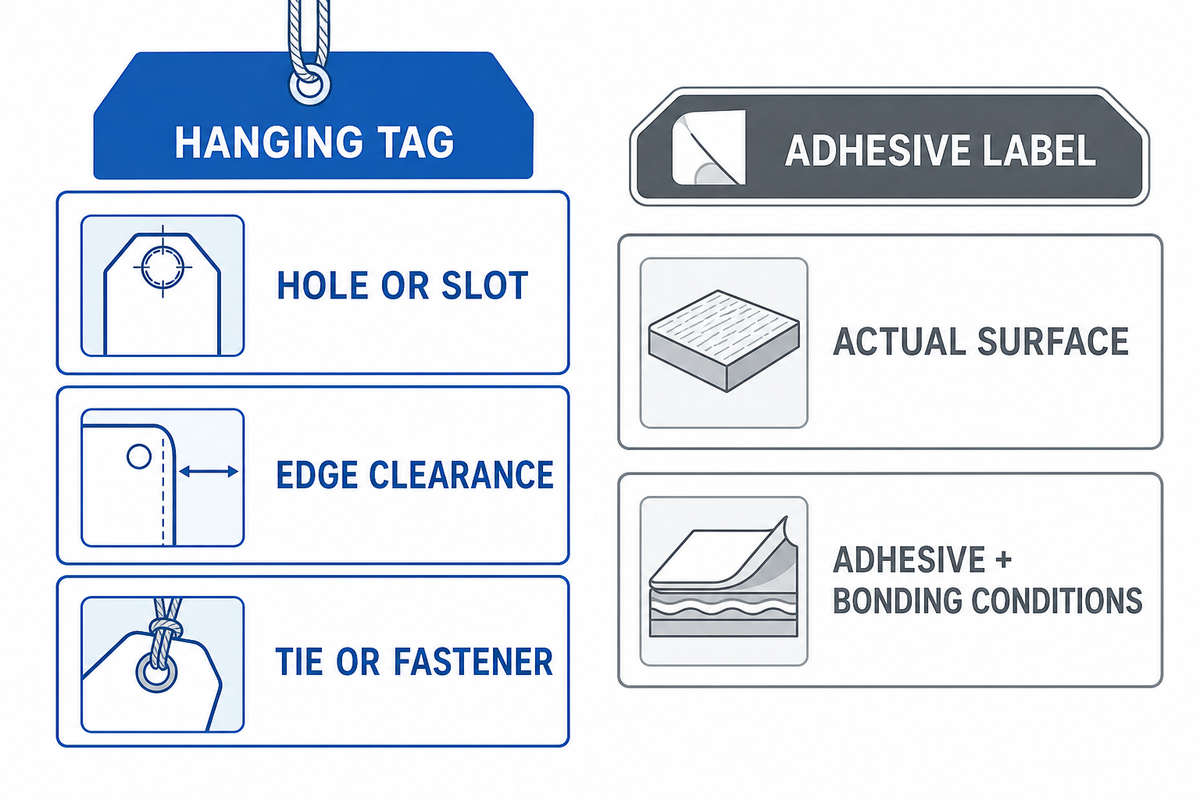
Use uma etiqueta suspensa quando a identificação deve ser fixada mecanicamente através de um orifício, fenda ou laço, em vez de colada a uma superfície Use uma etiqueta adesiva quando uma superfície adequada estiver disponível e a identificação possa ser colada a ela Cada opção introduz considerações diferentes; portanto, a opção de fixação deve ser escolhida antes de solicitar uma amostra ou comparar a espessura do filme.
Para uma etiqueta suspensa, o ponto de fixação, a amarração e a borda da etiqueta devem ser especificados Para etiquetas sensíveis à pressão, a superfície, o adesivo e a aplicação devem ser considerados Fundições texturizadas, peças oleosas e painéis planos limpos são diferentes problemas de colagem Superfícies curvas em equipamentos industriais também requerem uma amostra; um painel de teste plano não representa essa superfície Pendurar uma etiqueta pode resolver um problema de ligação e introduzir um problema de fixação.
Etiqueta pendurada
- Especifique o furo ou o afastamento do entalhe e da borda.
- Identifique a gravata, o fio ou outro fixador.
- Avalie o conjunto carregado e impresso.
Etiqueta adesiva
- Especifique a superfície real da aplicação.
- Identificar as condições adesivas e de colagem.
- Avalie o conjunto colado e impresso.
Objeção de compra: “O certificado do material já foi enviado.” Pergunte qual construção e teste ele descreve Este certificado de material para filme não convertido não pode fornecer o resultado desejado para sua abertura perfurada ou fixador Para a rota colada, comece com guia de seleção de materiais de etiquetas resistentes a produtos químicos quando a decisão é motivada pela exposição química.
Material resistente da etiqueta: compare construções candidatas
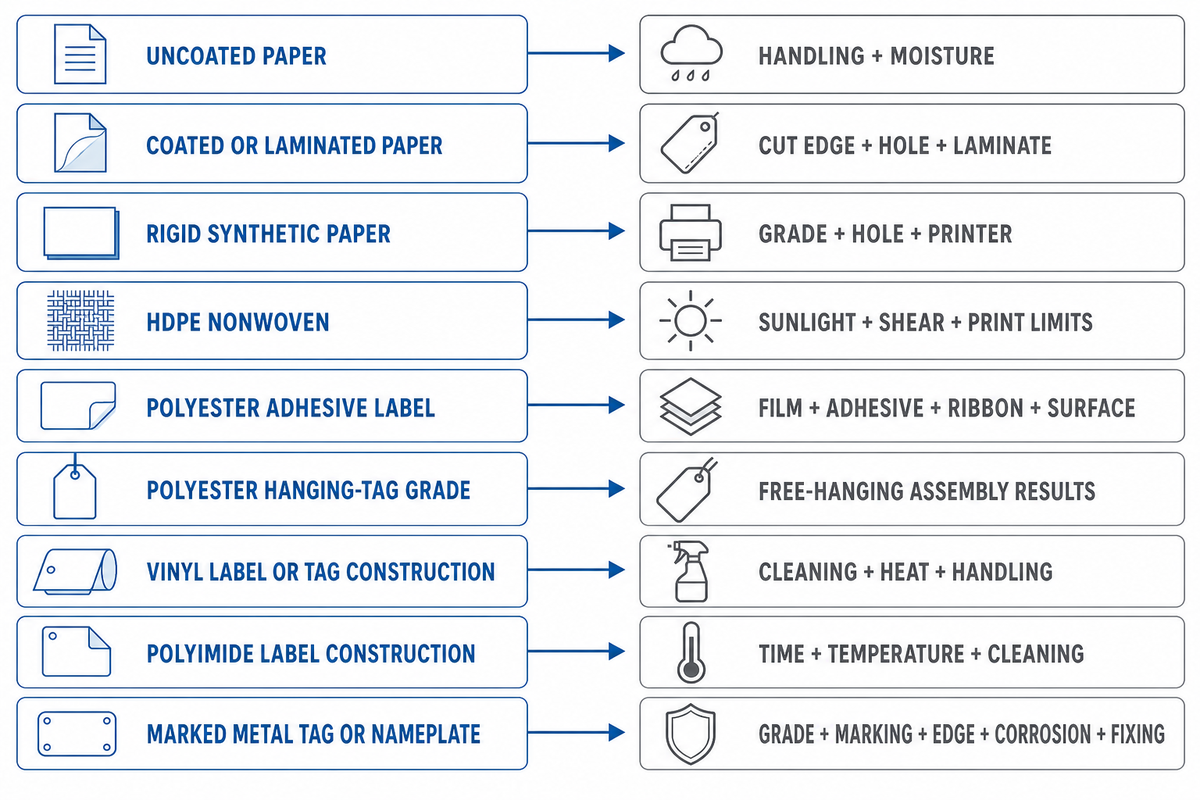
Shortlist resistente tag material pela construção que você pode encomendar e testar Papel, folha sintética, poliéster, vinil, poliimida e metal todos são pontos de partida; não há vencedor universal A tabela separa candidatos materiais da evidência necessária para aceitar uma etiqueta acabada ou etiqueta adesiva.
Não interprete as linhas como produtos iguais Uma construção que emprega um revestimento, laminado ou adesivo muda o material, e o papel “sintético” pode descrever vários polímeros Mesmo acabamentos brilhantes e foscos podem precisar de diferentes configurações de impressão Para fazer uma comparação maçãs-a-maçãs, use um código de grau de fornecedor Os rótulos de policarbonato podem entrar em uma lista restrita quando um fornecedor documenta uma construção adequada, mas um nome de polímero por si só não estabelece adequação para a aplicação específica.
| Candidato | Motivo para considerar uma amostra | Provas a solicitar antes da aprovação |
|---|---|---|
| Papel não revestido | Identificação temporária em processo protegido e seco | Manuseio real e exposição à umidade; rejeite uma amostra somente seca como prova de uso externo |
| Papel revestido ou laminado | É necessário um rosto impresso protegido | Desempenho de ponta, furo e laminado após a exposição pretendida |
| Papel sintético rígido | Uma etiqueta suspensa imprimível mais rígida é útil | Polímero exato ou grau, geometria do furo e compatibilidade da impressora |
| HDPE não tecido, como um estilo Tyvek específico | É necessária uma etiqueta leve e flexível | Limites de luz solar, cisalhamento e impressão específicos do estilo |
| Etiqueta adesiva poliéster | Etiquetas de equipamentos ou identificação de ativos fixos precisam de um filme colado | Facestock, adesivo, fita e superfície real como uma combinação |
| Grau de etiqueta suspensa de poliéster | Uma etiqueta de filme é preferida a uma etiqueta adesiva | Resultados de montagem suspensos; não tome emprestada uma classificação de rótulo adesivo |
| Etiqueta de vinil ou construção de tags | Flexibilidade ou conformidade é uma prioridade de seleção | Grau exato sob limpeza, calor e manuseio; o alongamento não deve estragar a imagem |
| Construção de etiquetas de poliimida | Um processo de alta temperatura exige um candidato especializado | Ciclo tempo-temperatura completo, adesivo e sistema de impressão, incluindo limpeza subsequente |
| Etiqueta ou placa de identificação de metal marcado | Uma construção polimérica pode ser inadequada para o processo | Grau de metal, método de marcação, acabamento de borda, exposição à corrosão e compatibilidade de fixação |
Uma comparação útil de fornecedores é Gama de etiquetas resistentes a rasgos da Pannier. Seu papel sintético 00 é listado por -23 °F a 215 °F com 9 PSP2 meses de estabilização ultravioleta; as etiquetas de polímero PTR20 são listadas para -70 °F a 180 °F com resistência ultravioleta e às intempéries de um ano Essas são descrições de produtos separadas e não são necessariamente os limites para todas as etiquetas sintéticas A página não fornece uma classificação de carga universal de furo perfurado.
“Nenhum estoque de rótulo único enfrenta todos os desafios.”
As equipas de compras devem avaliar a construção entregue, em oposição apenas ao preço cotado por etiqueta, quando consideram ofertas concorrentes Em alguns casos, as opções de custo mais baixo podem ser razoavelmente justificadas como alternativas No entanto, isto também requer provas relevantes Para rótulos de poliéster, o Guia de material de etiqueta PET entra em detalhes sobre a rota do filme colado.
Mapa de falhas de tags finalizadas: inspecione toda a montagem
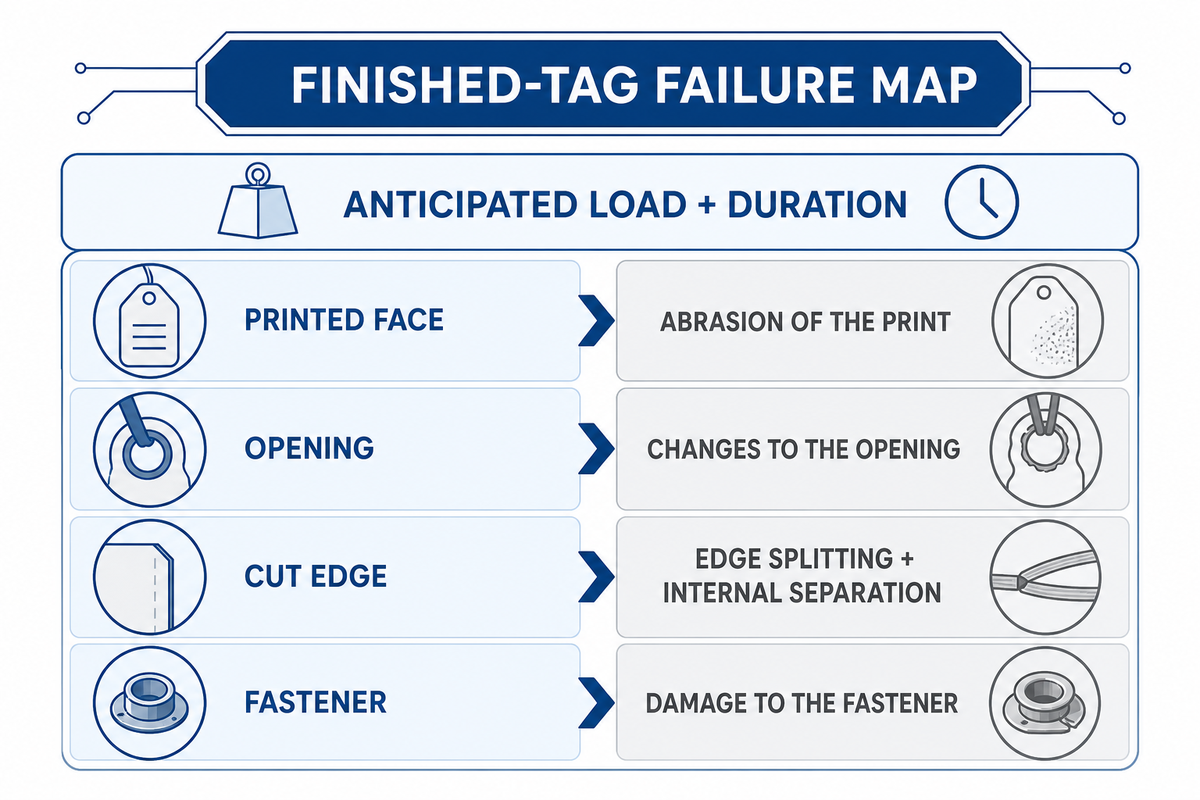
O Mapa de falha da etiqueta finalizada identifica problemas na face impressa, na borda de corte, na abertura e no fixador Avalie essas áreas de amostras convertidas e avalie-as sob a carga prevista e a duração da exposição Um defeito óbvio pode se tornar visível com um puxão rápido da mão, mas não pode confirmar o desempenho a longo prazo do acessório.
Comece com a forma fornecida Registre o diâmetro do furo ou as dimensões do entalhe, a distância à borda mais próxima, a forma do canto, e todo o reforço Fotografe a amostra com o laço pretendido instalado Ao avaliar a amostra, procure a abrasão da impressão, as mudanças à abertura, à divisão da borda e à separação interna, ao dano ao prendedor, e à rotação que esconde a informação impressa.
A questão da geometria tem um precedente publicado. US6267152B1, uma patente histórica de hang-tag relacionada ao Panduit, discute o espaçamento e reforço de ranhuras no contexto do rasgo Seus exemplos usam certos materiais e amarrações Eles explicam por que esses detalhes são importantes, mas não estabelecem um padrão para a folga de furos, ou endossam uma construção Guanma.
O tempo também é importante. O escopo público e a orientação para ASTM D2990-17(2025) abordar a fluência plástica e a ruptura por fluência sob cargas sustentadas Se o acessório for mantido apertado, peça ao avaliador para descrever a carga e a duração e o ambiente Uma etiqueta que pareça ser satisfatória imediatamente após a instalação precisa ser suportada com dados referentes ao serviço esperado.
A delaminação interna pode ser causada por ações tão simples quanto esfregar ou vincar A flexão em ângulo afiado também pode causar delaminação interna O DuPont Perguntas frequentes sobre Tyvek afirma que as forças de cisalhamento podem causar delaminação interna A mesma orientação não considera Tyvek como resistente a ultravioleta para luz solar constante Peça o estilo específico e o resultado da amostra acabada em vez de assumir que Tyvek atende a um padrão universal de“ à prova de ”tear O adjetivo não deve ser usado como substituto para o cliente aceitar o produto.
Separe as especificações de exposição e teste a sequência real
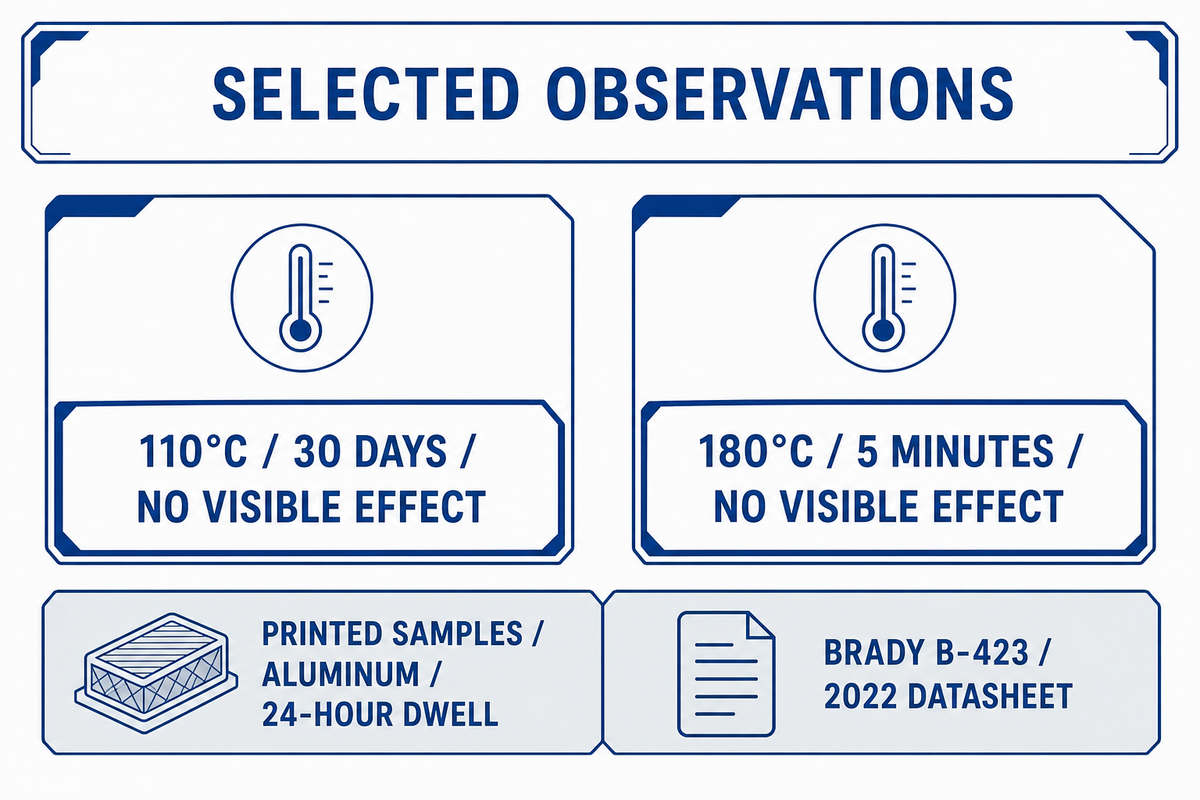
Registre o calor, o contato químico, o tempo, e a carga mecânica separadamente de modo que cada condição esteja clara Depois, avalie as situações que podem ocorrer junto no serviço Por exemplo, uma situação pode incluir a exposição curto ao calor alto, a exposição mais longa ao calor mais baixo, e um ciclo da limpeza em que uma etiqueta é esticada Cada um destes pode exigir formas diferentes da evidência, mesmo se o fornecedor descreve cada candidato como o material durável da etiqueta.
O Ficha técnica do Brady B-423 de 2022 fornece alguma clareza em relação ao tempo Suas amostras de desempenho declaradas foram impressas, aplicadas em alumínio e receberam 24 horas de permanência As observações documentadas aqui também estão associadas a essa construção e configuração.
| Teste publicado | Exposição | Observação relatada |
|---|---|---|
| Alta temperatura de serviço | 110°C por 30 dias | Nenhum efeito visível |
| Alta temperatura de serviço | 120 °C por 30 dias | Ligeira descoloração |
| Alta temperatura de serviço | 145 °C por 30 dias | Descoloração moderada; rótulo ainda funcional |
| Alta temperatura de curto prazo | 180 °C por 5 minutos | Nenhum efeito visível |
| Alta temperatura de curto prazo | 200°C por 5 minutos | Ligeira descoloração e encolhimento; rótulo funcional |
| Alta temperatura de curto prazo | 210 °C por 5 minutos | Não funcional devido ao encolhimento |
Brady Destaque do produto B-423 também relata o resultado de 110 °C, 30 dias Ambas as fontes são de BradyNem transforma 180 °C em uma classificação de serviço contínuo para todo o poliéster, e nenhum mede a força de uma etiqueta de suspensão livre.
A seleção de material de etiqueta resistente a produtos químicos começa com o solvente ou limpador real, concentração, modo de contato e duração Os rótulos resistentes a solventes qualificados para um lenço não têm automaticamente evidências de imersão contínua A orientação pública para ASTM D543-21 considera a exposição ao reagente juntamente com a temperatura e o estresse aplicado Usar a sequência real da planta ao definir uma avaliação, incluindo condições que se sobrepõem A resistência química é condicional: rótulos resistentes a óleo e rótulos resistentes a ácidos precisam do fluido e concentração nomeados, não uma garantia de que resistem à exposição química em geral Para recipientes químicos ou equipamentos de processamento químico, levar o cronograma de limpeza real para o avaliador.
Objeção de compra: “É resistente às intempéries e resistente a produtos químicos já.” Essas descrições deixam a exposição indefinida. Use o existente guia de etiquetas resistentes a produtos químicos para o ramo químico detalhado e o guia de etiqueta durável ao ar livre para intemperismo. Uma breve alegação de resistência ao calor não pode preencher nenhuma das lacunas de evidência. Substitua frases como “temperaturas extremas,” “calor extremo” e “condições extremas” por valores e durações. Uma cotação para rótulos de alta temperatura ainda está incompleta sem essas condições.
Combine a superfície da impressora, fita e etiqueta
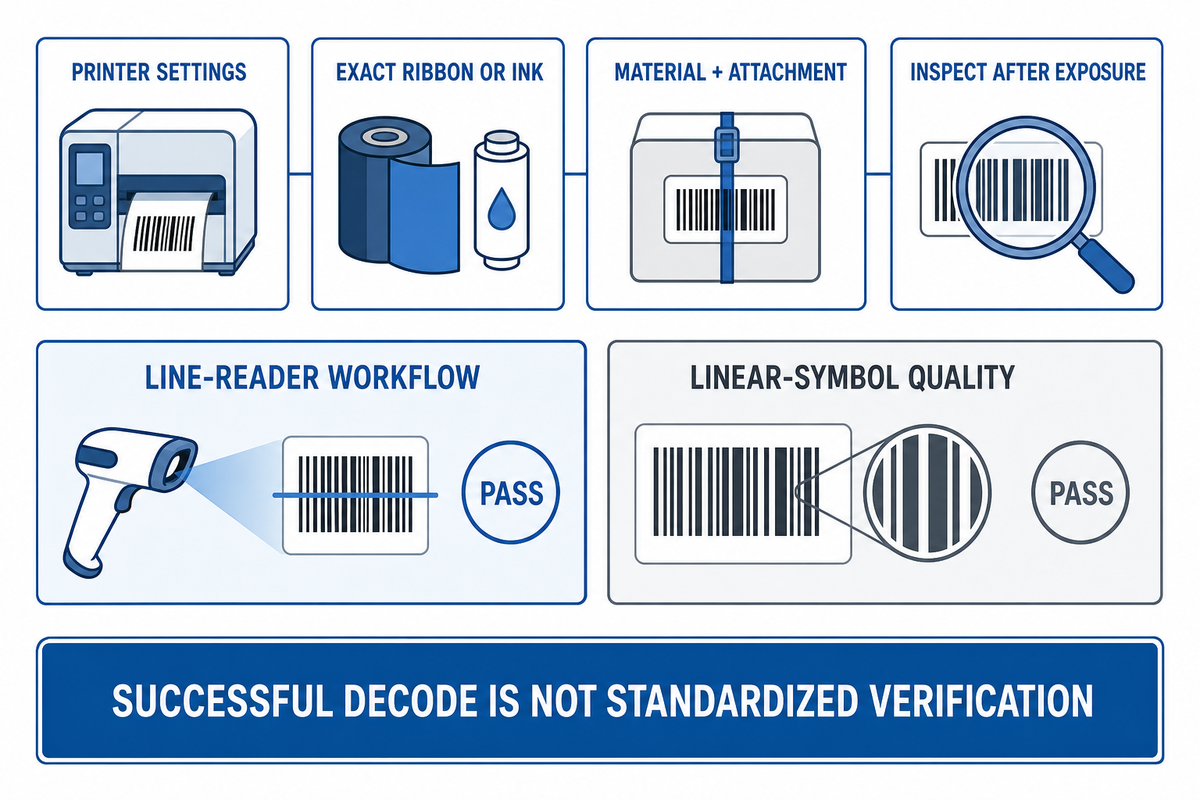
Qualifique a imagem impressa com o material da etiqueta e anexo selecionados A transferência térmica, o jato de tinta e outros métodos de impressão têm diferentes requisitos de compatibilidade Registre as configurações da impressora e a fita ou tinta exata e, em seguida, inspecione e leia a amostra acabada após a exposição Uma impressão limpa na instalação é apenas a condição inicial A identificação do produto falha quando as etiquetas impressas perdem as informações necessárias na próxima operação, mesmo que seu material de base permaneça intacto.
B-423, por exemplo, é um material de poliéster branco brilhante com adesivo acrílico permanente A folha de dados especifica um filme de 0,002 polegadas e uma camada adesiva de 0,001 polegadas, excluindo o forro, e nomeia fitas Brady compatíveis Esses detalhes identificam a construção testada Substituindo outra fita de transferência térmica altera a questão da evidência, mesmo que a impressão inicialmente pareça idêntica.
O calor da impressora também merece atenção A DuPont não recomenda a impressão a laser de toner seco comum para Tyvek porque pode derreter o material Sua orientação recomenda permanecer a ou abaixo de 79 °C sob tensão em operações de impressão ou revestimento para evitar deformação O ponto de fusão relatado de 135 °C não é uma configuração segura da impressora.
A aceitação do código de barras requer distinguir uma decodificação bem-sucedida da verificação padronizada da qualidade do símbolo O teste do leitor usado na linha verifica o fluxo de trabalho pretendido. ISO/IEC 15416:2025 descreve medidas de atributos e uma avaliação de qualidade geral para símbolos lineares Se o cliente especificar um determinado grau de verificação, confirme o método e limite; não default para “our scanner leia-o.”
Etiquetas de equipamentos, marcadores de fios e cabos e etiquetas de placas de circuito podem conter dados variáveis, mas seus mecanismos de impressão e exposição diferem Os fornecedores de etiquetas de alta temperatura para processamento de placas de circuito devem identificar o ciclo completo de aquecimento e limpeza Quando a arte, fita ou revestimento muda, retenha a amostra antiga para que a equipe de impressão possa revisar as mudanças específicas.
Use um registro de exposição à aprovação para a decisão da amostra
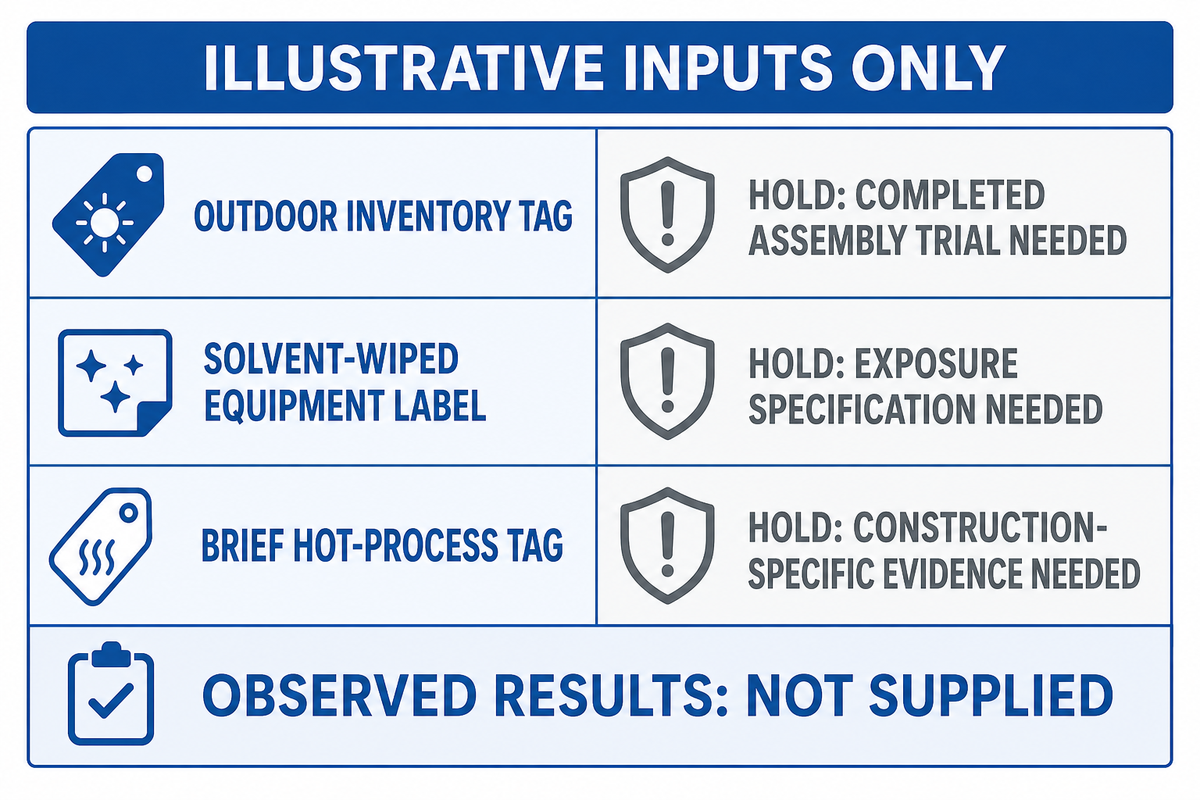
O Registro de Exposição à Aprovação torna visíveis as evidências ausentes antes que um lote seja aprovado Preencha-o com a construção real, as condições de serviço e os critérios de aceitação acordados e, em seguida, anexe os resultados medidos Os três casos a seguir ilustram como preparar esse registro; nenhum contém um teste concluído ou uma recomendação para liberar material.
Apenas entradas ilustrativas: o caso exterior assume seis meses de uso pretendido O caso do quente-processo assume um 180 °C, passo de processo de cinco minutos Estes são requisitos hipotéticos do comprador, não limites de serviço comprovados O caso solvente-limpeza especificamente deixa concentração mais limpa não declarada, porque essa omissão impede uma comparação.
| Campo | Etiqueta de inventário ao ar livre | Etiqueta do equipamento limpo com solvente | Breve tag de processo quente |
|---|---|---|---|
| Finalidade | Identifique um componente armazenado ao ar livre | Mantenha o texto do ativo legível após a limpeza | Mantenha a identidade através do passo quente |
| Candidato | Grau de etiqueta sintética especificado pelo fornecedor; código final pendente | Combinação especificada de poliéster, adesivo e fita; código pendente | Construção especializada em alta temperatura; grau pendente |
| Anexo | Etiqueta perfurada e gravata pretendida no componente real | Ligação à superfície real do equipamento revestido | Abertura pretendida de etiquetas e fixação compatível com o calor; evidências pendentes |
| Exposição | Meta de seis meses; sol, chuva e condições de manuseio a serem documentadas | Nomeado limpador de plantas; cronograma de concentração e limpeza ainda ausente | Assumido 180 °C por cinco minutos; condições subsequentes do processo para documentar |
| Condições combinadas | Manuseio úmido com o tirante instalado; carga sustentada para definir | Limpeza à temperatura da superfície de operação; permanência de ligação para definir | Aquecimento com a própria fixação, seguido de qualquer limpeza ou manuseamento |
| Imprimir registro | Impressora, fita e revisão de arte necessária | Impressora, fita, superfície da etiqueta e revisão da arte necessária | Processo de marcação e revisão da arte necessária |
| Critérios de aprovação | Concorde com limites de fixação, deformação e imagem legível | Concordo adesão, condição de imagem e qualquer exigência de grau de código de barras | Concorde limites dimensionais, de fixação e de imagem legível |
| Resultados observados | Não fornecido | Não fornecido | Não fornecido |
| Decisão e proprietário | Hold: equipe de qualidade precisa do teste de montagem concluído | Hold: avaliador técnico precisa primeiro da especificação de exposição | Hold: o proprietário do processo precisa de evidências específicas da construção |
Use uma retenção que nomeie a próxima ação Impede que a aquisição trate uma solicitação de amostra como aprovação técnica Atribua um proprietário e uma data para cada item ausente Adicione o relatório de teste quando estiver disponível Separe os resultados reais dos critérios de aceitação para evitar que qualquer um deles seja reescrito para justificar a aceitação da amostra.
No exemplo ligado, ASTM D6252/D6252M-98(2025) fornece um método de descascamento de 90 graus para estoques de etiquetas sensíveis à pressão e discute o uso com critérios de aceitação acordados Ele não testa o slot ou gravata de uma etiqueta suspensa O mais geral guia de padrões de teste de durabilidade de etiquetas ajuda o leitor a distinguir a seleção do método de um passe para o produto.
Encomende a mesma construção que foi avaliada
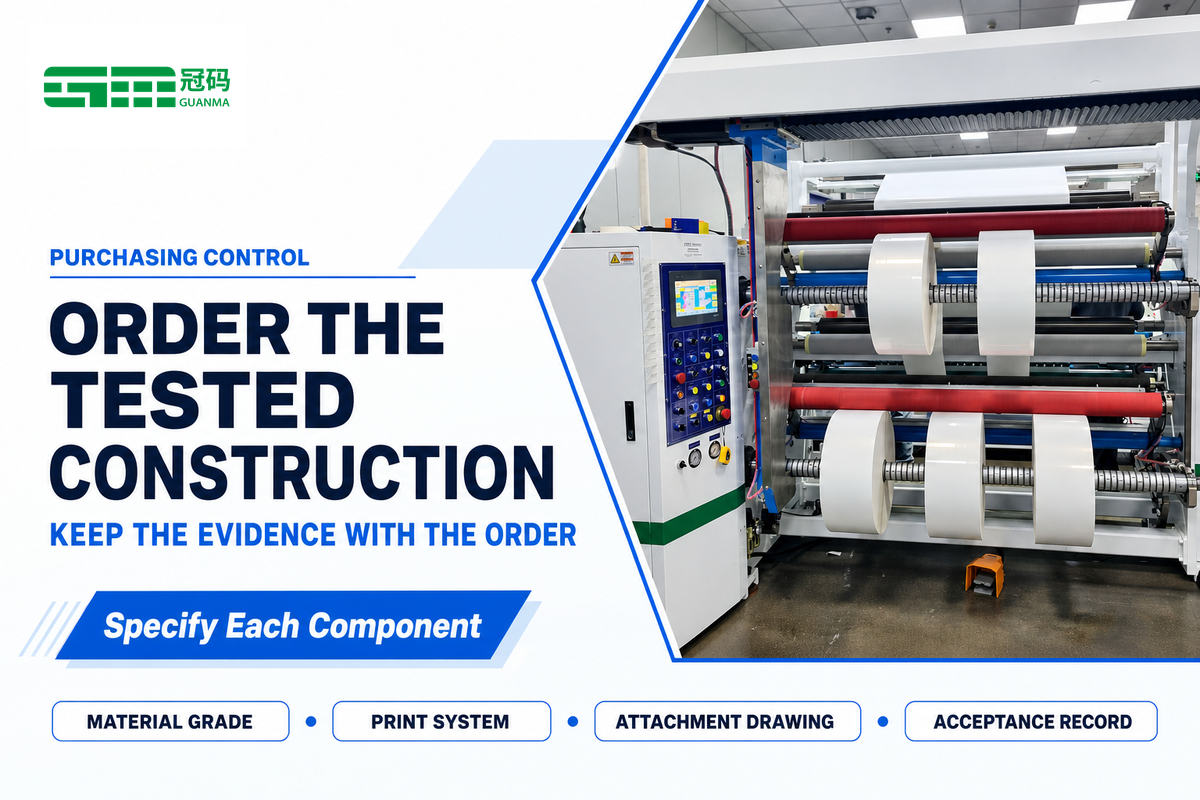
As especificações do material da etiqueta em um resumo de compra devem identificar a construção testada de perto o suficiente para que um pedido de substituição possa reproduzi-la Mantenha o grau e a espessura do material, o sistema de impressão, o desenho do anexo e o registro de aceitação como um conjunto Peça ao fornecedor que divulgue as substituições antes do envio para que o avaliador técnico possa decidir quais evidências precisam ser renovadas.
Em aplicações industriais, a especificação para rotulagem também requer reprodutibilidade A cotação para materiais “duráveis” é incompleta Por favor, inclua o nome do facestock, qualquer sobrelaminado, adesivo de etiqueta, quando relevante, e o fixador de etiqueta pendurada Fornecer o tamanho acabado e um desenho de furo Anexar a obra de arte aprovada e indicar quais alterações exigem revisão Uma fita de resina, um adesivo ou um grau de metal é um componente com uma identidade, não um adjetivo intercambiável.
O reconhecimento também exige um escopo apropriado A listagem pública para UL 969 Edição 6, revisada em 28 de julho de 2025, inclui etiquetas afixadas mecanicamente Certas etiquetas de bandeira, etiquetas de bandeira e produtos relacionados em cabos flexíveis elétricos ou mangueiras de transporte de fluidos são, em vez disso, cobertos pela UL 969 A. Identifique as condições reais do produto final; nem uma referência UL genérica nem um registro de amostra por si só estabelecem aceitação Onde as etiquetas de segurança carregam as informações de segurança necessárias, confirme os requisitos do produto final com o especialista responsável antes do lançamento Este registro de seleção de material não determina a mensagem ou classificação legal necessária.
Ao adquirir filme adesivo, envie à Guanma o registro de exposição e os detalhes de construção necessários por meio de seu página de material de filme autoadesivo. Exigir alternativas documentadas para a rota do filme colado. Os graus concorrentes e a patente aqui discutidos são exemplos de provas, e não alegações de que a Guanma fornece esses produtos ou detém o seu reconhecimento.
Perspectivas da indústria: verifique novamente as classes de conteúdo alterado e reciclado
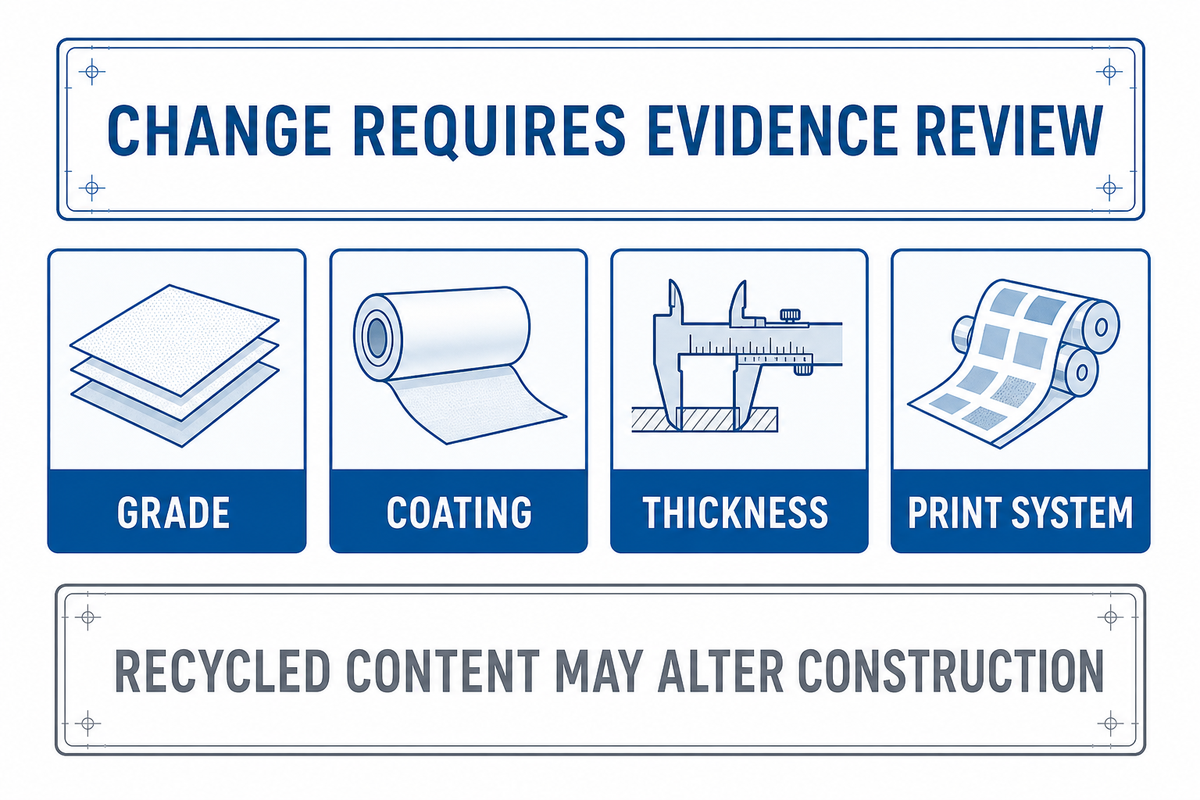
Considerar uma mudança de grau de material, mantendo a mesma família de polímeros, como uma razão para rever a evidência O conteúdo reciclado, um facestock mais fino, ou um revestimento diferente pode alterar a construção especificada Compare a nova documentação e amostra convertida com a versão que foi avaliada antes de aceitar um substituto.
Um caso em questão é um exemplo real. Na sua Anúncio de 4 de setembro de 2025, Avery Dennison descreveu etiquetas PET contendo conteúdo reciclado quimicamente para bens duráveis O anúncio se relaciona com Avery Dennison Não demonstra que um equivalente não especificado tem o mesmo desempenho, ou que Guanma tem uma construção comparável.
Descubra qual parte mudou e quais resultados podem ser retidos Coloque a nova especificação ao lado da amostra original retida Se o fornecedor não tiver evidências de construção acabada correspondentes, devolva os campos relevantes ao avaliador O resultado é fazer uma escolha justificada com base nas evidências disponíveis.
Durante uma revisão de compras em setembro de 2026, separe um anúncio de novo produto da evidência para a nota exata na cotação A data de lançamento estabelece quando um fornecedor descreveu uma opção; ele não estabelece seu limite de exposição A aquisição pode solicitar a documentação exata de grau e conteúdo reciclado enquanto a equipe de qualidade verifica a evidência para a construção acabada Nenhuma das tarefas substitui a outra.
As formas de substituição é evidente em aplicações industriais podem variar Por exemplo, identificações impressas em equipamentos de processamento industrial podem ser submetidas a limpeza e manuseio que uma amostra retida e não utilizada não irá Ao comparar revisões, certifique-se de que elas estejam nas mesmas aplicações industriais relevantes, com o mesmo detalhe de impressão e anexo Se um novo relatório do fornecedor usar uma superfície diferente ou uma duração diferente, indique isso ao avaliador em vez de fundir os resultados em um único histórico aparente.
A objeção de preço é “O nome do polímero e a correspondência de reivindicação de conteúdo reciclado.” Determine se o grau, o revestimento, a espessura e o sistema de impressão do item avaliado também são os mesmos. Uma vez que a aquisição define as diferenças, o financiamento pode comparar os preços cotados quando a qualidade determina se novas evidências são necessárias. Não há evidência de economia de custos ou intervalo de requalificação universal neste caso.
Perguntas frequentes
Qual é o material de etiqueta mais durável?
Ler resposta
Nenhum material é o mais durável em cada aplicação Metal, poliéster e outras construções sintéticas podem ser candidatos úteis, mas o método de marcação, fixação e exposição decidir adequação Para uma etiqueta de suspensão, incluir o furo e fixador na avaliação Para uma etiqueta adesiva, incluir a superfície real e adesivo Comparar resultados para a construção exata, em vez de classificar nomes de família.
Quais adesivos podem suportar o calor?
Ler resposta
Construções específicas de etiquetas de poliéster e poliimida podem ser candidatas à exposição ao calor Verifique o grau do fornecedor, temperatura, duração, imagem impressa e adesivo juntos Brady B-423 ilustra por que o tempo importa: suas observações publicadas de cinco minutos em alta temperatura são distintas de suas observações de 30 dias Um adesivo que sobrevive a uma curta etapa do processo não demonstrou, assim, uso contínuo a essa temperatura ou sobrevivência através de limpeza posterior.
Qual fabricante de etiquetas fabrica etiquetas resistentes ao calor?
Ler resposta
Escolha a construção de etiquetas compatível antes de escolher um fabricante de etiquetas Peça ao fornecedor do material para identificar a impressora ou o processo de impressão e a fita ou tinta aprovada, depois avalie a amostra impressa sob o ciclo de calor pretendido A marca da impressora por si só não consegue estabelecer a durabilidade Alguns materiais sintéticos são inadequados para impressão a laser comum, então uma máquina que imprime etiquetas de papel pode ser a escolha errada.
O que são rótulos não perigosos?
Ler resposta
“Non-hazardous” descreve uma mensagem ou categoria de uso Não especifica a resistência do rótulo ao calor, água ou manuseio.
Por que uma etiqueta resistente a rasgos pode se dividir em seu orifício de fixação?
Ler resposta
Uma descrição de resistência ao rasgo pode se referir ao material em folha, em vez da abertura convertida e do fixador instalado Examine a geometria do furo, a borda próxima, o reforço e a carga Inclua a tensão sustentada e a sequência de exposição real, quando relevante Uma divisão requer o diagnóstico dessa construção; não prova que toda etiqueta feita do mesmo polímero falhará da mesma maneira.
Artigos relacionados
Para terminologia da camada de material, consulte o que significa facestock em uma construção de etiqueta. Para uso a frio, compare reivindicações de etiquetas resistentes ao freezer e à prova de freezer.
Referências e fontes
- PFFC: cinco rótulos de material obrigatório para o crescimento do mercado, Diane Merzbach, janeiro de 2026; ponto de vista técnico de autoria do fornecedor.
- ASTM D2990-17(2025): escopo público de fluência e ruptura por fluência.
- ASTM D543-21: orientação pública sobre plásticos e reagentes químicos.
- ISO/IEC 15416:2025: resumo público sobre qualidade de impressão de código de barras linear.
- ASTM D6252/D6252M-98(2025): escopo público de descascamento de estoque de etiquetas de 90 graus.
- UL 969, Edição 6: escopo público atual e listagem de revisão de julho de 2025.
- US6267152B1: divulgação histórica de patente, não uma aprovação atual do produto.
Os números específicos do fornecedor estão vinculados à discussão relevante. Os resumos das normas públicas foram revisados em 8 de setembro de 2026; procedimentos completos de teste e requisitos de aceitação do produto devem ser obtidos para a avaliação pretendida.