ติดต่อกับกวนมา

วัสดุแท็กทนเป็นเพียงจุดเริ่มต้น ในการสรุปตัวเลือกให้นิยามการเปิดรับแสงสิ่งที่แนบมาภาพที่พิมพ์การตรวจสอบตัวอย่างสําเร็จรูปและการควบคุมการซื้อ แท็กสามารถอยู่ในรายการในขณะที่บาร์โค้ดกลายเป็นอ่านไม่ได้; แผ่นเสียงยังดูสามารถออกจากหลุมหรือตัวยึดยังไม่ผ่านการทดสอบ.
คู่มือนี้ช่วยให้ผู้ประเมินทางเทคนิคเลือกการก่อสร้างและตัดสินใจว่าหลักฐานใดที่ยังขาดหายไป ครอบคลุมแท็กที่แขวนอยู่ก่อนโดยมีเส้นทางแยกต่างหากสําหรับฉลากกาว ตัวอย่างคือข้อมูลที่เผยแพร่เฉพาะซัพพลายเออร์และบันทึกผู้ซื้อสมมุติที่ทําเครื่องหมายไว้อย่างชัดเจน ไม่ใช่ผลการทดสอบ Guanma หรือการจัดอันดับความทนทานสากล.
ประเด็นสําคัญ
อนุมัติวัสดุภาพพิมพ์และสิ่งที่แนบมาเป็นหนึ่งก่อสร้างเสร็จแล้ว ชื่อวัสดุ-ครอบครัวหรือการทดสอบในชิ้นงานอื่นไม่ได้กําหนดว่าแท็กของคุณจะผ่าน.
เลือกป้ายแขวนหรือป้ายกาวก่อน
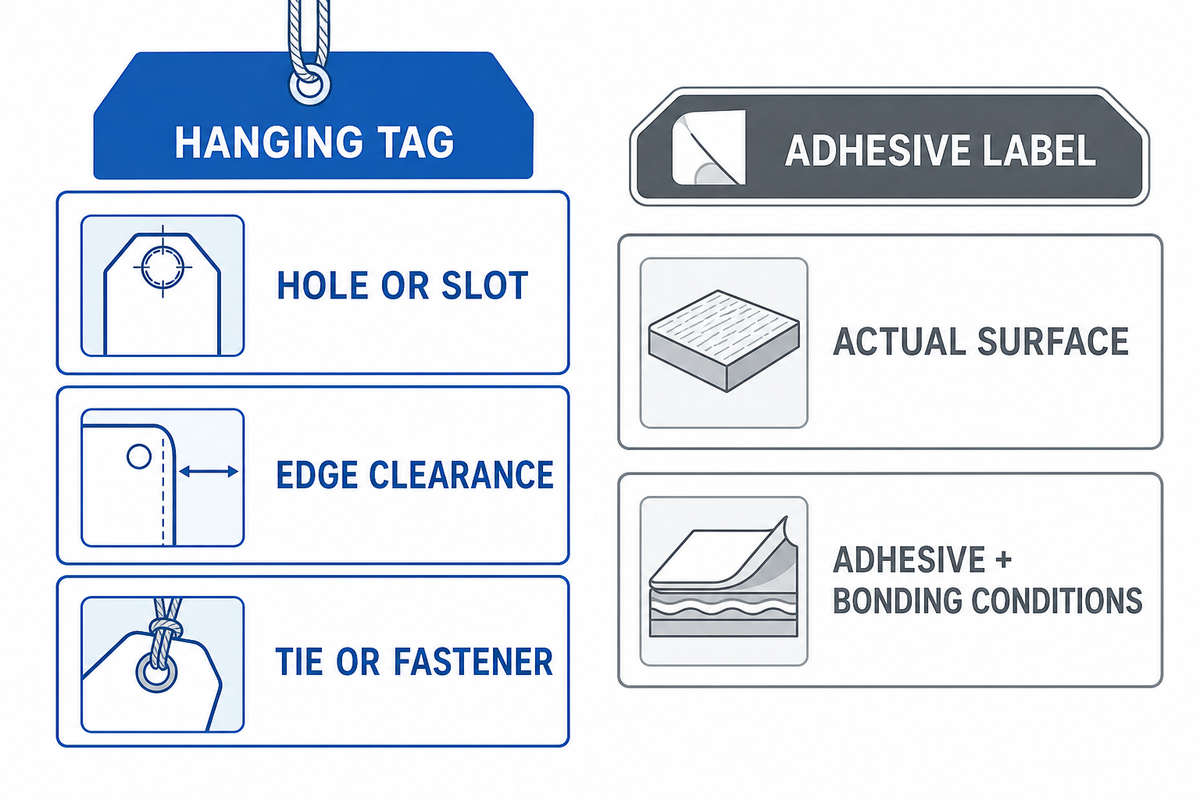
ใช้แท็กแขวนเมื่อต้องติดบัตรประจําตัวทางกลไกผ่านรูช่องหรือห่วงแทนที่จะยึดติดกับพื้นผิว ใช้ฉลากกาวเมื่อมีพื้นผิวที่เหมาะสมและสามารถระบุตัวตนได้ แต่ละตัวเลือกแนะนําข้อควรพิจารณาที่แตกต่างกันดังนั้นจึงต้องเลือกตัวเลือกการแนบก่อนที่จะขอตัวอย่างหรือเปรียบเทียบความหนาของฟิล์ม.
สําหรับแท็กแขวนควรระบุจุดยึดผูกและขอบแท็ก สําหรับฉลากที่ไวต่อแรงกดควรพิจารณาพื้นผิวกาวและการใช้งาน การหล่อพื้นผิวชิ้นส่วนมันและแผ่นเรียบที่สะอาดเป็นปัญหาพันธะที่แตกต่างกัน พื้นผิวโค้งบนอุปกรณ์อุตสาหกรรมยังต้องการตัวอย่าง; แผงทดสอบแบบแบนไม่ได้เป็นตัวแทนของพื้นผิวนั้น การแขวนแท็กอาจแก้ปัญหาพันธะหนึ่งปัญหาและแนะนําปัญหาการแนบ.
แท็กแขวน
- ระบุรูหรือช่องและระยะห่างขอบ.
- ระบุเน็คไท ลวด หรือตัวยึดอื่นๆ.
- ประเมินชุดประกอบที่พิมพ์และโหลด.
ฉลากกาว
- ระบุพื้นผิวการใช้งานจริง.
- ระบุสภาวะการยึดเกาะและการยึดเกาะ.
- ประเมินการประกอบแบบพิมพ์ที่เชื่อมติดแล้ว.
การคัดค้านการซื้อ: “ใบรับรองวัสดุถูกส่งไปแล้ว” ถามว่าโครงสร้างและการทดสอบใดอธิบาย ใบรับรองวัสดุสําหรับฟิล์มที่ยังไม่ได้แปลงนี้ไม่สามารถให้ผลลัพธ์ที่ต้องการสําหรับช่องเปิดหรือตัวยึดที่เจาะแล้วของคุณ สําหรับเส้นทางที่ถูกผูกมัดเริ่มต้นด้วย คู่มือการเลือกวัสดุฉลากทนสารเคมี เมื่อการตัดสินใจถูกขับเคลื่อนโดยการสัมผัสสารเคมี.
วัสดุแท็กต้านทาน: เปรียบเทียบโครงสร้างผู้สมัคร
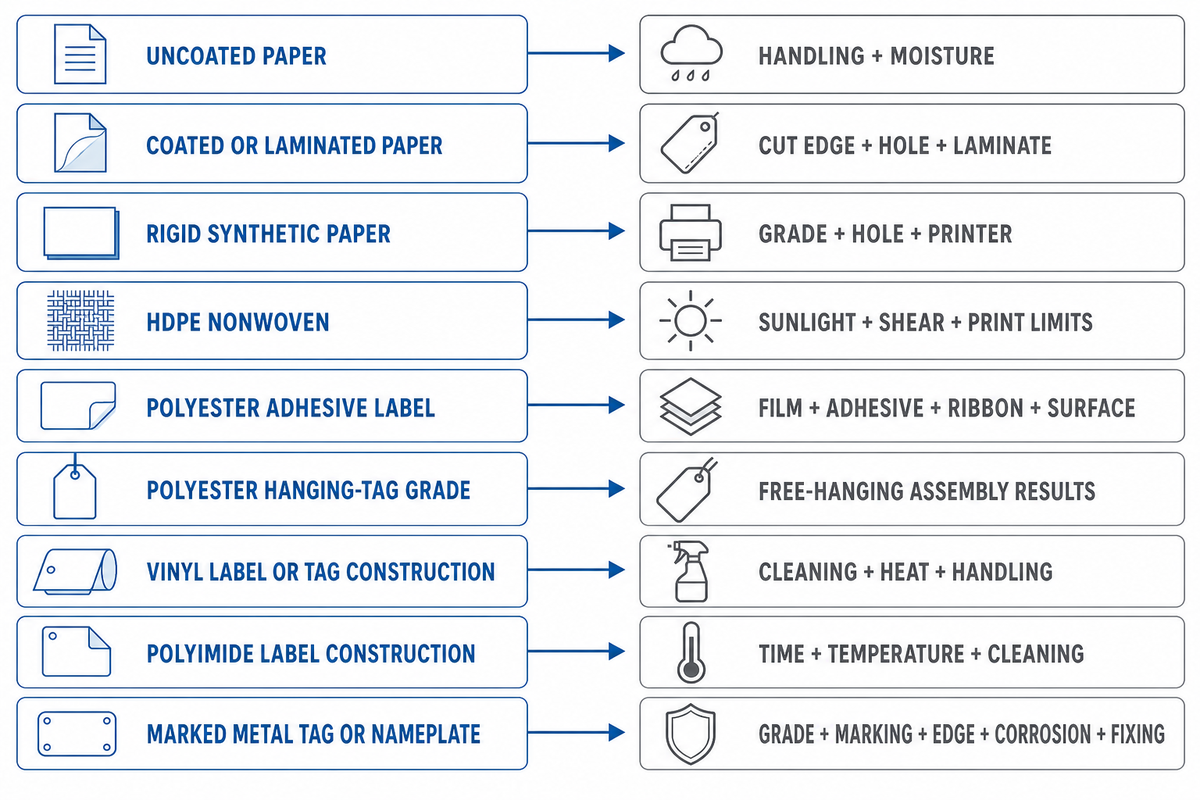
วัสดุแท็กทนชอร์ตลิสต์โดยการก่อสร้างที่คุณสามารถสั่งซื้อและทดสอบได้ กระดาษแผ่นสังเคราะห์โพลีเอสเตอร์ไวนิลโพลีอิไมด์และโลหะทั้งหมดเป็นจุดเริ่มต้น; ไม่มีผู้ชนะสากล ตารางแยกผู้สมัครวัสดุจากหลักฐานที่จําเป็นในการยอมรับแท็กสําเร็จรูปหรือฉลากกาว.
อย่าตีความแถวเป็นผลิตภัณฑ์ที่เท่าเทียมกัน การก่อสร้างที่ใช้การเคลือบลามิเนตหรือกาวจะเปลี่ยนวัสดุและ “กระดาษสังเคราะห์” อาจอธิบายโพลีเมอร์หลายตัว แม้แต่ผิวเคลือบมันและเคลือบด้านก็อาจต้องมีการตั้งค่าการพิมพ์ที่แตกต่างกัน หากต้องการเปรียบเทียบแอปเปิ้ลกับแอปเปิ้ลให้ใช้รหัสเกรดซัพพลายเออร์ ฉลากโพลีคาร์บอเนตสามารถเข้าสู่รายการคัดเลือกเมื่อซัพพลายเออร์จัดทําเอกสารการก่อสร้างที่เหมาะสม แต่ชื่อโพลีเมอร์เพียงอย่างเดียวไม่ได้สร้างความเหมาะสมสําหรับการใช้งานเฉพาะ.
| ผู้สมัคร | เหตุผลที่ต้องพิจารณาตัวอย่าง | หลักฐานที่จะขอก่อนอนุมัติ |
|---|---|---|
| กระดาษไม่เคลือบผิว | การระบุตัวตนชั่วคราวในกระบวนการที่ได้รับการป้องกันและแห้ง | การจัดการจริงและการสัมผัสความชื้น ปฏิเสธตัวอย่างแบบแห้งเท่านั้นเพื่อเป็นหลักฐานการใช้งานกลางแจ้ง |
| กระดาษเคลือบหรือลามิเนต | จําเป็นต้องมีใบหน้าที่พิมพ์ไว้ที่ได้รับการป้องกัน | ประสิทธิภาพที่ล้ําสมัย รู และลามิเนตหลังจากสัมผัสตามที่ตั้งใจไว้ |
| กระดาษสังเคราะห์แข็ง | แท็กแขวนที่พิมพ์ได้แข็งขึ้นมีประโยชน์ | โพลีเมอร์หรือเกรดที่แน่นอนรูปทรงของรูและความเข้ากันได้ของเครื่องพิมพ์ |
| ผ้าไม่ทอ HDPE เช่น สไตล์ Tyvek ที่กําหนด | จําเป็นต้องมีแท็กน้ําหนักเบาและยืดหยุ่น | ขีดจํากัดแสงแดด แรงเฉือน และการพิมพ์เฉพาะสไตล์ |
| ฉลากกาวโพลีเอสเตอร์ | ฉลากอุปกรณ์หรือการระบุสินทรัพย์ถาวรจําเป็นต้องมีฟิล์มผูกมัด | Facestock กาว ริบบิ้น และพื้นผิวจริงเป็นหนึ่งเดียว |
| โพลีเอสเตอร์แขวนแท็กเกรด | แนะนําให้ใช้ป้ายฟิล์มมากกว่าฉลากกาว | ผลการประกอบแบบแขวนฟรี อย่ายืมพิกัดฉลากกาว |
| ฉลากไวนิลหรือการสร้างแท็ก | ความยืดหยุ่นหรือความสอดคล้องเป็นสิ่งสําคัญอันดับแรกในการเลือก | เกรดที่แน่นอนภายใต้การทําความสะอาด ความร้อน และการจัดการ การยืดจะต้องไม่ทําให้ภาพเสีย |
| โครงสร้างฉลากโพลีอิไมด์ | กระบวนการที่อุณหภูมิสูงจําเป็นต้องมีผู้สมัครที่เชี่ยวชาญ | วงจรเวลา-อุณหภูมิเต็ม ระบบกาวและการพิมพ์ รวมถึงการทําความสะอาดในภายหลัง |
| ป้ายโลหะหรือป้ายชื่อที่ทําเครื่องหมายไว้ | โครงสร้างโพลีเมอร์อาจไม่เหมาะสมกับกระบวนการนี้ | เกรดโลหะวิธีการทําเครื่องหมายการตกแต่งขอบการสัมผัสการกัดกร่อนและความเข้ากันได้ของการแนบ |
การเปรียบเทียบซัพพลายเออร์ที่เป็นประโยชน์คือ ช่วงแท็กป้องกันการฉีกขาดของ Pannier. กระดาษสังเคราะห์ PSP200 ของมันถูกแสดงรายการสําหรับ −23°F ถึง 215°F พร้อม 9 12 เดือนของการรักษาเสถียรภาพของรังสีอัลตราไวโอเลต; แท็กโพลีเมอร์ PTR200 ถูกแสดงรายการสําหรับ −70°F ถึง 180°F พร้อมรังสีอัลตราไวโอเลตหนึ่งปีและความต้านทานต่อสภาพอากาศ เหล่านี้เป็นคําอธิบายผลิตภัณฑ์แยกต่างหากและไม่จําเป็นต้องเป็นข้อ จํากัด สําหรับแท็กสังเคราะห์ทั้งหมด หน้าไม่ได้ให้คะแนนโหลดรูเจาะสากล.
“ไม่มีหุ้นป้ายเดียวตอบโจทย์ทุกความท้าทาย”
ทีมจัดซื้อควรประเมินการก่อสร้างที่ส่งมอบซึ่งตรงข้ามกับราคาที่เสนอต่อแท็กเท่านั้นเมื่อพิจารณาข้อเสนอที่แข่งขันกัน ในบางกรณีตัวเลือกที่มีต้นทุนต่ํากว่าสามารถให้เหตุผลได้อย่างสมเหตุสมผลว่าเป็นทางเลือก อย่างไรก็ตามสิ่งนี้ก็ต้องการหลักฐานที่เกี่ยวข้องเช่นกัน สําหรับฉลากโพลีเอสเตอร์นั้น คู่มือวัสดุฉลาก PET ลงรายละเอียดเกี่ยวกับเส้นทางภาพยนตร์ที่ถูกผูกมัด.
แผนที่ความล้มเหลวของแท็กที่เสร็จแล้ว: ตรวจสอบการประกอบทั้งหมด
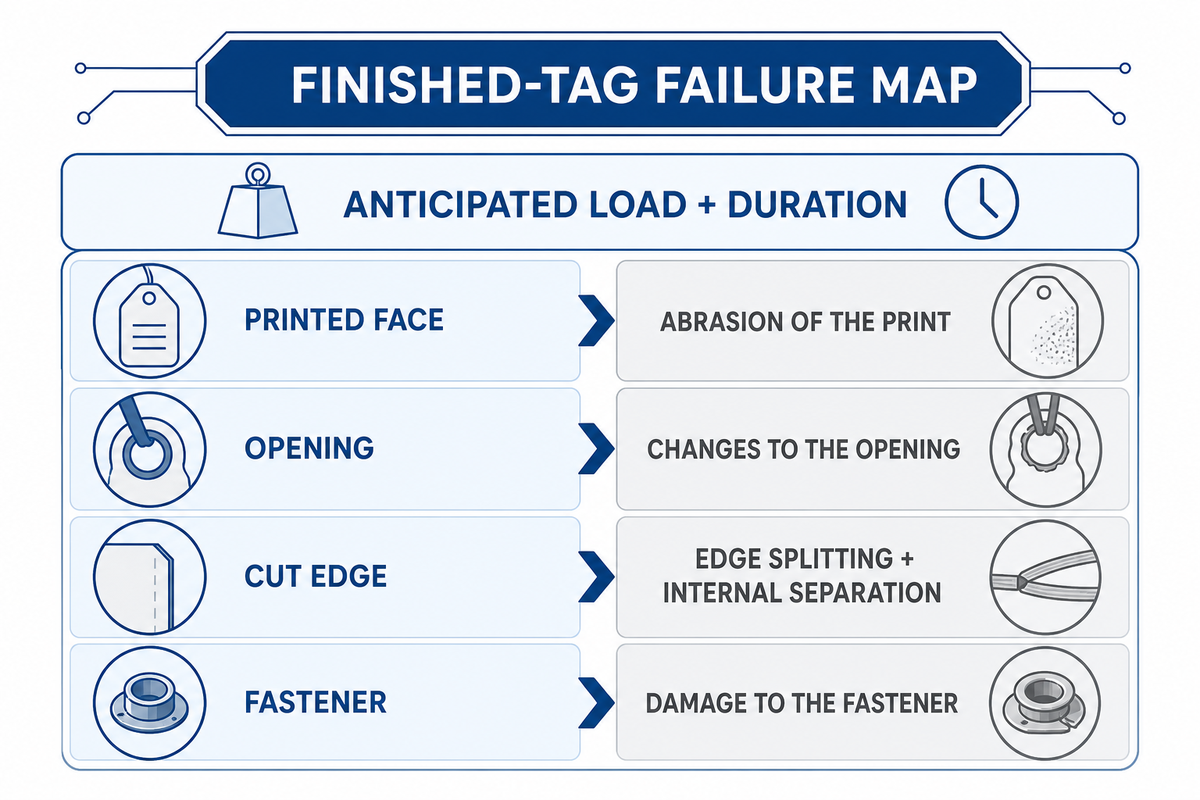
แผนที่ความล้มเหลวของแท็กสําเร็จรูประบุปัญหาที่ใบหน้าที่พิมพ์ขอบตัดการเปิดและตัวยึด ประเมินพื้นที่เหล่านี้ของตัวอย่างที่แปลงแล้วและประเมินภายใต้ภาระที่คาดการณ์ไว้และระยะเวลาของการสัมผัส ข้อบกพร่องที่ชัดเจนอาจมองเห็นได้ด้วยการดึงมืออย่างรวดเร็วแต่ไม่สามารถยืนยันประสิทธิภาพในระยะยาวของสิ่งที่แนบมาได้.
เริ่มต้นด้วยรูปร่างที่ให้มา บันทึกเส้นผ่านศูนย์กลางรูหรือขนาดของช่องระยะห่างไปยังขอบที่ใกล้ที่สุดรูปแบบมุมและการเสริมแรงใด ๆ ถ่ายภาพตัวอย่างด้วยการผูกที่ตั้งใจไว้เมื่อทําการประเมินตัวอย่างให้มองหาการขัดถูของการพิมพ์การเปลี่ยนแปลงการเปิดการแยกขอบและการแยกภายในความเสียหายของตัวยึดและการหมุนที่ปกปิดข้อมูลที่พิมพ์.
คําถามเรขาคณิตมีแบบอย่างที่ได้รับการตีพิมพ์. US6267152B1 สิทธิบัตรแฮงค์แท็กในอดีตที่เกี่ยวข้องกับ Panduit, กล่าวถึงระยะห่างของสล็อตและการเสริมแรงในบริบทของการฉีกขาด ตัวอย่างของมันใช้วัสดุและความสัมพันธ์บางอย่าง พวกเขาอธิบายว่าทําไมรายละเอียดเหล่านั้นจึงมีความสําคัญแต่ไม่ได้กําหนดมาตรฐานสําหรับการกวาดล้างหลุมหรือรับรองการก่อสร้าง Guanma.
เวลาเป็นสิ่งสําคัญเกินไป ขอบเขตสาธารณะและคําแนะนําสําหรับ ASTM D2990-17(2025) จัดการกับการคืบคลานพลาสติกและการแตกคืบภายใต้โหลดที่ยั่งยืน หากสิ่งที่แนบมาถูกเก็บไว้อย่างแน่นหนาขอให้ผู้ประเมินอธิบายโหลดและระยะเวลาและสภาพแวดล้อม แท็กที่ดูเหมือนจะเป็นที่น่าพอใจทันทีหลังจากการติดตั้งจําเป็นต้องได้รับการสนับสนุนด้วยข้อมูลที่เกี่ยวข้องกับบริการที่คาดหวัง.
การหลุดร่อนภายในอาจเกิดจากการกระทําที่ง่ายเช่นการถูหรือรอยพับ การดัดงอมุมแหลมยังสามารถทําให้เกิดการหลุดร่อนภายใน ดูปองท์ คําถามที่พบบ่อยของ Tyvek ระบุว่าแรงเฉือนสามารถทําให้เกิดการหลุดร่อนภายใน คําแนะนําเดียวกันไม่ได้ถือว่า Tyvek ทนต่อรังสีอัลตราไวโอเลตสําหรับแสงแดดอย่างต่อเนื่อง ขอรูปแบบเฉพาะและผลลัพธ์ตัวอย่างสําเร็จรูปแทนที่จะสมมติว่า Tyvek ตรงตามมาตรฐาน “tear-proof” ที่เป็นสากล คําคุณศัพท์ไม่ควรใช้เป็นตัวแทนสําหรับลูกค้าที่ยอมรับผลิตภัณฑ์.
แยกข้อกําหนดการสัมผัส จากนั้นทดสอบลําดับจริง
บันทึกความร้อนการสัมผัสสารเคมีสภาพอากาศและการโหลดเชิงกลแยกกันเพื่อให้แต่ละเงื่อนไขมีความชัดเจน หลังจากนั้นให้ประเมินสถานการณ์ซึ่งอาจเกิดขึ้นร่วมกันในการให้บริการ ตัวอย่างเช่นสถานการณ์อาจรวมถึงการสัมผัสความร้อนสูงสั้น ๆ การสัมผัสความร้อนต่ํานานขึ้นและรอบการทําความสะอาดซึ่งแท็กถูกยืดออก แต่ละสิ่งเหล่านี้อาจต้องการหลักฐานในรูปแบบที่แตกต่างกันแม้ว่าซัพพลายเออร์จะอธิบายผู้สมัครทุกคนว่าเป็นวัสดุแท็กที่ทนทาน.
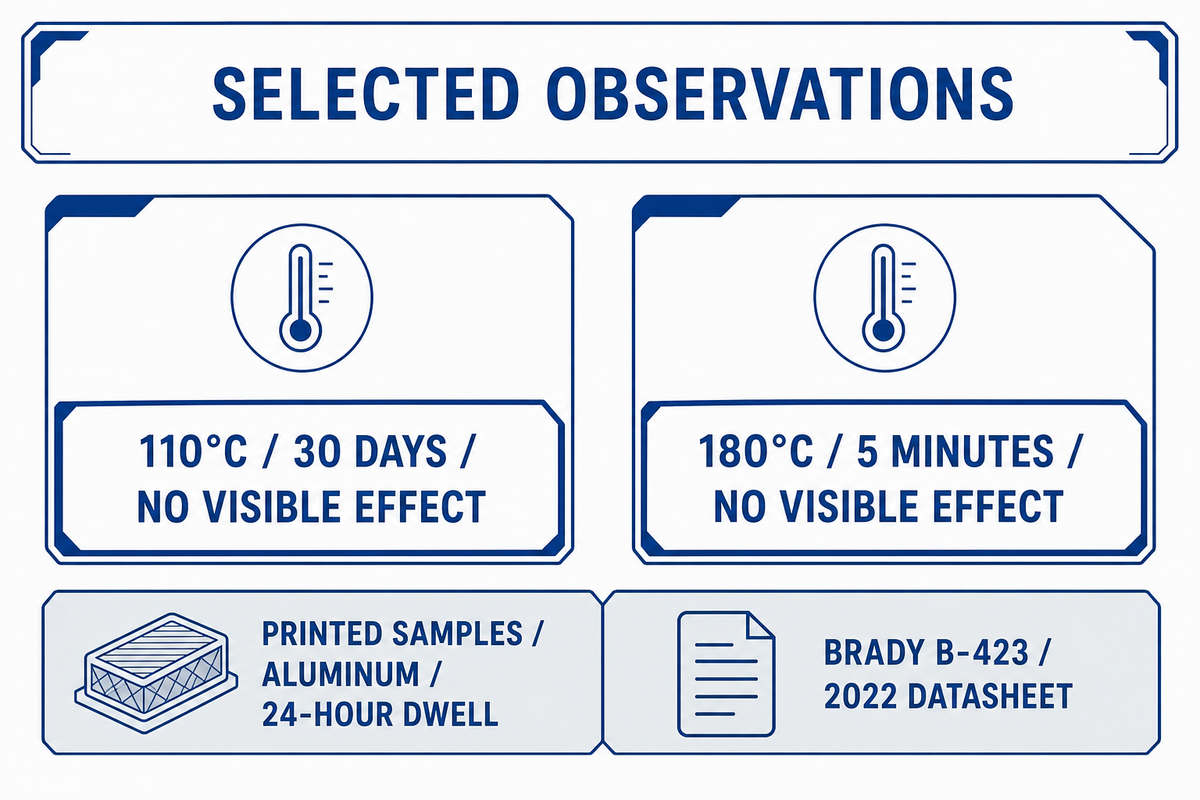
เดอะ เอกสารข้อมูลทางเทคนิคของ Brady B-423 ปี 2022 ให้ความชัดเจนบางอย่างเกี่ยวกับเวลา ตัวอย่างประสิทธิภาพที่ระบุไว้ถูกพิมพ์นําไปใช้กับอลูมิเนียมและให้ 24 ชั่วโมงของการอยู่อาศัย ข้อสังเกตที่บันทึกไว้ในที่นี้ยังเกี่ยวข้องกับการก่อสร้างและการตั้งค่านี้.
| การทดสอบที่เผยแพร่ | การสัมผัส | รายงานข้อสังเกต |
|---|---|---|
| อุณหภูมิบริการสูง | 110 °C เป็นเวลา 30 วัน | ไม่มีผลกระทบที่มองเห็นได้ |
| อุณหภูมิบริการสูง | 120°C เป็นเวลา 30 วัน | การเปลี่ยนสีเล็กน้อย |
| อุณหภูมิบริการสูง | 145°C เป็นเวลา 30 วัน | การเปลี่ยนสีปานกลาง ฉลากยังคงใช้งานได้ |
| อุณหภูมิสูงระยะสั้น | 180°C เป็นเวลา 5 นาที | ไม่มีผลกระทบที่มองเห็นได้ |
| อุณหภูมิสูงระยะสั้น | 200°C เป็นเวลา 5 นาที | การเปลี่ยนสีและการหดตัวเล็กน้อย ฉลากใช้งานได้ |
| อุณหภูมิสูงระยะสั้น | 210°C เป็นเวลา 5 นาที | ไม่ทํางานเนื่องจากการหดตัว |
ของเบรดี้ สปอตไลท์ผลิตภัณฑ์ B-423 ยังรายงานผล 110 °C, 30 วัน ทั้งสองแหล่งมาจากเบรดี้ ทั้งสองเปลี่ยน 180 °C เป็นคะแนนการบริการอย่างต่อเนื่องสําหรับโพลีเอสเตอร์ทั้งหมดและทั้งสองไม่ได้วัดความแข็งแรงของแท็กที่แขวนฟรี.
การเลือกวัสดุแท็กทนสารเคมีเริ่มต้นด้วยตัวทําละลายหรือน้ํายาทําความสะอาดจริงความเข้มข้นโหมดการติดต่อและระยะเวลา ฉลากทนตัวทําละลายที่มีคุณสมบัติสําหรับการเช็ดไม่มีหลักฐานโดยอัตโนมัติสําหรับการแช่อย่างต่อเนื่อง คําแนะนําสาธารณะสําหรับ เอเอสทีเอ็ม D543-21 พิจารณาการสัมผัสสารรีเอเจนต์ร่วมกับอุณหภูมิและความเครียดที่ใช้ ใช้ลําดับที่แท้จริงของโรงงานเมื่อกําหนดการประเมินรวมถึงเงื่อนไขที่ทับซ้อนกัน ความต้านทานต่อสารเคมีเป็นเงื่อนไข: ฉลากที่ทนต่อน้ํามันและฉลากที่ทนต่อกรดต้องการของเหลวและความเข้มข้นที่มีชื่อไม่ใช่การรับประกันว่าต้านทานการสัมผัสสารเคมีโดยทั่วไป สําหรับภาชนะบรรจุสารเคมีหรืออุปกรณ์แปรรูปสารเคมีให้นําตารางการทําความสะอาดจริงมาให้ผู้ประเมิน.
การคัดค้านการซื้อ: “ทนต่อสภาพอากาศและทนต่อสารเคมีเรียบร้อยแล้ว” คําอธิบายเหล่านั้นทําให้การเปิดรับแสงไม่ได้กําหนดไว้ ใช้ที่มีอยู่ คู่มือฉลากทนสารเคมี สําหรับสาขาเคมีโดยละเอียดและ คู่มือฉลากทนทานกลางแจ้ง สําหรับการผุกร่อน การกล่าวอ้างการทนความร้อนโดยย่อไม่สามารถเติมเต็มช่องว่างหลักฐานทั้งสองได้ แทนที่วลีเช่น “อุณหภูมิสุดขั้ว,” “”ความร้อนสุดขั้ว“ และ ”สภาวะสุดขั้ว” ด้วยค่าและระยะเวลา ใบเสนอราคาสําหรับฉลากที่มีอุณหภูมิสูงยังคงไม่สมบูรณ์หากไม่มีเงื่อนไขเหล่านั้น.
จับคู่เครื่องพิมพ์ ริบบิ้น และพื้นผิวฉลาก
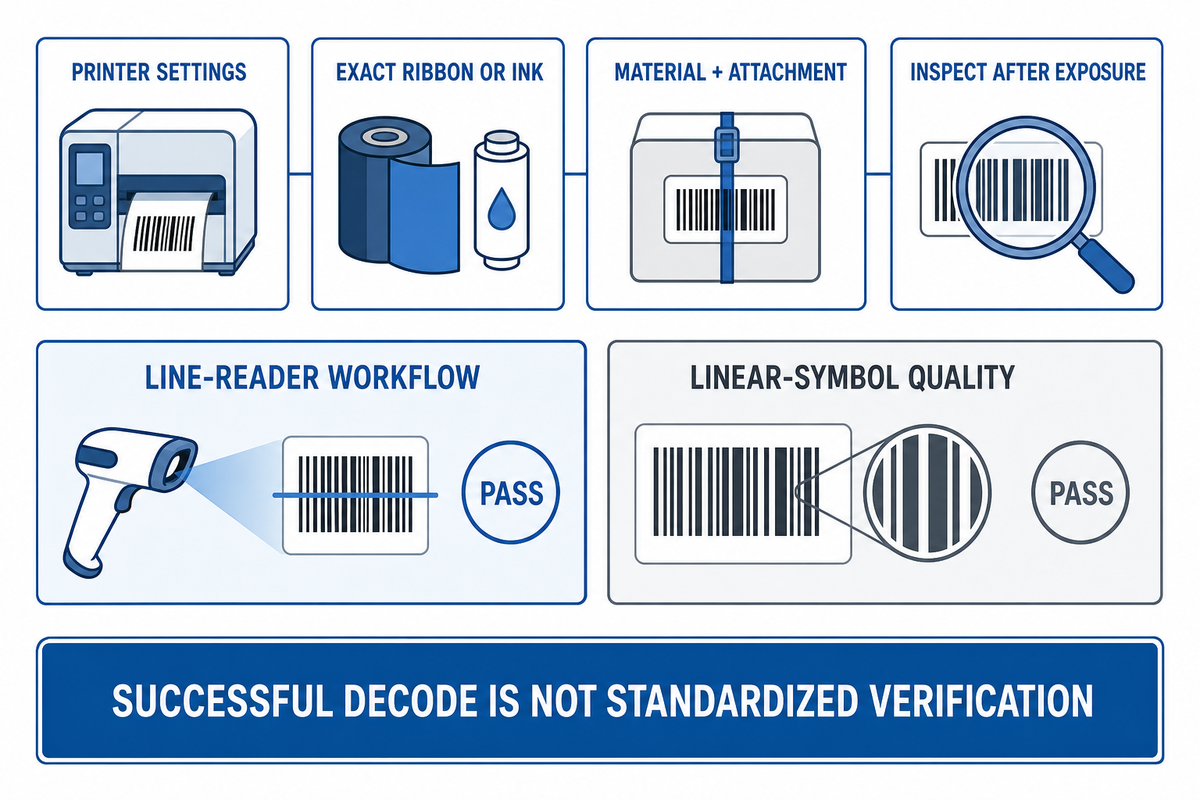
คุณสมบัติภาพที่พิมพ์ด้วยวัสดุฉลากที่เลือกและสิ่งที่แนบมา การถ่ายโอนความร้อนอิงค์เจ็ทและวิธีการพิมพ์อื่น ๆ มีข้อกําหนดความเข้ากันได้ที่แตกต่างกัน บันทึกการตั้งค่าเครื่องพิมพ์และริบบิ้นหรือหมึกที่แน่นอนจากนั้นตรวจสอบและอ่านตัวอย่างที่เสร็จแล้วหลังจากได้รับสัมผัส การพิมพ์ที่สะอาดในการติดตั้งเป็นเพียงเงื่อนไขเริ่มต้น การระบุผลิตภัณฑ์ล้มเหลวเมื่อฉลากที่พิมพ์สูญเสียข้อมูลที่จําเป็นในการดําเนินการครั้งต่อไปแม้ว่าวัสดุฐานจะยังคงอยู่.
ตัวอย่างเช่น B-423 เป็นวัสดุโพลีเอสเตอร์สีขาวมันวาวพร้อมกาวอะคริลิกถาวร เอกสารข้อมูลระบุฟิล์ม 0.002 นิ้วและชั้นกาว 0.001 นิ้วไม่รวมซับและชื่อริบบิ้น Brady ที่เข้ากันได้ รายละเอียดเหล่านี้ระบุโครงสร้างที่ทดสอบ การแทนที่ริบบิ้นถ่ายโอนความร้อนอื่นจะเปลี่ยนคําถามหลักฐานแม้ว่าในตอนแรกการพิมพ์จะดูเหมือนกัน.
ความร้อนของเครื่องพิมพ์สมควรได้รับความสนใจเช่นกัน ดูปองท์ไม่แนะนําการพิมพ์เลเซอร์แบบแห้งโทนเนอร์ธรรมดาสําหรับ Tyvek เนื่องจากสามารถละลายวัสดุได้ คําแนะนําแนะนําให้อยู่ที่หรือต่ํากว่า 79 °C ภายใต้ความตึงเครียดในการพิมพ์หรือการเคลือบเพื่อหลีกเลี่ยงการเสียรูป จุดหลอมเหลว 135 °C ที่รายงานไม่ใช่การตั้งค่าเครื่องพิมพ์ที่ปลอดภัย.
การยอมรับบาร์โค้ดต้องแยกแยะการถอดรหัสที่ประสบความสําเร็จจากการตรวจสอบคุณภาพสัญลักษณ์ที่ได้มาตรฐาน การทดลองเครื่องอ่านที่ใช้ในบรรทัดจะตรวจสอบขั้นตอนการทํางานที่ต้องการ. ISO/IEC 15416:2025 อธิบายการวัดแอตทริบิวต์และการประเมินคุณภาพโดยรวมสําหรับสัญลักษณ์เชิงเส้น หากลูกค้าระบุเกรดการตรวจสอบบางอย่างยืนยันวิธีการและขีด จํากัด; อย่าผิดนัดกับ “สแกนเนอร์ของเราอ่านมัน.”
ป้ายอุปกรณ์, ลวดและสายเคเบิลเครื่องหมายและป้ายแผงวงจรทั้งหมดสามารถมีข้อมูลตัวแปรแต่กลไกการพิมพ์และการเปิดรับแสงที่แตกต่างกัน ซัพพลายเออร์ของฉลากอุณหภูมิสูงสําหรับการประมวลผลแผงวงจรควรระบุวงจรความร้อนและการทําความสะอาดที่สมบูรณ์ เมื่องานศิลปะริบบิ้นหรือการเคลือบมีการเปลี่ยนแปลงให้เก็บตัวอย่างเก่าไว้เพื่อให้ทีมพิมพ์สามารถตรวจสอบการเปลี่ยนแปลงที่เฉพาะเจาะจง.
ใช้บันทึกการสัมผัสเพื่ออนุมัติสําหรับการตัดสินใจตัวอย่าง
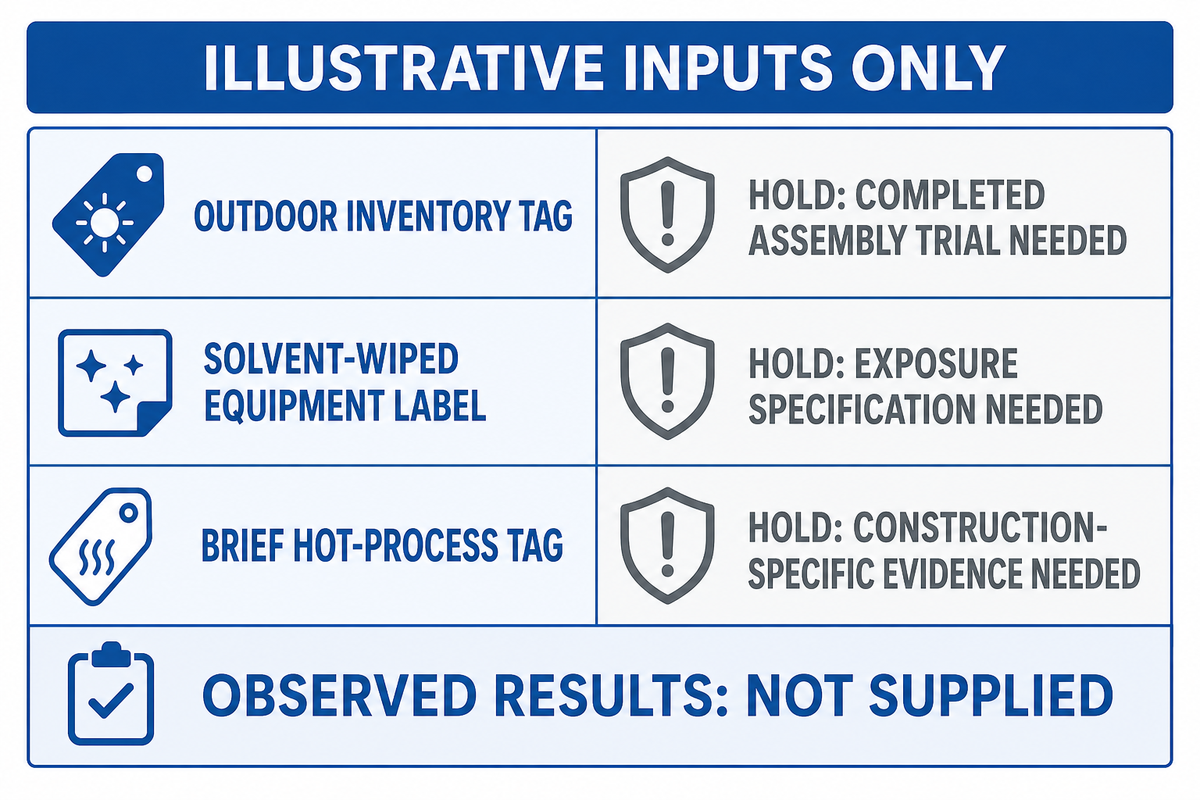
บันทึกการเปิดรับการอนุมัติทําให้หลักฐานที่ขาดหายไปมองเห็นได้ก่อนที่จะได้รับการอนุมัติชุดงาน เติมด้วยการก่อสร้างจริงเงื่อนไขการบริการและเกณฑ์การยอมรับที่ตกลงกันไว้จากนั้นแนบผลลัพธ์ที่วัดได้ สามกรณีต่อไปนี้แสดงให้เห็นถึงวิธีการเตรียมบันทึกนั้นไม่มีการทดสอบที่เสร็จสมบูรณ์หรือคําแนะนําในการปล่อยวัสดุ.
อินพุตภาพประกอบเท่านั้น: กรณีกลางแจ้งถือว่าหกเดือนของการใช้งานที่ตั้งใจไว้ กรณีกระบวนการร้อนสมมติ 180 °Cขั้นตอนกระบวนการห้านาที เหล่านี้เป็นความต้องการของผู้ซื้อสมมุติไม่ได้พิสูจน์ข้อ จํากัด การบริการ กรณีตัวทําละลายเช็ดออกโดยเฉพาะอย่างยิ่งออกจากความเข้มข้นที่สะอาดกว่าไม่ได้ระบุไว้เนื่องจากการละเว้นนั้นป้องกันการเปรียบเทียบ.
| สนาม | แท็กสินค้าคงคลังกลางแจ้ง | ป้ายอุปกรณ์เช็ดตัวทําละลาย | แท็กกระบวนการร้อนโดยย่อ |
|---|---|---|---|
| วัตถุประสงค์ | ระบุส่วนประกอบที่เก็บไว้กลางแจ้ง | อ่านข้อความเนื้อหาได้หลังจากทําความสะอาด | รักษาตัวตนผ่านขั้นตอนอันร้อนแรง |
| ผู้สมัคร | เกรดแท็กสังเคราะห์ที่ซัพพลายเออร์ระบุ รหัสสุดท้ายรอดําเนินการ | ระบุโพลีเอสเตอร์ กาว และริบบิ้นผสมกัน รหัสที่รอดําเนินการ | การก่อสร้างที่อุณหภูมิสูงเฉพาะทาง เกรดที่รอดําเนินการ |
| สิ่งที่แนบมา | แท็กเจาะและผูกตั้งใจบนส่วนประกอบจริง | พันธะกับพื้นผิวอุปกรณ์เคลือบจริง | การเปิดแท็กที่ตั้งใจไว้และการยึดที่เข้ากันได้กับความร้อน หลักฐานอยู่ระหว่างการพิจารณา |
| การสัมผัส | เป้าหมายหกเดือน แสงแดด ฝน และสภาวะการจัดการเพื่อจัดทําเอกสาร | ชื่อน้ํายาทําความสะอาดพืช ตารางความเข้มข้นและการเช็ดยังขาดหายไป | สมมติว่า 180°C เป็นเวลาห้านาที เงื่อนไขกระบวนการที่ตามมาในเอกสาร |
| เงื่อนไขรวม | การจัดการแบบเปียกโดยติดตั้งเน็คไท โหลดต่อเนื่องเพื่อกําหนด | การทําความสะอาดที่อุณหภูมิพื้นผิวการทํางาน พันธะคงอยู่เพื่อกําหนด | การทําความร้อนด้วยการยึดจริง ตามด้วยการทําความสะอาดหรือการจัดการใดๆ |
| บันทึกการพิมพ์ | จําเป็นต้องมีการแก้ไขเครื่องพิมพ์ ริบบิ้น และอาร์ตเวิร์ค | จําเป็นต้องมีการแก้ไขเครื่องพิมพ์ ริบบิ้น พื้นผิวฉลาก และงานศิลปะ | จําเป็นต้องมีกระบวนการทําเครื่องหมายและการแก้ไขงานศิลปะ |
| ผ่านเกณฑ์ | ยอมรับการแนบ การเสียรูป และขีดจํากัดภาพที่อ่านได้ | ยอมรับการยึดเกาะ สภาพภาพ และข้อกําหนดเกรดบาร์โค้ด | เห็นด้วยกับขีดจํากัดมิติ การแก้ไข และภาพที่อ่านได้ |
| ผลลัพธ์ที่สังเกตได้ | ไม่ได้จัดหา | ไม่ได้จัดหา | ไม่ได้จัดหา |
| การตัดสินใจและเจ้าของ | ถือ: ทีมงานคุณภาพต้องการการทดลองประกอบที่เสร็จสมบูรณ์ | ถือ: ผู้ประเมินทางเทคนิคจําเป็นต้องมีข้อกําหนดการสัมผัสก่อน | ถือ: เจ้าของกระบวนการต้องการหลักฐานเฉพาะการก่อสร้าง |
ใช้การระงับที่ระบุชื่อการดําเนินการต่อไป มันป้องกันการจัดซื้อจัดจ้างจากการปฏิบัติคําขอตัวอย่างเป็นการอนุมัติทางเทคนิค กําหนดเจ้าของและวันที่ให้กับแต่ละรายการที่ขาดหายไป เพิ่มรายงานการทดสอบเมื่อมันกลายเป็นพร้อมใช้งาน แยกผลลัพธ์ที่เกิดขึ้นจริงจากเกณฑ์การยอมรับเพื่อป้องกันไม่ให้อย่างใดอย่างหนึ่งจากการเขียนใหม่เพื่อให้เหตุผลการยอมรับตัวอย่าง.
ในตัวอย่างที่ถูกผูกมัด, ASTM D6252/D6252M-98(2025) ให้วิธีการลอก 90 องศาสําหรับหุ้นฉลากที่ไวต่อแรงกดและหารือเกี่ยวกับการใช้งานกับเกณฑ์การยอมรับที่ตกลงกันไว้ มันไม่ได้ทดสอบช่องหรือเน็คไทของแท็กที่แขวนอยู่ ยิ่งทั่วไปมากขึ้น คู่มือมาตรฐานการทดสอบความทนทานของฉลาก ช่วยให้ผู้อ่านแยกแยะการเลือกวิธีการจากบัตรผ่านสําหรับผลิตภัณฑ์.
สั่งก่อสร้างแบบเดียวกับที่ประเมิน
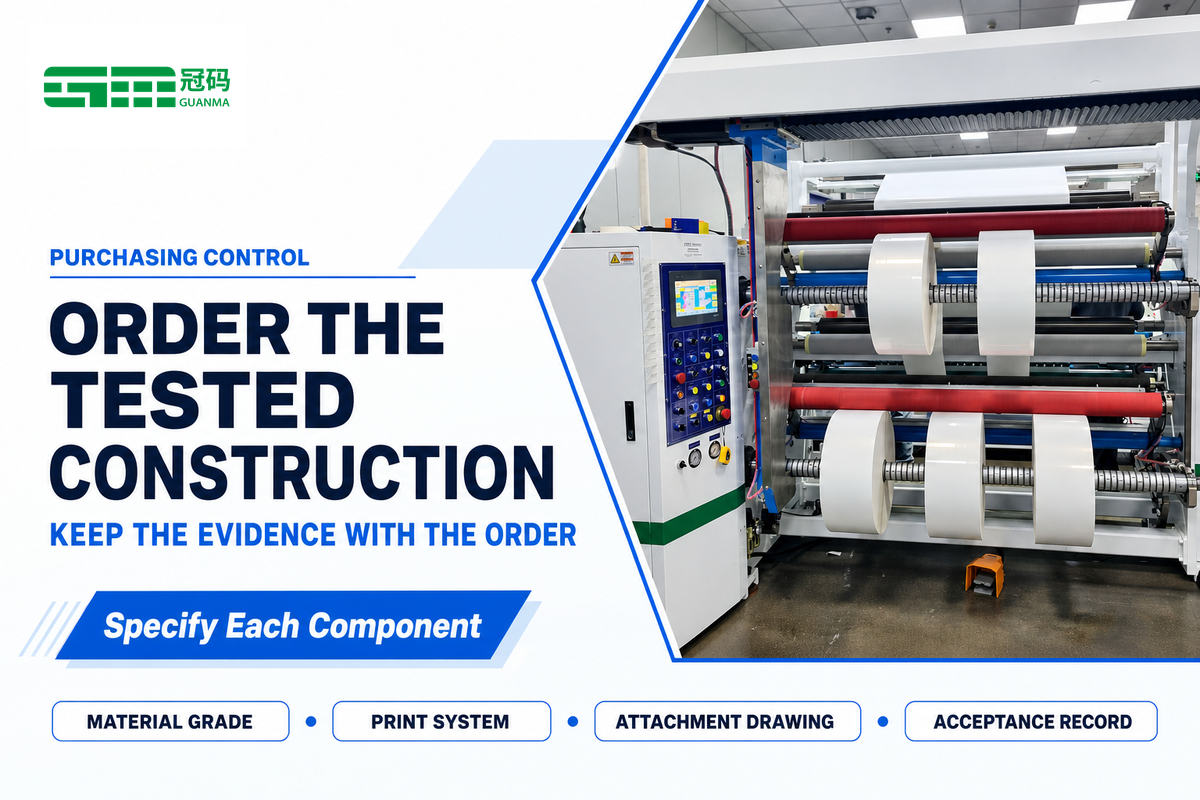
ข้อกําหนดวัสดุฉลากในบทสรุปการจัดซื้อควรระบุโครงสร้างที่ทดสอบอย่างใกล้ชิดพอที่คําสั่งซื้อทดแทนสามารถทําซ้ําได้ เก็บเกรดและความหนาของวัสดุระบบการพิมพ์ภาพวาดสิ่งที่แนบมาและบันทึกการยอมรับเป็นชุด ขอให้ซัพพลายเออร์เปิดเผยการทดแทนก่อนจัดส่งเพื่อให้ผู้ประเมินทางเทคนิคสามารถตัดสินใจได้ว่าหลักฐานใดที่ต้องต่ออายุ.
ในการใช้งานทางอุตสาหกรรมข้อกําหนดสําหรับการติดฉลากยังต้องการความสามารถในการทําซ้ํา คําพูดสําหรับ “วัสดุคงทน” ไม่สมบูรณ์ โปรดระบุชื่อ facestock, ทับซ้อนใด ๆ, กาวฉลากที่เกี่ยวข้องและตัวยึดแท็กแขวน ให้ขนาดที่เสร็จแล้วและการวาดรู แนบงานศิลปะที่ได้รับอนุมัติและระบุว่าการแก้ไขใดที่ต้องมีการตรวจสอบ ริบบิ้นเรซินกาวหรือเกรดโลหะเป็นส่วนประกอบที่มีเอกลักษณ์ไม่ใช่คําคุณศัพท์ที่ใช้แทนกันได้.
การรับรู้ยังต้องการขอบเขตที่เหมาะสม การลงรายการสาธารณะสําหรับ UL 969 ฉบับที่ 6 แก้ไขเมื่อ 28 กรกฎาคม 2025, รวมถึงฉลากที่ติดด้วยกลไก ป้ายธงบางป้ายแท็กธงและผลิตภัณฑ์ที่เกี่ยวข้องบนสายไฟฟ้าที่มีความยืดหยุ่นหรือท่อลําเลียงของเหลวจะถูกปกคลุมด้วย UL 969A แทน ระบุเงื่อนไขของผลิตภัณฑ์ขั้นสุดท้ายที่เกิดขึ้นจริงทั้งการอ้างอิง UL ทั่วไปหรือบันทึกตัวอย่างเพียงอย่างเดียวสร้างการยอมรับ ในกรณีที่ฉลากความปลอดภัยมีข้อมูลความปลอดภัยที่จําเป็นให้ยืนยันข้อกําหนดของผลิตภัณฑ์ขั้นสุดท้ายกับผู้เชี่ยวชาญที่รับผิดชอบก่อนที่จะปล่อย บันทึกการเลือกวัสดุนี้ไม่ได้กําหนดข้อความที่จําเป็นหรือการจําแนกประเภททางกฎหมาย.
เมื่อจัดหาฟิล์มกาว ให้ส่งบันทึกการสัมผัสของ Guanma และรายละเอียดการก่อสร้างที่จําเป็นผ่านทางฟิล์ม หน้าวัสดุฟิล์มกาวตนเอง. ต้องการทางเลือกที่เป็นเอกสารสําหรับเส้นทางภาพยนตร์ที่ถูกผูกมัด เกรดและสิทธิบัตรที่แข่งขันกันที่กล่าวถึงในที่นี้เป็นตัวอย่างของหลักฐานไม่ใช่การอ้างว่า Guanma จัดหาผลิตภัณฑ์เหล่านั้นหรือได้รับการยอมรับ.
แนวโน้มอุตสาหกรรม: ตรวจสอบเกรดที่เปลี่ยนแปลงและรีไซเคิลอีกครั้ง
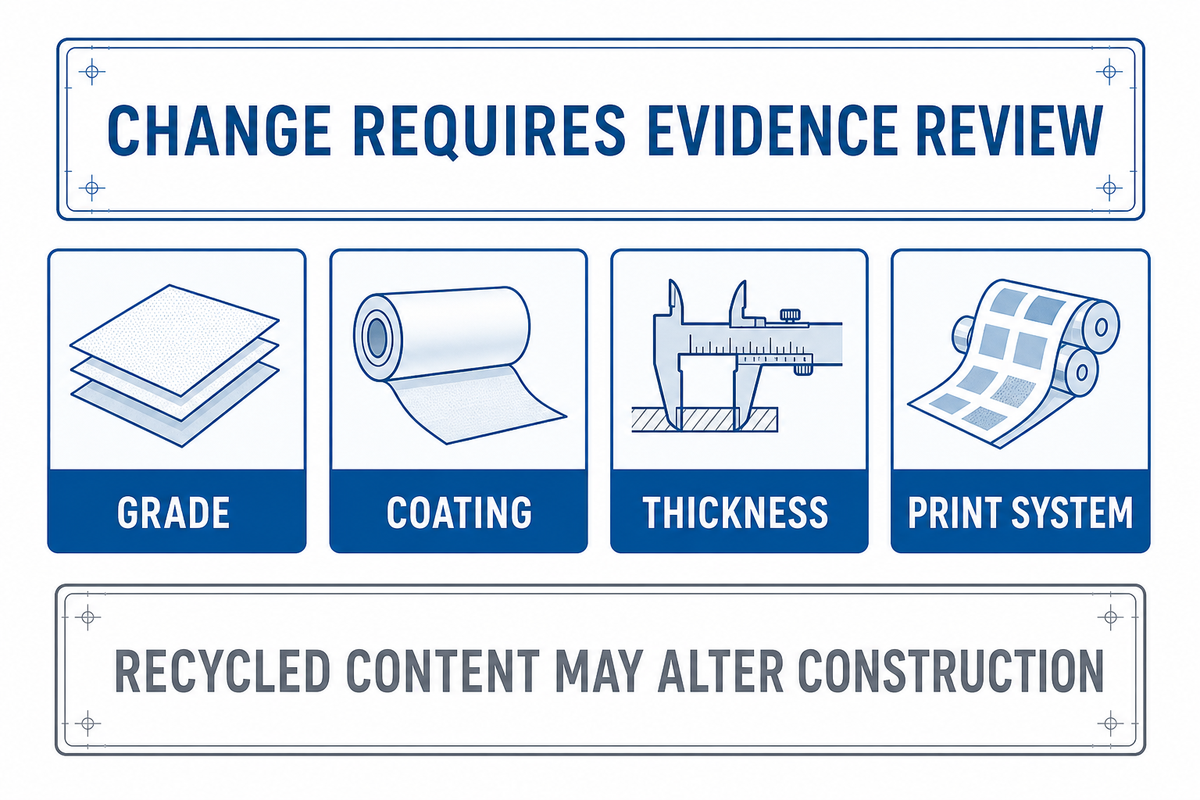
คํานึงถึงการเปลี่ยนแปลงเกรดของวัสดุในขณะที่ยังคงรักษาตระกูลโพลีเมอร์เดียวกันไว้เป็นเหตุผลในการตรวจสอบหลักฐาน เนื้อหารีไซเคิล, เฟสสต็อกที่บางลงหรือการเคลือบอื่นอาจเปลี่ยนแปลงโครงสร้างที่ระบุ เปรียบเทียบเอกสารใหม่และตัวอย่างที่แปลงแล้วกับเวอร์ชันที่ได้รับการประเมินก่อนที่จะยอมรับสิ่งทดแทน.
กรณีในจุดเป็นตัวอย่างที่แท้จริง ในของมัน ประกาศวันที่ 4 กันยายน 2568, Avery Dennison อธิบายฉลาก PET ที่มีเนื้อหาที่รีไซเคิลทางเคมีสําหรับสินค้าคงทน ประกาศเกี่ยวข้องกับ Avery Dennison มันไม่ได้แสดงให้เห็นว่าสิ่งที่เทียบเท่าที่ไม่ระบุมีประสิทธิภาพเหมือนกันหรือ Guanma มีโครงสร้างที่เทียบเคียงได้.
ค้นหาว่าส่วนใดมีการเปลี่ยนแปลงและผลลัพธ์ใดที่อาจยังคงอยู่ วางข้อกําหนดใหม่ไว้ข้างตัวอย่างเดิมที่เก็บไว้ หากซัพพลายเออร์ไม่มีหลักฐานการก่อสร้างที่เสร็จสมบูรณ์ที่ตรงกันให้ส่งคืนช่องที่เกี่ยวข้องไปยังผู้ประเมิน ผลลัพธ์คือการตัดสินใจเลือกที่สมเหตุสมผลตามหลักฐานที่มีอยู่.
ในระหว่างการตรวจสอบการจัดซื้อเดือนกันยายน 2026 ให้แยกประกาศผลิตภัณฑ์ใหม่จากหลักฐานสําหรับเกรดที่แน่นอนในใบเสนอราคา วันที่เปิดตัวกําหนดเมื่อซัพพลายเออร์อธิบายตัวเลือก; มันไม่ได้กําหนดขีด จํากัด การเปิดรับของคุณ การจัดซื้อสามารถขอเกรดที่แน่นอนและเอกสารเนื้อหาที่รีไซเคิลได้ในขณะที่ทีมคุณภาพตรวจสอบหลักฐานสําหรับการก่อสร้างที่เสร็จสมบูรณ์ ไม่มีงานใดทดแทนงานอื่น.
วิธีการทดแทนเป็นที่ประจักษ์ชัดในการใช้งานทางอุตสาหกรรมอาจแตกต่างกันไป ตัวอย่างเช่นการระบุที่พิมพ์บนอุปกรณ์แปรรูปทางอุตสาหกรรมอาจอยู่ภายใต้การทําความสะอาดและการจัดการที่ตัวอย่างที่ถูกเก็บรักษาไว้และไม่ได้ใช้จะไม่ เมื่อเปรียบเทียบการแก้ไขให้แน่ใจว่าพวกเขาอยู่ในการใช้งานทางอุตสาหกรรมที่เกี่ยวข้องเดียวกันโดยมีรายละเอียดการพิมพ์และการแนบเดียวกัน หากรายงานของซัพพลายเออร์ใหม่ใช้พื้นผิวที่แตกต่างกันหรือระยะเวลาที่แตกต่างกันให้ระบุว่าให้กับผู้ประเมินแทนที่จะรวมผลลัพธ์เป็นประวัติที่ชัดเจนเพียงรายการเดียว.
การคัดค้านราคาคือ “ชื่อโพลีเมอร์และการเรียกร้องเนื้อหาที่รีไซเคิลตรงกัน” กําหนดว่าเกรดการเคลือบความหนาและระบบการพิมพ์ของรายการที่ประเมินเหมือนกันหรือไม่ เมื่อการจัดซื้อจัดจ้างกําหนดความแตกต่างการเงินสามารถเปรียบเทียบราคาที่เสนอเมื่อคุณภาพกําหนดว่าจําเป็นต้องมีหลักฐานใหม่หรือไม่ ไม่มีหลักฐานของการประหยัดต้นทุนหรือช่วงการปรับคุณสมบัติใหม่สากลในกรณีนี้.
คําถามที่พบบ่อย
วัสดุฉลากที่ทนทานที่สุดคืออะไร?
อ่านคําตอบ
ไม่มีวัสดุใดที่มีความทนทานมากที่สุดในทุกการใช้งาน โลหะโพลีเอสเตอร์และโครงสร้างสังเคราะห์อื่น ๆ สามารถเป็นตัวเลือกที่มีประโยชน์ แต่วิธีการทําเครื่องหมายสิ่งที่แนบมาและการเปิดรับแสงจะตัดสินความเหมาะสม สําหรับแท็กแขวนให้รวมรูและตัวยึดในการประเมิน สําหรับฉลากกาวให้รวมพื้นผิวและกาวจริง เปรียบเทียบผลลัพธ์สําหรับการก่อสร้างที่แน่นอนมากกว่าการจัดอันดับชื่อสกุล.
สติ๊กเกอร์อะไรทนความร้อนได้บ้าง?
อ่านคําตอบ
โครงสร้างฉลากโพลีเอสเตอร์และโพลีอิไมด์ที่เฉพาะเจาะจงสามารถเป็นตัวเลือกสําหรับการสัมผัสความร้อน ตรวจสอบเกรดซัพพลายเออร์อุณหภูมิระยะเวลาภาพที่พิมพ์และกาวเข้าด้วยกัน Brady B-423 แสดงให้เห็นว่าเหตุใดเวลาจึงมีความสําคัญ: การสังเกตอุณหภูมิสูงห้านาทีที่เผยแพร่แตกต่างจากการสังเกต 30 วัน สติกเกอร์ที่รอดจากขั้นตอนกระบวนการสั้น ๆ ไม่ได้แสดงให้เห็นถึงการใช้งานอย่างต่อเนื่องที่อุณหภูมินั้นหรือการอยู่รอดผ่านการทําความสะอาดในภายหลัง.
ผู้ผลิตฉลากใดทําฉลากทนความร้อน?
อ่านคําตอบ
เลือกโครงสร้างฉลากที่เข้ากันได้ก่อนเลือกเครื่องทําฉลาก ขอให้ซัพพลายเออร์วัสดุระบุเครื่องพิมพ์หรือกระบวนการพิมพ์และริบบิ้นหรือหมึกที่ได้รับอนุมัติจากนั้นประเมินตัวอย่างที่พิมพ์ภายใต้วงจรความร้อนที่ตั้งใจไว้ แบรนด์เครื่องพิมพ์เพียงอย่างเดียวไม่สามารถสร้างความทนทานได้ วัสดุสังเคราะห์บางชนิดไม่เหมาะสมสําหรับการพิมพ์ด้วยเลเซอร์ทั่วไปดังนั้นเครื่องที่พิมพ์ฉลากกระดาษอาจเป็นทางเลือกที่ผิด.
ฉลากที่ไม่เป็นอันตรายคืออะไร?
อ่านคําตอบ
“ไม่อันตราย” อธิบายถึงข้อความหรือหมวดหมู่การใช้งาน ไม่ได้ระบุถึงความต้านทานของฉลากต่อความร้อน น้ํา หรือการจัดการ.
เหตุใดแท็กที่ทนต่อการฉีกขาดจึงอาจแตกที่รูยึด?
อ่านคําตอบ
คําอธิบายความต้านทานการฉีกขาดอาจหมายถึงวัสดุแผ่นมากกว่าช่องเปิดที่แปลงแล้วและติดตั้งตัวยึด ตรวจสอบรูปทรงของรูขอบใกล้เคียงการเสริมแรงและโหลด รวมความตึงเครียดที่ยั่งยืนและลําดับการสัมผัสจริงที่เกี่ยวข้อง การแยกต้องมีการวินิจฉัยโครงสร้างนั้นมันไม่ได้พิสูจน์ว่าทุกแท็กที่ทําจากโพลีเมอร์เดียวกันจะล้มเหลวในลักษณะเดียวกัน.
บทความที่เกี่ยวข้อง
สําหรับคําศัพท์เกี่ยวกับชั้นวัสดุ โปรดดู facestock หมายถึงอะไรในการก่อสร้างฉลาก. สําหรับการใช้งานเย็นเปรียบเทียบ การอ้างสิทธิ์ฉลากที่ทนต่อการแช่แข็งและป้องกันการแช่แข็ง.
ข้อมูลอ้างอิงและแหล่งที่มา
- PFFC: วัสดุฉลากห้าชนิดที่ต้องมีเพื่อการเติบโตของตลาด, ไดแอน เมิร์ซบาค, มกราคม 2026; มุมมองทางเทคนิคที่ซัพพลายเออร์เขียน.
- ASTM D2990-17(2025): ขอบเขตการคืบคลานสาธารณะและการคืบคลานแตก.
- เอเอสทีเอ็ม D543-21: คําแนะนําสาธารณะเกี่ยวกับพลาสติกและรีเอเจนต์เคมี.
- ISO/IEC 15416:2025: บทคัดย่อสาธารณะเกี่ยวกับคุณภาพการพิมพ์บาร์โค้ดเชิงเส้น.
- ASTM D6252/D6252M-98(2025): ขอบเขตการลอกฉลากสต็อก 90 องศาสาธารณะ.
- UL 969 ฉบับที่ 6: ขอบเขตสาธารณะปัจจุบันและรายการแก้ไขเดือนกรกฎาคม 2025.
- US6267152B1: การเปิดเผยสิทธิบัตรในอดีตไม่ใช่การอนุมัติผลิตภัณฑ์ในปัจจุบัน.
ตัวเลขเฉพาะซัพพลายเออร์มีการเชื่อมโยงข้างการอภิปรายที่เกี่ยวข้อง มีการทบทวนบทสรุปมาตรฐานสาธารณะเมื่อวันที่ 8 กันยายน 2026; ต้องได้รับขั้นตอนการทดสอบและข้อกําหนดการยอมรับผลิตภัณฑ์อย่างเต็มรูปแบบสําหรับการประเมินที่ตั้งใจไว้.