Entre em Contato com Guanma

Transferência térmica Impressão térmica vs Guia direto do lado dos materiais para compradores de etiquetas

Transferência térmica Impressão térmica vs Guia direto do lado dos materiais para compradores de etiquetas
Transferência térmica versus térmica direta é a decisão mais importante em qualquer especificação de impressão de rótulos. Escolha a opção errada e um rótulo de envio se dissolve em um armazém úmido, uma etiqueta de tambor químico se dissolve durante a lavagem de uma empilhadeira, ou o código de barras de um frasco de farmácia se torna ilegível no meio da cadeia de suprimentos. A maioria dos guias on-line é escrita por OEMs de impressoras ou ribbons e apresenta a questão como “qual impressora”. Este guia é de um fabricante de materiais autoadesivos para rótulos e formula a questão como “qual frontal + qual método + qual faixa de operação” — pois essa tríade, e não apenas a impressora, determina a sobrevivência do rótulo.
Especificações rápidas TT vs DT em uma visão
| Térmica Direta (DT) | Papel revestido sensível ao calor; sem fita; ≤6-mês de vida útil; suprimentos baratos |
| Transferência Térmica (TT) | Cera/cera-resina/fita de resina em filme ou papel; 5+ anos de vida; ajuste mais severo |
| Variável decisiva | Janela de serviço 6 meses elegível para D; acima de → TT obrigatório |
| Cabeça de impressão MTBF | Ciclos DT de 25–50 km; ciclos TT de 50–100 km (típico do setor) |
| Normas comuns | Código de barras A/B/C grau ANSI; Qualidade de impressão ISO/IEC 15416 |
| item de relógio de 2026 | Washington proíbe BPA + BPS em papel de recibo térmico em 1o de janeiro de 2026 |
Como cada método realmente funciona, revestimento ativado por calor versus transferência de fita
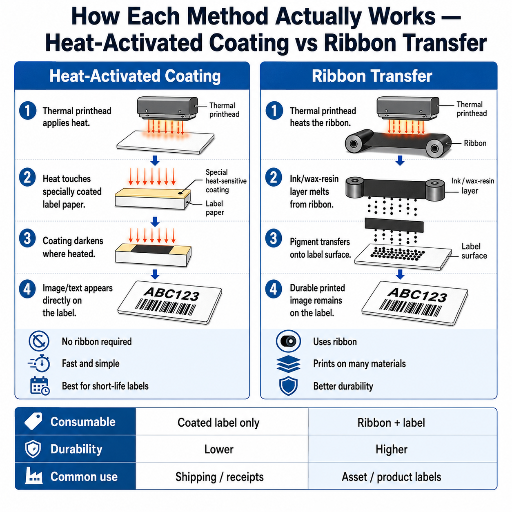
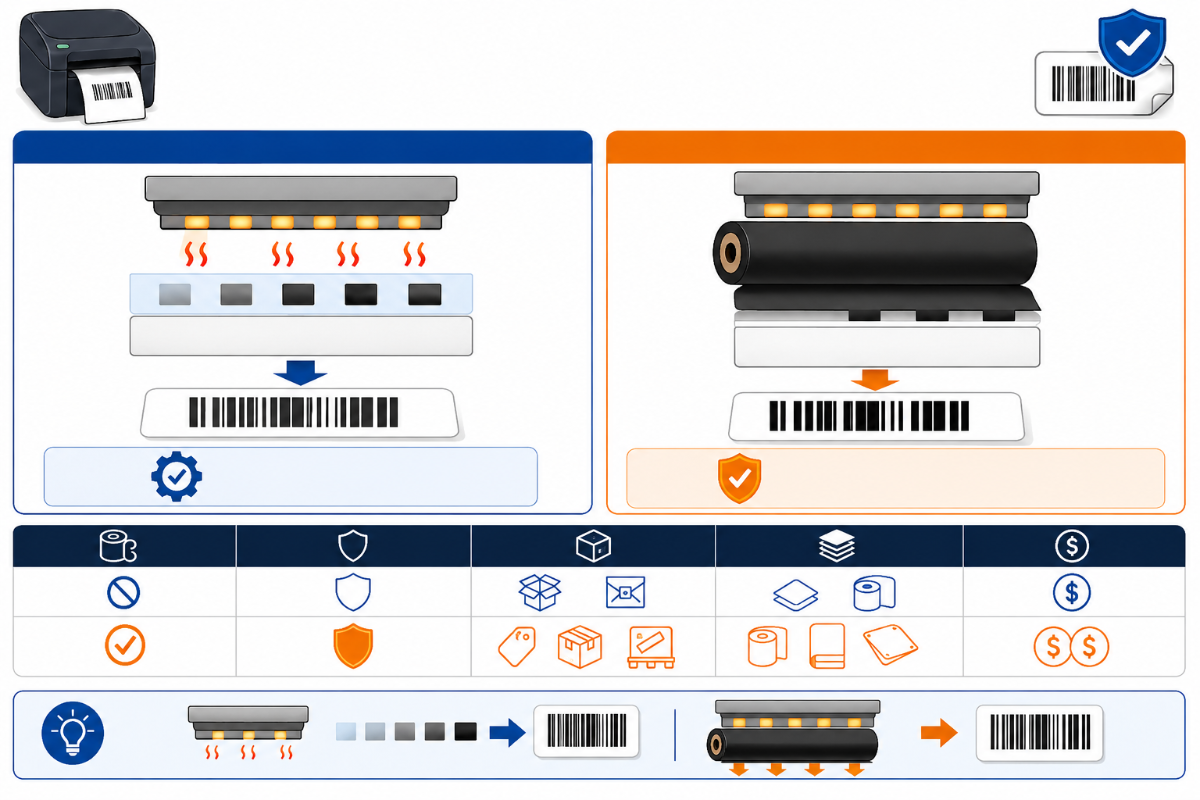
A diferença entre a impressão por transferência térmica direta e térmica é se o substrato é a camada imprimível ou simplesmente um transportador. Eles apresentam a mesma classe de cabeça de impressão aquecida, mas essa é sua única característica compartilhada.
Térmico direto (a impressão envolve papel ou filme com um revestimento quimicamente ativo. Quando alvo de um ponto de cabeça de impressão aquecido de ~120 °C, o revestimento reage quimicamente e escurece. Sem tinta, sem fita (o próprio papel) torna-se a imagem. Como documenta a EPA dos EUA, a impressão térmica “direct produz uma imagem quando produtos químicos específicos dentro do revestimento de papel térmico são aquecidos.”
A transferência térmica (Thermal transfer – transferência térmica) usa uma fita separadaTT um transportador de poliéster fino revestido com uma camada de cera, cera-resina ou tinta de resina. Um cabeçote de impressão aquecido derrete a tinta da parte de trás da fita sobre o substrato por baixo, e a tinta solidifica à medida que esfria. As opções de substrato variam entre papel, filme, poliéster e vinil, e a classe de fita é combinada com substrato e ambiente de serviço.
Então o quê? em DT o substrato é a camada imprimível; em TT, o substrato é apenas o transportador e a tinta é a superfície acabada É por isso que DT é mais barato de operar (um consumível em vez de dois), mas inerentemente menos durável (o mesmo calor que produz uma imagem pode re-escurecê-lo).
Camada de material O que há dentro de uma etiqueta D versus uma etiqueta TT
As especificações de aquisição que omitem a química raramente sobrevivem em serviço ao longo de um ano. Aqui está o que você realmente compra.
Pilha de papel térmico direto
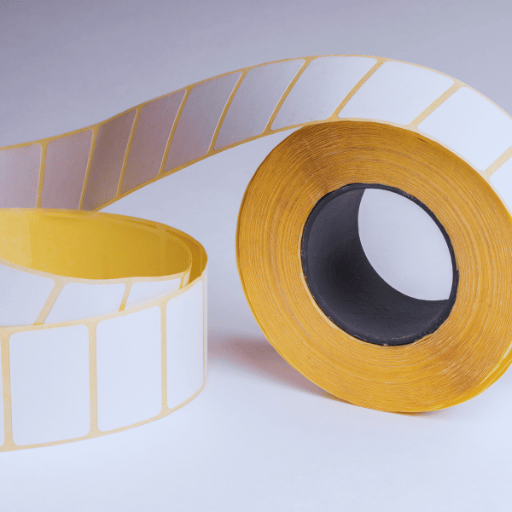
Um material de etiqueta DT é uma pilha química de 4 camadas em um suporte de papel ou filme. Uma cabeça de impressão térmica ativa essas camadas em sequência. Entrada em papel térmico da Wikipedia e o documento de referência da EPA dos EUA nomeia os quatro ingredientes:
- Leuco corante geralmente um triaril metano ftalida; incolor até ativar
- Desenvolvedor BPA sem ácido, cada vez mais BPS, agora evoluindo em direção ao ácido ascórbico (Vit C) e outras químicas fenol-livres
- Sensibilizador (sentido) A ativação até o limite de temperatura que a cabeça de impressão requer para uma mudança de cor limpa
- O estabilizador retarda a mudança gradual e não intencional de cor causada pelo calor, plastificantes, óleos e luz solar direta
Esta pilha química explica por que os DTs são tão intrinsecamente efêmeros: a mesma química que pode tornar preto um pulso de calor de 0,2 ms fará com que o revestimento escureça perpetuamente quando for exposto ao calor ou ao solvente.
Pilha Transferência Térmica
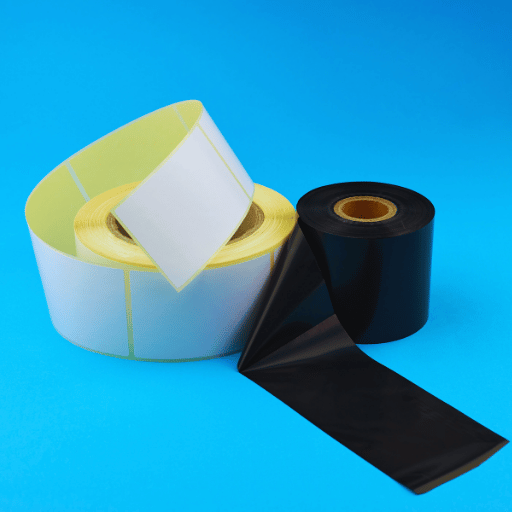
TT divide a química em duas seções, o ribbon e o frontal. O ribbon é dividido em cera (60–70 g/m² de peso de revestimento de tinta, apenas papel e mais barato), cera-resina (70–90 g/m², uso geral para sintéticos) e resina (90–110 g/m², resistente a produtos químicos e abrasão). Os frontais podem ser de papel couché, Facestocks PET, BOP ou sintéticos PP, vinílicos, com fusão a quente ou à base de água adesivo acrílico.
Lado a lado Seis dimensões de comparação
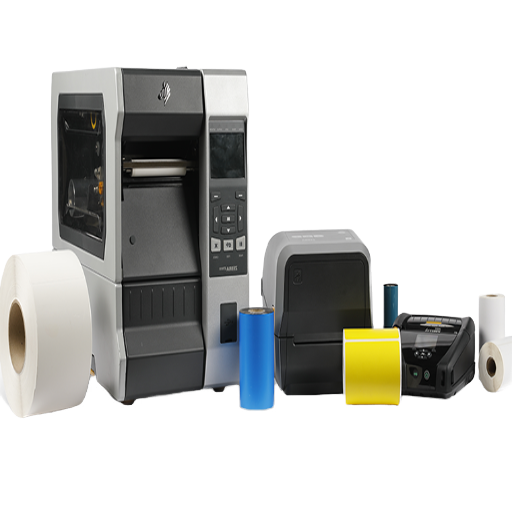
O que separa os dois é muitas vezes uma questão de seis critérios, onde cada um sempre determina a escolha do fornecedor Aqui está um resumo:
| Dimensão | Térmico Direto | Transferência Térmica |
|---|---|---|
| Mecanismo | O calor ativa o papel revestido | O calor derrete a tinta da fita no substrato |
| Consumíveis | papel DT/apenas filme | Mídia fita + etiqueta (par correspondente) |
| Vida útil | ≤6 meses (padrão da indústria) | 5+ anos; arquivamento até 10+ |
| Custo por etiqueta | Inferior (sem fita) | Maior (o ribbon adiciona 30–50 %) |
| Qualidade de impressão | Afiado quando fresco, desvanece-se com calor/UV | Crisp + estável; fita de resina = melhor borda |
| Melhor para | Receitas, envio, crachás de eventos, perecíveis | Farmacêutico, produtos químicos, pneus, etiquetas de ativos, para uso externo |
Vida útil (Serviço) Por que o DT desaparece após 6 meses
Três fontes independentes da indústria convergem para o mesmo número. Beontag afirma “labels normalmente duram cerca de 6 meses em condições normais.” Brother Mobile Solutions escreve “menos de seis meses” como o ponto de corte de elegibilidade DT. DNP descreve DT como aplicações de“ de período ”shorter.
Passamos a chamar essa evidência convergente de Regra Limiar de 6 Meses e usá-la como a questão inicial de triagem em qualquer nova especificação de rótulo.
💡 A regra do limite de 6 meses
Janela de serviço sob 6 meses, interior/armazenamento climatizado é DT. Janela de serviço ao longo de 6 meses, exposição ao calor ou luz solar, óleos ou solventes, mudar para TT. Não há meio termo onde DT permanece confiável.
Por que um penhasco tão difícil?
Lembre-se da química leuco dye+developer+sensitizer+stabilizer. Esse revestimento permanece energizado quimicamente uma vez impresso. Calor, UV, plastificante lixiviado das mangas de PVC, óleo das pontas dos dedos, apenas fricção esfregando repetidamente o rótulo. Qualquer coisa pode desencadear a mudança de cor novamente ou, mais frequentemente, apenas escurecer todo o rótulo.
Na comunidade r/EventProduction do Reddit, os organizadores da conferência reclamam que os emblemas DT desaparecem no terceiro dia da conferência“, depois de apenas suor de bolso.
⚠️ Erros comuns
- Aquecimento DT com situação quente ou sol. Etiquetas de advertência DT em uma janela sul ficam pretas em não mais que semanas; em um contêiner de carga a 60 °C pode desaparecer em dias.
- Definir DT para exposição química ao tambor. fumos de solvente. Escurecimento do revestimento superior à medida que o vapor de solvente dissolve o revestimento superior.
- Aplique um topcoat em “make DT durável” (como o próprio DT vai ficar bem, desde que primer está presente).Um topcoat adiciona um pouco à vida, mas não faz nada para mudar a química básica de 6 meses. Para mais de 6 meses de uso, ir TT, não banda-aid o DT.
Desgaste de cabeçote de impressão e custo total de propriedade

O argumento do custo por rótulo não é tão convincente sem a amortização de substituição do cabeçote de impressão. Aqui está a imagem TCO completa para uma linha de impressão de 100.000 etiquetas/mth por 3 anos.
Os DT’s estão sujeitos a um desgaste mais elevado uma vez que estão em contacto direto com o revestimento ativo que tem pequenas partículas abrasivas no mesmo. As métricas reais de receção-impressora de Hoin mostram uma vida média de cabeça de impressão DT de aproximadamente 150 km utilizados. Dados MIDCOM defina a vida útil da impressora industrial por milhões de polegadas lineares, dimensionadas pela intensidade de uso, dureza da fita e ciclos de limpeza.
Os cabeçotes de impressão de transferência térmica têm vidas mais longas do que os cabeçotes de impressão térmicos diretos, graças principalmente à fita, que serve como um amortecedor para a dor dos elementos de aquecimento e a goiva de um substrato de etiqueta abrasiva. Pule a fita e o cabeçote de impressão é aquele que estará pagando a conta.
| item de linha TCO de 3 anos | DT | TT |
|---|---|---|
| Impressora (industrial, 4 polegadas) | $1.000–$1.800 | $1.400–$2.400 |
| Mídia (papel DT ou etiqueta TT) | Inferior por rolo | Comparável; os graus de resina custam mais |
| Fita | N/A | Adiciona 30–50 % ao custo por rótulo |
| Substituição do cabeçote de impressão | ~$200–$500 a cada 25–50 km | ~$300–$600 a cada 50–100 km |
Nota de Engenharia
Um armazém de 3 linhas que consome ~100k rótulos/mês cada produz ~3,6 km de impressão por ano por linha. Dados esses níveis de volume, uma linha DT substitui cabeças de impressão a cada 7–14 anos e uma linha TT a cada 14–28 anos — uma boa disciplina de limpeza pode reduzir esse intervalo pela metade, naturalmente. Faça um orçamento de uma cabeça de impressão por linha a cada cinco anos em altas taxas, ou menos para laptops ou necessidades de menor produção.
Qualidade de impressão, códigos de barras e definição de borda
As impressoras Zebra são de transferência térmica ou térmica direta?
Ambos. A linha industrial da Zebra — incluindo ZD420, ZD421, ZT411 e ZT231 — é fornecida em variantes de modo duplo (compatíveis com TT e operadas como DT mediante remoção do ribbon), de modo que uma única impressora atende aos dois trabalhos. A escolha da resolução é feita por lote de rótulos: 203 dpi atende códigos de barras padrão, 300 dpi é o ponto ideal prático para rótulos com tolerâncias rigorosas e textos pequenos, e 600 dpi existe para códigos 2D de alta densidade (DataMatrix, QR) em pequenos frascos médicos.
A definição da borda é onde o TT puxa claramente à frente e produz imagens de alta qualidade, especialmente com uma fita de resina. As varreduras do grau A de ANSI (a categoria a mais alta da qualidade em ISO/IEC 15416) vêm consistentemente das combinações da resina-em-PET; DT varreduras tipicamente no grau B ou em C como a idade de serviço avança. As fitas da cera-resina batem o grau A de ANSI no papel sintético. Se seu processo do QA rejeita abaixo do grau B de ANSI, planeje o TT mais uma fita da resina ou da cera-resina como seu padrão.
Mapa de decisão de aplicação Escolha o método certo para seu uso
O mapa de decisão aplicação-método abaixo é a ferramenta de triagem que usamos internamente para adequar clientes a uma formulação de material para rótulos. Use a coluna de janela de serviço como chave principal de triagem: com menos de 6 meses em prateleira, DT é uma opção; acima de 6 meses, mude para TT e escolha uma classe de ribbon compatível com substrato e exposição.
| Aplicação | Janela serviço | Método | Classe de mídia + fita |
|---|---|---|---|
| Etiquetas de envio e correio | Dias a semanas | DT | Papel DT, sem fita |
| Recibos e ingressos POS | Horas a semanas | DT | Papel DT sem fenol (pós-2026) |
| Crachás de eventos (≤eventos de 3 dias) | Dias | DT (caverna: suor de bolso) | Filme DT com acabamento |
| Etiquetas farmacêuticas & frascos | Anos (prazo de validade completo) | TT | Material frontal PET + ribbon de resina |
| Etiquetas químicas & etiquetas de tambor | Anos; exposição dura | TT | Fita de vinil ou PET + resina |
| Etiquetas pneus | Anos; abrasão + clima | TT | Papel sintético de PP + ribbon de resina |
| Etiquetas congelador & cadeia de frio | Anos a -20 °C | TT | PET + adesivo de grau frio + fita de resina de cera |
| Tags de ativos e ID do equipamento | 5–10 anos para uso externo | TT | Fita de poliéster ou vinil + resina |
| Alimentos perecíveis (congelados + descongelados) | Semanas a meses | DT (prateleira curta) ou TT (exportação) | DT freezer-grade ou BOPP + cera-resina |
Compatibilidade de substrato (substrate Compatibility) Um pivô do lado do material que você não encontrará nas páginas OEM da impressora
Aqui está a tabela de decisão aplicação-método que usamos internamente ao adequar clientes a uma formulação de material para rótulos — use a janela de serviço como coluna principal de triagem para classificação.
| Frontal | Térmico Direto | Fita TTx | TT-Resina | TT em |
|---|---|---|---|---|
| Papel revestido | se for um revestimento sensível ao calor | emparelhamento padrão | propósito geral | 0 overkill |
| Papel sintético de PP | não ativo termicamente | – má adesão | emparelhamento padrão | dever duro |
| BOPP | não ativo termicamente | – marginal | bebida/cosméticos | respingo químico |
| PET (poliéster) | não ativo termicamente | smears | logística, congelado | farma, autoclave |
| Vinil (PVC) | não ativo termicamente | smears | apenas ao ar livre | padrão para produtos químicos externos |
Dois takeaways. Primeiro, DT vive em uma única coluna (a).papel revestido sensível ao calor e algumas variantes de filme aceitam a química. Segundo, a coluna de fita de resina é onde o TT resistente vive, e combinar resina com uma face de filme (PET ou vinil) é o que lhe dá vida útil de mais de 5 anos. Especificações que emparelham fita de resina com papel revestido, ou fita de cera com PET, são ambas formas de dinheiro em chamas.
Perspectiva para 2026–2030 — Sem fenol, restrições ao BPA e o mandato de Washington
Aqui estão três das tendências que dominarão o desenvolvimento das especificações de DT em quatro anos:
Eliminação regulatória dos bisfenóis. O Departamento de Comércio do Estado de Washington confirmou que, a partir de 1 o de janeiro de 2026, a venda e a fabricação de papel de recibo térmico contendo BPA ou BPS são proibidas em Washington. Maine proibiu o papel térmico contendo BPA anos antes; as listagens da Proposição 65 da Califórnia têm o mesmo efeito comercial. As restrições do REACH da UE sobre o BPA estão se apertando, com o BPS esperado para seguir no Q4 2027. se seus clientes enviarem para qualquer uma dessas jurisdições, um roteiro de fornecedor de DT sem fenol não é mais opcional.
Química ácido-ácido-desenvolvedor ascórbico. Uma importante substituição pós-BPA usa ácido ascórbico (vitamina C) como revelador no lugar de BPA / BPS. A química do ácido ascórbico é bem documentada e comercialmente disponível, embora os convertedores ainda estejam ajustando a paridade de custo e a estabilidade de armazenamento sob condições de alta umidade. As equipes de compras devem solicitar aos fornecedores IDs de SKU específicos sem fenol — e não apenas a linguagem de marketing “BPA-free”, que frequentemente significa substituto de BPS e agora é igualmente regulamentado.
Crescimento mercado. Prevê-se que o segmento de rótulos DT, isoladamente, cresça de US $3,9 bilhões em 2026 para US $6,1 bilhões até 2033 — uma CAGR de 6,7 % impulsionada pelo volume do comércio eletrônico e por exigências de rastreabilidade. O crescimento de TT segue trajetória semelhante. Para contratos de três anos, reserve agora a capacidade dos fornecedores, especialmente para ribbons DT sem fenol e ribbons TT de resina, nos quais a demanda está se concentrando.
Se o seu plano de aquisição 2026–2027 ainda assumir papel térmico BPA para operações na América do Norte, a ação realista é qualificar dois SKUs DT sem fenol e um SKU TT de resina antes de meados de 2026 — dois ciclos de compra, o prazo mínimo para trocar uma especificação estável de rótulo sem interrupção do fornecimento.
Perguntas frequentes
Q: Posso usar etiquetas térmicas diretas em uma impressora de transferência térmica?
Ver Resposta
Sim, mas você desperdiça ribbon. Uma impressora TT com ribbon carregado imprimirá em mídia DT — tanto a química ativada por calor quanto a tinta do ribbon marcarão o rótulo, produzindo uma imagem fantasma dupla. A maioria das impressoras TT de modo duplo (Zebra ZD420, Brother TD-2, SATO CL4NX series) permite remover o ribbon para operar no modo DT puro. Retire o ribbon, mantenha a impressora e volte a usá-lo quando precisar da durabilidade TT.
Q: Quanto tempo dura uma impressora térmica?
Revelar Resposta
O corpo da impressora dura 5–10 anos sob uso industrial normal. Os cabeçotes de impressão — a peça de desgaste — duram aproximadamente 25–50 km de impressão térmica direta e 50–100 km de transferência térmica, com limpeza adequada. Dados reais da Hoin sobre impressoras de recibos relatam cerca de 150 km em DT em ambientes de ponto de venda no varejo. Uma simples limpeza com álcool a cada 1–2 rolos aproximadamente dobra a vida útil do cabeçote de impressão. Cabeçotes de reposição custam cerca de $200–$500 para impressoras de mesa e $300–$600 para unidades industriais de 4 polegadas.
Q: Que tipo de fita (cera), cera-resina, resina?
Mostrar resposta
Combine a fita com o facest e a exposição. As fitas de cera são as mais baratas e emparelhem com papel revestido para trabalhos internos de curta duração. A resina de cera é a escolha de uso geral para papéis sintéticos e BOPP, com abrasão razoável e resistência química. A resina é o grau áspero-dever necessário para vinil, frascos PET pharma, tambores químicos, e etiquetas de ativos ao ar livre. A incompatibilidade é cara: uma fita de cera em um tambor de vinil mancha em poucas horas; uma fita de resina em papel revestido custa aproximadamente 3× o que a aplicação precisa.
Q: As impressoras térmicas imprimem em cores?
Abrir Resposta
A impressão térmica nativa em cores existe (térmica de 2 passagens no estilo Polaroid Zink), mas é rara na rotulagem B2B porque os consumíveis custam várias vezes mais do que a cera / resina padrão e a gama de cores é limitada. A rota industrial prática para cores são ribbons TT de cor direta — ribbons de uma única cor em vermelho, azul e verde para marcas de segurança, regulatórias ou de codificação por categoria. Algumas impressoras Zebra e SATO são fornecidas como mecanismos de ribbon duplo que combinam cor direta com preto no mesmo rótulo.
P: Os rótulos térmicos diretos são recicláveis após a eliminação progressiva do BPA?
Ver Resposta
O papel Phenolfree DT torna a história de reciclabilidade 300% melhor.Receitas com resíduos de bisfenol contaminaram a reciclagem de papel; a química DT à base de ácido ascórbico é muito mais limpa. Os papéis DT ainda são um desafio para o lenço de papel não revestido, mas a maioria dos fluxos de papel municipais norte-americanos agora processam DT sem fenol. Para uma aspiração verde em circuito fechado, peça um SKU específico sem fenol, além de uma declaração de reciclabilidade assinada contra as diretrizes da AF & PA ou da UE.
Combine seu método de impressão com a pilha de material certa
Guanma reúne todos os graus de material autoadesivo para rótulos compatível com DT e TT, além de equipamentos de revestimento, laminação e P&D, na Tailândia e no Vietnã. PET, BOPP, papel sintético de PP e papel couché nos formatos com adesivos hot-melt, à base de água e acrílicos são projetados e testados para aplicações de moldagem por sopro, transporte marítimo, farmacêuticas, químico-químicas e turnkey no Sudeste Asiático, na América do Sul e na Europa. Informe o modelo da sua impressora, a classe de ribbon e o ambiente de operação; fornecemos a combinação recomendada de frontal/adesivo/revestimento superior, além de uma caixa de amostras sem fenol.
Solicite um pacote de amostras DT/TT →
Fale com Nossa Equipe de P & D →
Sobre Este Guia Materiais
Guanma é um produtor de estoque de etiquetas autoadesivas com instalações de conversão, revestimento, laminação e P & D na Tailândia e Vietnã A matriz de compatibilidade TT/DT que usamos, emparelhamentos de classe de fita e fenolfree fornecedor-roteiro abaixo são baseados em mais de dez anos de fabricação de PET, papel sintético PP, BOPP e estoques de papel revestido para impressão térmica O desempenho figura uma quantidade arredondada dentro da faixa típica da indústria; o teste fragmentado da impressora é necessário antes que qualquer nova especificação de etiqueta seja aprovada para produção Validade do método validada pela equipe de engenharia da Guanma.
Referências e fontes
- Bisfenol em papel térmico A Alternativas Capítulo 3 • Agência de Proteção Ambiental
- Estado de Washington elimina produtos químicos nocivos dos recibos térmicos 0 Departamento de Comércio do Estado de Washington
- Papel Térmico e Química e História ^ Wikipédia
- Impressão direta por transferência térmica versus térmica Equipe técnica da D Imagingcomm Europe
- Transferência Térmica Direta vs Térmica: Qual é a Diferença? –
- Transferência térmica direta versus transferência térmica Qual tecnologia de impressão funciona melhor? (Raul Palacios) Soluções Móveis
- Vida útil média de um cabeçote de impressão térmica 00 Tecnologias Dados
- Por quanto tempo a impressora de recibos térmicos imprime os últimos dados do mundo real Impressora HOIN
- Tendências de rotulagem 2026: Wash-off, Térmico sem fenol, Base biológica –
- Tamanho e previsão do mercado de rótulos térmicos diretos 2026–2033 Pesquisa de Mercado
Artigos Relacionados
- Como o trabalho real à prova d’água rotula os materiais, adesivos e revestimentos que sobrevivem à água
- Seleção de fita de transferência térmica (Wax, Wax-Resin e Resin for Every Substrate)
- Papel térmico sem BPA 2026 Roteiro de compras 2030
- Economia de limpeza e substituição de cabeçotes de impressão para impressoras de etiquetas térmicas
- Adesivo Adrílico de Grau Frio Especificando Acrificação para Aplicações Congeladas e Refrigeradas
POR QUE ESCREVEMOS ISSO
Sobre Guanma
Guanma é fabricante de filme autoadesivo, material autoadesivo para rótulos e liner de liberação para aplicações de rotulagem industrial. Nossa equipe trabalha com filme de PET, papel sintético de PP, papel couché, PSA hot-melt, PSA acrílico, adesivo à base de água, liner glassine e papel de liberação CCK.
Escrevemos estes guias para ajudar convertedores de rótulos, compradores de embalagens e equipes de compras industriais a escolher materiais com base em condições reais de aplicação, em vez de nomes genéricos de catálogo. A maioria das falhas de rótulos decorre de uma incompatibilidade entre frontal, adesivo, liner, substrato, temperatura, processo de impressão ou ambiente de uso final. Nosso conteúdo explica essas decisões em termos práticos.
Nossa Experiência
A orientação de materiais da Guanma é baseada na experiência de revestimento, laminação, corte, validação de amostras e solução de problemas do cliente em toda a produção da Tailândia e do Vietnã. Nós nos concentramos em problemas comuns de rótulos industriais, como descascamento a temperatura fria, exposição a óleo e produtos químicos, envelhecimento UV, durabilidade de impressão, força de liberação, MOQ, prazo de entrega e testes correspondentes ao substrato.
Nossa Experiência
Usamos lógica prática de ensaios e normas reconhecidas da indústria de rótulos, incluindo métodos FINAT FTM de descolamento e cisalhamento, métodos ASTM de ensaio de descolamento, FDA 21 CFR 175.105, REACH, RoHS, FSC e controle de qualidade relacionado à ISO 9001. Para material de rótulos personalizado, sempre recomendamos testar amostras no substrato real do comprador antes da produção completa.
SYS.PERFIL
Visite o site
Perfil de contato
Nome
Equipe Fabricação Guanma
Marca Nome
Guanma
País
Produção Tailândia + Vietnã
Modelo
B2 B / Atacado /revestimento personalizado
Principais Produtos
Filme autoadesivo, material para rótulos, papel de liberação & liner
Contato
Envie RFQ através do Formulário do Site
Site
https://guanmalabel.com/
Postagens relacionadas
Em alta agora