Liên hệ với Guanma

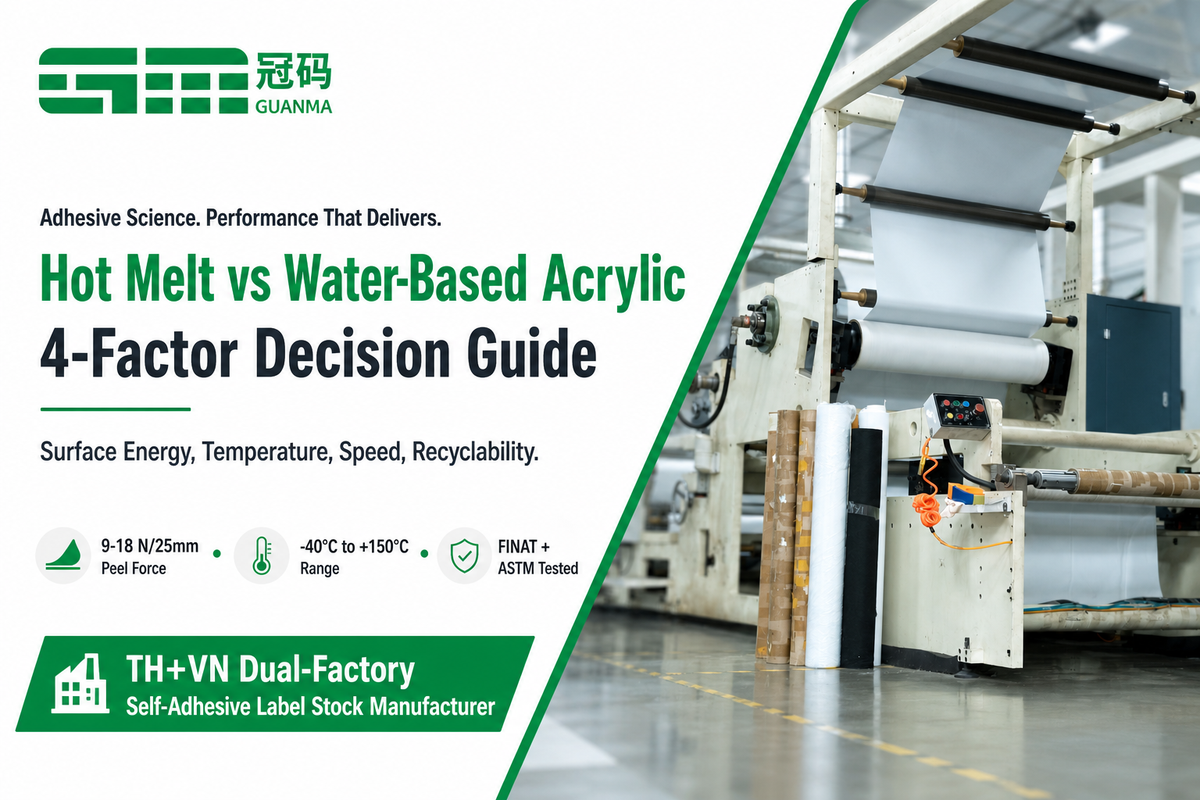
Keo nóng chảy so với keo acrylic gốc nước là lựa chọn về hóa học quyết định liệu nhãn có chịu được bề mặt sử dụng thực tế hay không, chứ không chỉ trong thùng vận chuyển. Ở cấp độ hóa học, keo nóng chảy là vật liệu nhiệt dẻo 100% chất rắn, đóng rắn khi làm nguội trong vài giây, còn keo acrylic gốc nước là nhũ tương polymer, đóng rắn khi nước bay hơi trong vài phút. Việc chọn đúng không phụ thuộc nhiều vào thương hiệu bằng năng lượng bề mặt, dải nhiệt độ và dây chuyền sản xuất mà nhãn phải chịu được — cũng là những biến số định hình các giải pháp rộng hơn của Guanma màng tự dính phạm vi hóa học kết dính này được kết hợp với.
Thông số kỹ thuật nhanh
| Cơ chế chữa bệnh | Nóng chảy: nguội đến rắn | Acrylic gốc nước: nước bay hơi |
| Nhiệt độ dịch vụ | Nóng chảy: -40 °C đến +120 °C (tùy thuộc vào ứng dụng) | Acrylic: -40 °C đến +150 °C |
| Lực bóc điển hình (FINAT FTM1) | 9-18 N/25mm | 6-16 N/25mm |
| Phương pháp thử nghiệm | FINAT FTM1/FTM2, ASTM D3330 (phiên bản hiện tại 2025) |
Việc lựa chọn giữa keo nóng chảy và acrylic gốc nước cho nhãn phụ thuộc vào năng lượng bề mặt và môi trường ứng dụng: keo nóng chảy bám nhanh và bám chắc trên các bề mặt lạnh, năng lượng thấp hoặc nhám, trong khi acrylic gốc nước bám chậm hơn nhưng kháng tia UV, dao động độ ẩm và nhiệt độ cao tốt hơn trong nhiều năm sử dụng. Không hóa học nào thắng trong mọi tình huống, và Khung chéo hóa học 4 yếu tố dưới đây biến sự đánh đổi đó thành danh sách kiểm tra mà người mua có thể áp dụng cho một thông số nhãn cụ thể.
Sơ lược về Hot Melt vs Acrylic gốc nước

Hai chất kết dính này có rất khác nhau sẽ đưa ra cùng một câu trả lời: loại chất kết dính nào và loại chất kết dính nào, thực sự chịu được môi trường nhãn của bạn?
Keo dán nhãn nóng chảy là một loại nhựa nhiệt dẻo không có dung môi; các bộ chuyển đổi làm nóng nó đến điểm nóng chảy, phủ nó lên facestock, và sau đó làm nguội nó thành dạng rắn chỉ trong vài giây. (Đây là lý do tại sao các đường nóng chảy đi nhanh.) Keo acrylic gốc nước, trong khi đó, ra khỏi nhũ tương sữa của polyme, và chất kết dính không được áp dụng cho facestock cho đến khi nước đã bay hơi-có thể chậm hơn, nhưng có thể dẫn đến một màng chống tia cực tím rõ ràng hơn. cả hai loại đều nằm trong danh mục keo nhạy áp lực (PSA) như được xác định bởi các Hội đồng băng nhạy áp lực (PSTC), cùng một gia đình như băng dính hàng ngày hoặc keo đóng gói. không yêu cầu kích hoạt bằng nước, dung môi hoặc nhiệt, sau khi áp dụng cho nhãn và chất nền. hệ thống nhãn nhạy áp lực này khác với màng liên kết kích hoạt bằng nhiệt; cho cái sau, xem Phim keo nóng chảy từ Teng Yang.
Keo dán gốc dung môi, hóa học keo dán thứ ba, vẫn xuất hiện trong một số loại băng keo cũ và keo dán công nghiệp, nhưng ngoài ra đã gần như biến mất khỏi các nhà gia công nhãn do VOC và các lo ngại về an toàn tại nơi làm việc.
9-18 N/25mmlực bóc nóng chảy (FINAT FTM1)
6-16 N/25mmlực lượng vỏ acrylic gốc nước
Giây so với phútnóng chảy vs acrylic thiết lập thời gian
Câu hỏi mà người mua thực sự đặt ra, keo nóng chảy có phải là gốc nước không? — có câu trả lời dứt khoát là không. Keo nóng chảy gồm 100% chất rắn ở nhiệt độ môi trường; không chứa nước hoặc dung môi, và đó là lý do keo nóng chảy có khả năng thiết lập nhanh và khả năng kháng nước. Keo acrylic gốc nước được đặc trưng bởi lượng nước chúng giải phóng, và một số loại còn giữ lại lượng nước dư có thể ảnh hưởng đến độ ổn định lâu dài của nhãn giấy.
Nhầm một loại keo dán với loại kia là lý do phổ biến nhất khiến nhà gia công nhãn chỉ định sai keo dán cho các ứng dụng độ ẩm cao hoặc rửa xối, và cũng là sai lầm được đề cập chi tiết hơn ở phần sau của hướng dẫn này. Chọn đúng keo dán cho vật liệu nền, thay vì chọn bất kỳ hóa học nào có sẵn trong kho của nhà cung cấp, quyết định liệu một chương trình ghi nhãn sẽ thành công hay đầy rẫy các công việc lặp lại và chi phí làm lại cao — và một loại keo dán có thể hoạt động hoàn hảo trong thử nghiệm phòng thí nghiệm nhưng vẫn hỏng khi gặp dây chuyền sản xuất thực tế.
Hai hóa học này cũng phân nhánh thành các phân nhóm đáng biết theo tên. Keo dán gốc nước được phân tán trong nước thay vì dung môi hoặc chất mang hòa trộn với nước, và nhóm rộng hơn bao gồm nhũ tương nhựa/polymer-acetate (loại mà đa số nhãn sử dụng), cùng các biến thể cũ như keo dán gốc tinh bột và keo dán latex vẫn xuất hiện trong một số ứng dụng giấy và mỹ thuật đồ họa; các công thức cũ thậm chí dùng nền tinh bột hoặc được dùng để sản xuất keo casein cho đóng sách và các mục đích chủ yếu dùng giấy khác. Ngược lại, keo nóng chảy chủ yếu được chia thành các cấp ethylene-vinyl acetate (EVA) – loại đa dụng cho nhiều ứng dụng, dạng keo dán mà phần lớn nhà gia công nhãn nhận ra ngay – và các cấp polyolefin, đánh đổi cửa sổ tráng phủ keo dán hẹp hơn để có dải nhiệt độ sử dụng rộng hơn và chịu tốt các biến động nhiệt độ lớn. Các loại keo nóng chảy thường được xếp hạng theo nhiệt độ mà chúng có thể chịu được, và dùng keo nóng chảy hoặc keo dán nóng chảy ngoài phạm vi xếp hạng đó là cách nhanh nhất để làm mất hiệu lực bảo hành. Cả hai nhóm keo dán đều không hoạt động tốt trên mọi vật liệu nền; mỗi nhóm được thiết kế với một tập hợp đặc tính cụ thể, có một số ưu điểm giúp chúng lý tưởng cho một phạm vi xác định trong lĩnh vực ghi nhãn, chứ không phải giải pháp phổ quát. Ngay cả keo dán gốc dung môi, dù hiếm khi là lựa chọn ưu tiên hiện nay, vẫn xuất hiện ở những nơi thiết bị cũ yêu cầu.
Thực tế nói, sử dụng chất kết dính nước cũng có nghĩa là tôn trọng một vài điều cơ bản.Các loại tiêu chuẩn của chất kết dính nước cũng có thể được điều chỉnh lại cho độ ẩm cao hơn sức đề kháng, chất kết dính nước có thể cung cấp một liên kết linh hoạt trên facestocks xốp, và chất kết dính cũng thường xuyên được cung cấp với một cơ sở tinh bột hoặc cơ sở polymer tổng hợp tùy thuộc vào ứng dụng mục tiêu.Một số là chất kết dính theo nghĩa đen có chứa một cơ sở tinh bột quay trở lại dán đóng sách, được sử dụng cho giấy lâu trước khi PSA hiện đại tồn tại.Các nhà cung cấp dịch vụ chất kết dính công nghiệp ngày nay mô tả chất kết dính nóng chảy có thể chịu được một phạm vi nhiệt độ thực sự rộng một lần phù hợp với công việc, và chất kết dính là các hệ thống dựa trên polymer cho dù cơ sở là nóng chảy, keo nóng, hoặc nhũ tương dựa trên nước. các hợp chất hữu cơ dễ bay hơi có hiệu quả bằng không trong nóng chảy và tương đối thấp trong hầu hết các vật liệu kết dính dựa trên nước hiện đại được sử dụng trong bao bì. một chất kết dính đáng tin cậy, cuối cùng, chỉ đơn giản là một chất kết dính duy trì độ bền liên kết định mức của chúng cho đến khi nhãn cần nó, và các cân nhắc về môi trường như độ ẩm và tiếp xúc với tia cực tím vẫn là một phần của phương trình đó cho dù chất kết dính là nước dựa trên và nóng chảy trong cùng một hoạt động sản xuất hoặc một dòng hóa học duy nhất rộng. Chất kết dính được thiết lập nhanh chóng hoặc chậm theo thiết kế, và chất kết dính được biết là thất bại chỉ khi thiết kế đó không phù hợp với công việc iv logic băng dính bên phải tương tự áp dụng cho dù sản phẩm là nhãn, băng niêm phong trường hợp, hoặc đóng thùng carton vận chuyển.
Làm ướt bề mặt và chất nền: Tại sao cùng một nhãn dính vào một bề mặt và rơi ra khỏi bề mặt khác

Năng lượng bề mặt, được đo bằng dyne/cm, quyết định liệu keo có thể thấm ướt bề mặt chất nền trước khi đóng rắn hay không, và chỉ riêng biến số này được theo dõi qua các phương pháp đo độ bám dính bóc tách như ASTM D3330, giải thích nhiều lỗi nhãn hơn nhiệt độ. dữ liệu trường của Butler Technologies về lỗi bám dính nhãn lưu ý rằng chất kết dính acrylic nhạy áp lực liên kết đáng tin cậy với thép không gỉ có thể thất bại hoàn toàn trên các loại nhựa năng lượng bề mặt thấp (LSE) như polypropylen hoặc polyetylen, vì chất kết dính không bao giờ làm ướt hoàn toàn bề mặt trước khi nó đặt. độ bám dính ban đầu cao hơn và ướt nhanh hơn dưới áp suất làm nóng chảy dễ tha thứ hơn trên các chất nền thô hoặc năng lượng thấp; acrylic gốc nước ướt chậm nhưng tạo thành màng ổn định nhiệt và tia cực tím hơn sau khi nó được đặt hoàn toàn trên bề mặt tương thích.
Dữ liệu ứng dụng dây chuyền phủ của Guanma nhóm các chất nền nhãn chung thành ba vùng năng lượng bề mặt thực tế thay vì một điểm cắt vượt qua/không đạt duy nhất và các giải pháp kết dính này áp dụng cho dù cuộn được dành cho dụng cụ bôi keo nóng chảy hay đầu phủ gốc nước:
| Vùng năng lượng bề mặt | Ví dụ về chất nền | Hóa học được đề xuất | Hạn chế /Không phù hợp với |
|---|---|---|---|
| Thấp (<33 dyne/cm) | Thùng carton PP, PE, sáp chưa qua xử lý | Nóng chảy (độ bám dính ban đầu cao) | Không thích hợp cho việc tiếp xúc với tia cực tím ngoài trời >90 ngày mà không có lớp phủ quá mức |
| Trung bình (33-40 dyne/cm) | PP đã xử lý, màng PET, giấy tráng phủ | Hoặc, phụ thuộc vào ứng dụng | Xác minh bằng mẫu phù hợp với chất nền trước khi cam kết về thể tích |
| Cao (>40 dyne/cm) | Thủy tinh, thép không gỉ, kim loại sơn tĩnh điện | Acrylic gốc nước (ổn định lâu dài) | Không thích hợp cho nhiệt độ ứng dụng dưới 0 dưới + 5 °C |
“Chúng tôi thực hiện nhanh thử nghiệm bút dyne trên mọi vật liệu nền mới trước khi cam kết đơn hàng của khách với một hóa học. Nhãn đạt yêu cầu trên PET đã xử lý vẫn có thể hỏng trên lớp đế khay PP chưa xử lý của cùng khách hàng — bề mặt, chứ không phải thương hiệu keo dán, thường là lý do nhãn bị trả lại.”
— Kỹ sư ứng dụng cấp cao, Xưởng tráng phủ Guanma
Hiệu suất Nhiệt độ & Môi trường

Nhãn dùng cho chuỗi lạnh và ngoài trời thường suy giảm do tác động môi trường trước khi độ bám dính trở thành nguyên nhân, và khả năng chịu nhiệt chỉ là một nửa câu chuyện. Cụ thể với môi trường đông lạnh, các công thức keo nóng chảy như G-07 của Guanma (lớp mặt nhãn tổng hợp PP + keo nóng chảy) duy trì 92-96% lực bóc ban đầu sau thời gian lưu 30 ngày ở -40°C, theo FINAT FTM1 sửa đổi cho lạnh – một phạm vi nhiệt độ cực đoan mà sẽ tước hầu hết các chất kết dính tiêu chuẩn của hiệu suất liên kết mạnh mẽ trong vòng vài ngày. trong cùng phạm vi đó, acrylic gốc nước mất tack khi nó tiếp cận điểm chuyển tiếp thủy tinh của nó, đó là lý do tại sao nó hiếm khi được chỉ định dưới -10 °C mà không có một sự tái cấu trúc cấp lạnh.
Keo nóng chảy có gốc nước không?
Không. keo nóng chảy, kể từ khi nó Lừa một 100% rắn, polymer nhiệt dẻo, không chứa nước hoặc dung môi. nó Lừa rắn ở nhiệt độ phòng và chỉ trở thành chất lỏng trên phạm vi nóng chảy của nó (82-93 °C/180-200 °F trong thiết bị bôi).
Đây chính xác là lý do tại sao nóng chảy hoạt động tốt trên các bề mặt ẩm ướt hoặc ẩm ướt, nơi chất kết dính gốc nước sẽ gặp khó khăn trong việc giải phóng chất mang nước của chính nó: không có nước để chống lại sự ngưng tụ ngay từ đầu.
Độ ẩm, tất nhiên, là một trục khác của sự thất bại và giá trị được theo dõi riêng lẻ.Một nghiên cứu cho thấy độ bền của vỏ tại chất kết dính giảm mạnh khi tăng RH: độ ẩm hấp phụ làm dẻo lớp dính và làm giảm độ bền kết dính. điều này có tác động lớn hơn đến nước dựa trên hơn là nóng chảy vì ngay cả khi nhũ tương acrylic khô vẫn còn ưa nước hơn.
Đối với bất kỳ nhãn có khả năng phải chịu một nhà kho ẩm ướt hoặc cửa của một hộp lạnh nơi ngưng tụ là có thể, hiệu suất độ ẩm nên có hàng riêng của mình trong một tờ spec chứ không phải chỉ là một giới hạn nhiệt độ.Đây là một lý do mà nóng chảy vẫn có một ace lên tay áo của nó trong hoàn cảnh thực sự khắc nghiệt.
Tốc độ dây chuyền sản xuất & Phương pháp ứng dụng

Thời gian cài đặt nhanh là một trong những lý do nóng chảy làm tăng tốc độ trên các dòng ghi nhãn, và tốc độ tăng rõ ràng là rõ ràng ở khối lượng thương mại. hành vi tack và nhanh chóng dính đằng sau tốc độ đó là cùng một đặc điểm Phương pháp thử nghiệm PSTC dùng để phân biệt các cấp PSA. Keo nóng chảy của Henkel dùng cho ghi nhãn PET được thử nghiệm để cố định tới 40.000 nhãn mỗi giờ trên các dây chuyền chiết rót tốc độ cao; con số đó liên quan đến tốc độ dán nhãn chai, không phải tốc độ tráng phủ hoặc gia công nhãn (tốc độ mà nhãn được nhà sản xuất làm ra ở giai đoạn trước). Acrylic gốc nước cần thời gian lưu mẫu để nước thoát ra và liên kết phát triển hoàn toàn, do đó nhà gia công nhãn thường vận hành nhãn acrylic trên các dây chuyền ở tốc độ vừa phải, hoặc chưa đạt tốc độ tối đa, hoặc tích hợp công đoạn sấy ngay trên dây chuyền.
Đối với người mua so sánh báo giá, diễn giải thực tế nhất là: nếu tốc độ dán là nút thắt trên dây chuyền tự động của bạn, keo nóng chảy sẽ loại bỏ nó; nếu bạn đã có trạm đóng rắn hoặc sấy khô, việc keo acrylic gốc nước bám chậm không đáng kể. Đặc biệt trên dây chuyền thùng carton và dán kín thùng, các chức năng dán kín thùng và carton này, được hầu như mọi nhà cung cấp keo dán công nghiệp xử lý, cũng cho thấy cùng một giá trị: “độ bền liên kết ban đầu trên thùng đang di chuyển mới là điều quan trọng, không phải trạng thái màng thử nghiệm trong phòng thí nghiệm” – keo nóng chảy bám vào thùng hoặc carton tốt hơn, vì chính xác cùng lý do.
Chi phí & Tổng chi phí sở hữu

Chi phí cho mỗi kg không bao giờ nói lên toàn bộ câu chuyện giữa hai hóa chất này. chuyển đổi ngành công nghiệp nói chung sẽ nói rằng chi phí vật liệu nóng chảy trên mỗi cuộn cao hơn một chút so với đối tác acrylic của họ trên một số lớp nhưng sự khác biệt này được bù đắp nhiều hơn bởi thời gian thiết lập nhanh hơn dẫn đến tăng sản lượng ghi nhãn, do đó làm giảm chi phí hiệu quả cho mỗi đơn vị hoàn thành trên đường dây tốc độ cao. mặt khác, acrylic gốc nước sẽ rẻ hơn trên nguyên liệu thô trên mỗi kg và sẽ không yêu cầu cơ sở hạ tầng sưởi ấm, tuy nhiên thời gian sấy bổ sung và tốc độ tối đa giảm có thể làm giảm bất kỳ khoản tiết kiệm nào đạt được khi chạy lớn.
Tổng chi phí sở hữu trong 5 năm theo loại chi phí, minh họa dây chuyền đóng chai 40.000 nhãn/giờ:
| Hạng mục chi phí | Nóng chảy | Acrylic gốc nước |
|---|---|---|
| Thiết bị ứng dụng | Bể nóng chảy + dụng cụ làm nóng | Xả cuộn tiêu chuẩn, không gia nhiệt |
| Năng lượng (5-yr) | Cao hơn quis liên tục sưởi ấm đến 180-200 °F | Thấp hơn % không cần sưởi ấm |
| Công suất tốc độ đường dây | Lên đến 40.000 nhãn/hr (ứng dụng đóng chai) | Thời gian lưu trú vừa phải, có giới hạn |
| Làm lại từ sự không khớp sai chất nền | Thấp hơn trên chất nền lạnh/thô | Thấp hơn trên các chất nền năng lượng cao ổn định |
| Rủi ro thời gian ngừng hoạt động (5-năm) | Khoảng thời gian bảo trì máy sưởi | Nút cổ chai ở giai đoạn khô nếu tốc độ đường dây tăng |
| Phạm vi nhiệt độ dịch vụ | -40 °C đến + 120 °C (tùy thuộc vào ứng dụng) | -40 °C đến + 150 °C |
| Lực bóc điển hình (FINAT FTM1) | 9-18 N/25mm | 6-16 N/25mm |
| Giữ lại chuỗi lạnh (ở 30 ngày) | 92-96% ở -40 °C | Không được đánh giá dưới -10 °C mà không có sự tái cấu trúc cấp lạnh |
| VOC/hồ sơ tuân thủ (Quy tắc 1168) | Gần bằng 0, không có dung môi để thoát khí | Phụ thuộc vào danh mục, thường thấp nhưng khác 0 |
Ví dụ hoàn vốn: một dây chuyền chạy ở tốc độ 30.000 chai/giờ chuyển từ thiết lập acrylic gốc nước có giới hạn dừng sang nóng chảy và nâng công suất lên tiêu chuẩn Henkel 40.000/giờ sẽ thu hồi chi phí vật liệu nóng chảy gia tăng trong khoảng một đến hai quý sản xuất, miễn là chất nền đã ở vùng năng lượng bề mặt từ thấp đến trung bình, nơi nóng chảy là lựa chọn chính xác về mặt kỹ thuật và chuyển đổi hóa học hoàn toàn theo tốc độ trên nền thủy tinh hoặc kim loại năng lượng cao có thể đánh đổi tốc độ đường truyền đạt được cho một vấn đề bám dính lâu dài.
Chi phí tuân thủ được định hướng theo danh mục hơn là định hướng hóa học. các quy định VOC khu vực như Quy tắc AQMD của Bờ biển phía Nam 1168 ví dụ tại California, quy định các giới hạn theo từng danh mục keo dán và không tự động liệt kê một nhóm hóa học là tuân thủ còn nhóm khác là không tuân thủ. Mọi đơn vị gia công nhãn hoạt động theo Quy tắc 1168, hoặc quy định tương đương ở khu vực khác, nên kiểm tra giới hạn VOC thực tế của danh mục sản phẩm đang sử dụng.
Khả năng tái chế và ca giặt

Trong 12 tháng qua, sự quan tâm đến hóa học PSA acrylic đã tăng khoảng 255%, trong khi tìm kiếm PSA nóng chảy đã giảm khoảng 18%. Sự gia tăng quan tâm đến hóa học acrylic này không phải là một câu chuyện “nó xanh hơn” bao quát mà bởi vì các nhà sản xuất chất kết dính toàn cầu lớn, ví dụ như trong báo cáo ngành công nghiệp năm 2025 của HB Fuller, đang xác định chất kết dính nhãn là “ở ngã tư đường”, và đặc biệt là do rửa sạch chất kết dính nhãn, sẽ tách ra khỏi chai PET trong quá trình rửa trong dung dịch kiềm 70-90 °C cho mục đích tái chế và sẽ là bắt buộc ở châu Âu đối với chai PET từ năm 2030, hiện là mối quan tâm thực sự của chủ sở hữu thương hiệu.
Tuy nhiên, đây không phải là một câu chuyện đơn giản về nóng chảy mất đi acrylic. yêu cầu thực tế được xác định bởi các cơ quan EU chứng nhận khả năng tái chế cho chất kết dính, chẳng hạn như RecyClass, là chất kết dính tách ra trong giai đoạn rửa 70-90 °C, đây là một thử nghiệm dựa trên hiệu suất, không phải là một dựa trên gia đình hóa học.Một loạt các bằng sáng chế mới, bao gồm một Bằng sáng chế quốc tế năm 2023 cho PSA nóng chảy rửa sạch dựa trên olefin và một bằng sáng chế quốc tế trước đó cho PSA nóng chảy phồng lên trong dung dịch ăn da để tạo điều kiện phân tán, chứng minh rằng ngành công nghiệp đang tích cực phát triển khả năng rửa trôi cho nóng chảy. đặt cược an toàn hơn trong tương lai cho tất cả là’t “chuyển sang acrylic” nhưng “xác nhận chứng nhận rửa sạch cho lớp nóng chảy hoặc acrylic của bạn” vì hiện tại có các sản phẩm nóng chảy và rửa sạch acrylic và không rửa sạch có sẵn.
Một tuyên bố khả năng tái chế cũng phụ thuộc vào nhiều hơn bản thân chất kết dính.Tại Hoa Kỳ, FTC Lừa Hướng dẫn Xanh (16 CFR 260.12) yêu cầu rằng tuyên bố có thể tái chế phải được hỗ trợ bằng khả năng tiếp cận thực tế với các chương trình tái chế và không thành phần đơn lẻ nào, bao gồm cả keo dán, hạn chế đáng kể khả năng tái chế, vì vậy keo dán được xếp hạng rửa sạch là điều kiện cần cho tuyên bố về khả năng tái chế, nhưng tự nó không phải điều kiện đủ. Chủ thương hiệu lập kế hoạch thông số kỹ thuật nhãn 2026–2027 nên yêu cầu báo cáo thử nghiệm rửa sạch cho cấp keo dán cụ thể, thay vì cho rằng nhóm hóa học chung sẽ trả lời được câu hỏi.
Bạn nên chọn cái nào? Khung quyết định

Việc sử dụng tất cả bốn yếu tố trong Crossover Framework – năng lượng bề mặt, nhiệt độ và độ ẩm, tốc độ đường truyền và thời gian hết hạn sử dụng – giúp việc chạy thông số nhãn rõ ràng hơn nhiều so với việc dựa vào bất kỳ quy tắc ngón tay cái nào. Các con số lực bóc đằng sau mỗi yếu tố đều quay trở lại giống nhau ASTM D3330 và các phương pháp thử nghiệm FINAT FTM1 được trích dẫn trong bảng Thông số kỹ thuật nhanh ở trên, do đó, khung này dựa trên phép đo lặp lại chứ không phải ưu tiên tiếp thị.
Chọn nóng chảy khi
- Chất nền là năng lượng bề mặt từ thấp đến trung bình (nhựa chưa qua xử lý, thùng sáp)
- Môi trường ứng dụng bao gồm kho lạnh, tủ đông hoặc ngưng tụ
- Tốc độ đường dây là vấn đề tắc nghẽn và thiết lập tức thời
- Loại nóng chảy được đánh giá có thể giặt được xác nhận có sẵn cho mục tiêu tái chế
Chọn acrylic gốc nước khi
- Chất nền có năng lượng bề mặt cao (kính, thép không gỉ, giấy tráng phủ đã xử lý)
- Môi trường ứng dụng ổn định, môi trường xung quanh và tiếp xúc với tia cực tím lâu dài
- Cơ sở hạ tầng sấy/chữa đã có sẵn trên dây chuyền
- Nguyên liệu thô có hàm lượng VOC thấp hơn được ưu tiên và xác nhận theo giới hạn danh mục hiện hành
✓ Ưu điểm
- Nóng chảy: thiết lập nhanh, hiệu suất lạnh mạnh, không cần thời gian dừng
- Acrylic: ổn định nhiệt/tia UV lâu dài tốt hơn, làm ướt bề mặt năng lượng cao một cách sạch s
⚠ Hạn chế
- Nóng chảy: khả năng chống tia cực tím lâu dài yếu hơn mà không có lớp phủ quá mức; cần thiết bị ứng dụng được làm nóng
- Acrylic: bộ chậm hơn giới hạn tốc độ đường truyền tối đa; mất độ bám dính ở mức dưới 0 độ lạnh mà không có công thức cấp độ lạnh
Những sai lầm lựa chọn phổ biến & Khi mỗi hóa học thất bại

Dạng hư hỏng phổ biến nhất được báo cáo tại hiện trường không phải là keo dán kém; mà là keo dán không phù hợp với năng lượng bề mặt. Một chủ đề cộng đồng in lưới so sánh keo acrylic và keo nóng chảy trên băng che sáng nêu lên cùng bài học mà nhà gia công nhãn nhận thấy: không loại keo nào luôn là “loại mạnh”, và lựa chọn đúng thay đổi tùy theo vật liệu nền và quy trình cụ thể. Một minh họa trong ngành liên quan được lan truyền giữa các nhà gia công nhãn còn nêu rõ hơn cùng điểm này: keo nóng chảy kỵ nước và vẫn bám chắc ngay cả trên bề mặt ướt, trong khi acrylic nhũ tương có thể hút nước và mất độ dính ban đầu trong cùng điều kiện, một khác biệt về đặc tính Tài liệu thử nghiệm của riêng PSTC thuộc tính cho hóa học tàu sân bay cơ bản, không phải thương hiệu hoặc điểm giá inhere Không có câu trả lời dính đơn cho mọi công việc.
Làm
- Yêu cầu đọc mức độ nhuộm hoặc kiểm tra mẫu chất nền trước khi thực hiện hóa học
- Xác nhận xếp hạng rửa trôi của lớp cụ thể thay vì giả định họ hóa học
- Phù hợp với chất kết dính với điều kiện lạnh nhất hoặc ẩm ướt nhất mà nhãn sẽ thực sự nhìn thấy, không phải là điều kiện trung bình
Đừng
- Giả sử acrylic luôn là lựa chọn “cao cấp” hoặc “an toàn hơn” mà không cần kiểm tra năng lượng bề mặt trước
- Thông số kỹ thuật loại nóng chảy tiêu chuẩn để bảo quản dưới 0 độ bền vững mà không cần xác nhận công thức cấp lạnh
- Hãy coi “có thể tái chế” như một tuyên bố về hóa học-gia đình thay vì một tuyên bố cụ thể theo cấp độ, phụ thuộc vào chương trình
Q: Sự khác biệt giữa keo nóng chảy và keo acrylic là gì?
Về keo nóng chảy: đây là vật liệu nhiệt dẻo 100% chất rắn, đóng rắn khi làm nguội trong vài giây; còn keo acrylic là nhũ tương polymer gốc nước, đóng rắn khi nước bay hơi trong vài phút.
Một nắm bắt ban đầu mạnh mẽ hơn, tốc độ dòng nhanh hơn, và liên kết đáng tin cậy với các vật liệu lạnh hoặc bề mặt năng lượng thấp là những gì nóng chảy cung cấp, vì nó không phải bay hơi để chữa. nhược điểm là khả năng chống tia cực tím hạn chế của nó trong thời gian dài trừ khi nhiều lớp, vì nó có thể vàng và phá vỡ theo thời gian. keo acrylic gốc nước mang lại cho bạn sự ổn định lâu dài chống lại sự suy thoái của tia cực tím và khả năng chịu nhiệt độ tốt hơn sau khi đóng rắn hoàn toàn, làm cho nó trở thành lựa chọn tốt hơn cho các nhãn ngoài trời hoặc xuất hiện cao trong thời gian dài, mặc dù sau này vẫn sẽ cần một overlaminate anyway.Nó cũng có xu hướng giữ tốt hơn trên bề mặt năng lượng bề mặt thấp ở nhiệt độ cao hơn.
Q: Những nhược điểm của keo nóng chảy là gì?
Đối với keo nóng chảy, cần có thiết bị gia công gia nhiệt; keo có thể mất độ ổn định UV nhanh hơn keo acrylic nếu không có lớp màng phủ trên, và khó định vị lại hơn sau khi đóng rắn. Điều này đặc biệt quan trọng với các nhãn được dán lại thủ công.
Nóng chảy là “chộp lấy tức thì,” với độ bám dính thường đạt được trong vài giây làm mát. bởi vì họ không phải chờ cho sự bay hơi nước, bạn don nhận được nhiều nếu bất kỳ cửa sổ nào để định vị lại các nhãn bị áp dụng sai. với khả năng phân hủy trong tia cực tím trực tiếp trong thời gian dài (không có quá nhiều lớp) và yêu cầu thiết bị được làm nóng, nóng chảy tiêu chuẩn không lý tưởng để sử dụng ngoài trời kéo dài hoặc khi tối thiểu, quay vòng nhanh là trọng tâm.
Q: Băng keo nóng chảy có mạnh hơn acrylic không?
Trên độ bám dính và độ bền cắt ban đầu, nóng chảy thường vượt trội hơn acrylic, nhưng acrylic giữ liên kết của nó ổn định hơn qua nhiều năm lão hóa, do đó, chất kết dính “mạnh hơn” phụ thuộc vào đặc tính và khung thời gian nào thực sự quan trọng đối với ứng dụng.
“Mạnh hơn” phụ thuộc vào tài sản nào đang được đo. nóng chảy chiến thắng trên lấy ngay lập tức và liên kết bề mặt thô trong môi trường hậu cần lạnh, nhanh. acrylic có xu hướng giành chiến thắng trên sức mạnh nắm giữ cắt dài hạn và khả năng chống vàng hoặc giòn, đó là lý do tại sao nhãn ngoài trời và cuộc sống lâu dài cao cấp thường chỉ định acrylic. không yêu cầu bồi thường là phổ biến đúng trên mọi chất nền và khung thời gian, vì vậy một thử nghiệm mẫu phù hợp với chất nền vẫn là cách đáng tin cậy để giải quyết câu hỏi cho một ứng dụng cụ thể une đây chính xác là lý do tại sao nhãn ngoài trời bền có xu hướng chỉ định acrylic theo mặc định mặc dù nóng chảy, nắm bắt ban đầu mạnh mẽ hơn.
Hỏi: Keo nóng chảy sẽ giữ trên hộp tái chế hoặc repulped?
Tiêu chuẩn nóng chảy liên kết tốt với sóng tái chế, nhưng một rửa-off hoặc repulpable-đánh giá cấp là cần thiết nếu các mặt hàng được dán nhãn chính nó cần phải đi qua một chai hoặc tái chế giấy dòng.
Nói chung, keo nóng chảy xử lý tốt bìa carton tái chế vì năng lượng bề mặt của sợi nằm trong phạm vi bám dính thông thường của keo nóng chảy, nên bản thân hộp hiếm khi là vấn đề. Điều quan trọng hơn là khả năng tái nghiền bột của nhãn khi hết vòng đời, chứ không phải chiếc hộp dùng để vận chuyển sản phẩm: các công thức keo nóng chảy có thể tái chế được thiết kế bằng copolymer khối olefin và chất tăng dính đã hydro hóa, nhằm trương nở, làm mềm và phân tán trong cùng bể rửa kiềm mà chai PET đi qua khi tái chế. Không phải mọi cấp keo nóng chảy không rửa sạch đều có đặc tính đó, dù chúng bám dính giống nhau trên kệ. Hãy xác nhận xếp hạng rửa sạch hoặc khả năng tái nghiền bột của cấp cụ thể với nhà cung cấp keo dán trước khi chỉ định cho bất kỳ dây chuyền bao bì nào có tuyên bố về khả năng tái chế, vì tên tiếp thị của nhóm hóa học không cho biết gì về hành vi cuối vòng đời của cấp cụ thể đó.
Q: Băng keo acrylic có chuyển sang màu vàng theo thời gian không?
Acrylic gốc nước tiêu chuẩn chống vàng tốt khi tiếp xúc với tia cực tím, đây là một trong những ưu điểm chính của nó so với nóng chảy không được bảo vệ cho nhãn ngoài trời hoặc nhãn hiển thị để dưới ánh sáng mặt trời trực tiếp trong nhiều năm.
Hầu như không bao giờ. và nó chính xác là lý do tại sao các công ty nước giải khát và mỹ phẩm cao cấp đã chuyển sang acrylic cho sự ổn định lâu dài trên kệ của sản phẩm.
Trường hợp các chất kết dính này được sử dụng trong các ngành công nghiệp

Keo dán công nghiệp được cung cấp trên hàng chục ngành công nghiệp cũng vượt ra ngoài nhãn, và bối cảnh đó giúp giải thích tại sao mỗi hóa học duy trì danh tiếng riêng của mình. keo nóng chảy thường được tìm thấy nhiều nhất trong trường hợp và niêm phong thùng carton, bao bì, và các ứng dụng chuyển đổi giấy cho tốc độ của họ thiết lập và giữ lại.
Sau khi phù hợp đúng với ứng dụng, chất kết dính nóng chảy giữ tốt trên các môi trường nhiệt độ khác nhau, nhưng việc sử dụng sai ngoài thông số kỹ thuật nhiệt độ sẽ nhanh chóng trở thành điểm thất bại. lựa chọn băng công nghiệp chính xác, giống như ghi nhãn, bản lề trên sự hiểu biết công nghệ kết dính chứ không phải là tên thương hiệu cho cách trái phiếu sẽ chống lại các yếu tố môi trường.
Keo dán gốc nước là lựa chọn ưu tiên cho bao bì, đóng sách và mỹ thuật đồ họa khi độ trong của liên kết và một mức độ linh hoạt được ưu tiên hơn khả năng thiết lập nhanh. Điều này phụ thuộc vào việc hiểu hàm lượng nước và cơ chế hóa học phụ thuộc thời gian lưu mẫu: keo dán gốc nước tiêu chuẩn cũng có thể được điều chỉnh công thức để kháng ẩm cao hơn, và có thể được pha chế với nền tinh bột hoặc nền polymer tổng hợp tùy theo ứng dụng mục tiêu. Cả keo nóng chảy và keo dán gốc nước, cũng như keo nóng chảy và các hóa học acrylic nói chung, đều không hoạt động giống hệt nhau khi ghép với sai vật liệu nền; việc chọn hệ keo phù hợp với ứng dụng vẫn là yếu tố quyết định.
Đại đa số nhà sản xuất keo dán công nghiệp mô tả các sản phẩm keo nóng chảy của mình bằng những thuật ngữ khá tiêu chuẩn: đóng rắn nhanh, chi phí cho mỗi lần sử dụng thấp và phát thải VOC bằng không hoặc gần bằng không, vì keo nóng chảy không chứa dung môi để thoát khí. Ngược lại, keo gốc nước có sự đánh đổi trái chiều – trong một số công thức cũ, mức VOC cao hơn đôi chút so với keo nóng chảy nguyên chất nhưng thấp hơn nhiều so với mọi lựa chọn gốc dung môi, đồng thời thường cho bề mặt hoàn thiện mịn hơn trên các lớp mặt nhãn bằng giấy. Keo dán thuộc cả hai nhóm đều có sẵn rộng rãi từ kho; đối với các đơn vị gia công nhãn dự định đầu tư vào thiết bị tráng phủ keo nóng chảy mới, hoặc quy định sử dụng cả keo nóng chảy và keo gốc nước trong một đợt sản xuất phân chia, các loại keo dán công nghiệp hiện có ngày nay đáp ứng gần như mọi yêu cầu ứng dụng, từ các loại dùng để ghi nhãn ngoài trời ổn định dưới tia UV đến các loại dùng trong nhà chú trọng chi phí, được cấu tạo như các công thức giấy tráng phủ. Keo dán được thiết kế để đóng rắn nhanh hơn hoặc chậm hơn; keo dán chỉ duy trì sự phù hợp với mục đích sử dụng như thiết kế khi loại keo được áp dụng đúng cho công việc phù hợp – một nguyên tắc mà mọi đơn vị gia công nhãn giàu kinh nghiệm đều nhanh chóng học cách tuân thủ nghiêm ngặt.
Tại sao chúng tôi viết điều này
Tại Guanma, chúng tôi phủ nhiều chất nền tự dính khác nhau bằng cả PSA acrylic nóng chảy và gốc nước hàng tuần trên các dòng TH + VN, phủ PET, BOPP và giấy tráng. chúng tôi giải quyết các vấn đề năng lượng bề mặt được thảo luận ở đây trong các thử nghiệm ứng dụng trên các mẫu khách hàng của chúng tôi trước khi bắt đầu chạy sản xuất chính.
Tất cả các số liệu được cung cấp cho lực bóc và khả năng chịu nhiệt độ đều được lấy từ ma trận thử nghiệm bên trong của chúng tôi, bao gồm 18 biến thể. một cách tự nhiên, kết quả sẽ bị ảnh hưởng bởi các chất nền theo lô riêng lẻ và các thông số sản xuất của riêng bạn; chúng tôi khuyên bạn nên chạy mẫu xác nhận trên chất nền phù hợp trước khi cam kết sản xuất hàng loạt. Được đánh giá bởi đội ngũ kỹ thuật Guanma.
Tài liệu tham khảo & Nguồn
- Băng nhạy áp lực ờ Wikipedia
- Làm thế nào để không kiểm tra PSA: Bài học kinh nghiệm qua nhiều năm Hội đồng băng nhạy cảm áp suất (PSTC)
- Lỗi bám dính nhãn: 5 yếu tố cần kiểm tra Công nghệ Quản gia
- Henkel công bố keo nóng chảy mới cho ghi nhãn chai PET — Packaging Strategies
- Chất kết dính nóng chảy: Giải quyết những thách thức ghi nhãn thực phẩm khó khăn nhất Nhãn ine và Web hẹp
- Nhãn Keo tại một ngã tư INH HB Fuller (2025)
- 16 CFR §260.12 · · Các yêu cầu bồi thường có thể tái ch 0 Ủy ban Thương mại Liên bang Hoa Kỳ, Hướng dẫn Xanh
- Quy tắc 1168 1 Ứng dụng keo và chất bịt kín 4 Khu quản lý chất lượng không khí Bờ biển phía Nam
- WO2023003546A1 · Nhãn dính nhạy áp lực nóng chảy dựa trên olefin có thể tái chế và USPTO/WIPO
- ASTM D3330/D3330M-04(2025) — Phương pháp thử tiêu chuẩn về độ bám dính bóc tách của băng keo nhạy áp & ASTM quốc tế
Bài viết liên quan
- Giải thích nhãn tủ đông ing một cái nhìn sâu hơn về lựa chọn chất kết dính chuỗi lạnh dưới -25 °C
- Nhãn chống nước: Vật liệu & Cách hoạt động ed cách hai chất hóa học giống nhau hoạt động dưới nước và ngâm
- Giải thích về giấy đế CCK — phối hợp lớp đế chống dính phù hợp với lựa chọn keo của bạn
- Hướng dẫn về giấy đế glassine dùng làm lớp đế chống dính Vd thay thế lớp lót có trọng lượng nhẹ hơn để phân phối tốc độ cao
- Hướng dẫn mua vật liệu nhãn tự dính — hướng dẫn đầy đủ về lớp mặt nhãn, keo và quy trình mua sắm
Người mua thường đi đến quyết định về chất kết dính nóng chảy và acrylic này và đã đặt ra một số câu hỏi hẹp hơn: giới hạn nhiệt độ chất kết dính nóng chảy cho một bước tủ đông hoặc lò nướng cụ thể, liệu chất kết dính acrylic gốc nước có đáp ứng mục tiêu VOC nội bộ hay chỉ đơn giản là loại nào trong số các loại chất kết dính nhãn rộng hơn áp dụng cho tờ thông số kỹ thuật hiện tại của họ. Bỏ thuật ngữ kết dính PSA sang một bên, câu trả lời thường là kiểm tra chất nền nhanh hơn là tên thương hiệu, bất kể công thức chất kết dính gốc nước, ví dụ về chất kết dính gốc nước có sẵn hay cách sử dụng chất kết dính gốc nước đang được xem xét, việc kiểm tra bằng bút nhuộm trên chất nền sản xuất thực tế sẽ giải quyết câu hỏi nhanh hơn bất kỳ tờ thông số kỹ thuật nào.
Guanma thiết kế nhãn tự dính cơ bản đằng sau cả hai loại hóa chất kết dính này, khám phá nhà sản xuất vật liệu nhãn tự dính trang chủ cho đầy đủ 18-cấu hình Material Stack Configurator, hoặc xem cách ba loại hóa học keo phù hợp với ma trận lớp mặt nhãn × keo × lớp đế rộng hơn của Guanma.