Liên hệ với Guanma

Hướng dẫn thực hành cho các thương hiệu thực phẩm, nhà sản xuất và nhóm mua sắm. Cập nhật tháng 1 năm 2026.
Nhãn bao bì thực phẩm có thể in được, nhãn tự dính được áp dụng cho gói sản phẩm thực phẩm.Họ truyền đạt thông tin bắt buộc của nó và tồn tại trong môi trường gói.Về mặt kỹ thuật, nó là nhãn Nhạy cảm với áp suất; các vật chất bao gồm ba phần: lớp mặt nhãn (chất liệu mặt nhãn, ví dụ như giấy, màng BOPP hoặc PET), các dính, và cái lớp đế chống dính điều đó sẽ bị loại bỏ trong quá trình áp dụng.
Hình in trên lớp mặt nhãn cần chất nền phù hợp và dính để tuân thủ đúng cách và vẫn dễ đọc, ví dụ, làm lạnh, độ ẩm, dầu hoặc nhiệt. tài liệu này mô tả cả “công việc” mà nhãn thực phẩm phải thực hiện, nêu ra các yêu cầu pháp lý và giải thích các loại vật liệu và chất kết dính.
Q. What’s một nhãn bao bì thực phẩm, trong một tóm tắt?
A. Nhãn nhạy áp (tự dính) gồm lớp mặt nhãn (bề mặt có thể in), keo và lớp đế chống dính, được dán lên bao bì thực phẩm để truyền đạt thông tin bắt buộc theo pháp luật (ví dụ: định danh, thành phần, chất gây dị ứng, khối lượng tịnh, dinh dưỡng) và chịu được điều kiện lưu trữ. Hoa Kỳ.
21 CFR 101 của FDA xác định nội dung bắt buộc; 21 CFR 175.105 xác định các đặc tính kết dính cho gián tiếp tiếp xúc thực phẩm.
Những điều quan trọng cần làm
- thu hồi chất gây dị ứng không được công bố: Nguyên nhân #1 năm 2024 của việc thu hồi thực phẩm ở Hoa K.
- Thuật ngữ “nhãn cấp thực phẩm”có thể gây nhầm lẫn; hầu như tất cả các nhãn thực phẩm là “gián tiếp tiếp xúc với thực phẩm,” nghĩa là chỉ có lớp dính là phải tuân theo quy định của FDA.
- Mỹ xác định 9 chất gây dị ứng.
EU yêu cầu 14. cùng một mặt hàng thực phẩm có thể cần ghi nhãn khác nhau tùy thuộc vào thị trường.
- Có hai công việc chính cho nhãn bao bì thực phẩm – và việc lựa chọn vật liệu ảnh hưởng đến cả hai, ngay cả trước khi bắt đầu in.
Nhãn Thực phẩm At-a-Glance
| Nó là gì | Cấu trúc tự dính = lớp mặt nhãn + keo + lớp đế chống dính |
| Hai công việc | Giao tiếp (nói những gì luật pháp yêu cầu) + Sống sót (chịu đựng môi trường của nó) |
| 3 lớp tuân th | Luật nội dung · An toàn vật liệu · Sự sống còn của môi trường |
| Quy tắc chính của Hoa Kỳ | FDA 21 CFR 101 (nội dung) · 21 CFR 175.105 (dính, tiếp xúc gián tiếp) |
| Các quy tắc chính của EU | Reg (EU) 1169/2011 (nội dung) · (EC) 1935/2004 + (EU) 10/2011 (tài liệu) |
Nhãn bao bì thực phẩm là gì? Hai nhiệm vụ mọi nhãn phải thực hiện
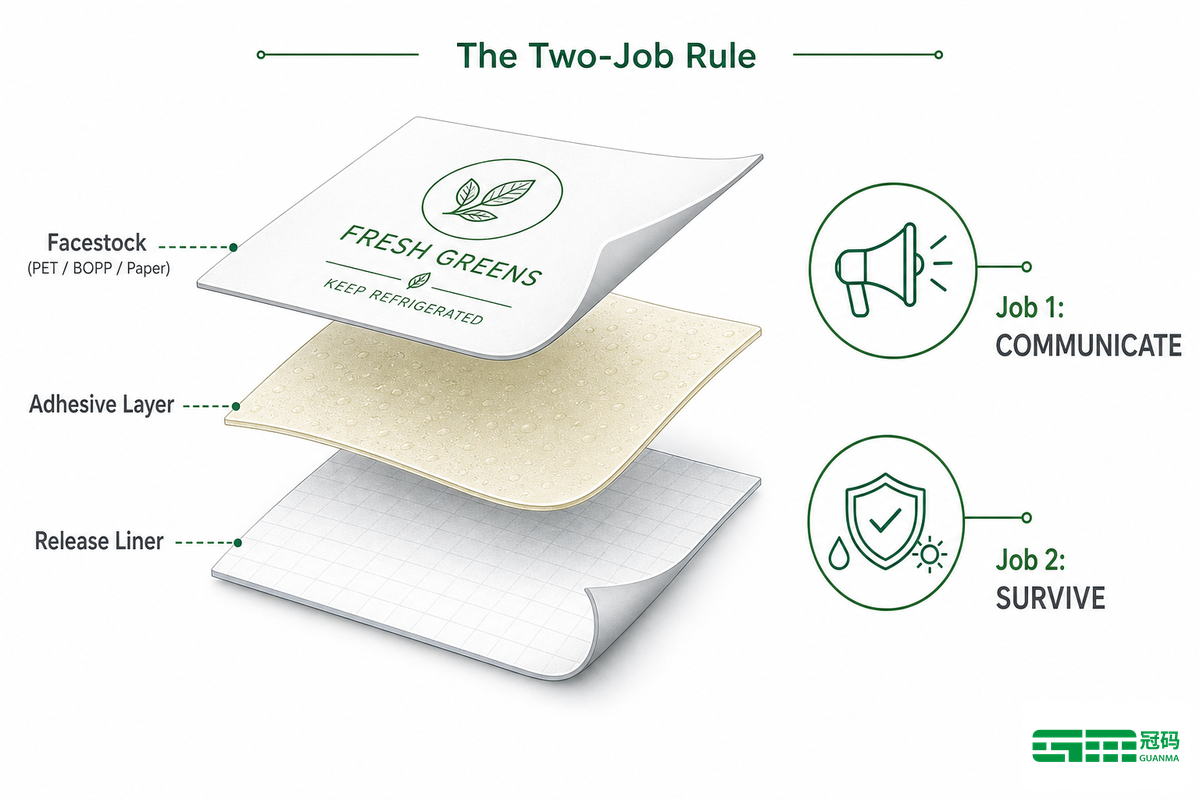
Nhãn bao bì thực phẩm là nhãn nhạy áp (còn gọi là nhãn tự dính) được dán lên bề mặt ngoài của vật chứa hoặc bao bì sản phẩm thực phẩm. Cấu trúc cơ bản có ba lớp được thiết kế: lớp mặt nhãn, keo và lớp đế chống dính.
Lớp mặt nhãn là lớp bề mặt nơi hình in xuất hiện – có thể là giấy, màng như BOPP hoặc PET. Keo gắn nhãn với bao bì, còn lớp đế chống dính đỡ nhãn và được bóc ra khi dán. Thiết kế in trên lớp mặt nhãn tất nhiên quan trọng, nhưng chính tổ hợp vật liệu và keo bên dưới mới quyết định hiệu quả của nhãn.
Quy tắc hai công việc cho nhãn thực phẩm. nhãn bao bì thực phẩm, do cần thiết, được yêu cầu hoàn thành hai nhiệm vụ đồng thời cùng một lúc.
Đầu tiên, họ chịu trách nhiệm truyền đạt thông tin bắt buộc-chi tiết như nhận dạng sản phẩm, danh sách thành phần, chất gây dị ứng, số lượng ròng và giá trị dinh dưỡng – mà người tiêu dùng và cơ quan quản lý mong đợi tìm thấy đây là “giao tiếp” công việc, và đối với hầu hết các sản phẩm thực phẩm chế biến sẵn, bao gồm ngũ cốc, đồ nướng, đồ hộp, đồ đông lạnh, đồ ăn nhẹ và đồ uống, đó là một yêu cầu pháp lý được thực thi bởi các cơ quan như Cục Quản lý Thực phẩm và Dược phẩm Hoa Kỳ.
Công việc thứ hai của họ, cũng quan trọng không kém, là “sống sót” công việc. điều này có nghĩa là nhãn phải duy trì độ bám dính, dễ đọc và tính toàn vẹn của nó bất chấp một loạt các thách thức môi trường, từ nhiệt độ lạnh của tủ lạnh đến điều kiện ẩm ướt, dầu của nhà bếp ướt át hoặc thậm chí nhiệt độ cao. một nhãn được thiết kế rực rỡ tách ra hoặc trở nên không đọc được trong tủ lạnh, ví dụ, không thực hiện được công việc của nó, cho dù bản in hấp dẫn đến đâu.
Tại sao lựa chọn vật liệu nhãn là tối quan trọng và một quyết định ngược dòng không thể thương lượng.Chọn vật liệu nhãn bao bì thực phẩm phù hợp là một trong những quyết định sớm nhất và quan trọng nhất mà thương hiệu thực phẩm, nhà sản xuất hoặc nhóm mua sắm có thể đưa ra.
Lựa chọn vật liệu không chỉ là một chi tiết của xưởng in; đó là quyết định chiến lược tác động đến mọi giai đoạn trong vòng đời của nhãn. Hướng dẫn này trình bày từng nhiệm vụ trong hai nhiệm vụ lõi cuộn mà nhãn bao bì thực phẩm phải thực hiện: nhiệm vụ ‘truyền đạt’ và nhiệm vụ ‘tồn tại’.
9 loại nhãn bao bì thực phẩm (theo chức năng)
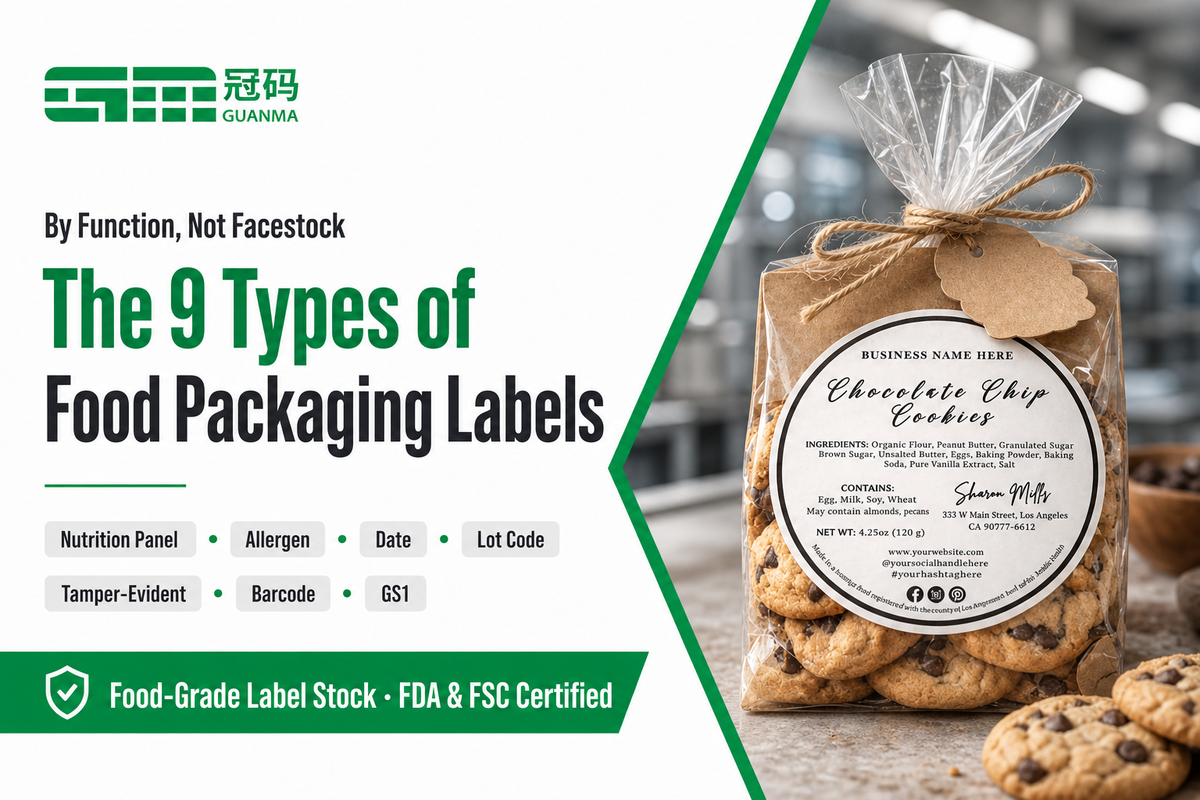
Hầu hết các hướng dẫn nhãn tổ chức các mặt hàng theo vật liệu hoặc theo loại thực phẩm. It’s far more helpful to organize food product labels by their chức năng – công việc mà mỗi nhãn thực hiện và quy tắc chi phối nó. Đây là Loại Nhãn Thực phẩm × Công việc × Quy tắc Quản tr bản đồ, danh sách của chúng tôi chín các loại nhãn sản phẩm thực phẩm khác nhau, mục đích của mỗi loại và cơ quan chính phủ nào quản lý nó.
| Loại nhãn | Công việc của nó | Quản lý bởi |
|---|---|---|
| Xây dựng thương hiệu /chính | Xác định sản phẩm và thương hiệu | Tuyên bố nhận dạng, FDA 21 CFR 101 |
| Bảng thông tin dinh dưỡng | Khai báo khẩu phần ăn, calo, chất dinh dưỡng | FDA 21 CFR 101,9 |
| Thành phần & chất gây dị ứng | Liệt kê các thành phần + cờ các chất gây dị ứng chính | FALCPA /Đạo luật NHANH HƠN (Hoa Kỳ) · Reg 1169/2011 (EU) |
| Mã ngày & lô | Lô truy xuất nguồn gốc tốt nhất trước/sử dụng + | Thương hiệu + Quy tắc đánh dấu ngày của EU |
| Mã vạch / GS1 | Quét bán lẻ (GTIN) | Tiêu chuẩn GS1 |
| Rõ ràng là giả mạo | Hiển thị nếu một gói đã được mở | Chính sách an toàn thương hiệu/nhà bán lẻ |
| Cân-giá | Trọng lượng + giá thay đổi ở quy mô bán lẻ | Quy tắc số lượng ròng (FPLA) |
| Khuyến mại / on-pack | Khiếu nại, mã QR, chiến dịch | Quy tắc chứng minh yêu cầu bồi thường |
| Tính bền vững /tái chế | Hướng dẫn xử lý (ví dụ: How2Recycle) | EU PPWR · các chương trình tự nguyện |
Ánh xạ kiểu thành quy tắc được biên dịch từ Quy định ghi nhãn thực phẩm của FDA (21 CFR 101) và Quy tắc thông tin thực phẩm của EU (Quy định 1169/2011).
Một nhãn vật lý thường sẽ thực hiện đồng thời một số chức năng; ví dụ: một nhãn chính duy nhất có thể chứa bảng thông tin dinh dưỡng, danh sách thành phần, mã ngày và mã vạch. Chỉ cần biết chức năng là gì sẽ cho phép bạn xác định quy tắc bạn cần tuân thủ – đây là lần cân nhắc đầu tiên trước khi chọn tài liệu hoặc quy trình in của bạn.
Những gì phải xuất hiện hợp pháp trên nhãn bao bì thực phẩm (Mỹ và EU)
Các nhà sản xuất thực phẩm thường tìm kiếm chính xác điều này. một nhãn thực phẩm đóng gói ở Hoa Kỳ sẽ cần phải bao gồm các mặt hàng bắt buộc sau đây theo Quy tắc dán nhãn thực phẩm của Cục Quản lý Thực phẩm và Dược phẩm Hoa Kỳ (21 CFR 101): tuyên bố về danh tính của thực phẩm, số lượng nội dung ròng, các thành phần được liệt kê theo thứ tự giảm dần theo trọng lượng, Bảng thông tin dinh dưỡng, tuyên bố về sự hiện diện của chất gây dị ứng, và tên và địa điểm kinh doanh của nhà sản xuất, nhà đóng gói hoặc nhà phân phối.
Tôi nên dán nhãn thực phẩm là gì?
Nhãn thực phẩm bán lẻ ở Hoa Kỳ cần tối thiểu sáu yếu tố: (1) a tuyên bố danh tính, (2) tuyên bố về trọng lượng tịnh hoặc thể tích, (3) danh sách đầy đủ các thành phần theo trọng lượng giảm dần, (4) tuyên bố về chất gây dị ứng, (5) bảng Thông tin Dinh dưỡng và (6) danh tính và địa chỉ của nhà sản xuất, nhà đóng gói hoặc nhà phân phối.
Các sản phẩm thịt và gia cầm thuộc thẩm quyền của Cơ quan Kiểm tra và An toàn Thực phẩm của Bộ Nông nghiệp Hoa Kỳ (USDA), cơ quan này yêu cầu yếu tố bắt buộc thứ sáu, chú thích kiểm tra và thường là các quy định bắt buộc bổ sung “tiêu chuẩn nhận dạng” trong số các tính năng nhãn bắt buộc. Các hoạt động tại nhà (tiểu bang-thực phẩm) có thể ngạc nhiên rằng luật ghi nhãn của tiểu bang của họ có thể sẽ yêu cầu tên, địa chỉ và số điện thoại của doanh nghiệp trực tiếp trên danh sách thành phần.
Tuyên bố về chất gây dị ứng là nguồn gốc phổ biến của các vấn đề về ghi nhãn.
Việc không khai báo các chất gây dị ứng (vấn đề ghi nhãn, không phải vấn đề hư hỏng hoặc vấn đề ô nhiễm) chiếm phần lớn các vụ thu hồi thực phẩm của FDA theo Chỉ số thu hồi năm 2024 của Sedgwick, trong đó xác định các chất gây dị ứng không được công bố là nguyên nhân hàng đầu của việc thu hồi thực phẩm của FDA. luật pháp Hoa Kỳ hiện công nhận chín chất gây dị ứng chính: sữa, trứng, cá, động vật có vỏ giáp xác, hạt cây, đậu phộng, lúa mì, đậu nành và vừng, mà các Đạo luật NHANH HƠN đã tạo ra chất gây dị ứng lớn thứ chín, cần phải dán nhãn kể từ ngày 1 tháng 1 năm 2023.
⚠️ Quan trọng: Mỹ ≠ EU
Nếu Quý khách dự định tiếp thị tại châu Âu, Quý khách sẽ cần một nhãn khác.
Quy định 1169/2011 của EU về thông tin thực phẩm tới người tiêu dùng yêu cầu khai báo 14 chất gây dị ứng chính (không phải chín), nêu bật các chất gây dị ứng trong các thành phần và yêu cầu QUID (tuyên bố thành phần định lượng), đánh dấu ngày bắt buộc và bảng Thông tin dinh dưỡng ở mặt sau của gói. một công thức duy nhất thường yêu cầu nhãn khác nhau cho mỗi thị trường.
Trong khi cổ phần không quyến rũ và cao, có hai những sai lầm thường được gắn cờ nhất từ USDA FSIS ghi nhãn: thất bại để đặt tên các thành phần theo tên chung của họ, và thất bại để đặt hàng các thành phần theo trọng lượng giảm dần. nếu bạn bán cho nhiều hơn một thị trường hoặc xuất khẩu, sử dụng của chúng tôi công cụ kiểm tra vùng tuân thủ nhãn thực phẩm để lập bản đồ ứng dụng của bạn theo các con đường của FDA, EU và GB.
Các Ngăn xếp tuân thủ nhãn thực phẩm 3 lớp
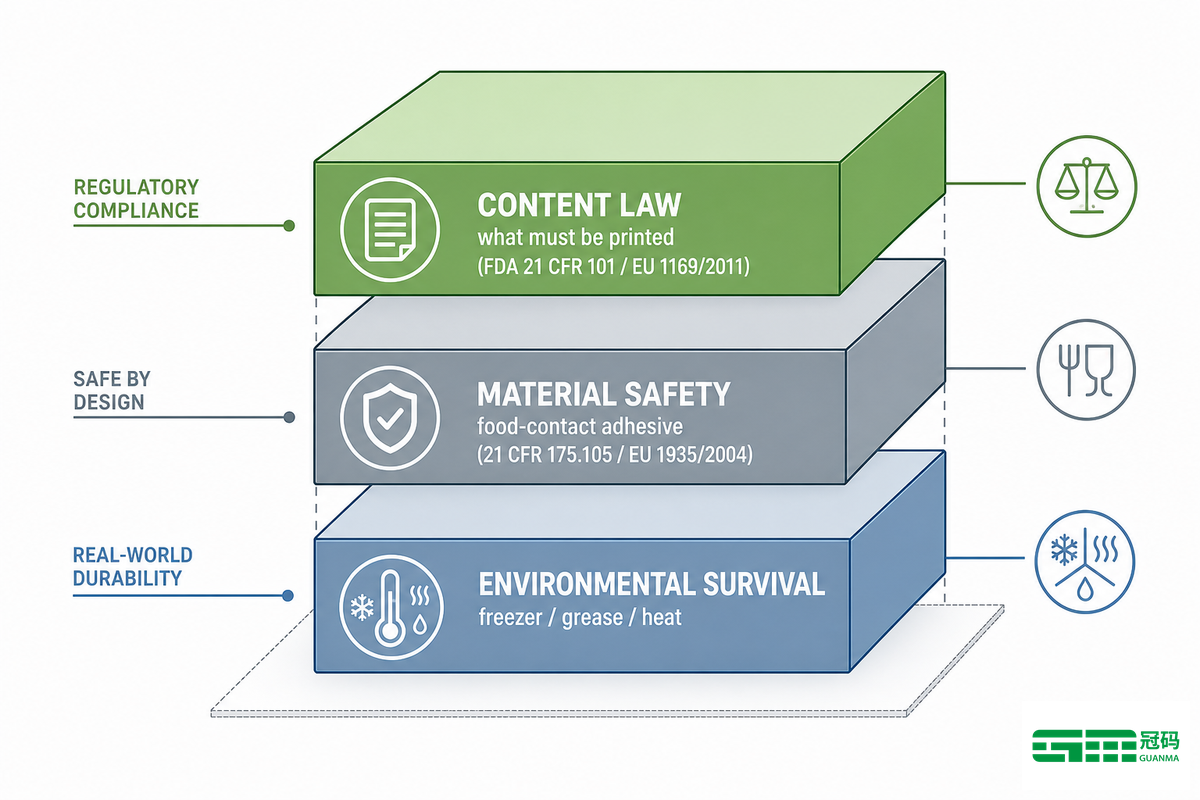
Sự nhầm lẫn về ghi nhãn thực phẩm thực sự bắt đầu bằng việc trả lời một câu hỏi có vẻ đơn giản, nhưng thực tế là ba câu hỏi: “Nhãn thực phẩm của tôi có an toàn không?”.Như bạn sẽ thấy bên dưới, việc tuân thủ nhãn thực phẩm 3 lớp Ngăn xếp tuân thủ nhãn thực phẩm cho thấy rõ rằng việc tuân thủ phụ thuộc vào việc đáp ứng đồng thời cả ba yêu cầu.
Ngăn xếp tuân thủ nhãn thực phẩm 3 lớp
- Luật nội dung (như đã đề cập trước đây).
- An toàn vật liệu.
- Sự sống còn của môi trường.
Nhãn bao bì thực phẩm có an toàn khi tiếp xúc trực tiếp với thực phẩm không?
Hầu hết các liên hệ nhãn là gián tiếp (không phải là một wrapper), nhưng sự khác biệt này làm cho một sự khác biệt lớn.Nó không phải là nhãn dán chính nó mà các nhà quản lý quan tâm nhưng chất kết dính, đặc biệt FDA 21 CFR 175.105 đối với Hoa Kỳ và Quy định (EC) 1935/2004 và (EU) 10/2011 đối với nhựa, để đảm bảo không có chất gây ô nhiễm chuyển sang thực phẩm. nhãn dán nhãn tiếp xúc thực phẩm trực tiếp thậm chí còn được quy định nhiều hơn do con đường di chuyển chất.
💡 Myth-buster: “food-grade”không phải là một chuyện
Thuật ngữ “nhãn cấp thực phẩm” có thể có nghĩa là một số điều. nhà cung cấp thường ngụ ý một vật liệu phù hợp để tiếp xúc trực tiếp với thực phẩm khi ý nghĩa của chúng là gián tiếp, đó là trường hợp của hầu hết các nhãn thực phẩm. do đó, câu hỏi chính xác là liệu chất kết dính có phù hợp với ứng dụng được chỉ định hay không, đáp ứng 21 CFR 175.105 hoặc tương đương EU/GB cho tiếp xúc gián tiếp.
“Hầu hết các câu hỏi ‘đây có an toàn với thực phẩm không?’ mà chúng tôi thực hiện là những câu hỏi thực sự về chất kết dính.Đối với một lọ hoặc nhãn túi, thực phẩm không bao giờ chạm trực tiếp vào chất kết dính, điều quan trọng là chất kết dính đủ điều kiện để tiếp xúc gián tiếp và phù hợp với bề mặt và nhiệt độ mà nó phải giữ.”
Tại sao Nhãn Thực phẩm Thất bại: Tủ đông, Độ ẩm, Mỡ & Nhiệt
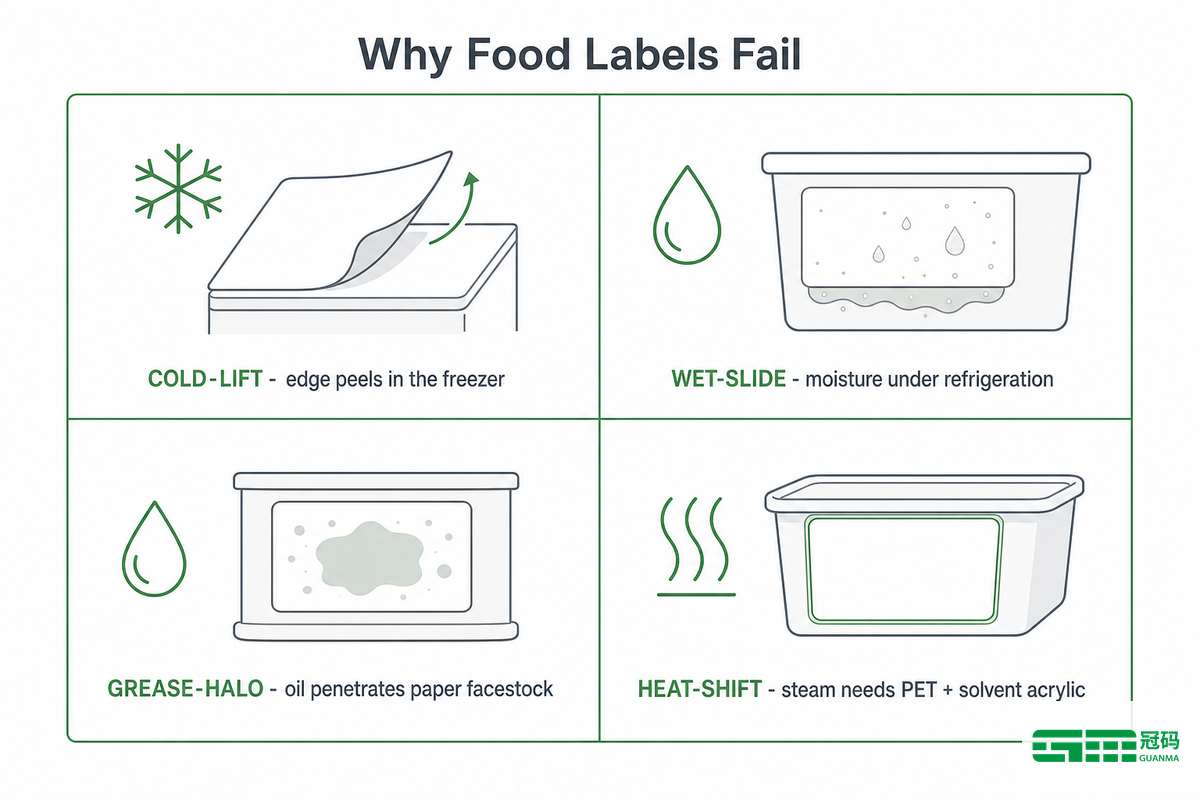
Khi nhãn thất bại trong lĩnh vực này, nó thường ở Lớp 3, sự sống còn của môi trường inhd nhãn giữ nội dung của nó và vượt qua kiểm tra vật liệu của nó, nhưng tủ đông, nồi chiên hoặc rửa trôi đánh bại nó. chẩn đoán các điều kiện môi trường cụ thể mà nhãn sẽ phải đối mặt là chìa khóa để xác định các yêu cầu vật liệu của nó, bởi vì mỗi chế độ lỗi ánh xạ tới một môi trường khác nhau và một nguyên nhân vật liệu khác nhau.
| Thất bại | Môi trường | Nguyên nhân vật chất |
|---|---|---|
| Nâng cạnh /cold-lift | Tủ đông, dây chuyền lạnh | Lớp mặt nhãn bằng giấy hút ẩm; keo acrylic đa dụng mất độ bám dính ở nhiệt độ dưới khoảng +5°C. |
| Trượt ướt/phết tế bào | Ngưng tụ, tắm nước đá, rửa trôi | Lớp mặt nhãn không chống nước; mực không chịu ẩm. |
| Halo mỡ | Thực phẩm bánh, chiên & dầu | Dầu thấm vào lớp mặt nhãn giấy không phủ |
| Sự thay đổi nhiệt | Thanh trùng bằng hơi nước, đổ đầy nóng | Lớp mặt nhãn/keo không phù hợp với nhiệt độ sử dụng; cần màng và keo chịu nhiệt cao. |
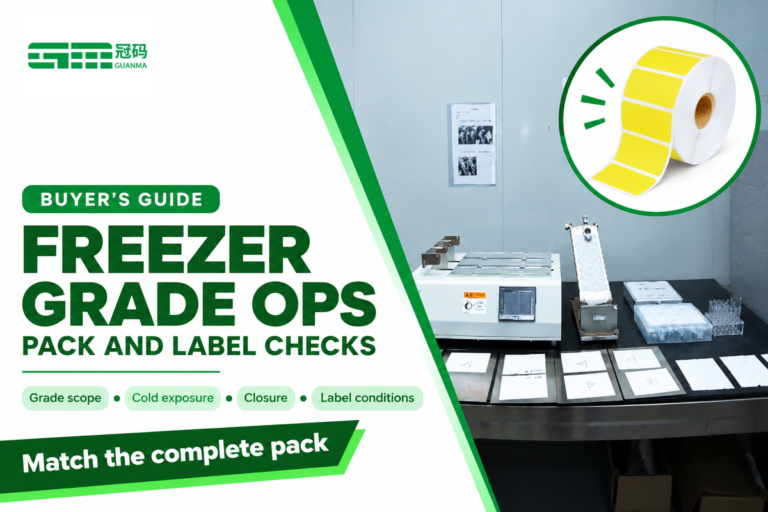
Dù là tủ đông hay dầu mỡ, vấn đề ở lớp này thường do vật liệu chứ không phải in ấn. Ví dụ, sản phẩm chuỗi lạnh, sữa và đồ uống thường dùng nhãn BOPP hoặc PET với keo thiết kế cho môi trường đó – chúng chống lại hư hại mà nhãn giấy tráng phủ sẽ gặp, trong khi nhãn dành cho lưu trữ thông thường có thể tách lớp khi làm lạnh hoặc dán trên túi mềm rồi hỏng hoàn toàn. Túi đứng và các màng năng lượng bề mặt thấp khác đặc biệt nhạy với việc chọn sai loại keo. Mục đích chính của một ma trận quyết định facestock-and-dính, và của chúng tôi vật liệu nhãn Máy tính TCO có thể giúp định lượng chi phí thực tế của một lựa chọn không đúng.
Làm thế nào Nhãn Bao bì Thực phẩm được In & Áp dụng
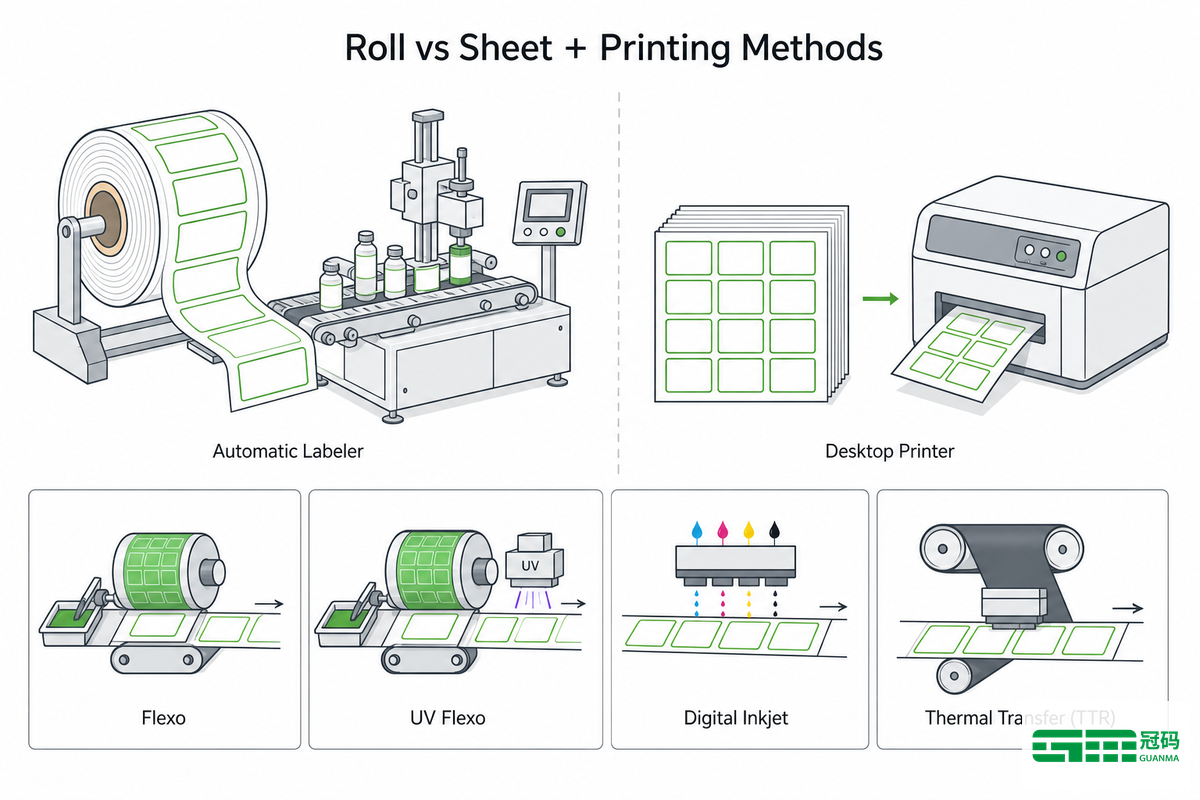
Một khi bạn đã có vật liệu xuống, hai lựa chọn thực tế vẫn còn: yếu tố hình thức và quy trình in. cả hai đều có tác động nhiều hơn đến chi phí và thời gian quay vòng hơn hầu hết người mua lần đầu sẽ đoán, và cả hai nên được giải quyết trước khi tác phẩm nghệ thuật được hoàn thiện, bởi vì lớp phủ một nhu cầu báo chí được chọn tại thời điểm đặt hàng (lệnh) (lệnh) (lệnh) không phải tại máy.
Sự khác biệt giữa nhãn cuộn và nhãn tờ là gì?
Nhãn cuộn có lớp lót liên tục và được thiết kế để chạy qua thiết bị ghi nhãn tự động, tốc độ cao – mã lực để sản xuất thực phẩm số lượng lớn. Nhãn tấm được cắt sẵn trên tấm nền và dành cho máy in phun hoặc máy in laser để bàn – một lựa chọn tuyệt vời cho các lần chạy ngắn, khởi động và in ấn nội bộ. Tóm lại: cuộn là về thông lượng; tờ là về tính linh hoạt và mức tối thiểu thấp.
Guanma có thể cung cấp vật liệu nhãn tự dính ở cả dạng cuộn và dạng tờ, cắt từ cùng vật liệu mẹ.
Tiếp theo là quy trình in, sau lớp mặt nhãn và lớp phủ.
Để sản xuất cuộn và khả năng tương thích tối đa, in flexo (bao gồm cả flexo UV) là tiêu chuẩn của bạn. Máy in kỹ thuật số, dạng nước hoặc UV, là lựa chọn thông minh cho đơn hàng ngắn và ứng dụng dữ liệu biến đổi nhờ ít lãng phí; hãy dùng vật liệu có phủ cho in kỹ thuật số để mực bám. Nếu cần nhãn cho mã ngày hoặc mã vạch, lựa chọn tốt nhất là truyền nhiệt (TTR), cần lớp mặt nhãn có phủ.
Mỗi quy trình in yêu cầu một lớp phủ cụ thể, vì vậy việc lựa chọn lớp phủ nên được thực hiện khi bạn đặt hàng chứ không phải trên máy in. (Đọc thêm trong của chúng tôi Hướng dẫn về màng nhãn BOPP).
Một vài cân nhắc thực tế cuối cùng.
Một phần là thiết kế đồ họa và thiết kế nhãn: hầu hết nhà gia công nhãn in nhãn thực phẩm muốn nhận tệp PDF sẵn sàng in, với phông chữ đã chuyển thành đường viền và mọi logo ở dạng vector, và đầu ra chất lượng cao bắt đầu từ việc chọn đúng vật liệu nhãn cùng các tệp sạch. Họ thường cung cấp mẫu miễn phí để giúp người mua lần đầu căn nội dung theo hình dạng phần bế. Dù Quý khách in nhãn thực phẩm tùy chỉnh hay dùng mẫu, hãy chừa đủ chỗ cho mọi chi tiết quan trọng đã thảo luận trước đó — danh sách thành phần và khối thông tin chất gây dị ứng chiếm nhiều không gian hơn các thương hiệu thường phân bổ.
Thứ hai là tùy chỉnh so với vật liệu sẵn có: nhiều nhà sản xuất mới thử công thức mới sẽ bắt đầu bằng vật liệu nhãn tự dính trống, có sẵn trước khi nâng cấp sang ghi nhãn tùy chỉnh hoàn toàn. Các đơn vị gia công in nhãn dạng cuộn báo giá thời gian hoàn thành nhanh, nhưng công việc in tùy chỉnh vẫn phụ thuộc vào vật liệu bền và lớp phủ phù hợp — điều đó quan trọng hơn nhiều so với máy in. Trên toàn ngành thực phẩm, từ thương hiệu bán lẻ đến dịch vụ thực phẩm, giải pháp nhãn tốt nhất bắt đầu từ vật liệu, không phải lượt in.
Cách chọn nhãn bao bì thực phẩm phù hợp: Danh sách rút gọn gồm 5 câu hỏi
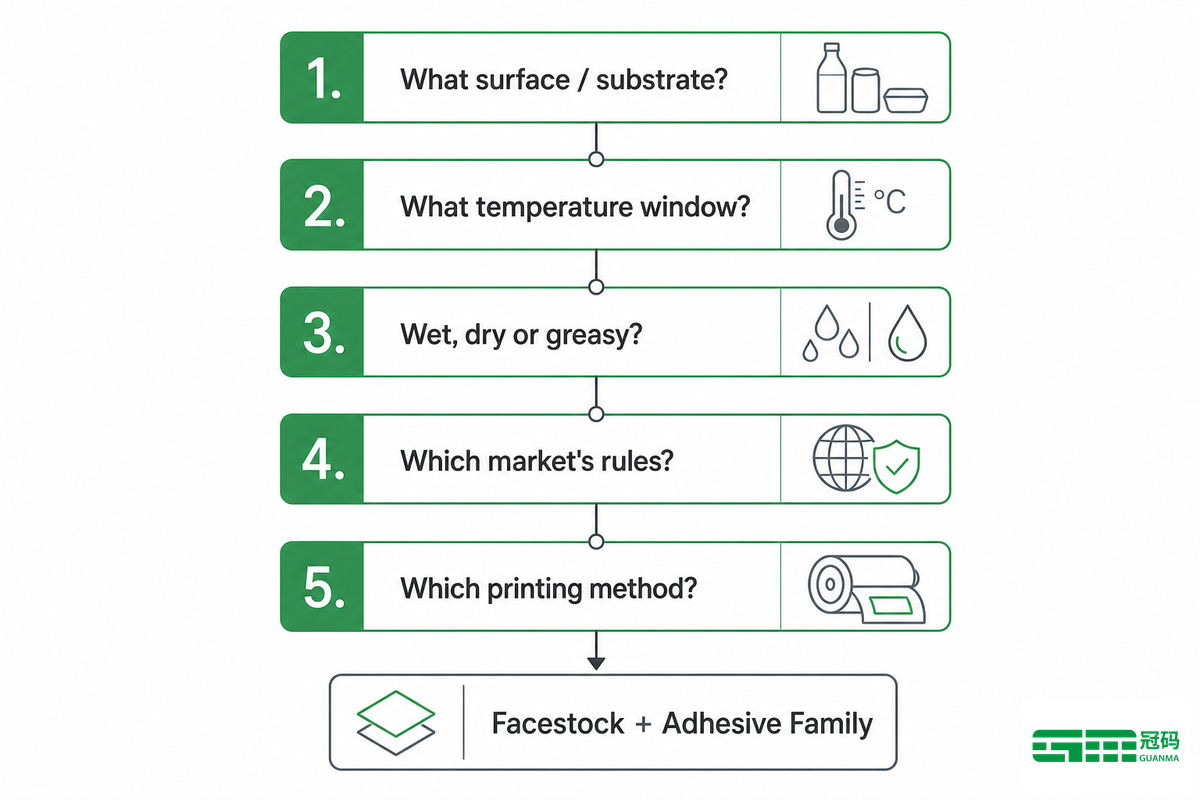
Bạn không cần phải có bằng cấp về khoa học vật liệu để bắt đầu tập trung vào lựa chọn tốt nhất cho sản phẩm của bạn. chỉ cần tự hỏi mình năm câu hỏi này, theo thứ tự. lĩnh vực khả năng của bạn sẽ thu hẹp đáng kể nhanh chóng.
Chúng tôi gọi nó là The Danh sách rút gọn nhãn thực phẩm 5 câu hỏi.
Danh sách rút gọn về nhãn thực phẩm gồm 5 câu hỏi
- Bề mặt: Loại bề mặt nào nhãn sẽ dính vào – glass, PET, HDPE, bìa cứng, màng năng lượng thấp?
- Nhiệt độ: Phạm vi nhiệt độ mà nhãn sẽ gặp phải là bao nhiêu – tủ đông, môi trường xung quanh, thanh trùng, tất cả những điều trên?
- Tiếp xúc: nó ướt, khô hoặc nhờn trong dịch vụ?
- Thị trường: Sản phẩm của bạn sẽ phải tuân theo những quy định ghi nhãn nào – FDA, EU 1169/2011, GB, v.v.?
- In ấn: Bạn muốn chạy loại máy ép nào trên – flexo, truyền kỹ thuật số hoặc truyền nhiệt và ở định dạng cuộn hoặc tờ?
Chỉ riêng những câu trả lời này sẽ dẫn bạn đến đúng họ facestocks (ví dụ: giấy cho các sản phẩm khô trong điều kiện môi trường xung quanh, BOPP hoặc PET cho các sản phẩm trong điều kiện ẩm ướt, đông lạnh hoặc nóng), chất kết dính thích hợp (vĩnh viễn, có thể tháo rời, rửa sạch) và hệ số hình thức chính xác. sau đó, bước tiếp theo hiệu quả nhất là đề xuất vật liệu được cá nhân hóa được hỗ trợ bởi một mẫu – chỉ cần sử dụng của chúng tôi bộ chọn lớp mặt nhãn và keo công cụ để thu hẹp các tùy chọn của bạn xuống, sau đó đưa vật liệu vào thử nghiệm.
Nhãn thực phẩm bền vững: Điều gì đang thay đổi vào năm 2026
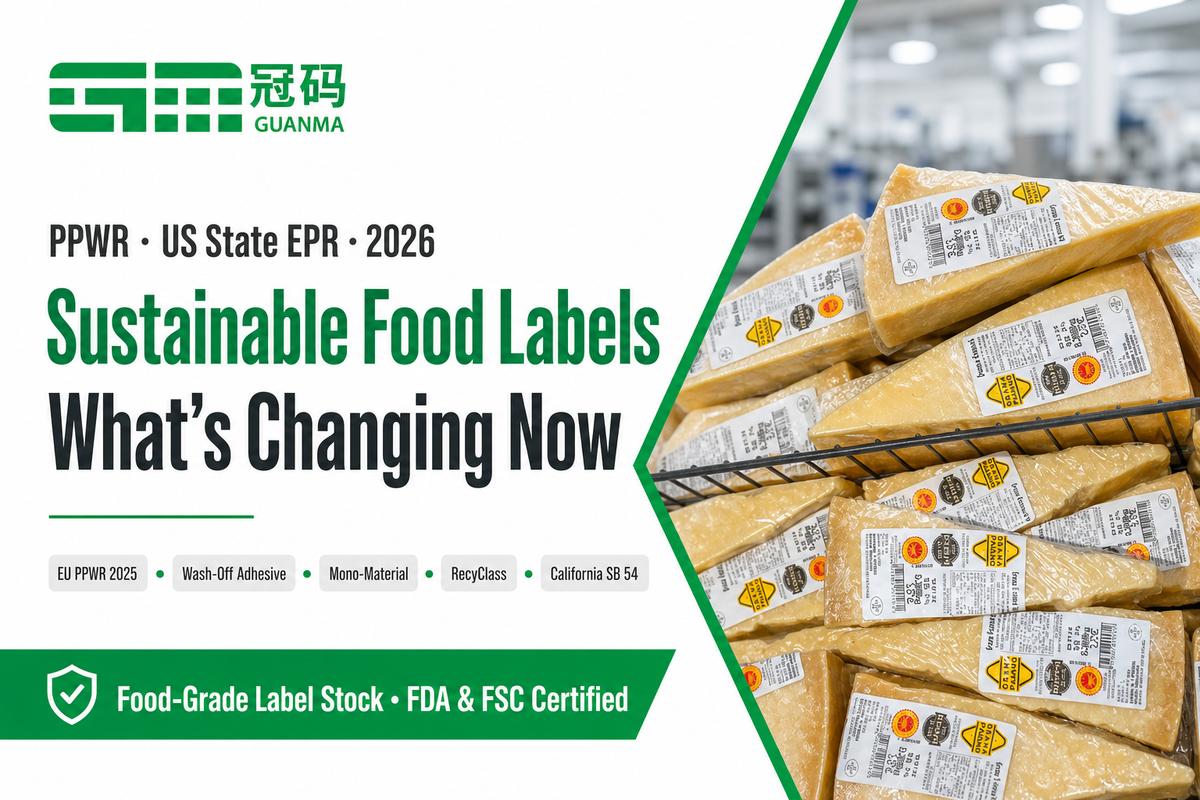
Ngay bây giờ, xu hướng ghi nhãn bao bì thực phẩm lớn nhất không phải là mỹ phẩm, nó có quy định và nó về việc nhãn bao bì bị kéo vào luật tái chế. Một quy định của EU được thông qua năm 2025 và thực hiện năm 2026 được gọi là Quy định về bao bì và chất thải bao bì (PPWR) – Quy định (EU) 2025/40 – đã quy định rằng từ năm 2030, tất cả bao bì đưa ra thị trường ở EU phải tuân thủ thiết kế để tái chế và phải có thể tái chế về mặt kỹ thuật, với nhãn đạt được mức độ cụ thể khả năng tái chế không còn được coi là có thể tái chế. Nếu sử dụng keo không chính xác và vật liệu mặt không chính xác, toàn bộ chai PET sẽ không thể được phân loại và phân loại là có thể tái chế và do đó, nhãn bao bì không trở thành yếu tố sáng tạo mà là vấn đề tuân thủ.
Áp lực đó đang định hình lại vật liệu. phạm vi thương mại Labelexpo 2024 và 2025 cho thấy sự thương mại hóa nhanh chóng của chất kết dính rửa sạch, cho phép bóc sạch một dải nhãn khỏi chai PET trong suốt quá trình tái chế; cấu trúc đơn vật liệu và lớp mặt nhãn PCR. Ở cấp tiểu bang tại U.S., luật EPR, như SB 54 của California, tạo áp lực bằng cách áp dụng phí bao bì.
Với người mua, việc cần làm rất rõ ràng: nếu bán vào EU hoặc bất kỳ bang nào đã ban hành chương trình EPR, hãy yêu cầu nhà cung cấp vật liệu cung cấp ngay vật liệu nhãn tự dính có thể rửa trôi, tương thích với RecyClass, đồng thời xác nhận bằng văn bản để có đủ thời gian và tránh phải thay đổi vội vàng trước thời hạn năm 2030. (Dự báo quy mô thị trường chỉ mang tính định hướng; các mốc quy định là những ràng buộc thực tế.)
Câu hỏi thường gặp
Nhãn bao bì thực phẩm phải bao gồm những gì?
Xem Câu Trả Lời
Tại Hoa Kỳ, nhãn thực phẩm bán lẻ phải bao gồm tuyên bố nhận dạng, số lượng thực phẩm, danh sách thành phần theo thứ tự giảm dần theo trọng lượng, thông tin về chất gây dị ứng bao gồm chín chất gây dị ứng chính, bảng Thông tin Dinh dưỡng cũng như tên và địa điểm kinh doanh của nhà sản xuất, nhà đóng gói hoặc nhà phân phối. Thịt và gia cầm thêm chú thích kiểm tra USDA. EU yêu cầu các yếu tố cần thiết tương tự cộng với 14 chất gây dị ứng có thể khai báo và đánh dấu ngày bắt buộc.
Nhãn bao bì thực phẩm có an toàn khi tiếp xúc trực tiếp với thực phẩm không?
Xem Câu Trả Lời
Gần như mọi nhãn bao bì thực phẩm đều là tiếp xúc thực phẩm gián tiếp — chúng nằm trên bao bì, không phải thực phẩm. Thành phần được quản lý là keo, tại Hoa Kỳ được điều chỉnh bởi FDA 21 CFR 175.105 cho tiếp xúc gián tiếp. Tiếp xúc thực phẩm trực tiếp, như nhãn dán lên nông sản tươi, theo lộ trình di trú chất riêng và cần thử nghiệm cụ thể, được cung cấp theo yêu cầu thay vì vật liệu tiêu chuẩn.
Sự khác biệt giữa nhãn cuộn và nhãn tờ là gì?
Xem Câu Trả Lời
Nhãn cuộn cho ăn máy dán nhãn tốc độ cao tự động và phù hợp với sản xuất lớn hơn chạy; nhãn tấm được cắt sẵn cho máy in phun hoặc máy in laser để bàn và phù hợp với thời gian ngắn, khởi động và công việc DIY. vật liệu có thể giống hệt nhau inh sự khác biệt là định dạng và cách nhãn được áp dụng. chọn cuộn cho thông lượng và tờ cho tính linh hoạt và đơn đặt hàng tối thiểu thấp.
Nhãn bao bì thực phẩm có cần phải chống thấm nước hoặc an toàn với tủ đông không?
Xem Câu Trả Lời
Chỉ khi môi trường yêu cầu. Một lọ được bảo quản khô ở nhiệt độ thường có thể dùng nhãn giấy tráng phủ, nhưng các sản phẩm đông lạnh, bảo quản lạnh, tiếp xúc với nước hoặc dầu cần lớp mặt nhãn bằng màng chống nước và loại keo phù hợp với nhiệt độ sử dụng — nếu không, nhãn có thể bong mép hoặc bị lem.
“chất kết dính cấp thực phẩm” nghĩa là gì, và nhãn của tôi có cần nó không?
Xem Câu Trả Lời
“Cấp thực phẩm” được dùng lỏng lẻo, vì vậy hãy gắn nó với một quy định. Với nhãn bao bì thông thường — lọ, chai, túi hoặc hộp — thực phẩm không chạm vào keo, nên điều cần có là keo tuân thủ FDA 21 CFR 175.105 đối với tiếp xúc thực phẩm gián tiếp (hoặc tương đương EU/GB). Chỉ nhãn dán trực tiếp lên thực phẩm mới cần keo tiếp xúc trực tiếp, một thông số khác và nghiêm ngặt hơn. Khi yêu cầu vật liệu, hãy xin tuyên bố tuân thủ cụ thể thay vì chữ “cấp thực phẩm,” vì hai cách hiểu có thể rất khác theo nhà cung cấp. Nhà cung cấp thực sự dùng thuật ngữ này theo cả hai nghĩa: có nơi là an toàn tiếp xúc trực tiếp, có nơi là tuân thủ tiếp xúc gián tiếp; vì vậy số quy định là nội dung rõ ràng duy nhất để đưa vào thông số mua hàng.
Nhãn thực phẩm có thể tái chế hoặc rửa sạch có được pháp luật yêu cầu không?
Xem Câu Trả Lời
Ngày càng đúng — một cách gián tiếp. Quy tắc PPWR của EU yêu cầu mọi bao bì phải có thể tái chế vào năm 2030; nhãn cản trở tái chế có thể làm toàn bộ bao bì mất điều kiện, thúc đẩy keo có thể rửa trôi và nhãn đơn vật liệu. Luật EPR cấp bang của Hoa Kỳ bổ sung phí bao bì gắn với khả năng tái chế. Nếu bán vào các thị trường đó, vật liệu nhãn tự dính tương thích tái chế đang trở thành yêu cầu thực tế.
Speccing một nhãn bao bì thực phẩm?
Guanma cũng cung cấp màng thực phẩm PET, BOPP, giấy tổng hợp, giấy tráng có chứa chất kết dính được chứng nhận FDA 21 CFR 175.105 – được cắt theo định dạng của bạn, với các cuộn mẫu có sẵn để dùng thử trên báo chí của riêng bạn.
Tại sao chúng tôi viết điều này
Là nhà sản xuất vật liệu nhãn tự dính, hầu hết câu hỏi về nhãn thực phẩm mà chúng tôi nhận được không phải về thiết kế mà là keo nào tuân thủ tiếp xúc thực phẩm gián tiếp và lớp mặt nhãn nào chịu được tủ đông hoặc chảo chiên. Hướng dẫn này tách câu hỏi luật ghi nhãn (bạn phải in gì) khỏi câu hỏi vật liệu (điều gì giữ nhãn bám và tuân thủ), vì trộn lẫn hai vấn đề là nơi các thương hiệu thực phẩm thường mắc kẹt. Được đội ngũ kỹ thuật Guanma rà soát.
Tài liệu tham khảo & Nguồn
- Dinh dưỡng, Ghi nhãn Thực phẩm và Thực phẩm Quan trọng (21 CFR 101)Cục Quản lý Thực phẩm và Dược phẩm Hoa Kỳ
- Đạo luật NHANH HƠN: Mè là chất gây dị ứng thực phẩm chính thứ chínCục Quản lý Thực phẩm và Dược phẩm Hoa Kỳ
- 21 CFR 175.105, Chất kết dính (tiếp xúc gián tiếp với thực phẩm)Bộ luật điện tử của các quy định liên bang của Hoa Kỳ
- 10 Lỗi ghi nhãn phổ biến nhất và cách tránh chúngDịch vụ Kiểm tra và An toàn Thực phẩm USDA
- Thông tin thực phẩm bắt buộc, Quy định (EU) 1169/2011Ủy ban Châu Âu
- Quy định về bao bì và chất thải bao bì (PPWR)Ủy ban Châu Âu, Môi trường
- Thu hồi ghi nhãn thực phẩm: Dữ liệu về chất gây dị ứng không được công bố năm 2024Trustwell (trích dẫn Chỉ số thu hồi Sedgwick)