ติดต่อกับกวนมา

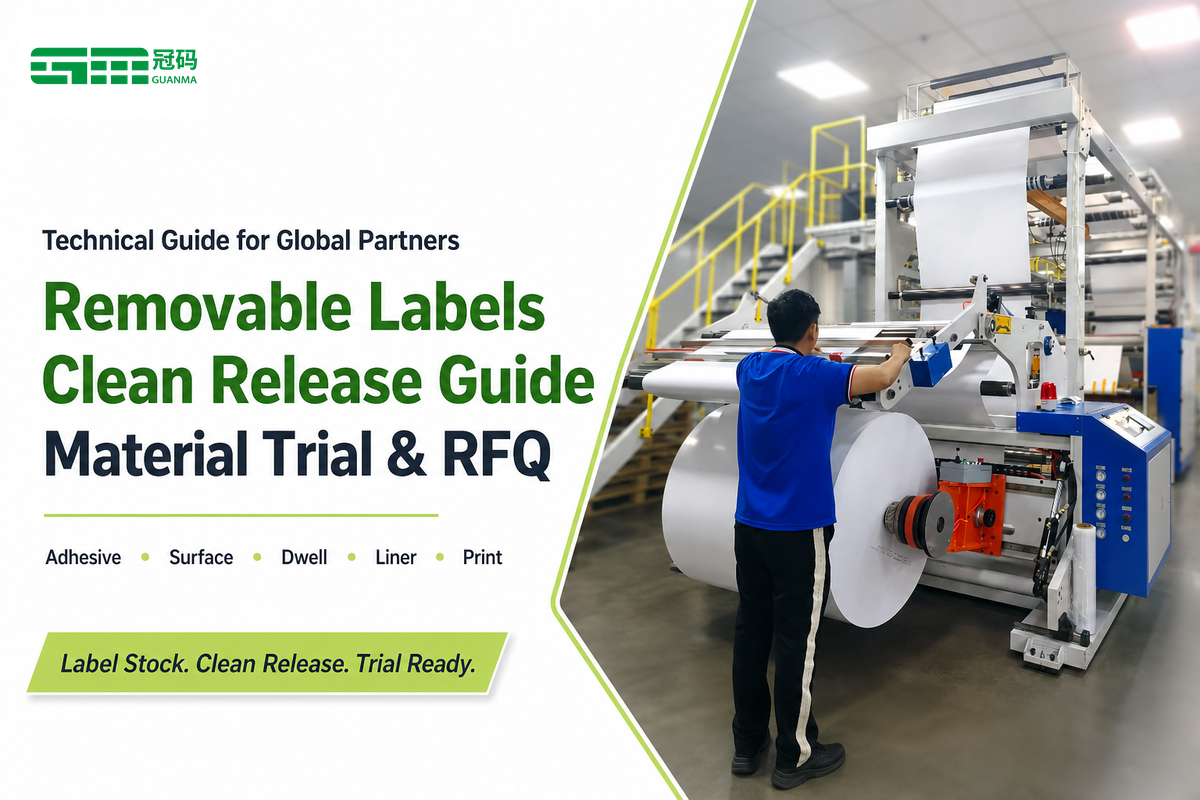
ฉลากแบบถอดได้คือโครงสร้างฉลากที่ไวต่อแรงกดซึ่งมีไว้สําหรับระยะเวลาการใช้งานที่กําหนดและเหตุการณ์การถอดที่ระบุ.
อัปเดตเมื่อเดือนกรกฎาคม 2026
ข้อมูลจําเพาะด่วน
| การใช้งานเบื้องต้น | การระบุชั่วคราว โปรโมชั่น รอบสินค้าคงคลัง และขั้นตอนการทํางานของคอนเทนเนอร์ที่นํากลับมาใช้ใหม่ได้ |
| เครื่องมือการตัดสินใจ | การ์ดทดลองกําจัดสิ่งสะอาด 7 สนาม |
| ตัวแปรที่สําคัญ | พื้นผิว สภาพพื้นผิว การอยู่อาศัย อุณหภูมิ การดําเนินการถอด ข้อกําหนดในการพิมพ์ เกณฑ์การยอมรับ |
| ขอบเขตขอบเขต | ไม่ใช่แนวทางสําหรับการตัดสินใจในการปฏิบัติตามข้อกําหนดเกี่ยวกับกาวที่มีความสําคัญด้านความปลอดภัย เคมีอันตราย เครื่องหมายควบคุมบังคับ หรือการสัมผัสกับอาหาร |
ป้ายที่ถอดออกได้ ไม่ได้เป็นเพียงสติกเกอร์แทคต่ํา ในการตั้งค่า B2B พวกเขาเป็นโครงสร้างฉลากที่ไวต่อแรงกดที่เลือกให้ถือผ่านระยะเวลาการจัดการที่กําหนดไว้แล้วปล่อยภายใต้เงื่อนไขที่ระบุไว้ ถามแทน: “โครงสร้างที่แน่นอนนี้ลบออกจากวัสดุพิมพ์นี้หลังจากเวลาพักนี้ในสภาพแวดล้อมนี้โดยใช้การดําเนินการลบนี้หรือไม่?”
คําตอบโดยตรง: ฉลากที่ถอดออกได้เป็นฉลากที่ไวต่อแรงกดซึ่งออกแบบมาเพื่อการใช้งานชั่วคราวและเหตุการณ์การกําจัดที่มีการควบคุม การปลดปล่อยที่สะอาดขึ้นอยู่กับสารตั้งต้นที่อยู่อาศัยและสิ่งแวดล้อมดังนั้นจึงต้องได้รับการตรวจสอบความถูกต้องบนบรรจุภัณฑ์หรือพื้นผิวจริงก่อนการใช้งานเชิงพาณิชย์.
ประเด็นสําคัญ
- “ถอดออกได้” คือ เงื่อนไขการใช้งานตามเป้าหมายไม่ใช่การรับประกันไร้สารตกค้างสําหรับทุกพื้นผิว.
- การทดสอบแรงลอกเป็นเครื่องมือในการวัด พวกเขาไม่รับรองว่าฉลากสามารถถอดออกได้หรือเป็นไปตามข้อกําหนด.
- การกําจัดมือที่สะอาด ความสามารถในการรีไซเคิล ความสามารถในการอ่านบาร์โค้ด และการอนุมัติการสัมผัสอาหารเป็นคําถามด้านประสิทธิภาพที่แยกจากกัน.
- บทสรุปการทดลองที่สมบูรณ์นี้ให้คําจํากัดความความสําเร็จเดียวกันกับการจัดซื้อจัดจ้าง QA และซัพพลายเออร์วัสดุ.
ป้ายที่ถอดออกได้คืออะไร และการกําจัดที่สะอาดหมายถึงอะไร?
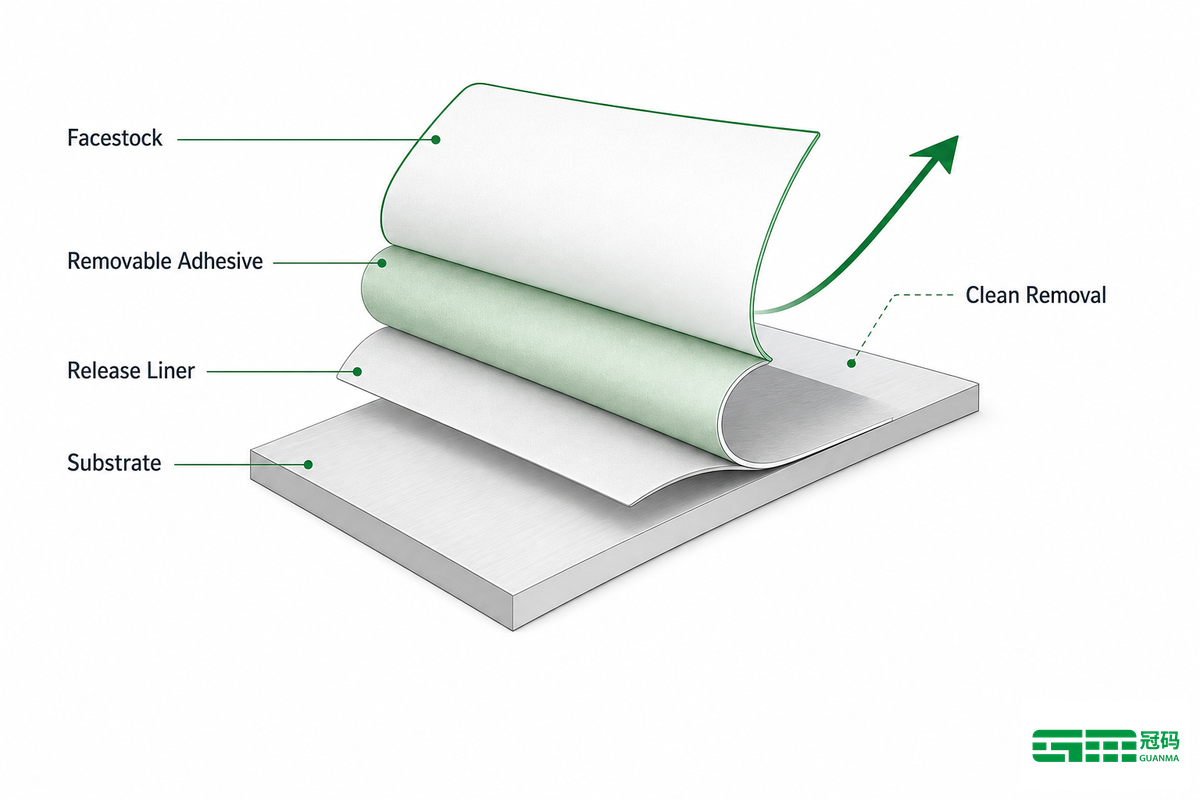
สําหรับการประยุกต์ใช้การผลิตบรรจุภัณฑ์ความเสี่ยงคือการอนุมัติฉลากจากคําอธิบายทั่วไปเนื่องจากพฤติกรรมของพื้นผิวเปลี่ยนผลลัพธ์ ด้วย Guanma วัสดุพิมพ์จริงและตัวอย่างสรุปสามารถวางกรอบการทดลองวัสดุได้ การสังเกต 20 นาทีและ 24 ชั่วโมงทําให้หน้าต่างการจัดการชัดเจนแทนที่จะสันนิษฐาน.
ฉลากที่ถอดออกได้คือโครงสร้างฉลากที่มีกาวไวต่อแรงกดซึ่งมีจุดประสงค์เพื่อรักษาการยึดเกาะที่เป็นประโยชน์สําหรับระยะเวลาที่วางแผนไว้จากนั้นลอกออกด้วยผลลัพธ์ที่ยอมรับได้บนพื้นผิวที่ระบุ “ทําความสะอาด” โดยปกติหมายถึงไม่มีการถ่ายโอนกาวที่ยอมรับไม่ได้การทําเครื่องหมายพื้นผิวหรือความเสียหายภายใต้เงื่อนไขการทดสอบที่ตกลงกันไว้ไม่ได้หมายความว่าผลลัพธ์เดียวกันจะเกิดขึ้นกับพลาสติกทุกชิ้นเคลือบกระดาษแข็งหรือภาชนะแก้ว.
การวิจัยการทดสอบการลอกของ NIST เป็นเครื่องเตือนใจที่มีประโยชน์ว่าพฤติกรรมของกาวที่ไวต่อแรงกดเปลี่ยนแปลงไปตามตัวแปรต่างๆ เช่น พลังงานพื้นผิว ความหยาบ อุณหภูมิ และอัตราการลอก นั่นเป็นเหตุผลที่คําอธิบายฉลากทั่วไปเป็นเพียงจุดเริ่มต้นเท่านั้น ผู้ซื้อที่ต้องการฉลากกําหนดราคาชั่วคราวบนกระจกอาจต้องการโครงสร้างที่แตกต่างจากผู้ซื้อที่ระบุโท้ตโพลีเอทิลีน กล่องเคลือบ หรืออุปกรณ์ทาสีด้าน หากทีมงานยังคงตัดสินใจเลือกระหว่างรูปแบบที่ไวต่อแรงกดและกาวเปียก ให้เปรียบเทียบตัวเลือกระบบฉลากก่อนที่จะถือว่าการถอดออกเป็นปัญหาเฉพาะกาว: ฉลากที่ไวต่อแรงกดเทียบกับฉลากที่ใช้กาว.
ป้ายที่ถอดออกได้ใช้สําหรับอะไร?
การใช้งานทั่วไปรวมถึงการกําหนดราคาโปรโมชั่นรอบสินค้าคงคลังสั้นการติดฉลากผลิตภัณฑ์ชั่วคราวภาชนะบรรจุที่ใช้ซ้ําได้การระบุไฟล์หรือสินทรัพย์และฉลากตําแหน่งที่ควรหายไปหลังจากขั้นตอนกระบวนการ พวกเขาเป็นค่าเริ่มต้นที่ไม่ดีเมื่อฉลากต้องยังคงอ่านได้ตลอดชีวิตของผลิตภัณฑ์อันตรายเครื่องหมายควบคุมหรืองานระบุตัวตนที่ให้บริการระยะยาว ในกรณีเหล่านั้นข้อกําหนดการเก็บรักษาเกิดขึ้นก่อนการปล่อยที่สะอาด.
💡 การทดสอบผู้ซื้อ: ขออายุการใช้งานฉลากที่จําเป็นและเหตุการณ์การกําจัดที่จําเป็นในประโยคเดียวกัน หากคําตอบใดคําตอบหนึ่งคลุมเครือเนื้อหาสรุปไม่พร้อม.
สมการการปลดปล่อยที่สะอาด: กาว พื้นผิว การอยู่อาศัย อุณหภูมิ และการกําจัด
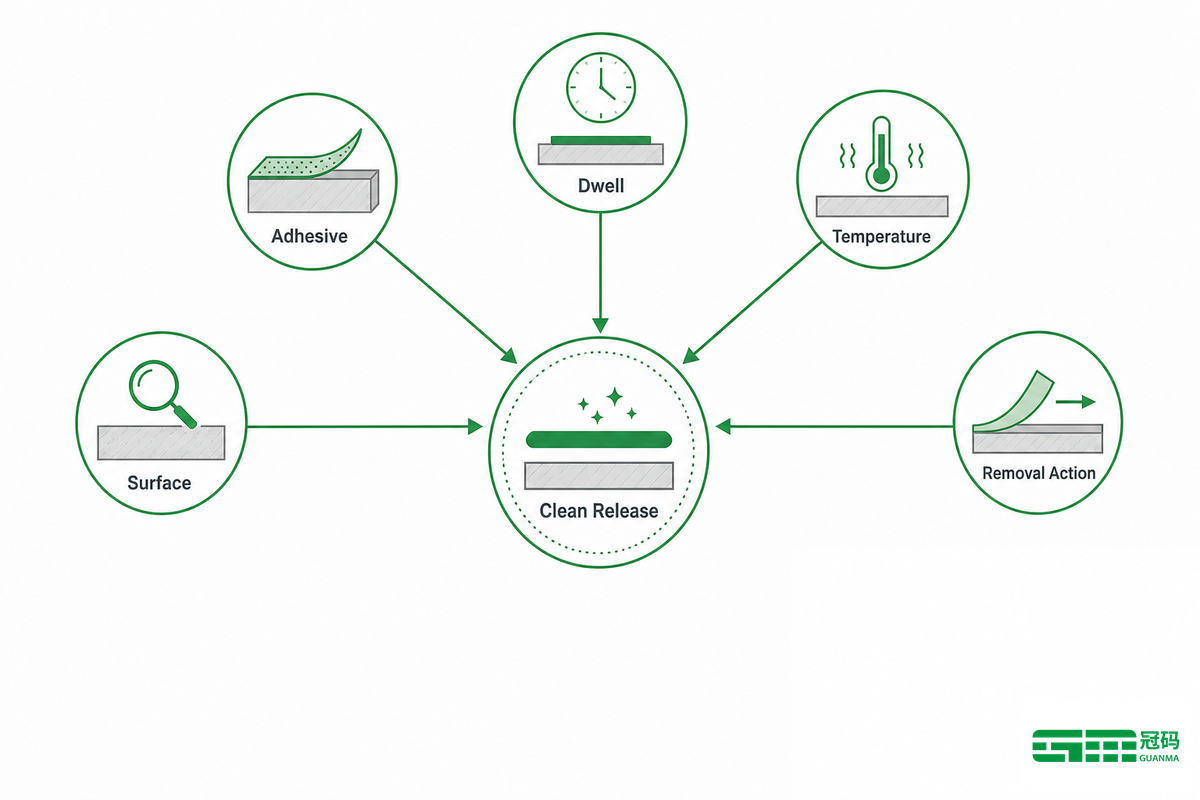
ในการใช้งานการผลิตความเสี่ยงของสารตกค้างและความเสี่ยงในการยกขอบจะเชื่อมโยงกันเนื่องจากพื้นผิวที่อยู่อาศัยและการดําเนินการกําจัดมีปฏิสัมพันธ์ กับกวนมาเงื่อนไขเหล่านั้นสามารถแปลเป็นบทสรุปตัวอย่างวัสดุโดยมีจุดตรวจ 20 นาทีและ 24 ชั่วโมงที่ใช้ในการเปิดเผยข้อผิดพลาดในการทดสอบสั้น ๆ ก่อนการตัดสินใจซื้อ.
คลีนรีลีสเป็นผลรวมของเคมีกาวพื้นผิวพื้นผิวเวลาที่อยู่อาศัยอุณหภูมิและความชื้นสัมผัสและวิธีการลบฉลาก การเปลี่ยนคําหนึ่งคําสามารถเปลี่ยนผลลัพธ์ได้แม้ว่าฉลากที่พิมพ์ออกมาจะดูเหมือนกัน.
ข้อผิดพลาดข้อกําหนดทั่วไปประการหนึ่งคือการขอ “กาวที่ถอดออกได้” โดยไม่ต้องกําหนดพื้นผิวหรือเงื่อนไขการกําจัด ขวดแก้วที่แตกต่างกันแผงเคลือบผงและภาชนะ PP พลังงานพื้นผิวต่ําไม่ได้นําเสนอพฤติกรรมการเปียกและลอกแบบเดียวกัน น้ํามันพื้นผิวน้ํายาทําความสะอาดฝุ่นพื้นผิวความร้อนห้องเย็นและการอยู่อาศัยแบบขยายทั้งหมดสามารถเปลี่ยนความสมดุลระหว่างการยึดเกาะของกาวและการยึดเกาะกับพื้นผิว.
| ตัวแปร | สิ่งที่ต้องบันทึก | ความเสี่ยงหากละเว้น |
|---|---|---|
| กาว | พฤติกรรมและวัตถุประสงค์การสมัครที่ร้องขอ | เกรดเอนกประสงค์ได้รับการทดสอบสําหรับงานที่ไม่ถูกต้อง |
| พื้นผิว | วัสดุ การเคลือบ พื้นผิว และสถานะการปนเปื้อน | ผลการทดลองไม่สามารถถ่ายโอนไปยังพื้นผิวการผลิตได้ |
| อาศัยอยู่ | หน้าต่างการลบเป้าหมายและระยะเวลาการระงับสูงสุด | การทดสอบระยะสั้นจะซ่อนความเสี่ยงของสารตกค้างที่กักไว้เป็นเวลานาน |
| สิ่งแวดล้อม | อุณหภูมิการใช้งานและการเก็บรักษา ความชื้น น้ํายาทําความสะอาด การจัดการ | ผลลัพธ์ของห้องปฏิบัติการไม่ได้แสดงถึงสภาพของสนาม |
| การดําเนินการกําจัด | ทิศทางการลอก ความเร็ว ผู้ปฏิบัติงาน หรือการกําจัดอัตโนมัติ | การดําเนินการลบที่แตกต่างกันจะให้ผลลัพธ์ที่แตกต่างกัน |
ประเด็นสําคัญ: ถือว่า “removable” เป็นคําขอประสิทธิภาพแบบมีเงื่อนไขไม่ใช่เป็นหมวดหมู่กาวที่ตอบทุกความเสี่ยงด้วยตัวเอง.
เรียกใช้การตรวจสอบ 5 พื้นผิวก่อนเลือกฉลากแบบถอดได้
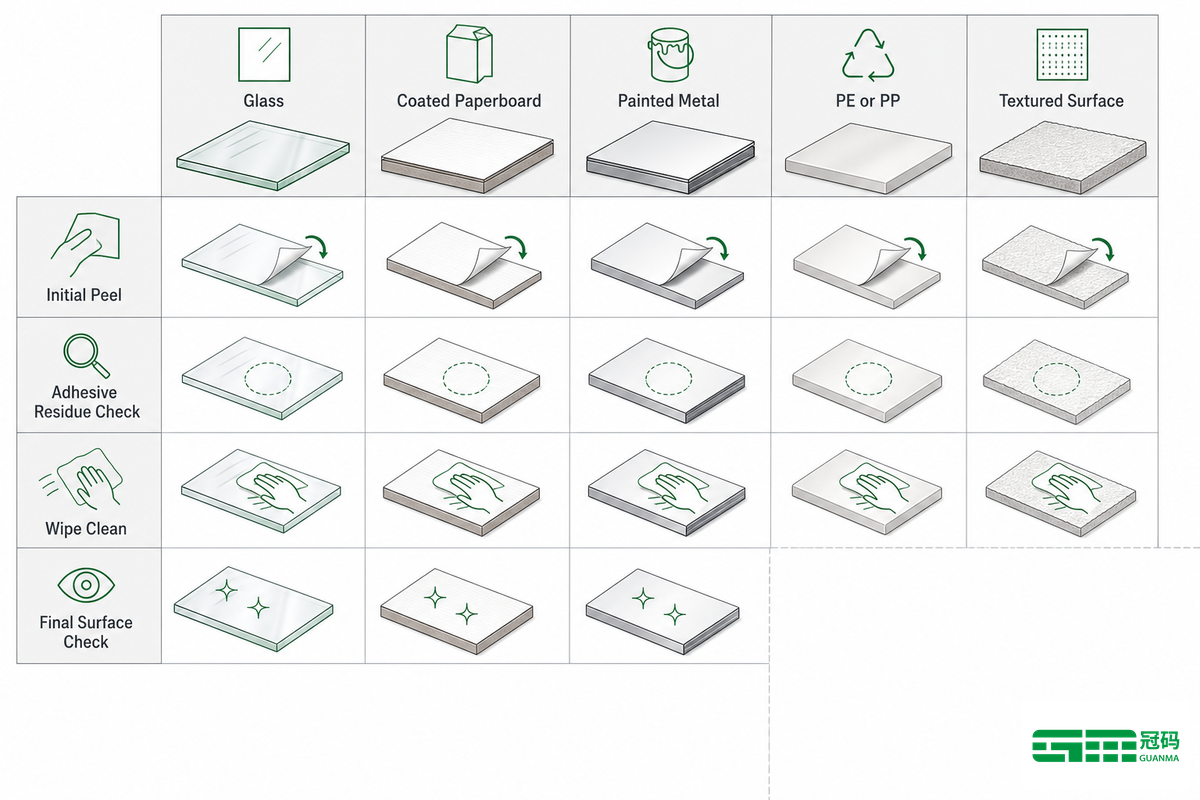
สําหรับการใช้งานการผลิตหลายพื้นผิวความเสี่ยงคือการรักษาแก้วกระดาษแข็งเคลือบและ PP เป็นงานเดียวเนื่องจากมีการใช้งานศิลปะแบบเดียวกัน ด้วย Guanma สามารถเปรียบเทียบแผงตัวอย่างได้ในการสังเกต 20 นาทีและ 24 ชั่วโมงดังนั้นความล้มเหลวเฉพาะพื้นผิวจึงมองเห็นได้ก่อนการแปลง.
วัสดุพิมพ์เป็นส่วนหนึ่งของข้อกําหนดฉลาก ก่อนที่จะเลือกฉลากที่ถอดออกได้ให้จําแนกพื้นผิวจริงการเคลือบหรือพื้นผิวความสะอาดอุณหภูมิที่ใช้งานได้และสภาพหลังจากระยะเวลาที่อยู่อาศัยที่ตั้งใจไว้.
| ครอบครัวพื้นผิว | คําถามแรก | โฟกัสการทดลอง |
|---|---|---|
| กระจก | ขวดสะอาด เคลือบ แช่เย็น หรือล้างซ้ําๆ หรือไม่? | สารตกค้าง การม้วนฉลาก และการนําภาชนะกลับมาใช้ใหม่ |
| กระดาษแข็งเคลือบ | การกําจัดจะรบกวนเส้นใยหรือการเคลือบพิมพ์หรือไม่? | ยกไฟเบอร์และเครื่องหมายที่มองเห็นได้ |
| โลหะทาสี | มีระบบสีและกระบวนการทําความสะอาดใดบ้าง? | การเปลี่ยนสี สารตกค้าง และการสัมผัสกับการจัดการ |
| พลาสติก PE หรือ PP | เป็นเกรดที่ใช้พลังงานพื้นผิวต่ําหรือมีพื้นผิวหรือไม่? | การยกขอบ ความต้องการในการเปลี่ยนตําแหน่ง และผลการถอดออก |
| พื้นผิวที่มีพื้นผิวหรือไม่สม่ําเสมอ | กาวสามารถสัมผัสกับพื้นผิวได้อย่างสม่ําเสมอหรือไม่? | ความสม่ําเสมอในการติดต่อและการถ่ายโอนเฉพาะที่ |
ตัวอย่างคอมโพสิตแสดงให้เห็นถึงประเด็น หนึ่งผู้บรรจุหีบห่อสัญญาอาจใช้งานศิลปะเดียวกันบนขวดแก้วและฝา PP แม้ว่ากราฟิกจะดูสอดคล้องกันพื้นผิวและประวัติการทําความสะอาดจะแตกต่างกัน แทนที่จะถือว่าทั้งสองเป็นงานฉลากเดียว QA ควรให้แต่ละพื้นผิวแผงของตัวเองในบันทึกการทดลองและอนุมัติผลลัพธ์แยกกัน.
ถอดออกได้เทียบกับแบบเปลี่ยนตําแหน่งได้เทียบกับแบบถาวร: เลือกตามงาน ไม่ใช่คําในเอกสารข้อมูล
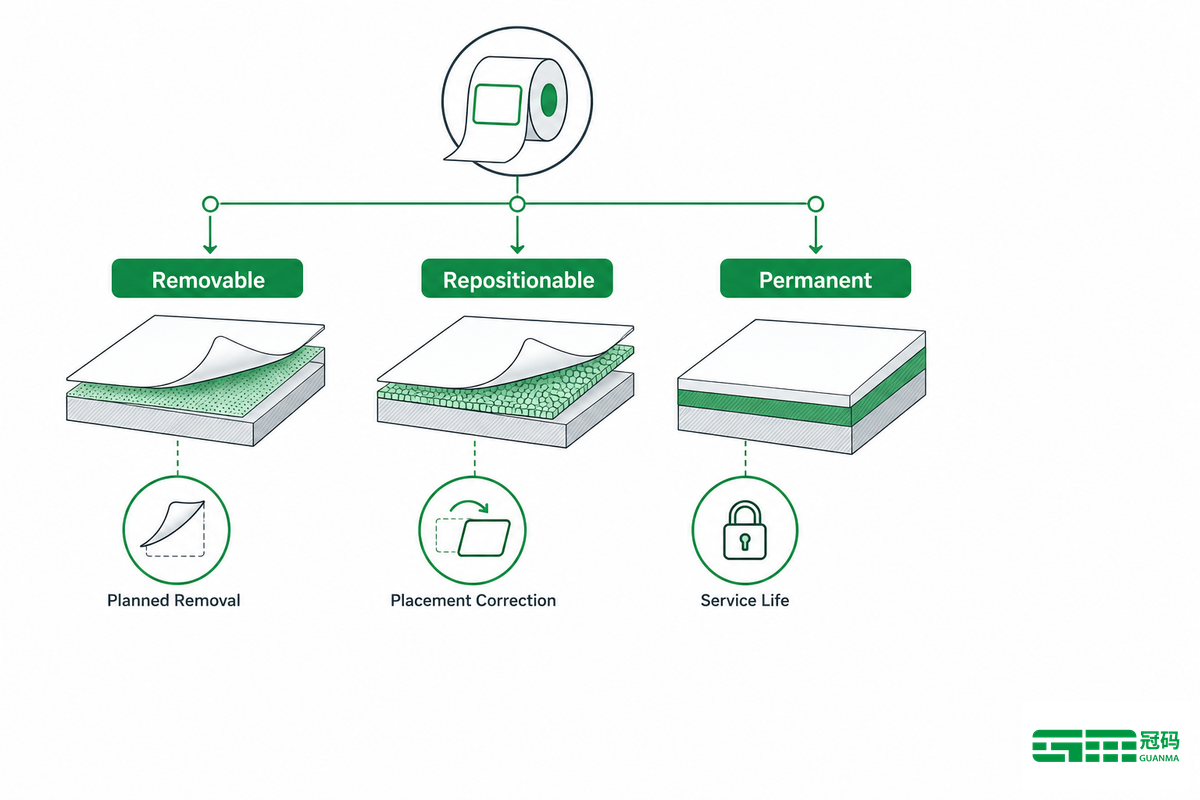
ทีมผู้ผลิตต้องเผชิญกับความเสี่ยงในการเลือกเมื่อแอปพลิเคชันแก้ไขตําแหน่งถูกอธิบายว่าเป็นแอปพลิเคชันการลบออกหลังการใช้งาน ด้วย Guanma ลําดับการจัดการสามารถตรวจสอบได้เนื่องจากการสังเกตตําแหน่ง 20 นาทีและการสังเกตการกําจัด 24 ชั่วโมงจะตอบคําถามวัสดุที่แตกต่างกัน.
ฉลากแบบถอดได้กําหนดเป้าหมายเหตุการณ์การกําจัดที่สะอาดตามแผนหลังการใช้งาน การแก้ไขตําแหน่งรองรับฉลากที่เปลี่ยนตําแหน่งได้ในระหว่างการใช้งาน ฉลากถาวรจัดลําดับความสําคัญของการระบุตัวตนที่เก็บไว้ ไม่ควรถือเป็นคําอธิบายที่ใช้แทนกันได้.
✔ เมื่อถอดออกได้พอดี
การส่งเสริมการขายสิ้นสุดลง คอนเทนเนอร์จะเข้าสู่วงวนการนํากลับมาใช้ใหม่ หรือต้องลบการระบุตัวตนชั่วคราวออกภายใต้เงื่อนไขที่ระบุไว้.
AW เมื่อมันไม่ใช่
ฉลากจะต้องคงอยู่ตลอดอายุการใช้งาน มีฟังก์ชันด้านความปลอดภัยหรือกฎระเบียบที่จําเป็น หรือต้องมีการตรวจสอบการสัมผัสอาหารหรือการตรวจสอบย้อนกลับแยกต่างหาก.
ตัวอย่างเช่นโรงงานอาจต้องการป้ายตําแหน่งที่สามารถเปลี่ยนตําแหน่งได้เพื่อให้ผู้ปฏิบัติงานสามารถแก้ไขการจัดตําแหน่งก่อนการใช้งานขั้นสุดท้ายได้ นั่นแตกต่างจากป้ายสินค้าคงคลังชั่วคราวที่ถูกลบออกเมื่อสิ้นสุดรอบการนับ ก่อนอื่นให้ถามเกี่ยวกับเวลาตําแหน่งที่เปิดอยู่ จากนั้นถามเกี่ยวกับผลการลบหลังจากอาศัย.
ประเด็นสําคัญ: กําหนดลําดับการจัดการก่อนที่จะเปรียบเทียบชื่อกาว ลําดับนั้นตัดสินใจว่าคุณต้องการเปลี่ยนตําแหน่งการกําจัดตามแผนหรือการเก็บรักษาในระยะยาว.
การเลือกกาวแบบถอดได้ตามอุณหภูมิ เวลาพัก และสภาวะการถอด
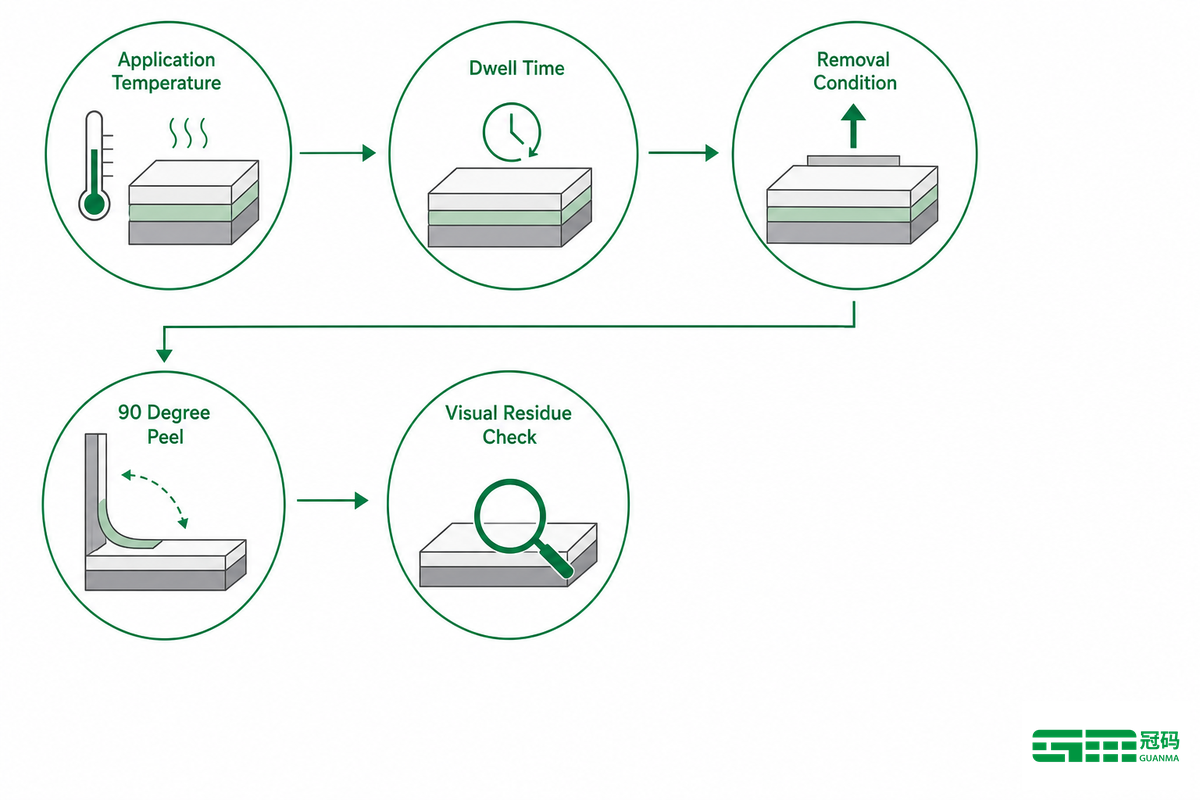
ในการใช้งานคลังสินค้าหรือโรงงานความเสี่ยงคือการใช้ผลลัพธ์การลอกหนึ่งผลเป็นคําตอบสากลเนื่องจากอุณหภูมิและการอยู่อาศัยสามารถเปลี่ยนพันธะได้ ด้วย Guanma ตัวอย่างวัสดุสามารถจัดเรียงตามสภาพจริงด้วยการตรวจสอบ 20 นาทีและ 24 ชั่วโมงที่เปิดเผยว่าหน้าต่างการกําจัดที่ระบุนั้นเป็นจริงหรือไม่.
สั้นกาวที่ถอดออกได้ควรระบุว่าป้ายถูกนําไปใช้ที่ใดระยะเวลาที่ฉลากอยู่สิ่งที่พบและสิ่งที่การกําจัดที่ยอมรับได้ดูเหมือน แรงลอกเพียงอย่างเดียวไม่ได้สร้างการกําจัดที่สะอาด.
ASTM D6252 มีประโยชน์เนื่องจากกําหนดกรอบการยึดเกาะของเปลือก 90 องศาเป็นการวัดการประกันคุณภาพสําหรับสต็อกฉลากที่ไวต่อแรงกด สามารถเปรียบเทียบพฤติกรรมของพันธะและสนับสนุนการทดสอบซ้ําได้รวมถึงบนพื้นผิวที่เป็นตัวแทน มันไม่ได้กําหนดเกณฑ์สากลที่ถอดออกได้เทียบกับเกณฑ์ถาวรและไม่ได้แทนที่การตรวจสอบสารตกค้างที่มองเห็นได้.
📐 หมายเหตุทางวิศวกรรม
ใช้รูปทรงการลอกที่ระบุไว้ในการเปรียบเทียบ จากนั้นเพิ่มวัสดุพิมพ์จริง การอยู่อาศัย การปรับสภาพ และการตรวจสอบการยอมรับด้วยภาพ ASTM D6252 อธิบายการวัดการลอก 90° สําหรับสต็อกฉลากที่ไวต่อแรงกด โดยจะวัดแรงยึดเกาะ ไม่ใช่ใบรับรองการปลดปล่อยที่สะอาด.
พิจารณาสถานการณ์คอมโพสิตที่สอง: คลังสินค้าต้องการการระบุอุปกรณ์ชั่วคราวหลังการบํารุงรักษา หลังจากหน้าต่างการตรวจสอบฉลากอาจถูกลบออกแต่พื้นที่อาจถูกเช็ดด้วยน้ํายาทําความสะอาดและจัดการโดยผู้ปฏิบัติงานที่สวมถุงมือ บทสรุปวัสดุจึงควรตั้งชื่อวัสดุพิมพ์ที่ทําความสะอาดหน้าต่างการตรวจสอบวิธีการกําจัดและไม่ว่าจะมีสารตกค้างใด ๆ ที่ยอมรับได้ไม่เพียง แต่ขอฉลาก “low-tack”.
Facestock, Release Liner และการพิมพ์: ทางเลือกในการก่อสร้างเบื้องหลังฉลากแบบถอดได้
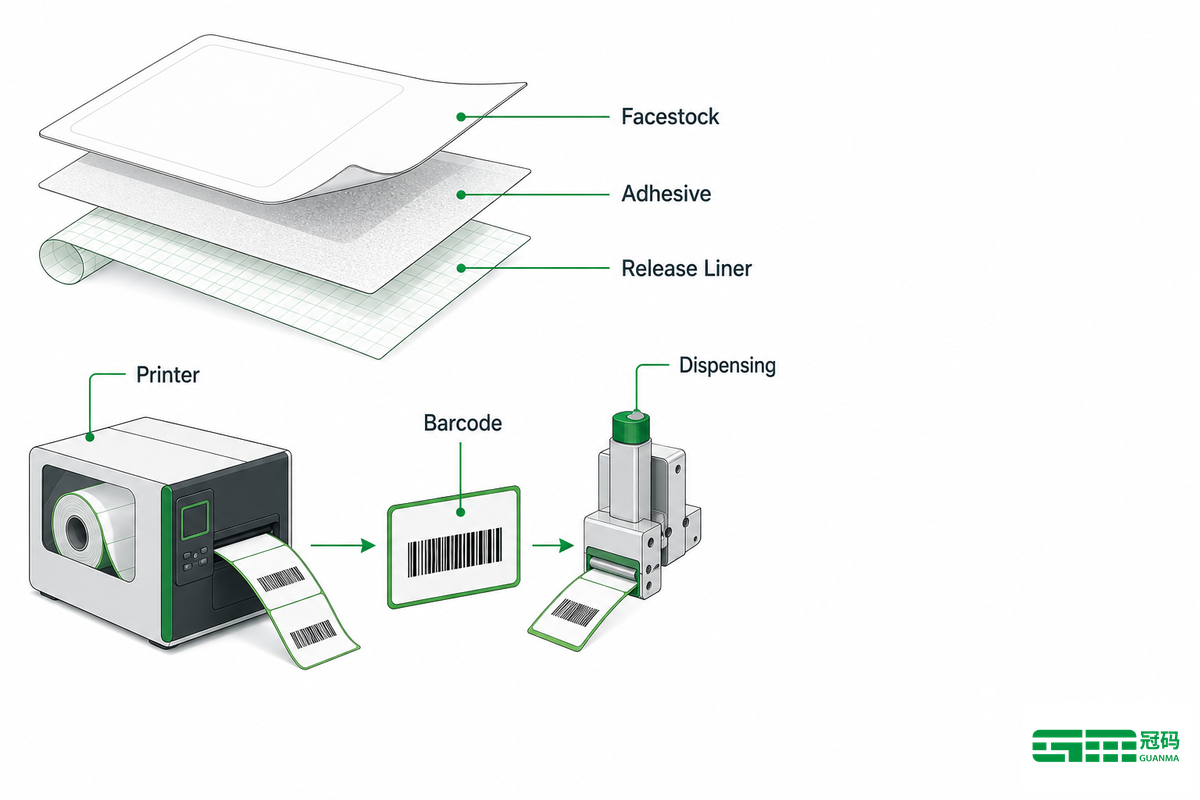
สําหรับการแปลงและการพิมพ์แอปพลิเคชันความเสี่ยงคือการอนุมัติการกําจัดที่สะอาดในขณะที่ข้อกําหนดซับ facestock หรือบาร์โค้ดล้มเหลวในภายหลัง ด้วย Guanma ตัวอย่างวัสดุสามารถสอดคล้องกับเครื่องพิมพ์และเส้นทางการจ่ายเนื่องจากการตรวจสอบ 20 นาทีและ 24 ชั่วโมงไม่ได้แทนที่การตรวจสอบการพิมพ์หรือการสแกน.
ฉลากที่ถอดออกได้ที่สามารถใช้งานได้คือการก่อสร้างไม่ใช่กาวเพียงอย่างเดียว ต้องตรวจสอบ Facestock, กาว, แผ่นซับปล่อย, เคลือบ, เทคโนโลยีเครื่องพิมพ์, ระบบหมึกและความต้องการบาร์โค้ดใด ๆ ร่วมกัน.
Facestock เปลี่ยนการจัดการความทึบลักษณะการพิมพ์ความแข็งและความพอดีของสิ่งแวดล้อม ไลเนอร์ปล่อยมีผลต่อการแปลงและการจ่าย ตัวเลือกการพิมพ์และการเคลือบมีผลต่อความต้านทานการถูคุณภาพของภาพและความสามารถในการอ่านของเครื่องสแกน สิ่งเหล่านี้เป็นแกนอิสระจากการกําจัดที่สะอาด: ฉลากอาจลอกออกอย่างหมดจดแต่ล้มเหลวในการตรวจสอบบาร์โค้ดหรือพิมพ์ได้ดีในขณะที่ไม่เหมาะสมกับวัสดุพิมพ์ที่ต้องการ.
สามารถพิมพ์ฉลากที่ถอดออกได้ด้วยเครื่องพิมพ์อิงค์เจ็ทหรือเลเซอร์หรือไม่?
โครงสร้างที่ถอดออกได้บางอย่างสามารถเหมาะกับการพิมพ์อิงค์เจ็ทหรือเลเซอร์แต่ความเข้ากันได้นั้นเป็นการก่อสร้างเฉพาะ ระบุเทคโนโลยีเครื่องพิมพ์เส้นทางความร้อนระบบหมึกหรือผงหมึกขนาดและรูปร่างฉลากวิธีการใช้งานและความต้องการบาร์โค้ดหรือข้อมูลตัวแปรใด ๆ รวมถึงข้อกําหนดในสต็อกเปล่าและการอนุมัติแบรนด์ขั้นสุดท้าย ใช้การทดสอบการพิมพ์และการสแกนจริงการปอกเปลือกที่สะอาดเพียงอย่างเดียวไม่ได้พิสูจน์คุณภาพการพิมพ์.
สําหรับไพรเมอร์ก่อสร้างที่กว้างขึ้น โปรดดูคําแนะนําของ Guanma การเลือกฉลาก facestock, จากนั้นให้การทดลองใช้ฉลากแบบถอดได้มุ่งเน้นไปที่พื้นผิวจริงและเหตุการณ์การกําจัด.
การ์ดทดลองกําจัดสิ่งสะอาด 7 สนาม
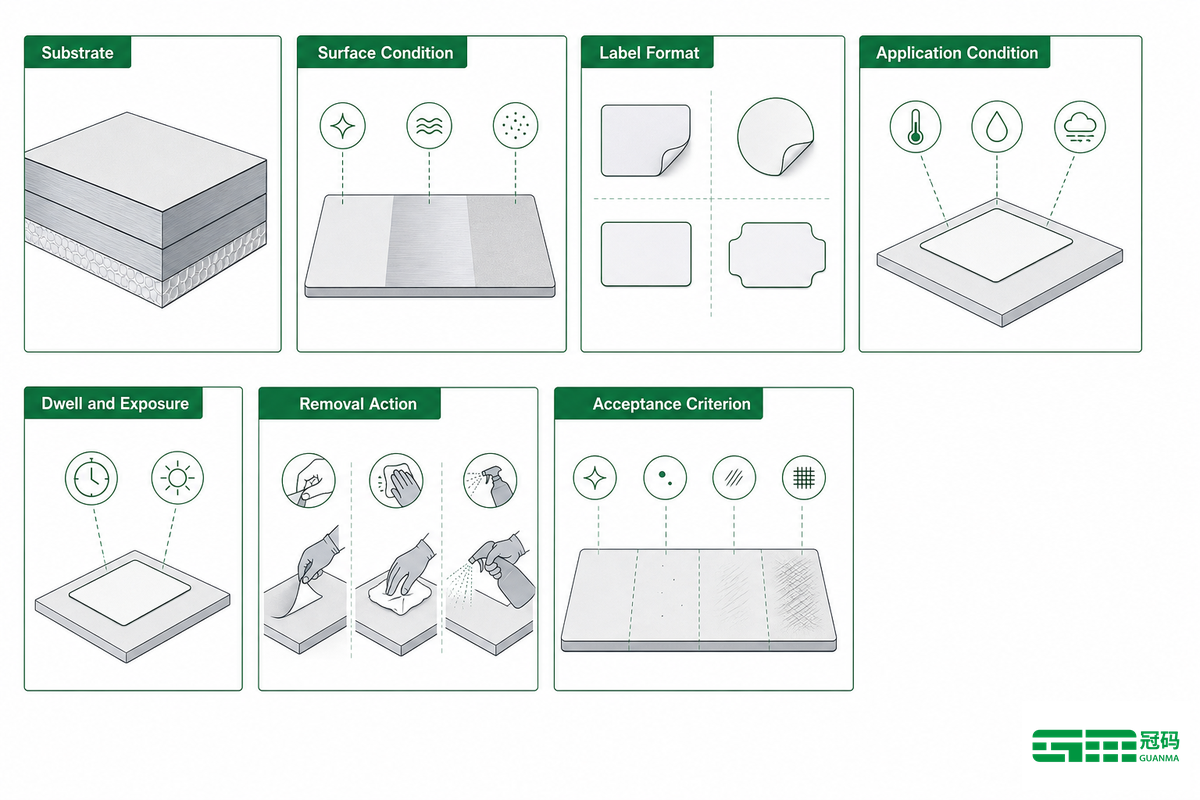
สําหรับการสมัครจัดซื้อจัดจ้างความเสี่ยงที่ซ่อนอยู่คือคําขอที่ไม่สมบูรณ์เนื่องจากซัพพลายเออร์แต่ละรายจะทดสอบเงื่อนไขที่แตกต่างกัน กวนมาสามารถใช้บัตรทดลองที่เสร็จสมบูรณ์เพื่อเตรียมตัวอย่างวัสดุที่เทียบเคียงได้ในขณะที่ QA เป็นเจ้าของคําตัดสินผ่าน/ไม่ผ่าน.
การ์ดทดลองการกําจัดที่สะอาด 7 สนามนี้เปลี่ยนคําขอตัวอย่างที่คลุมเครือให้เป็นบทสรุปการตรวจสอบที่สามารถทําซ้ําได้ โดยให้การจัดซื้อจัดจ้าง QA และซัพพลายเออร์วัสดุหนึ่งคําจํากัดความที่ใช้ร่วมกันของวัสดุพิมพ์ การสัมผัส การดําเนินการกําจัด และการสังเกตผ่าน/ไม่ผ่าน.
| สนาม | สิ่งที่ผู้ซื้อจัดหา | ใครใช้มัน |
|---|---|---|
| 1 พื้นผิว | วัสดุจริง การเคลือบ พื้นผิว และตัวอย่างที่ไม่ผ่านการบําบัดหากเป็นไปได้ | ทีมงาน QA และวัสดุ |
| 2 สภาพพื้นผิว | สภาพที่สะอาดขึ้น น้ํามัน ความชื้น การจัดการ หรือการปนเปื้อน | พืชและ QA |
| 3 รูปแบบฉลาก | การตั้งค่า Facestock ขนาด รูปร่าง งานศิลปะ วิธีการพิมพ์ ความต้องการบาร์โค้ด | การจัดซื้อจัดจ้างและการแปลง |
| 4 เงื่อนไขการสมัคร | อุณหภูมิการใช้งาน ความดัน วิธีเส้น และพื้นผิวเป้าหมาย | พืชและ QA |
| 5 การอยู่อาศัยและการเปิดรับแสง | ระยะเวลาการเก็บรักษาที่วางแผนไว้ การจัดเก็บ ความชื้น การทําความสะอาด การเสียดสี หรือการจัดการ | คิวเอ |
| 6 การดําเนินการกําจัด | ทิศทางการลอก การกระทําของผู้ปฏิบัติงาน คําอธิบายความเร็ว หรืออุปกรณ์กําจัด | พืช |
| 7 เกณฑ์การยอมรับ | สิ่งที่นับเป็นการผ่าน: สารตกค้าง การทําเครื่องหมาย การยกขอบ ผลการพิมพ์/การสแกน หรือการทดสอบซ้ําที่จําเป็น | การประกันคุณภาพและการจัดซื้อจัดจ้าง |
“ตัวอย่างที่มีประโยชน์คือตัวอย่างที่สร้างพื้นผิวและสภาพการจัดการของผู้ซื้อขึ้นมาใหม่ไม่ใช่ตัวอย่างที่ดูดีที่สุดบนแผงทั่วไป”
กวนมาสามารถรวม PET, กระดาษสังเคราะห์ PP หรือพื้นผิวกระดาษเคลือบเข้ากับระบบกาวร้อนละลาย น้ํา หรืออะคริลิกและไลเนอร์ที่แตกต่างกัน การเลือกไลเนอร์ยังส่งผลต่อพฤติกรรมการปล่อยของการก่อสร้าง ดังนั้น ตรวจสอบที่มีอยู่ ปล่อยกระดาษและซับตัวเลือก. ความยืดหยุ่นนั้นมีค่าก็ต่อเมื่อการ์ดทดลองอธิบายแอปพลิเคชันอย่างแม่นยําเพียงพอที่จะทําซ้ํา.
วิธีทดสอบสารตกค้าง การยกขอบ และการถ่ายโอนกาวโดยไม่ต้องหลอกตัวเอง
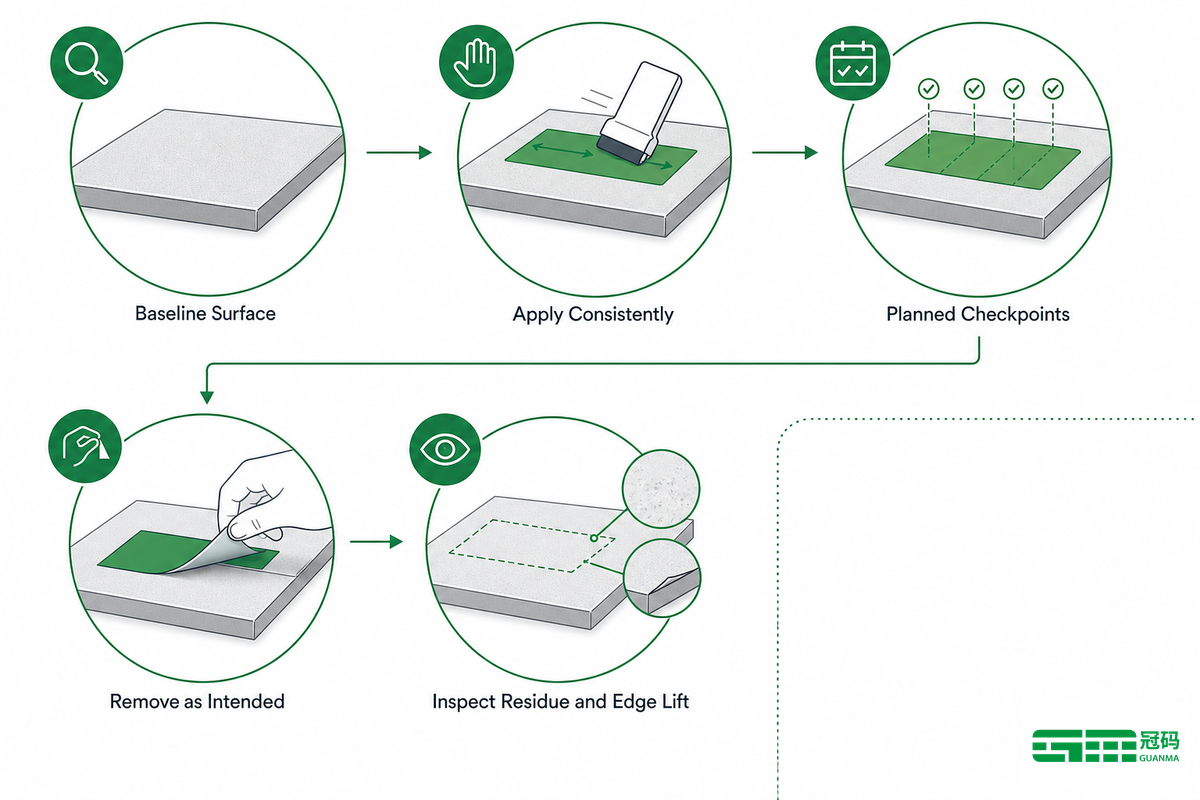
ในการใช้งานจริงการผลิตการกําจัดที่ไม่สอดคล้องกันเป็นความเสี่ยงเนื่องจากผู้ประกอบการรายหนึ่งสามารถซ่อนความล้มเหลวที่อีกคนหนึ่งเปิดเผยได้ กวนมาสามารถจัดหาตัวอย่างวัสดุได้ในขณะที่ผู้ซื้อบันทึกสารตั้งต้นการสัมผัสและการดําเนินการกําจัดสําหรับการเปรียบเทียบ QA ที่ทําซ้ําได้.
การทดสอบฉลากแบบถอดได้ที่มีความหมายจะเปรียบเทียบตัวอย่างที่กําหนดไว้ภายใต้เงื่อนไขที่กําหนดจากนั้นตรวจสอบทั้งการยึดเกาะระหว่างการใช้งานและสภาพของพื้นผิวหลังจากการกําจัด การลอกอย่างรวดเร็วหนึ่งครั้งจากแผงที่สะดวกไม่ใช่ผลการซื้อที่เชื่อถือได้.
- เริ่มต้นด้วยพื้นฐาน: ถ่ายภาพหรือบันทึกพื้นผิวและสภาพพื้นผิวที่ไม่ผ่านการบําบัด.
- สมัครอย่างสม่ําเสมอ: รักษาแนวทางการใช้งานและคําอธิบายแรงดันให้สอดคล้องกันในตัวอย่างต่างๆ.
- ใช้จุดตรวจที่วางแผนไว้: วางแผนการสังเกตตั้งแต่เนิ่นๆ และการสังเกตตามกําหนดเวลาในภายหลัง กําหนดการที่แน่นอนควรตรงกับกรณีการใช้งาน.
- ลบออกตามที่ตั้งใจไว้: บันทึกการกระทําแทนที่จะให้ผู้ปฏิบัติงานแต่ละคนคิดค้นวิธีการลอกที่แตกต่างกัน.
- ตรวจสอบผลลัพธ์ทั้งสอง: ตรวจสอบการยกขอบก่อนการกําจัดและสารตกค้าง การถ่ายโอน การทําเครื่องหมาย สภาพการพิมพ์ และข้อกําหนดในการสแกนหลังการกําจัด.
คําแนะนําการปรับสภาพ ASTM ยังมีประโยชน์เป็นข้อ จํากัด: เงื่อนไขการควบคุมปรับปรุงการเปรียบเทียบแต่พวกเขาไม่ได้ทําซ้ําทุกสภาพแวดล้อมสนาม หากการใช้งานจริงรวมถึงสารเคมีทําความสะอาดเครื่องทําความเย็นการสัมผัสกลางแจ้งหรือการจัดการที่ผิดปกติให้เขียนสิ่งนั้นลงในแผนตัวอย่างแทนที่จะสมมติว่าแผงมาตรฐานตอบ.
ในกรณีที่วิธีการในห้องปฏิบัติการเป็นส่วนหนึ่งของการทดลอง ให้บันทึกเรขาคณิตและอัตราแทนที่จะเขียนเพียง “การทดสอบการลอก” FINAT ระบุ FTM 1 เป็น 180° ที่ 300 มม./นาที และ FTM 2 เป็น 90° ที่ 300 มม./นาที นอกจากนี้ยังแสดงรายการ FTM 4 ข้าม 10 300 ม./นาที และ FTM 10 ที่ 300 มม./นาที ในแฮนด์ออฟของซัพพลายเออร์ ให้คัดลอกเรขาคณิต FTM 1 ที่เกี่ยวข้องที่ 180° อัตรา 300 มม./นาที หรือเรขาคณิต FTM 2 ที่ 90° ตามที่ใช้ทุกประการ เหล่านี้เป็นเงื่อนไขของวิธีการ ไม่ใช่เกณฑ์การปลดปล่อยความสะอาดสากล. วิธีทดสอบ FINAT
| ประเภทการทดสอบ | เงื่อนไขในการบันทึก | บริบทแหล่งที่มา | สิ่งที่มันไม่ได้พิสูจน์ |
|---|---|---|---|
| รงควัตถุเปลือก | 180° | ฟินัต เอฟทีเอ็ม 1 | การกําจัดสารตกค้างในทุกพื้นผิว |
| อัตราการปอกเปลือก | 300 มม./นาที | ฟินัต เอฟทีเอ็ม 1 | ความเร็วในการจัดการสนาม |
| รงควัตถุเปลือก | 90° | ฟินัต เอฟทีเอ็ม 2 | คลาสกาวสากล |
| อัตราการปอกเปลือก | 300 มม./นาที | ฟินัต เอฟทีเอ็ม 2 | ความเหมาะสมของเครื่องพิมพ์หรือบาร์โค้ด |
| ช่วงความเร็วการปลดปล่อย | 103 ม./นาที | ฟินัต เอฟทีเอ็ม 4 | ผลการจ่ายของผู้ซื้อ |
| อัตราการปล่อยไลเนอร์ | 300 มม./นาที | ฟินัต เอฟทีเอ็ม 10 | การกําจัดที่สะอาดจากฉลากสู่พื้นผิว |
| วิธีการลอกเทป | 180° | วิธีทดสอบ ASTM D3330 A | คุณสมบัติฉลากที่สมบูรณ์ |
| วิธีการลอกเทป | 90° | วิธีทดสอบ ASTM D3330 F | การรับประกันการใช้งานภาคสนาม |
| เปลือกฉลากสต็อก | 90° | ASTM D6252 | ใบรับรองการปลดปล่อยที่สะอาด |
| การยอมรับของผู้ซื้อ | เฉพาะโครงการ | บัตรทดลองใช้งานและการลงนาม QA | ผลลัพธ์ที่สามารถถ่ายโอนได้โดยไม่ต้องใช้วัสดุพิมพ์จริง |
เมื่อถอดออกได้ถือเป็นข้อกําหนดที่ผิด
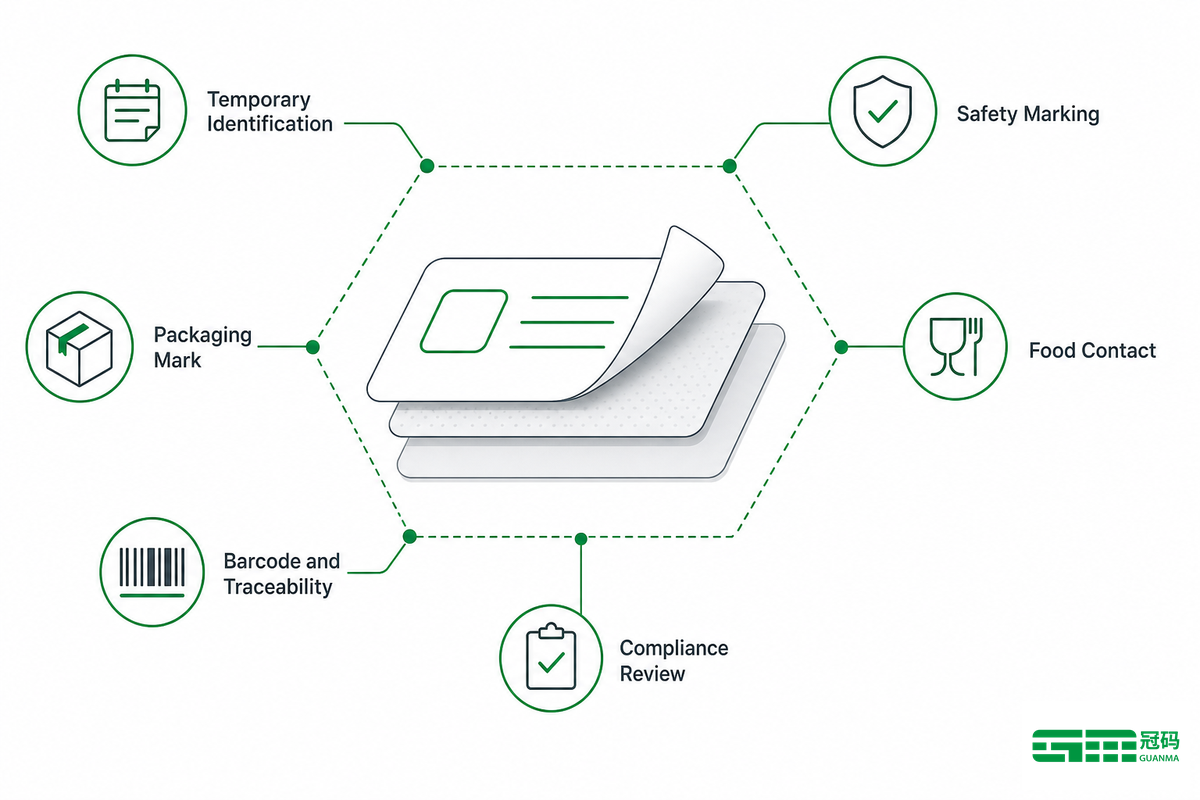
สําหรับการใช้งานด้านความปลอดภัยกฎระเบียบหรือการตรวจสอบย้อนกลับความเสี่ยงคือการระบุการกําจัดตามแผนโดยที่ความชัดเจนที่เก็บไว้คือข้อกําหนดในการควบคุม กวนมาสามารถหารือเกี่ยวกับตัวเลือกวัสดุหลังจากที่เจ้าของการปฏิบัติตามข้อกําหนดที่รับผิดชอบกําหนดข้อกําหนดที่เกี่ยวข้องและเส้นทางการตรวจสอบ สําหรับบริบทเฉพาะของบรรจุภัณฑ์ให้ตรวจสอบอย่างเป็นทางการ ข้อความควบคุมบรรจุภัณฑ์ของสหภาพยุโรป ควบคู่ไปกับกฎเกณฑ์สําหรับตลาดจริง.
อย่าใช้คู่มือการเลือกฉลากชั่วคราวเป็นกฎการตัดสินใจสําหรับการใช้งานการปฏิบัติตามกฎระเบียบที่มีความสําคัญด้านความปลอดภัยสารเคมีอันตรายเครื่องหมายข้อบังคับบังคับหรือการปฏิบัติตามกาวที่สัมผัสกับอาหาร กรณีเหล่านั้นจําเป็นต้องมีการเก็บรักษาความชัดเจนความปลอดภัยของวัสดุและการตรวจสอบกฎระเบียบของตนเอง.
| ใช้กรณี | เหตุใดคู่มือนี้จึงไม่เพียงพอ | เจ้าของคนต่อไป |
|---|---|---|
| การทําเครื่องหมายที่มีความสําคัญต่อความปลอดภัยหรือผลิตภัณฑ์อันตราย | การเก็บรักษาและความชัดเจนอาจควบคุมการตัดสินใจได้ | ทีมความปลอดภัยและกํากับดูแล |
| เครื่องหมายบรรจุภัณฑ์บังคับ | กฎการบรรจุหีบห่อเฉพาะเขตอํานาจศาลสามารถควบคุมการทําเครื่องหมายและการแนบได้ | เจ้าของการปฏิบัติตามข้อกําหนดบรรจุภัณฑ์ |
| บรรจุภัณฑ์สัมผัสอาหารหรือสัมผัสทางอ้อม | คําถามเกี่ยวกับสารยึดติดและการโยกย้ายแยกจากพฤติกรรมการลอก | ผู้เชี่ยวชาญด้านกฎระเบียบและการบรรจุอาหาร |
| บาร์โค้ด การตรวจสอบย้อนกลับ หรือข้อมูลที่เครื่องอ่านได้ | อ่านคุณภาพและความทนทานจําเป็นต้องมีการตรวจสอบของตัวเอง | QA และเจ้าของข้อมูล/การดําเนินงาน |
ขอบเขตนี้เพิ่มขึ้นแทนที่จะอ่อนค่าลงมูลค่าของคู่มือฉลากที่ถอดออกได้ จะบอกผู้ซื้อเมื่อการทดลองใช้วัสดุเป็นขั้นตอนต่อไปที่ถูกต้องและเมื่อเส้นทางการปฏิบัติตามข้อกําหนดที่แตกต่างกันต้องนําไปสู่.
เมื่อฉลากมาตรฐานไม่เพียงพอ: การเตรียมคําขอวัสดุที่กําหนดเอง
สําหรับการใช้งานในอุตสาหกรรมความเสี่ยงทางการค้าคือการเปรียบเทียบวัสดุที่มีชื่อมากกว่าเงื่อนไขการทดลองที่เทียบเคียงได้ กวนมาสามารถเตรียมการอภิปรายเกี่ยวกับวัสดุที่กําหนดเองเมื่อการจัดซื้อจัดหาวัสดุพิมพ์จริงเส้นทางการแปลงคําจํากัดความการยอมรับ QA ปริมาณการทดลองที่คาดหวังและผู้รับผิดชอบในการลงนาม.
ขอการสร้างฉลากที่กําหนดเองเมื่อวัสดุพิมพ์หน้าต่างการกําจัดการเปิดรับแสงกระบวนการพิมพ์หรือเกณฑ์การยอมรับไม่สามารถแสดงด้วยคําอธิบายที่วางจําหน่ายทั่วไป ส่งการ์ดทดลองที่เสร็จสมบูรณ์วัสดุพิมพ์จริงหากเป็นไปได้คําจํากัดความผ่าน/ล้มเหลวเป็นลายลักษณ์อักษรปริมาณการทดลองที่คาดหวังและรูปแบบฉลากตัวแปลงที่เกี่ยวข้องไม่ใช่งานศิลปะและขนาด.
สําหรับคําขอทางอุตสาหกรรมให้รวมพื้นผิวจริงแผงตัวอย่างหากมีรูปแบบฉลากเครื่องพิมพ์หรือกดสภาพเส้นอาศัยวิธีการกําจัดและคําจํากัดความผ่าน/ไม่ผ่านที่มองเห็นได้ สําหรับการสั่งซื้อให้ระบุปริมาณการทดลองใช้รูปแบบตัวแปลงและบุคคลที่ลงนามในผลลัพธ์ นอกจากนี้ยังสร้างการสนทนาที่สะอาดขึ้นระหว่างการจัดซื้อจัดจ้างและ QA: การจัดซื้อสามารถเปรียบเทียบข้อเสนอกับบทสรุปการทดลองเดียวกันแทนที่จะเปรียบเทียบเฉพาะชื่อวัสดุ.
กวนมาจัดหาวัสดุผสมที่สร้างขึ้นจาก PET, กระดาษสังเคราะห์ PP และกระดาษเคลือบด้วยตัวเลือกกาวร้อนละลาย น้ํา และอะคริลิก รวมถึงตัวเลือกซับใน เมื่อการ์ดทดลองเสร็จสมบูรณ์ ให้ตรวจสอบ ตัวเลือกวัสดุฉลากแบบถอดได้ซึ่งจับคู่กับวัสดุพิมพ์ของ Guanma สําหรับการอภิปรายตัวอย่างเชิงพาณิชย์.
คุณยังสามารถเปรียบเทียบตระกูลกาวผ่าน Guanma's ได้ คู่มือกาวร้อนละลาย น้ํา และอะคริลิก และใช้สิ่งนี้ คู่มือการซื้อฉลาก-สต๊อก เพื่อจัดระเบียบคําถามวัสดุต้นน้ําก่อนที่จะสรุปบทสรุป.
ข้อจํากัดด้านบรรจุภัณฑ์ปี 2026: การกําจัดที่สะอาดไม่เหมือนกับการรีไซเคิล
สําหรับการใช้งานบรรจุภัณฑ์ความเสี่ยงคือการปฏิบัติต่อเปลือกมือที่สะอาดเพื่อเป็นข้อพิสูจน์ถึงผลลัพธ์ที่หมดอายุการใช้งาน กวนมาสามารถสนับสนุนการอภิปรายเกี่ยวกับการเลือกวัสดุในขณะที่เจ้าของบรรจุภัณฑ์ยังคงสามารถรีไซเคิลได้และการตรวจสอบการใช้ซ้ําเป็นขั้นตอนการทํางานที่แยกต่างหากในปัจจุบัน กรอบการบรรจุหีบห่อของสหภาพยุโรป ให้ความเป็นมาด้านกฎระเบียบ ไม่ใช่การกล่าวอ้างประสิทธิภาพด้านวัสดุ.
การกําจัดที่สะอาดอธิบายถึงสิ่งที่เกิดขึ้นเมื่อบุคคลลอกฉลากออกจากพื้นผิว ความสามารถในการรีไซเคิลอธิบายว่าบรรจุภัณฑ์เต็มรูปแบบการสร้างฉลากหมึกกาวและกระบวนการกู้คืนมีพฤติกรรมอย่างไรในกระแสการรีไซเคิลที่กําหนดไว้ ผลลัพธ์หนึ่งไม่ได้พิสูจน์อีกผลลัพธ์หนึ่ง.
กฎระเบียบ (EU) 2025/40 เป็นกรอบงานบรรจุภัณฑ์และบรรจุภัณฑ์-ขยะในปัจจุบันที่ทําให้คําถามเกี่ยวกับวงจรชีวิตของบรรจุภัณฑ์ยากที่จะเพิกเฉย ควรกระตุ้นให้ผู้ซื้อมีคําถามที่ดีขึ้น: “เกิดอะไรขึ้นกับระบบบรรจุภัณฑ์หลังการใช้งาน” มันไม่ได้พิสูจน์ด้วยตัวมันเองว่ากาวที่ถอดออกได้โดยเฉพาะนั้นสามารถรีไซเคิลได้ ล้างออก หรือเหมาะสมกับเครื่องหมายบรรจุภัณฑ์ทุกอัน.
พิจารณาสถานการณ์คอมโพสิตที่สาม: ภาชนะแก้วแบบรีฟิล การปอกเปลือกด้วยมือที่สะอาดอาจช่วยให้ขั้นตอนการทํางานใช้ซ้ําได้ แต่การตัดสินใจทั้งหมดยังคงรวมถึงการครอบคลุมฉลาก, เฟสสต็อก, หมึก, กาว, เส้นทางการซักและวิธีการตรวจสอบของเจ้าของบรรจุภัณฑ์ การจัดซื้อจัดจ้างควรเก็บการทดสอบการกําจัดที่สะอาดและการตรวจสอบการสิ้นสุดอายุการใช้งานเป็นขั้นตอนการทํางานที่แยกจากกันจากนั้นนํามารวมกันเฉพาะเมื่อทั้งสองมีหลักฐาน.
💡 2026 การกระทํา: เพิ่มคําถามสิ้นสุดอายุการใช้งานหนึ่งข้อให้กับทุกคําขอฉลากแบบถอดได้: “เส้นทางการกู้คืนหรือการใช้ซ้ําใดที่ต้องรองรับแพ็คเกจนี้ และใครเป็นเจ้าของสิทธิ์การตรวจสอบนั้น?”
คําถามที่พบบ่อย
สําหรับการสมัครของผู้ซื้อ วิธีที่เร็วที่สุดในการลดความเสี่ยงในการเลือกวัสดุคือการส่งพื้นผิว สภาพการใช้งาน และข้อกําหนดผ่าน/ไม่ผ่านเป็นลายลักษณ์อักษรให้ Guanma ก่อนที่จะขอตัวอย่าง.
ป้ายที่ถอดออกได้คืออะไร?
ดูคําตอบ
ฉลากที่ถอดออกได้เป็นฉลากที่ไวต่อแรงกดซึ่งออกแบบมาเพื่อให้ยังคงมีประโยชน์สําหรับระยะเวลาที่กําหนดจากนั้นจึงถูกลบออกภายใต้เงื่อนไขที่ระบุไว้ พวกเขาเป็นเรื่องปกติในการกําหนดราคาชั่วคราวสินค้าคงคลังโปรโมชั่นขั้นตอนการทํางานของคอนเทนเนอร์ที่นํากลับมาใช้ใหม่ได้และการระบุในระยะสั้น พวกเขาไม่ใช่คํามั่นสัญญาสากลของการกําจัดสารตกค้าง: วัสดุพิมพ์สภาพพื้นผิวที่อยู่อาศัยอุณหภูมิความชื้นและการลอกออกทั้งหมดสามารถเปลี่ยนผลลัพธ์ได้ การทดลองวัสดุบนพื้นผิวจริงเป็นขั้นตอนต่อไปที่เชื่อถือได้.
ฉลากแบบถอดได้เหมือนกับฉลากที่เปลี่ยนตําแหน่งได้หรือไม่?
ดูคําตอบ
ไม่ ฉลากที่ถอดออกได้จะถูกเลือกสําหรับเหตุการณ์การกําจัดที่สะอาดตามแผนหลังการใช้งาน ฉลากที่เปลี่ยนตําแหน่งได้จะถูกเลือกเมื่อตําแหน่งอาจต้องมีการแก้ไขระหว่างการใช้งาน ลําดับการจัดการของพวกเขาการอยู่อาศัยที่ตั้งใจไว้การพัฒนาพันธบัตรเริ่มต้นและเกณฑ์การยอมรับอาจแตกต่างกัน อธิบายว่าฉลากจะต้องถูกย้ายระหว่างการจัดวางถอดออกเมื่อสิ้นสุดกระบวนการหรือเก็บไว้เพื่ออายุการใช้งานก่อนที่จะเลือกการก่อสร้าง.
ฉลากที่ถอดออกได้จะหลุดออกมาทุกพื้นผิวโดยไม่มีสารตกค้างหรือไม่?
ดูคําตอบ
ไม่ แก้ว กระดาษแข็ง โลหะทาสี พลาสติก PE หรือ PP และพื้นผิวที่มีพื้นผิวสามารถทํางานแตกต่างกันได้ การปนเปื้อนบนพื้นผิวระยะเวลาการอยู่อาศัยที่ยาวนาน ความร้อน ความเย็น ความชื้น น้ํายาทําความสะอาด และการดําเนินการกําจัดยังสามารถเปลี่ยนสารตกค้างหรือความเสี่ยงในการทําเครื่องหมายพื้นผิวได้ แนวทางที่ปลอดภัยที่สุดคือการทดลองวัสดุควบคุมที่ใช้วัสดุพิมพ์จริงและบันทึกเงื่อนไขการกําจัดและเกณฑ์การยอมรับที่จําเป็น.
สามารถพิมพ์ฉลากที่ถอดออกได้ด้วยเครื่องพิมพ์อิงค์เจ็ทหรือเลเซอร์หรือไม่?
ดูคําตอบ
การก่อสร้างบางอย่างสามารถเหมาะกับอุปกรณ์อิงค์เจ็ทหรือเลเซอร์แต่คําตอบขึ้นอยู่กับ facestock, เคลือบ, กาว, เส้นทางเครื่องพิมพ์, ความร้อน, หมึกหรือระบบผงหมึก, และวัตถุประสงค์ของการใช้งาน เพิ่มเทคโนโลยีเครื่องพิมพ์จริงและไม่ว่าจะต้องมีการตรวจสอบบาร์โค้ดหรือข้อมูลตัวแปรในการร้องขอตัวอย่าง ผลการลอกที่สะอาดไม่ควรใช้เป็นหลักฐานของการพิมพ์หรือสแกนคุณภาพ.
สิ่งที่ควรรวมอยู่ในคําขอฉลากแบบถอดได้ที่กําหนดเอง?
ดูคําตอบ
ส่งวัสดุพิมพ์จริง สภาพพื้นผิว หน้าต่างคงค้าง กระบวนการพิมพ์ รูปแบบการแปลง และคําจํากัดความการลบผ่าน/ไม่ผ่านที่เป็นลายลักษณ์อักษร.
มุมมองของเรา
คู่มือนี้เขียนขึ้นสําหรับผู้ซื้อที่ต้องการวิธีการทําซ้ําเพื่อระบุพฤติกรรมของกาวที่ถอดออกได้ facestock แผ่นซับปล่อยและการทดลองการปลดปล่อยที่สะอาด กวนมาพัฒนาชุดฉลาก-สต็อกที่มีกาวในตัวสําหรับการใช้งานในอุตสาหกรรม; ข้อเท็จจริงของ บริษัท ในบทความนี้ จํากัด เฉพาะช่วงวัสดุที่ให้มาและความสามารถในการปรับแต่งไม่ใช่การอ้างสิทธิ์ประสิทธิภาพสากลที่ไม่ได้รับการยืนยัน ตรวจสอบโดยทีมเทคนิคของกวนมา.
บทความที่เกี่ยวข้อง
- ฉลากที่ไวต่อแรงกดเทียบกับฉลากที่ติดกาว, ,เข้าใจระบบการสมัครก่อนเลือกการก่อสร้าง.
- วัสดุฉลากฟิล์มกาวตนเอง, ,ตัวเลือกการหันหน้าไปทางฟิล์มรีวิวสําหรับฉลากอุตสาหกรรม.
- วัสดุกระดาษกาวในตัว, เปรียบเทียบตัวเลือกการหันหน้าไปทางกระดาษสําหรับฉลากระยะสั้น.
- คู่มือการวางจําหน่ายซับกระดาษ, ดูว่าทําไมการเลือกซับมีผลต่อการแปลงและการจ่าย.
- คู่มือการซื้อฉลาก-สต๊อก, ,เตรียมคําขอวัสดุที่กว้างขึ้น.
- คู่มือกระดาษความร้อน, พิจารณาเทคโนโลยีการพิมพ์ในการเลือกฉลาก.
ข้อมูลอ้างอิงและแหล่งที่มา
- การทดสอบการลอกกลับมาอีกครั้งโดยใช้วิธีการใหม่ที่มีปริมาณงานสูง, สถาบันมาตรฐานและเทคโนโลยีแห่งชาติ.
- การประยุกต์ใช้วิธีผสมผสานในการทดสอบกาว, สถาบันมาตรฐานและเทคโนโลยีแห่งชาติ.
- ASTM D6252/D6252M, เอเอสทีเอ็ม อินเตอร์เนชั่นแนล.
- ASTM D4332, เอเอสทีเอ็ม อินเตอร์เนชั่นแนล.
- วิธีทดสอบ FINAT, ฟินาต.
- กฎระเบียบ (EU) 2025/40 ว่าด้วยบรรจุภัณฑ์และของเสียจากบรรจุภัณฑ์, สหภาพยุโรป EUR-Lex.