Entre em Contato com Guanma

Escolhendo o material da etiqueta do pneu para o risco de rotulagem do calor, do óleo, e do DOT/TIN

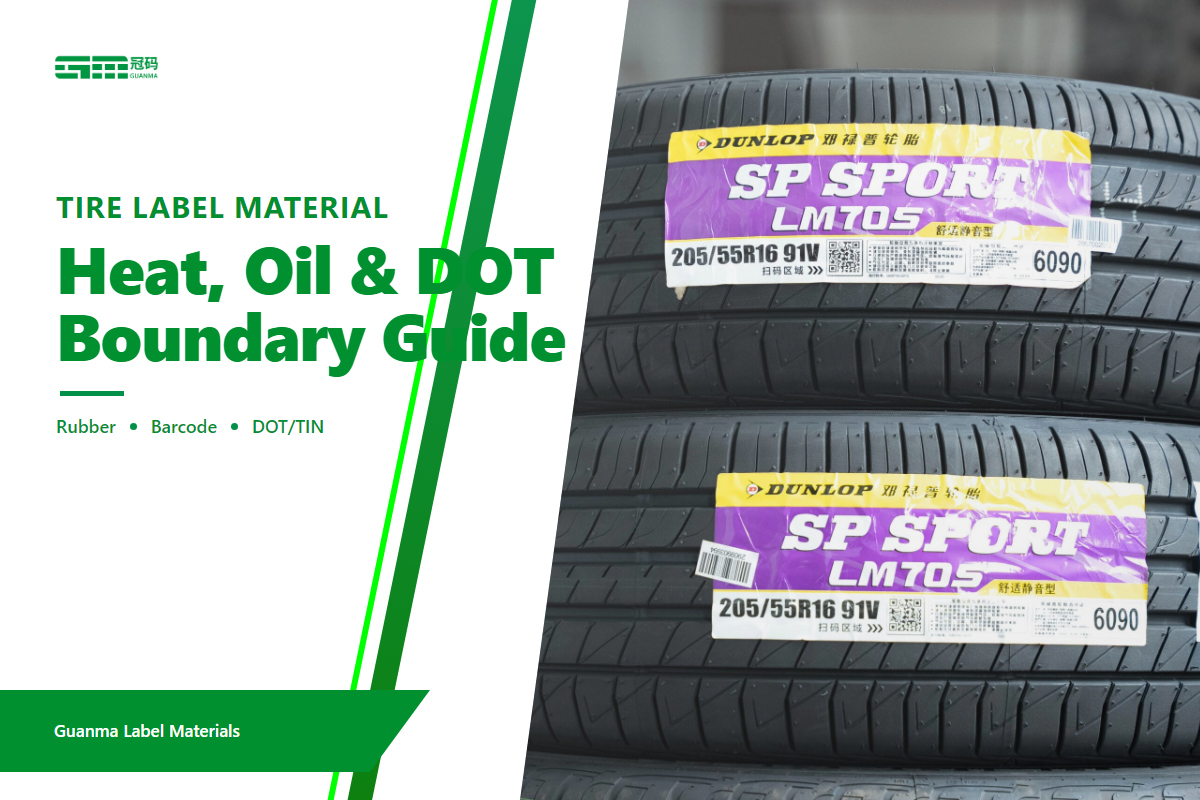
Como escolher o material da etiqueta do pneu é o processo de compatibilizar a superfície do pneu, a aplicação do rótulo, os dados de impressão e a função de conformidade antes de nomear um material para rótulos. Para compradores, um rótulo de pneu pode ser suporte de informações de varejo, registro de código de barras ou item de suporte de dados de conformidade. Pode precisar aderir à borracha áspera, conter dados de código de barras, permanecer limpo durante o armazenamento e evitar linguagem que exagere a conformidade com DOT ou UTQG.
Este guia separa a decisão sobre o material da decisão regulatória. O material autoadesivo para rótulos pode ajudar a manter as informações fixadas e legíveis, mas não torna um pneu certificado pelo DOT, não define um grau UTQG nem substitui as obrigações de marcação do fabricante do pneu.
Dica rápida: escolha o material para rótulos de pneus pelo tipo de rótulo e, em seguida, teste juntos o frontal, o adesivo, o liner, o processo de impressão e o percurso de manuseio na superfície real do pneu.
Resposta rápida: escolha por superfície, dados de impressão e função de conformidade
Os compradores devem definir a superfície do pneu e a tarefa de etiquetas antes de pedir PET, PP, BOPP, papel revestido ou um adesivo mais forte. Para programas automotivos, os requisitos de etiquetas devem ser escritos como um resumo de teste, não um apelido de material. Piso de borracha, curvas de parede lateral, óleo ou resíduo de liberação de molde, densidade de código de barras e informações necessárias sobre o pneu alteram o ponto de partida certo.
O risco de compras aumenta quando um nome de material para rótulos é aprovado antes de se conhecer o caminho da amostra, porque o resultado de 24 hr de permanência em uma banda de rodagem limpa não prevê 48 hr de armazenamento empilhado, manuseio oleoso ou verificações de leitura de código de barras. Nas discussões sobre amostras da Guanma, informe no mesmo briefing a superfície do pneu, o caso de uso da RFQ, dados de precisão de impressão e o registro de teste de aprovação/reprovação.
Use esta primeira passagem antes de comparar materiais:
- Superfície: piso, parede lateral, área do talão, pneu verde ou pneu de varejo acabado.
- Dados: cópia de varejo, código de barras, código QR, dados seriais, fluxo de trabalho RFID ou informações de rótulo energético.
- Exposição: calor, óleo, cera, armazenamento para uso externo, empilhamento, atrito ou exposição de curto prazo.
- Função de conformidade: suporte DOT/TIN, informações da etiqueta de piso UTQG, dados da etiqueta do pneu da UE ou rastreamento de inventário interno.
A mudança importante é simples: não pergunte, “Qual material é o melhor?” Pergunte, “Qual material pode conter esses dados sobre este pneu através deste processo, sem criar uma falsa alegação de conformidade?”
Primeiro Separe o Tipo de Etiqueta do Pneu
O tipo de etiqueta controla o ambiente de teste. Etiquetas de piso de varejo pós-cura, etiquetas de código de barras de armazém, etiquetas de processo pré-cura ou vulcanizadas e etiquetas de energia de pneus da UE podem ficar sob a frase “tire label”, mas não ficam voltadas para a mesma superfície, calor ou condições de remoção.
| Tipo de etiqueta | Principal risco material | O que verificar |
|---|---|---|
| Etiqueta da banda de rodagem de varejo | Piso áspero, remoção, resíduo, qualidade da exposição | Levante, comportamento da casca, clareza da impressão, resíduo após a remoção |
| Código de barras ou etiqueta logística QR | Digitalize o contraste após empilhamento e manuseio | Combinação de fita, revestimento, arranhões, distância de varredura |
| Etiqueta de processo pré-cura ou vulcanizada | Calor, pressão e compatibilidade de processos | Evidências separadas de processos de alta temperatura e testes de linha |
| Etiqueta de suporte de dados de conformidade | Exagerando o que o material do rótulo pode fazer | Redação oficial do DOT/TIN, UTQG ou escopo da UE |
Qual é a diferença entre uma etiqueta de pneu vulcanizada pré-cura e etiquetas de energia de pneu pós-cura?
Uma etiqueta de pneu pré-cura ou vulcanizada pertence ao processo de fabricação e pode precisar de resistência ao calor, tolerância à pressão e verificações de processamento de borracha em torno do processo de vulcanização. Etiquetas de energia dos pneus pós-cura ou etiquetas de varejo são aplicadas aos pneus acabados e avaliadas mais por adesão, remoção, risco de manchas, clareza de impressão e precisão das informações exibidas. Misturar esses dois trabalhos é uma fonte comum de especificações ruins.
Escolha o frontal: PET, papel sintético de PP, BOPP ou papel couché
O frontal é a face imprimível do rótulo. O contexto de materiais para rótulos de pneus da Guanma inclui PET, papel sintético de PP, BOPP e papel couché como pontos de partida práticos, mas esses nomes não são aprovações finais. O mesmo frontal pode se comportar de forma diferente após o revestimento, a combinação com o adesivo, a seleção do liner e a impressão.
Para uma solicitação de amostra Guanma, o erro a evitar é aprovar PET ou PP apenas pelo nome. Uma verificação de impressão e rub de 30 minutos, uma verificação de permanência de 24 horas e uma verificação de empilhamento de 48 horas podem expor rigidez, ondulação, resíduos, marcas de manchas ou falha no código de barras antes que um comprador bloqueie a ordem de produção.
| Frontal | Melhor uso inicial | Limite ao teste |
|---|---|---|
| PET | Código de barras durável, QR ou etiquetas de piso premium | Rigidez em superfícies curvas e comportamento de remoção |
| Papel sintético de PP | Etiquetas de piso de varejo que necessitam de boa impressão e resistência à água | Adesão em borracha áspera ou oleosa |
| BOPP | Display de curto prazo ou rótulos promocionais | Elevação da borda e arranhões durante o empilhamento |
| Papel revestido | Informações de varejo de curto prazo sensíveis aos custos | Umidade, abrasão e durabilidade do código de barras |
Se a sua escolha for entre PET e BOPP para uma etiqueta de filme, use um separado Comparação de filmes PET vs BOPP para verificar a rigidez, clareza e custo antes do teste adesivo específico do pneu.
Escolha Adesivo para Borracha Áspera, Oleosa ou de Baixa Energia
A seleção adesiva não é uma corrida para a aderência mais forte. Depois que a escolha do facetock estreita a superfície imprimível, a aderência inicial importa apenas quando a condição da superfície do pneu é conhecida; a aderência inicial alta não pode superar o óleo ou o resíduo de liberação do molde por si só. A banda de rodagem do pneu pode ser áspera, curva, empoeirada, oleosa, cerosa ou afetada por resíduos de liberação de molde. Um adesivo mais pesado pode melhorar o contato em alguns casos, mas também pode aumentar o risco de lodo da borda, resíduos, corte e limpeza da impressora.
ASTM D3330/D3330M-04 (2025) é útil como vocabulário de método de teste de aderência de descascamento para fita sensível à pressão, mas seus próprios metadados alertam contra o tratamento de valores de descascamento como prova direta de desempenho funcional. Para etiquetas de pneus, a lição útil é testar no pneu real, não copiar um número de folha de laboratório.
| Condição | Pergunta adesiva | Teste antes da ordem |
|---|---|---|
| Piso áspero | O adesivo pode molhar pontos de contato suficientes? | Verificação de elevação 24 horas após a aplicação manual ou da máquina |
| Descarte de óleo, cera ou molde | A superfície precisa de limpeza, adesivo diferente ou ambos? | Teste de amostra A/B de mesma superfície com resíduo anotado |
| Etiqueta do piso do código de barras | A aderência ou a exsudação afetarão a qualidade de impressão e digitalização? | Imprima, empilhe, esfregue e digitalize após o armazenamento |
Os agentes desmoldantes podem impedir a adesão das etiquetas dos pneus?
Sim. Resíduos de desmoldante podem reduzir o contato entre o adesivo e a borracha, especialmente em bandas de rodagem texturizadas. A resposta prática não é supor com base em uma ficha técnica. Teste o frontal, o adesivo, o liner e o processo de impressão escolhidos na mesma superfície de pneu e no mesmo percurso de manuseio que serão usados na produção.
Risco de calor, óleo e superfície: o que testar antes de fazer o pedido
A resistência ao calor, a resistência à temperatura e a exposição ao óleo devem ser tratadas como tarefas de validação de amostras. Um material que parece adequado em um livro de amostras pode levantar, apresentar curvatura, borrar ou deixar resíduos após empilhamento, transporte ou armazenamento para uso externo. Por isso, o plano de ensaio deve incluir a estrutura completa do rótulo, não apenas o frontal.
Registre cada amostra como uma estrutura, e não como um nome de material isolado. O registro útil inclui frontal, família de adesivos, gramatura-alvo de aplicação, liner, processo de impressão, ribbon ou tinta, pressão de aplicação, tempo de permanência e a condição da superfície do pneu. Se uma dessas entradas mudar, o resultado da amostra anterior deve ser tratado como orientação, e não como liberação para produção.
- Elevador: verifique bordas e cantos após aplicação, armazenamento e empilhamento.
- Ooze: inspecione as bordas da bobina, as bordas de meio-corte, o percurso da impressora e a liberação do liner.
- Resíduo: remova etiquetas de varejo de pneus de amostra e grave a transferência adesiva.
- Contraste de código de barras: imprima a densidade real do código e digitalize após esfregar e manusear.
- Curvatura: teste a memória do rolo, a curvatura do pneu e o tamanho da etiqueta juntos.
- Exposição: inclua óleo, cera, temperatura, umidade e tempo de armazenamento se essas condições forem reais.
Para um planejamento de durabilidade mais amplo, mantenha os testes específicos dos pneus separados dos gerais métodos de teste de rótulo duráveis. Métodos gerais ajudam a definir a linguagem do laboratório; a superfície do pneu ainda decide o resultado da amostra.
DOT/TIN e UTQG: O que o material da etiqueta pode e não pode fazer
As regras DOT/TIN e UTQG definem os deveres de informação dos pneus. Eles não criam uma categoria genérica de material de etiqueta em conformidade com o “DOT”. No contexto do Departamento de Transportes dos EUA, 49 CFR 574,5 abrange a marcação de identificação dos pneus, e a NHTSA explica o Número de Identificação dos Pneus DOT como uma ferramenta de segurança e recall.
UTQG precisa de uma redação cuidadosa. Sob 49 CFR 575.104, as classes de piso, tração e temperatura são informações de desempenho dos pneus. O material da etiqueta não define essas classes. Para etiquetas UTQG anexadas à banda de rodagem aplicáveis, porém, as opções de material, adesivo, impressão e layout têm uma função física limitada: a etiqueta não deve ser facilmente removível e as entradas de classificação devem permanecer indeléveis e vinculadas a regras em termos de posicionamento e conteúdo.
Nota de conformidade: A alegação excessiva é o verdadeiro risco aqui, pois as regras de identificação de pneus 49 CFR e UTQG regem as obrigações relativas às informações dos pneus, em vez de certificarem um material para rótulos universal. Guanma trata isso como um problema de controle da redação e validação de amostras: mantenha a linguagem de DOT/TIN, UTQG e rótulo de pneus da UE em linhas de especificação separadas.
| Reivindicação | Redação segura |
|---|---|
| “Este material de rótulo é certificado DOT.” | Evitar. Digamos que o material suporte informações legíveis do pneu e deve ser testado em relação à função de etiqueta pretendida. |
| “O material do rótulo determina UTQG.” | Evite. As classificações UTQG decorrem de informações de desempenho do pneu, não do material para rótulos. |
| “Material não tem nenhum papel.” | Muito amplo. Para etiquetas de piso aplicáveis, fixação, impressão indelével e layout ainda importam. |
Legibilidade de impressão e código de barras: transferência térmica, QR e RFID
Os rótulos de pneu legíveis por máquina dependem tanto da precisão do sistema de impressão quanto do material para rótulos. Códigos de barras densos, códigos QR, dados seriais, fluxos de trabalho RFID, impressão por transferência térmica e outros métodos de impressão exigem que material frontal, revestimento, ribbon ou tinta, calor da impressora, manuseio e distância de leitura sejam testados como um único conjunto.
O Estudo de Identificação Eletrônica de Pneus da NHTSA discute códigos QR, códigos de matriz de dados e identificação eletrônica como tecnologias de informação de pneus. Isso apoia uma tendência, e não um requisito geral atual de que cada etiqueta de pneu carregue QR ou RFID. As etiquetas dos pneus da UE têm o seu próprio contexto QR e EPREL, que não deve ser misturado com a redação DOT/TIN dos EUA.
A falha do código de barras é um problema de produção, não apenas de impressão, pois o mesmo código pode ser lido após a impressão e depois falhar após 30 min de atrito ou 48 hr de armazenamento empilhado. Nos ensaios de amostras da Guanma, registre o modelo da impressora, o ribbon, o tamanho do código, a distância de leitura e o percurso de manuseio do pneu antes de aprovar um rótulo de fluxo de trabalho com código de barras ou RFID.
Preciso de uma fita especial de transferência térmica para etiquetas de código de barras de pneus?
Você pode precisar de uma combinação de fita, revestimento e facestock correspondente se a etiqueta transportar dados de código de barras, QR, serial ou de varejo por meio de empilhamento e manuseio. Teste a impressora real, o substrato, o tamanho do código e a distância de digitalização. Uma fita que imprime nitidamente em um filme pode manchar ou arranhar em outro.
Decisões sobre liner e conversão que evitam escorrimento nas bordas
A escolha do liner e a qualidade da conversão afetam se os rótulos de pneus passam de forma limpa por impressoras e aplicadores. ASTM D5375/D5375M-98(2019) e as evidências dos métodos de ensaio FINAT indicam um conjunto interligado de variáveis: liberação do liner, gramatura de aplicação do adesivo, pressão da faca de corte, adesão subsequente, armazenamento e manuseio da bobina.
O principal limite é que nenhuma fonte pública encontrada fornece um limite universal de escorrimento nas bordas para rótulos de pneus. ASTM D5375 apoia ensaios de aderência e uniformidade do liner de liberação para material autoadesivo para rótulos sensível à pressão, mas também observa que o suporte, o liner siliconado, o revestimento de liberação, o adesivo e a gramatura de aplicação podem afetar o resultado. FINAT lista métodos relacionados à liberação, gramatura de aplicação, pressão da faca de corte, adesão da tinta e manuseio, ao mesmo tempo que afirma que os métodos, por si só, não implicam especificações de desempenho.
Regra de produção: especifique juntos a liberação do liner, a pressão da faca de corte, a gramatura de aplicação do adesivo, o armazenamento da bobina e as verificações do percurso de impressão. Não aprove uma estrutura de rótulo para pneus apenas com base na pegajosidade do adesivo.
Se a seleção do liner de liberação for uma decisão de compra separada, compare opções de liner de liberação antes das escolhas finais de corte e largura de rolo.
O Mapa Risco Etiqueta Pneus Quatro Zonas
Este Mapa de Risco de Etiqueta de Pneu de Quatro Zonas pode ser usado para apoiar as decisões de compra, apresentando o risco de fazer uma escolha de material para quatro tipos diferentes de trabalho de etiqueta de pneu.
Lista de verificação do mapa de risco da etiqueta dos pneus de 4 zonas
Os pontos de verificação abaixo são campos RFQ para registrar, não limites de passagem universais. Use-os para comparar construções de amostras sob as mesmas condições de pneu, manuseio, impressão e armazenamento.
| Categoria | Caminho do material de partida | Registro no teste amostral | Limite principal |
|---|---|---|---|
| Etiqueta do piso do varejo 1. retail | Papel sintético de PP, PET, BOPP ou papel couché | 24 horas de permanência, armazenamento empilhado 48 horas e retenção de 7 dias se seu plano de qualidade usar esses pontos de verificação | Levante do teste, resíduo, clareza da impressão, e remoção |
| Etiqueta do piso 2. oil-exposta | PP ou PET com adesivo compatível com borracha | 24 horas de permanência, verificação de resíduos 48 horas e método exato de limpeza | Mais aderência não pode substituir as evidências de preparação de superfície |
| Etiqueta de varejo removível 3 | BOPP, papel revestido ou construção adesiva removível | Comportamento de 24 horas e 7 dias de remoção na superfície real do pneu | O alvo de resíduos é importante tanto quanto manter o poder |
| Código de barras 4. durável ou etiqueta QR | PET ou PP com revestimento de transferência térmica correspondente | armazenamento de 48 horas, verificação de arranhões de 30 minutos e resultado da varredura após o manuseio | Dados legíveis são a condição de sucesso, não o nome do facestock |
| Etiqueta de fluxo de trabalho 5. serializada ou RFID | Construção do PET ou do PP combinada ao caminho da impressora e do leitor | Verificação de manuseio 24 horas, verificação de armazenamento 48 horas e status de verificação antes/depois | Mantenha os dados de rastreabilidade separados das reivindicações de conformidade |
| Etiqueta curva da parede lateral 6. | Filme ou papel conformável com adesivo compatível | Verificação de borda de 30 minutos e reteste de 24 horas no mesmo raio da parede lateral | Os resultados da amostra de tela plana não comprovam o desempenho da curva |
| Etiqueta do processo 7. pre-cure ou vulcanized | Rota de construção separada de alta temperatura | Temperatura real do processo em °C e tempo de permanência em min a partir do registro da planta de pneus | Não valide a partir de evidências de etiqueta de piso no varejo |
| Suporte do tipo piso 8. UTQG | Material que suporta fixação e legibilidade | Revisão de legibilidade de entrada de grau 100% após a aplicação | Nenhuma reivindicação de grau DOT ou UTQG em nível de material |
| 9. suporte à produção DOT/TIN | Caminho de material e impressão que mantém os dados de identificação legíveis | 49 Revisão de controle de redação do CFR 574.5 mais uma verificação de texto do rótulo de amostra de 100% | O rótulo suporta tratamento de dados; não é um certificado DOT |
| 10. Energia dos pneus da UE ou etiqueta QR | Material compatível com impressão de código QR e necessidades de apresentação regional | Verificação da varredura de 100% QR em amostras retidas após o armazenamento de 24 hr | Não misture a redação do EPREL da UE com a redação do DOT/TIN dos EUA |
A matriz de limite de calor-óleo-DOT companheira é o filtro final: o calor muda a rota de construção, o óleo muda o teste adesivo e DOT/TIN ou UTQG muda a disciplina de redação. Passar um filtro não significa passar pelos outros dois.
Validação de Amostras e Lista de Verificação RFQ Antes da Produção
As RFQs tornam-se resumos de ensaio quando os detalhes orientam o fornecedor a compatibilizar material, adesivo, liner e sistema de impressão para o trabalho específico de rótulos de pneus. A falta de detalhes é um risco porque uma amostra com 24 hr de tempo de permanência, 48 hr de armazenamento e evidências de leitura de código de barras ainda pode falhar se a superfície do pneu de produção, a impressora ou a redação da certificação mudarem.
Registro de validação de amostra de etiqueta de pneu
| registro validação | fonte evidência | valor medido para anotar | decisão uso |
|---|---|---|---|
| 1. verificação de permanência | Amostra vegetal | 24 horas na banda de rodagem real | Confirma o risco de primeira adesão |
| armazenamento empilhado 2. | Amostra armazém | 48 hr sob a carga de empilhamento do pneu | Mostra o elevador da borda ou o enrolamento após a pressão |
| 3. Verificação de algema | Manuseio de amostra | 30 minutos de revisão de fricção e digitalização | Separa o desgaste da impressão da falha adesiva |
| 4. exposição ao calor | Amostra de processo | Temperatura real do pneu-planta em °C | Separa rótulos de pré-cura de rótulos de varejo |
| 5. revisão de remoção | Amostra varejo | 7 dias de remoção e verificação de resíduos | Confirma o limite adesivo removível |
| 6. Varredura QR | amostra da UE ou rastreabilidade | 100% QR scan após armazenamento 24 hr | Confirma que os dados legíveis por máquina permanecem utilizáveis |
| 7. Redação UTQG | 49 Revisão do CFR 575.104 | Revisão de texto de entrada de série 100% | Impede reivindicações de nível de material |
| 8. Redação PONTO/ESTANHO | 49 Revisão do CFR 574,5 | 100% rótulo-revisão do texto antes da ordem | Impede que o material seja vendido como certificação |
| 9. Liberação do liner | Referência ASTM D5375 e FINAT | Notas de liberação e de corte por faca por rolo | Relaciona o comportamento do liner à limpeza da impressora |
Lista de verificação RFQ estática para amostras de etiquetas de pneus
- Tipo de pneu, faixa de tamanho, colocação da banda de rodagem ou parede lateral e condição da superfície.
- Tipo de etiqueta: banda de rodagem de varejo, código de barras, QR, fluxo de trabalho RFID, processo de pré-cura ou suporte a dados de conformidade.
- Candidatos a frontal: PET, papel sintético de PP, BOPP, papel couché ou outro filme especificado.
- Alvo adesivo: borracha áspera, borracha oleosa, uso removível no varejo, rastreamento permanente ou remoção sensível a resíduos.
- Método de impressão, fita ou tinta, densidade do código de barras, tamanho QR e distância de varredura.
- Liner, largura da bobina, tamanho do tubete, tolerância de meio-corte e modelo de aplicador ou impressora.
- Tempo de armazenamento, calor, umidade, empilhamento, exposição para uso externo e rota de transporte.
- Mercado-alvo e escopo de redação para DOT/TIN, UTQG, etiqueta de pneu da UE ou rastreabilidade interna.
Revise as soluções do rótulo somente após a correção das condições da amostra. Depois que o checklist estiver pronto, revise o da Guanma soluções de materiais para etiquetas de pneus página para caminhos de amostra e material. Use essa página como transferência comercial; mantenha este artigo como guia de decisão.
Tendência: informações de pneus legíveis por máquina elevam o padrão do material para rótulos
As informações sobre pneus legíveis por máquina estão movendo a seleção de materiais para uma disciplina de impressão e densidade de dados mais alta. A página de pneus da Comissão Europeia vincula as etiquetas de pneus da UE ao acesso ao código EPREL e QR, enquanto a pesquisa da NHTSA dos EUA discute tecnologias eletrônicas de identificação de pneus, como QR, Data Matrix e RFID.
Os compradores devem tratar essa tendência como um risco de verificação, porque adicionar QR, Data Matrix ou linguagem RFID sem a jurisdição certa pode criar confusão na RFQ. A verificação prática da Guanma é separar o acesso EPREL da UE, a identificação DOT/TIN dos EUA e a rastreabilidade interna da fábrica antes que qualquer amostra de material seja aprovada.
Para compradores, a ação não é exigir todas as tecnologias em todos os rótulos. É definir a jurisdição, a densidade de dados, o método de leitura e a vida útil do rótulo antes de aprovar o material para rótulos. O contexto EPREL da UE, o contexto DOT/TIN dos EUA e a rastreabilidade interna da fábrica devem permanecer em linhas de especificação separadas.
FAQ Sobre o Material da Etiqueta do Pneu
Qual facetock funciona melhor para etiquetas de piso de pneus?
PET e papel sintético de PP são pontos de partida sólidos quando um rótulo para banda de rodagem de pneu precisa permanecer legível durante empilhamento, manuseio e leitura de código de barras. BOPP pode ser adequado para rótulos promocionais mais leves, enquanto o papel couché é indicado para trabalhos de menor duração ou sensíveis ao custo. A escolha final ainda depende da superfície do pneu, do processo de impressão, do objetivo de remoção e do resultado da amostra. Se o mesmo SKU passa por exposição no varejo, empilhamento em armazém e posterior leitura de inventário, trate esse percurso como um pacote de ensaio, e não como três conversas separadas sobre material.
Qual adesivo é usado para etiquetas de pneus em superfícies de borracha?
As etiquetas dos pneus geralmente precisam de um adesivo sensível à pressão compatível com borracha, adesivo termofusível ou outro adesivo de rotulagem de pneus compatível com borracha áspera. Se a superfície tiver óleo, cera, resíduo de liberação de molde ou comportamento de baixa energia, teste o adesivo no pneu real. Mais adesivo nem sempre é mais limpo porque pode aumentar o risco de lodo e resíduos.
Como os requisitos DOT/TIN afetam a escolha do material da etiqueta do pneu?
As regras DOT/TIN afetam as informações de identificação do pneu e as obrigações de marcação, mas não transformam o material para rótulos sensível à pressão em certificado de conformidade. A escolha do material deve contribuir para informações legíveis, fluxos de trabalho de código de barras ou QR e rastreabilidade, enquanto as obrigações oficiais permanecem vinculadas ao pneu e à regra aplicável.
Os agentes desmoldantes podem impedir a adesão das etiquetas dos pneus?
Sim. resíduo de liberação de molde pode reduzir o contato adesivo na banda de rodagem áspera ou borracha tratada. Teste a construção escolhida na mesma superfície real do pneu e caminho de manuseio usado na produção ou distribuição, em seguida, registre o elevador, resíduo, condição de impressão e comportamento de remoção.
Preciso de uma fita especial de transferência térmica para etiquetas de código de barras de pneus?
Você pode precisar de uma combinação de fita, revestimento e facestock correspondente, especialmente quando a etiqueta carrega dados de código de barras, QR ou serial por meio de empilhamento e manuseio. Teste a impressora real, o substrato, o tamanho do código e a distância de digitalização antes da produção e, em seguida, repita a digitalização após o armazenamento.
As etiquetas dos pneus da UE e as etiquetas dos pneus DOT dos EUA são a mesma coisa?
Não. As etiquetas de pneus da UE incluem informações sobre rotulagem energética e acesso QR ligado a EPREL para pneus vendidos sob o âmbito da UE. As regras DOT/TIN dos EUA referem-se à identificação de pneus e ao contexto das normas federais. Um programa global deve separar a jurisdição, as informações necessárias e a validação do material antes do pedido.
Referências e fontes
- eCFR 49 CFR 574.5, Requisitos do Número de Identificação dos Pneus
- eCFR 49 CFR 575.104, Padrões Uniformes de Classificação de Qualidade de Pneus
- Segurança dos pneus NHTSAWise e orientação da etiqueta dos pneus
- Interpretação NHTSA 12632 wkm em condições de etiqueta de piso UTQG
- ASTM D3330/D3330M-04(2025), adesão de descascamento de fita sensível à pressão
- ASTM D5375/D5375M-98(2019), remoção do liner em alta velocidade de um material para rótulos sensível à pressão
- Métodos de Teste FINAT, lista de referência da 11a edição
- Informações sobre produtos de pneus da Comissão Europeia e contexto EPREL
- Estudo de identificação eletrônica de pneus NHTSA
POR QUE ESCREVEMOS ISSO
Sobre Guanma
Guanma é fabricante de filme autoadesivo, material autoadesivo para rótulos e liner de liberação para aplicações de rotulagem industrial. Nossa equipe trabalha com filme de PET, papel sintético de PP, papel couché, PSA hot-melt, PSA acrílico, adesivo à base de água, liner glassine e papel de liberação CCK.
Escrevemos estes guias para ajudar convertedores de rótulos, compradores de embalagens e equipes de compras industriais a escolher materiais com base em condições reais de aplicação, em vez de nomes genéricos de catálogo. A maioria das falhas de rótulos decorre de uma incompatibilidade entre frontal, adesivo, liner, substrato, temperatura, processo de impressão ou ambiente de uso final. Nosso conteúdo explica essas decisões em termos práticos.
Nossa Experiência
A orientação de materiais da Guanma é baseada na experiência de revestimento, laminação, corte, validação de amostras e solução de problemas do cliente em toda a produção da Tailândia e do Vietnã. Nós nos concentramos em problemas comuns de rótulos industriais, como descascamento a temperatura fria, exposição a óleo e produtos químicos, envelhecimento UV, durabilidade de impressão, força de liberação, MOQ, prazo de entrega e testes correspondentes ao substrato.
Nossa Experiência
Usamos lógica prática de ensaios e normas reconhecidas da indústria de rótulos, incluindo métodos FINAT FTM de descolamento e cisalhamento, métodos ASTM de ensaio de descolamento, FDA 21 CFR 175.105, REACH, RoHS, FSC e controle de qualidade relacionado à ISO 9001. Para material de rótulos personalizado, sempre recomendamos testar amostras no substrato real do comprador antes da produção completa.
SYS.PERFIL
Visite o site
Perfil de contato
Nome
Equipe Fabricação Guanma
Marca Nome
Guanma
País
Produção Tailândia + Vietnã
Modelo
B2 B / Atacado /revestimento personalizado
Principais Produtos
Filme autoadesivo, material para rótulos, papel de liberação & liner
Contato
Envie RFQ através do Formulário do Site
Site
https://guanmalabel.com/
Postagens relacionadas
Em alta agora