Ponte en contacto con Guanma

Actualizado en julio de 2026
Especificaciones rápidas
| Facesco de película de PET | 36-75 µm de espesor |
| Faces de película sintética de PP | 70-90 µm de espesor |
| Facestock de papel recubierto (semiglúcido) | 80-90 gsm |
| Facestock de papel térmico | 80 g/m² |
| Fuerza de pelado | 3-18 N por 25 mm, por FINAT FTM1 |
| Temperatura de servicio | -40°C a +150°C, varía según la química del adhesivo |
3-18 N/25mmla fuerza de pelado varía entre pares adhesivos frontales
-40° la +150°Cenvolvente total de temperatura de servicio, por química
4principales familias de materiales faciales
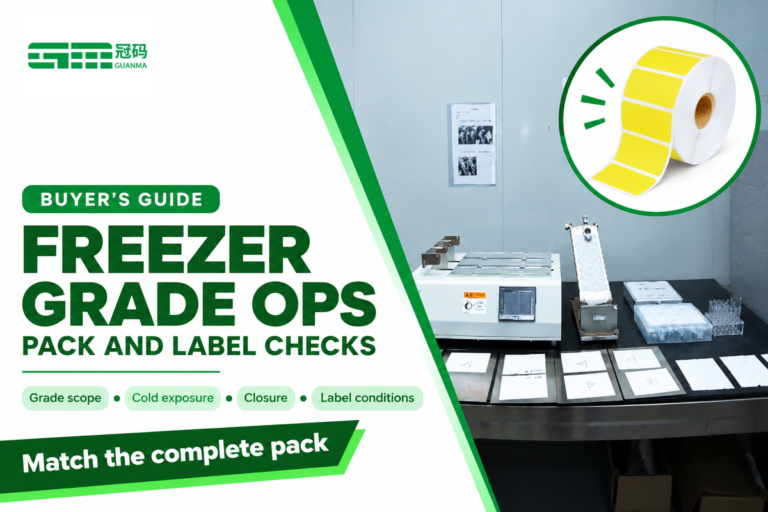
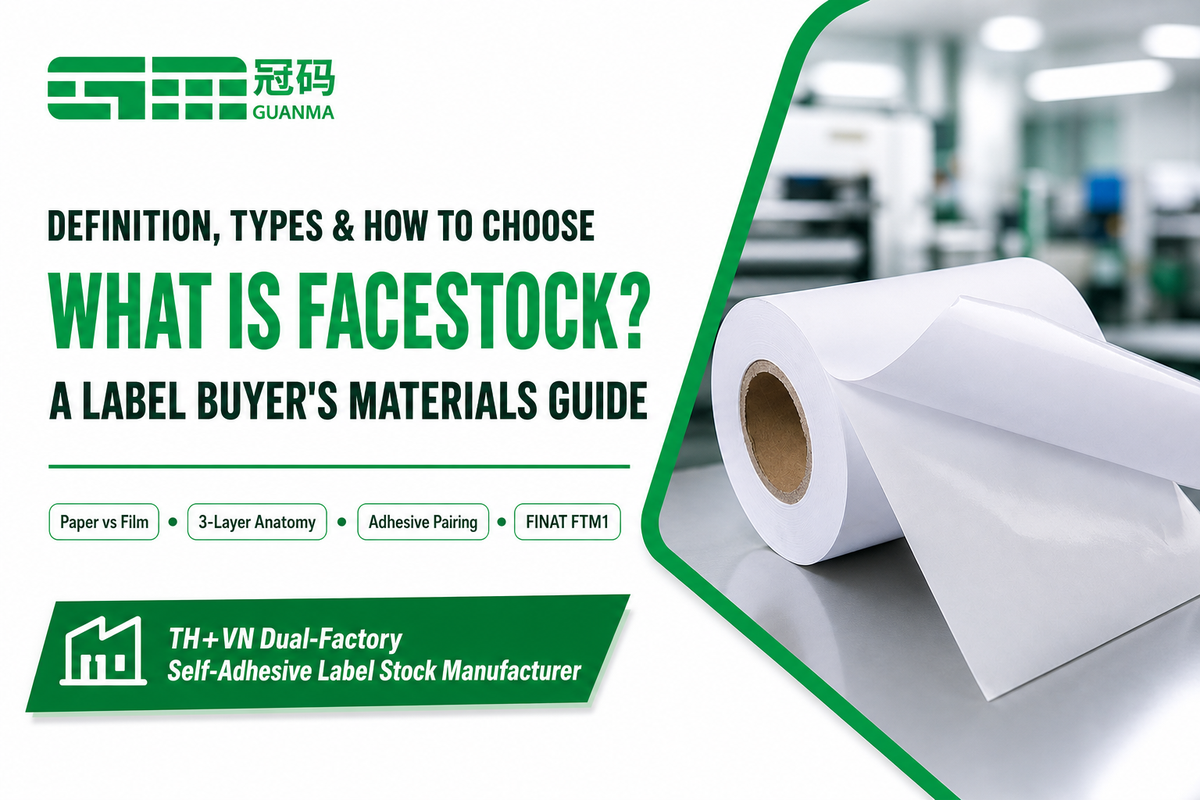
El frontal es la capa superior imprimible de una etiqueta sensible a la presión —la superficie que lleva su logotipo, código de barras y texto— situada sobre el adhesivo y el liner de liberación en una construcción de tres capas que a fabricante de películas autoadhesivas fabrica bajo pedido. Si alguna vez especificó una etiqueta y recibió una cotización que enumera «facestock» como una partida independiente de «adhesive» y «liner», esta guía explica exactamente qué significa esa palabra, qué familia de materiales se adapta a su aplicación y cómo guiar a un convertidor de etiquetas en una decisión sobre el frontal sin adivinar. Algunos compradores simplemente la llaman la capa imprimible de la etiqueta, aunque esa abreviatura omite el adhesivo y el liner que están debajo.
El frontal es la capa superior visible e imprimible de una etiqueta sensible a la presión, laminada sobre un adhesivo sensible a la presión y un liner de liberación. Se presenta en dos familias generales, papel y film, y el film se divide a su vez en grados de poliéster (PET), polipropileno (BOPP) y polietileno (PE), con espesores aproximados de 36 a 90µm según la aplicación.
Datos clave
- El espesor de la cara no predice la resistencia al calor; La química del polímero, no el calibre, gobierna cuánta temperatura sobrevive una cara.
- “facestock” y “marca de etiquetas” se utilizan vagamente como sinónimos en la industria, pero no son términos perfectamente intercambiables.
- Una construcción de etiqueta sensible a la presión de tres capas (frontal, adhesivo y liner de liberación) está documentada explícitamente en la literatura de procesos de la EPA de EE. UU., no solo en textos de marketing del sector.
- Los valores de adherencia al pelado para pares adhesivo frontal suelen oscilar entre 3 y 18 N/25 mm, según la química; un único número de “fuerza de pelado” sin un contexto químico casi no tiene sentido.
¿qué es el facestock? (Definición + Terminología)

El frontal es la capa superior de una construcción de etiqueta sensible a la presión: el material que recibe la impresión y queda frente al cliente. Se sitúa sobre una capa de adhesivo sensible a la presión y un liner de liberación, y las tres capas juntas forman lo que los convertidores llaman «label stock». En resumen, el frontal funciona como la base de una etiqueta —la capa que todo lo demás en la construcción existe para respaldar.
La Administración Nacional de Archivos y Registros de EE. UU. describe directamente el ensamblaje en una especificación de adquisiciones federales: material de frontal que lleva un adhesivo con un liner de liberación debajo, la misma anatomía utilizada en toda la industria de etiquetas.[1] La documentación de procesos de la EPA de EE. UU. para la fabricación de etiquetas describe la misma estructura: un sustrato recubierto de adhesivo se lamina bajo presión con el «face stock» para crear una laminación de tres capas de frontal, adhesivo y liner.[2]
En la práctica, los convertidores y compradores suelen utilizar “material facial” y “material de etiqueta” indistintamente en la conversación. Ese uso flexible no es exactamente incorrecto, pero oculta una distinción real: el material facial se refiere específicamente a la capa imprimible, mientras que el material de etiquetas se refiere más a menudo al laminado terminado, material facial más adhesivo y revestimiento, que se solicita, convierte y especifica como un solo producto. Cuando una hoja de especificaciones enumera la “composición del stock de etiquetas”, generalmente describe las tres capas, no solo la superior. Saber que la diferencia importa la primera vez que estás de visita con un convertidor y te preguntan si quieres cambiar el “material facial” o el “material” (esas son dos preguntas diferentes).
¿qué significa stock de etiquetas?
El material autoadhesivo para etiquetas es el laminado sensible a la presión completo —frontal, adhesivo y liner de liberación, todos unidos— que se vende a convertidores en su estado de materia prima sin troquelar, como producto intermedio a partir del cual se troquelarán las etiquetas. Los compradores lo solicitan como un producto combinado, aunque una hoja de especificaciones aún divide el laminado en sus tres capas nombradas.
Las especificaciones internas de materiales de la Biblioteca del Congreso para etiquetas adhesivas sensibles a la presión enumeran los criterios de prueba y calidad requeridos para ese laminado en un solo documento, combinando requisitos de brillo del frontal, desempeño del adhesivo y liberación del liner, en lugar de documentos de requisitos independientes para los tres laminados individualmente.[3] La guía de la Organización Internacional de Normalización sobre cómo pedir etiquetas autoadhesivas se refiere de manera similar al “material de la etiqueta”, que denota todo el laminado cuando se refiere a información que los compradores deben especificar al pedir o comparar diferentes construcciones de revestimiento adhesivo frontal.[4]
💡 Consejo profesional
Al escribir una solicitud de cotización, si solo solicita la capa superior imprimible del laminado (como si sustituyera solo el material frontal mientras conserva el adhesivo), solicite “material frontal”; de lo contrario, solicite “la construcción completa” o “material de etiqueta”. Estos materiales están almacenados y tienen precios diferentes por los convertidores.
Conclusión clave: el material frontal se refiere específicamente a la capa superior imprimible; “la construcción completa” o “material de etiqueta” se refiere al laminado completo.
Tipos de materiales de revestimiento, soportes para rostro de papel versus soportes para rostro de película (BOPP, PET, PP)

Los materiales frontales se dividen en dos categorías generales, papel y película. La película se divide en tres categorías principales: películas de poliéster, polipropileno y polietileno.
Cada categoría varía en coste, durabilidad e idoneidad para impresión, y las páginas individuales de materiales de los convertidores sirven en muchos casos como mejor indicador del espectro de opciones que una única ficha de especificaciones. La mayoría de los fabricantes independientes de material frontal clasifican sus productos de película en más de seis grados distintos solo de material de película, que abarcan policarbonato, vinilo, poliéster, polipropileno, poliimida e incluso algunos papeles; esto es considerablemente más específico que la clasificación “paper or film” que suelen presentar las explicaciones básicas. Un pequeño número de convertidores especializados también ofrece un material frontal de película de poliéster o vinilo fuera de la gama estándar PET/BOPP/PE, aunque sigue siendo un nicho reducido del etiquetado industrial sensible a la presión.
Cinta de papel
- Nivel de menor costo, gama de colores/acabados más amplia
- Lo mejor para etiquetas de corta duración, interiores y de ambiente seco (minorista, envío, logística)
- Poca resistencia a la humedad, productos químicos y abrasión sin laminación
- Guanma papel estucado semibrillante funciona entre 80 y 90 g/m²; El papel térmico funciona a 80 g/m²
Acciones faciales de película (BOPP, PET, PE)
- Mayor costo, resiste el agua, los productos químicos y la abrasión
- BOPP (polipropileno orientado biaxialmente): rígido, de alta claridad, común en el etiquetado de alimentos y bebidas
- PET (poliéster): alta resistencia al calor y a los productos químicos, dimensionalmente estable
- La película de PET Guanma tiene una duración de 36-75 µm; La película sintética de PP tiene una duración de 70-90 µm
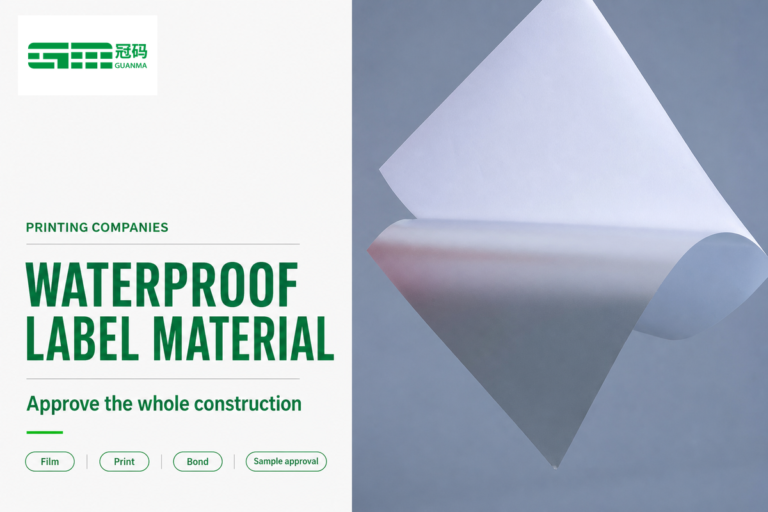
Muchos fabricantes y proveedores independientes de soportes faciales para películas y soportes faciales para etiquetas emplean una combinación de un revestimiento metalizado u otra capa de película flexible encima de la capa estándar de BOPP o PET para elevar el impacto estético en entornos de embalaje de marca y minoristas donde el atractivo visual es un factor de compra principal, un efecto imposible de replicar con soportes faciales de papel; si bien es un poco más caro, el atractivo de los soportes faciales sintéticos suele ser suficiente para justificar el aumento del costo. El papel sin estucar sigue siendo considerablemente menos duradero que cualquier opción de película una vez que la humedad o la manipulación repetida entran en escena, lo cual es una de las razones por las que los convertidores incumplen el trabajo exterior para filmar a pesar del mayor costo de la pieza.
El impacto de los lanzamientos de productos reales en la industria de etiquetas ofrece una aproximación de los espesores de película típicos. Por ejemplo, el lanzamiento reciente de un producto frontal BOPP (2024) se especificó en 58 µm, incluido el revestimiento superior imprimible,[5] y otro lanzamiento de producto para una película frontal transparente recubierta de brillo en un lado se especificó en 46 µm, descrita como 10% más delgada que la mayoría de las películas frontales del mercado.[6] Nuestras líneas de film PET y PP de Guanma trabajan entre 36-90µm según el grado, dentro de los límites de lo que el sector reconoce como un rango estándar de espesores para frontales de film. Un registro de procesos del gobierno de EE. UU. para la fabricación de etiquetas confirma de forma independiente esta división entre papel y film a nivel de material, al describir el frontal como la capa de sustrato que recibe impresión antes de la laminación con adhesivo y liner.[2]
Los rangos de catálogo para fabricantes independientes de películas frontales suelen extenderse desde 12 µm hasta aproximadamente 100 µm.
¿qué película se utiliza para el facestock?
Para la mayoría de las etiquetas sensibles a la presión, PET (poliéster) y BOPP (polipropileno orientado biaxialmente) son las materias primas de película seleccionadas con mayor frecuencia; El PE (polietileno) generalmente se especifica para aplicaciones de etiquetas más flexibles o comprimibles. Si la etiqueta necesita resistencia térmica, química o a largo plazo, el PET es la opción adecuada; tales como etiquetas de identificación para productos electrónicos y productos duros.
Sin embargo, si el costo y la claridad son más importantes que la resistencia absoluta de la etiqueta y una etiqueta de alimentos y bebidas solo requerirá una durabilidad moderada de la etiqueta, normalmente se usa BOPP. El PE, la más adaptable de las tres películas, es ideal para etiquetas redondas, contorneadas o comprimibles en las que el PET y el BOPP más rígidos se agrietarían o arrugarían. Como la película más flexible de la línea, el PE tolera esa flexión repetida sin que se agrieten las superficies que muestran las facestocks más rígidas.
⚠️ Concepto erróneo común
Una cara más gruesa no hace que la cara sea más dura automáticamente. En la familia de productos de polipropileno, los materiales más gruesos tienen límites de temperatura de aproximadamente 93°C, mientras que las versiones más delgadas de poliéster y poliimida en las mismas familias de productos soportan temperaturas continuas significativamente más altas. La resistencia de la etiqueta y el rendimiento térmico generalmente aumentan con la longitud de la cadena del polímero en lugar del espesor, por lo que en una aplicación en caliente, el poliéster más delgado puede funcionar mejor que una cara de polipropileno más gruesa.
El hecho de que una cara sea más débil en un conjunto de condiciones de exposición no significa que no será la cara adecuada para otro conjunto; por ejemplo, una cara de etiqueta de papel estucado con una capa de mejora de la resistencia de la etiqueta puede ser adecuada para una aplicación en interiores, pero no para exteriores. Es importante identificar qué factores importan más para la aplicación de etiquetas y seleccionar la película que sea más adecuada para funcionar en esas condiciones específicas.
Conclusión clave: primero haga coincidir la química de la película con su perfil de exposición y luego preocúpese por el grosor (una parte frontal más gruesa con la química incorrecta aún fallará temprano).
Acabados frontales, mate, brillante y semibrillante de papel recubierto

Las facestocks de papel recubierto pueden tener uno de tres acabados: mate, brillante o semibrillante. Esto determina qué tan bien la etiqueta acepta la tinta y qué tan bien funciona en presencia de estantes; la mejor opción depende en gran medida de la aplicación específica del producto. Para la mayoría de los propósitos, el semibrillante proporciona un equilibrio: es lo suficientemente nítido como para reproducir detalles finos y, sin embargo, lo suficientemente borroso como para rechazar huellas dactilares, a diferencia del brillo total.
Los recubrimientos de calidad van más allá de las apariencias. Este estándar de material de etiqueta adhesiva de la Biblioteca del Congreso especifica que una cara pigmentada de blanco debe tener un brillo mínimo de 82%.[3]Esto proviene del estándar oficial de adquisiciones del gobierno (aún activo desde 2016), no de algunas tonterías publicitarias, y representa uno de los únicos puntos de referencia verdaderamente numéricos que aparece en las páginas de muchos competidores de SERP. Un peso de recubrimiento más pesado también puede ofrecer una mayor durabilidad contra el desgaste y la humedad durante el tránsito, no solo una imagen impresa más nítida.
Finalmente, se debe tener en cuenta la capacidad de un recubrimiento para funcionar con diferentes métodos de impresión, como impresión flexográfica, digital o de transferencia térmica. Un recubrimiento desarrollado para una excelente adhesión de tinta flexográfica probablemente funcionará mal cuando se utiliza una cinta de transferencia térmica. Si la etiqueta es para una impresora que utiliza varios métodos diferentes (comunes para el embalaje por contrato), asegúrese de que el recubrimiento haya sido probado y calificado para todos los procesos de impresión involucrados. Los compradores que estandarizan múltiples tecnologías de impresión deben solicitar un recubrimiento calificado para el juego completo, en lugar de obtener un grado de revestimiento diferente por prensa.
💡 Consejo profesional
Las especificaciones del papel recubierto varían según el brillo exacto del proveedor y los números de peso del recubrimiento dependerán del grado y el nivel de acabado, así que considere que el número publicado de cualquier competidor es solo un punto de partida para discutir con su convertidor.
Los compradores de actualizaciones de recubrimiento realmente están pagando por la imprimibilidad: una etiqueta semibrillante de buena calidad capaz de obtener detalles finos de códigos de barras y colores saturados tiene un atractivo mucho mejor en el estante que un grado inferior de recubrimiento, incluso si el sustrato de papel subyacente es idéntico.
La línea semibrillante de papel estucado propio de Guanma se ofrece en 80-90 gsm en el nivel de acabado mencionado anteriormente.
Conclusión clave: el papel estucado semibrillante es el caballo de batalla de las aplicaciones interiores sensibles a la calidad de impresión; confirme que su recubrimiento esté aprobado para su modelo de impresora en particular.
Frontal vs. adhesivo vs. liner de liberación, la anatomía de la etiqueta de 3 capas

Stock de etiquetas FaceStock 2: la diferencia de una sola capa. Una etiqueta sensible a la presión consta de exactamente tres capas: el frontal, el adhesivo y el liner de liberación. Confundir el frontal con el liner de liberación es uno de los errores más comunes de los compradores cuando comienzan a interpretar una hoja de especificaciones.
La EPA de EE. UU. describe claramente el proceso de fabricación de una etiqueta: un sustrato recubierto de adhesivo se lamina junto con el frontal mediante rodillos de calor y presión para producir una película de tres capas: frontal, adhesivo y liner de liberación (o vapor de agua, en el caso de la fabricación de etiquetas a base de solvente).[2]
Los convertidores a veces describen el frontal como la «base de la etiqueta» porque se selecciona el frontal y las demás capas —la química del adhesivo y el liner de liberación— se eligen para complementarlo, y no al revés. Esta confusión es comprensible porque, a distancia, el frontal y el liner de liberación parecen bastante similares (como papel o plástico). Sin embargo, su función es muy diferente.
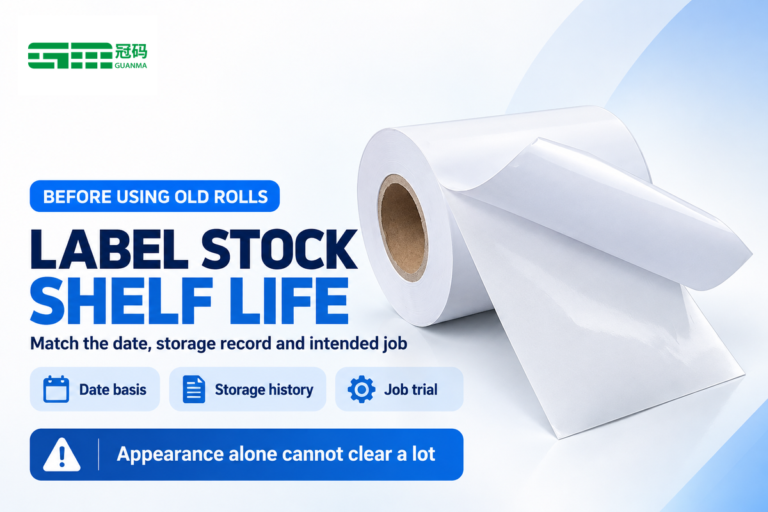
El frontal es permanente —permanecerá en el producto durante toda la vida útil de la etiqueta. En cambio, el liner de liberación es temporal —protege el adhesivo durante el almacenamiento y envío, y se despega antes de aplicar la etiqueta a un producto. Cambiar el liner de liberación y denominarlo erróneamente un «facestock» diferente no alterará el aspecto ni el desempeño de la etiqueta durante la aplicación, pero afectará los registros del convertidor y los pedidos posteriores.
¿Cuál es la diferencia entre el frontal y un liner de liberación?
El frontal es la capa superior permanente, visible e imprimible que permanece en el producto. Su contraparte, el liner de liberación, es una lámina de liner temporal y desechable que protege el adhesivo hasta la aplicación y luego se desecha. Aunque el frontal y el liner de liberación se laminan juntos durante la fabricación de la etiqueta, cumplen fines opuestos: uno está diseñado para permanecer y el otro para retirarse.
Si tiene curiosidad sobre los diversos materiales utilizados para el liner de liberación, consulte nuestra guía sobre qué es exactamente un liner de liberación o comprar para liner de liberación de glassine y CCK.
| Capa | Función | ¿Se queda en el producto? |
|---|---|---|
| Faceta | Superficie visible e imprimible | Da, permanente |
| Adhesivo | Une el material frontal a la superficie de aplicación | Da, permanente |
| Liner de liberación | Protege el adhesivo durante el almacenamiento/manipulación | No « eliminado y descartado en la solicitud |
La propia especificación de calidad de este producto proporciona mínimos numéricos para la pila de tres capas: una especificación de material de etiqueta adhesiva sensible a la presión mantenida por la Biblioteca del Congreso establece criterios de brillo, adhesión y liberación del revestimiento como un único documento combinado y no como tres documentos individuales con pigmentación blanca. material frontal que cumpla al menos con un valor de brillo de 82%.[3]
Conclusión: si un término describe un material que se retira durante el uso, se refiere al liner, no al frontal.
Cómo se empareja el rostro con la química adhesiva

Rango de fuerza de pelado: 3-18 N/25 mm a través de la matriz adhesiva frontal de Guanma. La fuerza de pelado, que define la cantidad de fuerza que se necesita para quitar una etiqueta de un sustrato, depende de una combinación de la química del material frontal y la química adhesiva elegida. Simplemente enumerar un número de fuerza de pelado no tiene sentido a menos que indique qué combinación representa.
En toda la matriz adhesivo frontal de Guanma, la fuerza de pelado medida por FINAT FTM1 (Método de prueba FINAT No. 1, una prueba estándar de la industria para determinar la fuerza de pelado) varía de 3 N/25 mm a 18 N/25 mm dependiendo del emparejamiento frontal/adhesivo. usted selecciona. Nota: este es un rango de medición de fuente única y debe interpretarse como direccional para este producto específico, no como un estándar de medición para toda la industria. Debido a que la química frontal y adhesiva interactúan, cambiar cualquiera de las capas puede cambiar el rendimiento general de una etiqueta incluso cuando la otra capa permanece idéntica.
Una norma ASTM D3330 define cómo se prueba la fuerza de despegue y la adhesión del sustrato de las cintas sensibles a la presión en condiciones específicas.[7] Una norma ASTM D6252 análoga define las pruebas de adhesión al pelado para etiquetas sensibles a la presión, pero establece claramente que tanto las variaciones de la cara como las del adhesivo afectan la lectura de la fuerza del pelado de un producto en particular, lo que significa que esta prueba no puede aislar la capa que influyó en la fuerza del pelado medida. lectura.[8] Además, el Consejo de Cinta Sensible a la Presión ofrece orientación de prueba alternativa para evaluar este tipo de adhesión.[9]
Hay cuatro químicas distintas que se utilizan para producir un adhesivo que se puede combinar con un producto frontal. Estas químicas consisten en: adhesivo termofusible -precio más bajo, velocidad más alta, mala adhesión sobre sustratos fríos o curvos; acrílico-permanente -el adhesivo de mayor fuerza de despegado, excelente resistencia a los rayos UV/envejecimiento; acrílico extraíble -excelente liberación limpia sin residuos; adhesivo a base de agua – adhesivo de fuerza de despegado moderado y respetuoso con el medio ambiente. Además, un quinto adhesivo (pero no comúnmente utilizado) “adhesivo a base de caucho – se encuentra en aplicaciones removibles sensibles a los costos. Sin embargo, para cualquier aplicación permanente o a largo plazo, el adhesivo acrílico extraíble ha reemplazado al adhesivo a base de caucho. Una especificación federal de EE. UU. para etiquetas de transferencia térmica (documento NARA de 2015 y todavía activo actualmente para esta aplicación) describe exactamente lo que probablemente exigirá una formulación. Los requisitos exigen un adhesivo de polímero acrílico que tenga suficiente resistencia al pelado para soportar un peso de 200 gramos cuando se aplica a una muestra de 1 por 2,5 pulgadas utilizando una prueba de pelado de 90 grados durante un total de diez minutos. Aunque no pretende definir un estándar aceptado en todos los ámbitos, muestra exactamente cómo son las especificaciones cuantitativas en comparación con una afirmación general de ”adhesión fuerte” [1]
“Los datos de adherencia al pelado en una etiqueta sensible a la presión pueden mostrar una fuerza de unión relativa a una o más superficies de material y textura variados en comparación con un panel de acero inoxidable estándar, pero las variaciones en la superficie misma y el adhesivo pueden afectar la respuesta. por lo que la prueba por sí sola no puede aislar qué capa es responsable de un resultado determinado”
parafraseado de la guía del método de prueba ASTM D6252/D6252M para etiquetas sensibles a la presión
Hacer
- Pídale a su convertidor el número de fuerza de despegado vinculado a su emparejamiento específico de adhesivo frontal, no a un rango genérico de hojas de especificaciones
- Haga coincidir la química del adhesivo con la temperatura de su aplicación y la energía superficial antes de finalizar el material frontal
- Solicite datos de prueba que hagan referencia a FINAT FTM1 o ASTM D3330/D6252 para que los resultados sean comparables entre proveedores
No
- Suponga que un adhesivo termofusible que funcione sobre un panel metálico plano se sujetará a una superficie curva o fría
- Trate un único número de fuerza de despegado como válido en cada combinación de adhesivo frontal que ofrezca un proveedor
- Evite una impresión de prueba al cambiar la química frontal o adhesiva, incluso si la otra capa permanece igual
Para obtener una descripción general más amplia del stock de etiquetas coincidentes con una especificación de adquisición no solo para la capa adhesiva, consulte nuestra guía de compra de material para etiquetas.
Conclusión clave: un número de fuerza de pelado solo significa algo cuando está vinculado a un emparejamiento adhesivo frontal con nombre y un método de prueba establecido (pregunte por ambos).
Elección de facestock por aplicación, cumplimiento, durabilidad y temperatura

La selección de frontal para aplicaciones reguladas o de exposición extrema es primero una decisión de cumplimiento normativo y después una decisión de materiales —si se equivoca en el requisito de cumplimiento normativo, las especificaciones de durabilidad dejan de importar. Las aplicaciones para exteriores, las etiquetas de logística de cadena de frío y otros perfiles de exposición a condiciones adversas exigen cada uno una solución de frontal-adhesivo diferente a la de un entorno minorista seco y con clima controlado —tratar todas las etiquetas de producto de la misma forma es como los compradores terminan haciendo nuevos pedidos. Especificar una etiqueta de alta durabilidad para uno de estos perfiles comienza con el marco de cumplimiento normativo, no con el catálogo de materiales. Tres marcos de cumplimiento normativo distintos influyen en la elección del frontal según lo que esté etiquetando: la Norma de Comunicación de Riesgos de OSHA establece requisitos de pictogramas, palabras de advertencia e indicaciones de peligro para etiquetas químicas que determinan la durabilidad y legibilidad mínimas de las etiquetas;[10] la Ley Federal de Sustancias Peligrosas de la Comisión de Seguridad de Productos de Consumo de EE. UU. exige un etiquetado preventivo lo suficientemente duradero como para seguir siendo legible durante la vida útil de un producto;[11] y BS 5609 «la edición actual de 2024 de la norma británica que cubre etiquetas impresas sensibles a la presión para uso marino «establece requisitos ambientales y de durabilidad específicamente para etiquetas de tambor que pueden estar expuestas al agua de mar.[12] Una ruta de certificación separada, el programa de Sistemas de Marcado y Etiquetado de UL, cubre las existencias de etiquetas en blanco probadas según ANSI/UL 969 para aplicaciones eléctricas y de marcado de productos fuera del espacio marino/neumático.[13]
| Tipo de aplicación | Facestock típico | Gravedad de la exposición | Controlador de cumplimiento/durabilidad | Limitaciones/no apto para |
|---|---|---|---|---|
| Bidón de materiales peligrosos/químicos | Película (PET), adhesivo acrílico permanente | Alta exposición química + climática | Pictogramas de OSHA GHS; BS 5609 para tránsito marítimo | No para papel sin estucar « no pasa las pruebas de inmersión en agua de mar BS 5609 |
| Etiquetas logísticas para congelación / cadena de frío | Película (PP o PE), adhesivo de grado congelador | Alto « subcero + ciclos de condensación | Adhesión a baja temperatura, resistencia a la condensación | No apto para almacenamiento ambiental cálido: el adhesivo de grado congelador tiene un rendimiento inferior a temperatura ambiente; obtenga el rango probado del proveedor |
| Alimentos y bebidas | Película (BOPP) o papel estucado | Moderado « contacto humedad/aceite | Resistencia a la humedad/aceite; Contacto adhesivo aprobado por la FDA | No apto para contacto directo con alimentos sin un sistema adhesivo certificado |
| Exterior/bienes duraderos | Película (PET), adhesivo estable a los rayos UV | Alto « UV + meteorización, varios años | Exposición a los rayos UV, intemperie, abrasión | No apto para una vida útil prolongada de varios años para exteriores sin un laminado de cobertura; solicite la clasificación de vida útil UV ensayada por el proveedor |
| Marcado eléctrico/producto | Película (PET o poliimida) | Calor alto y sostenido cerca de los componentes | Reconocimiento ANSI/UL 969 | El grado PET no es adecuado en los niveles de calor continuo más altos para los que está clasificada la poliimida « confirme la clasificación específica del grado con su proveedor |
| Neumático/sustrato de caucho | Película (PP), adhesivo agresivo a base de caucho o acrílico | Moderado-alto “baja energía superficial, curvo | Adhesión al caucho curvo de baja energía superficial | No apto para zonas laterales de alta flexión sin película conformable |
| Cable y alambre | Película (PET), compatible con envoltura | Moderado “flex + ciclo térmico | Flexibilidad para envolver cables de pequeño diámetro sin agrietarse | No para diámetros de cable muy pequeños sin película de calibre más delgado: confirme el radio de envoltura mínimo con su proveedor |
| Farmacéutico | Película (PET) o papel estucado, opciones a prueba de manipulaciones | Moderado “controlado pero larga vida útil | Legibilidad durante la vida útil del producto; Compatibilidad con procesos de esterilización | No apto para esterilización en ciclo de autoclave sin un grado de facestock validado |
| Bebidas y vino (botella de vidrio) | Película conformable o papel estucado de primera calidad | Moderado « condensación, contacto con cubos de hielo | Claridad sin apariencia de etiqueta; Resistencia a la condensación/humedad | No apto para inmersión prolongada en cubos de hielo sin adhesivo resistente a la humedad |
La manipulación frecuente, la resistencia a la humedad y los envases de productos sensibles al calor llevan a los compradores a preferir film en lugar de papel una vez que una etiqueta sale de un entorno con clima controlado. Las aplicaciones de salud y laboratorio añaden procesos de esterilización a esa lista —un frontal que resiste la esterilización en autoclave o las limpiezas químicas necesita una química fundamentalmente distinta a la de una etiqueta minorista estable en estantería, y los sistemas adhesivos aprobados por la FDA se convierten en un requisito indispensable, no en algo deseable, cuando hay alimentos o contacto directo con el producto. El desempeño de larga duración bajo exposición a UV, condiciones exigentes y temperaturas extremas es donde el frontal de papel se queda sistemáticamente corto. Una etiqueta de papel puede funcionar bien en un almacén seco o una bodega, pero falla rápidamente al exponerse a humedad, aceites o temperaturas extremas —un patrón que los convertidores observan con suficiente frecuencia como para orientar por defecto los nuevos trabajos para exteriores hacia el film. Para aplicaciones con alta exposición a UV específicamente, nuestro guía de etiquetas duraderas y exteriores Profundiza en la estabilización UV del lado adhesivo. La impresión por transferencia térmica agrega otra restricción: una especificación federal de etiquetas de transferencia térmica requiere explícitamente un material frontal compatible con cintas de tinta de transferencia térmica de resina dura y establece que la cera o las cintas de resina de cera no son aceptables para esa aplicación ‘un detalle que vale la pena conocer antes de asumir que cualquier material frontal imprimible por transferencia térmica funciona con cualquier cinta disponible. El código de barras y otra información variable impresa en las etiquetas del producto dependen de que la combinación cinta-material se mantenga de manera consistente, no solo de que la primera tirada se vea limpia. Para una transferencia térmica lado a lado versus una impresión térmica directa, consulte nuestra sección dedicada transferencia térmica versus comparación térmica directa.
📐 Nota de ingeniería
Las afirmaciones de resistencia química y durabilidad para exteriores deben incluir el tiempo de exposición y el medio, no solo «resistente». Un frontal clasificado para exposición a salpicaduras de un solvente de limpieza no está clasificado automáticamente para inmersión completa; un frontal clasificado para seis meses de exposición a UV para exteriores no cubre automáticamente una exposición de dos años.
Cuando la fachada estándar no es suficiente, los modos de falla comunes
Los convertidores que realizan trabajos de seguimiento de activos y exteriores informan de manera confiable: una cara térmica o de papel normal dura un tiempo, luego inesperadamente se autodestruye para la exposición a los rayos UV y los compuestos de erosión mucho antes de que una opción de película estable a los rayos UV parezca tener efectos similares. Se sabe que las fallas de adhesión se producen en cascada debido a problemas de compatibilidad sustrato/material facial, no necesariamente únicamente a partir del adhesivo.
la selección de durabilidad y las pruebas o documentación de durabilidad del entorno de las instalaciones se encuentran entre los dos etiquetados más comunes en la automatización de la impresión industrial,[14] junto con los informes absolutos de incumplimiento de los peligros que se pasan por alto correctamente.[15] Si se suelta una etiqueta en el campo, verifique la relación entre la cara y la superficie antes de culpar al adhesivo. Una cara calificada para condiciones duras en una dimensión, como exposición a los rayos UV, no está calificada automáticamente para condiciones duras en otra, como salpicaduras químicas.
Punto importante a quitar; primero determine qué marco de cumplimiento se está abordando: GHS, BS 5609, UL 969, ninguno; luego elija el emparejamiento facestock-adhesivo que logre esto ‘al revés de lo que se ve con más frecuencia’.
Cómo elegir el rostro adecuado, un marco de decisión de 4 factores

La prueba de ajuste frontal de 4 factores. Cuatro factores impulsan el material frontal correcto: superficie, entorno, adhesivo, proceso de impresión – y repasar los factores en el pedido enumerado, en lugar de comenzar con “cuál es el costo”, es lo que evita que los compradores tengan que reordenar el papel incorrecto. por segunda vez. Obtener el factor ambiental correcto significa hacer coincidir la química del material frontal con el entorno previsto antes de bloquear el adhesivo. Esta secuencia no es una mera casualidad: una especificación técnica ISO para la realización de pedidos y la especificación de etiquetas autoadhesivas proporciona las mismas categorías de información que necesita especificar de manera consistente para obtener cotizaciones comparables de diferentes proveedores (superficie, entorno, adhesión y manejo de uso final).[4] Nombrar el tipo de adhesivo exacto que desea (fundido en caliente, acrílico permanente, acrílico extraíble o a base de agua) en la etapa de RFQ evita que un convertidor pase por defecto a cualquier química que esté en stock, especialmente fuera del estándar -40°C. a +150°C que cubre esta guía. Dado que la guía ISO está explícitamente limitada a 36 páginas, no menciona los requisitos reglamentarios (GHS, BS 5609, UL 969) -ñona, así que trátelo como un primer filtro separado -méstate, consulte la sección anterior; luego revise los cuatro factores a continuación.
Nominalmente, la compatibilidad del proceso de impresión es mucho más importante de lo que permiten la mayoría de los compradores. Líneas guía aprobadas por la industria para la selección de sustratos, lista de compatibilidad del proceso de impresión, absorbencia, resistencia al roce, características de la superficie y resistencias químicas como estándares primarios del papel base (no detalles de producción secundarios que deben abordarse después de que el material ya esté seleccionado).[16] Plano sobre papel no siempre se traduce en liso sobre el pistón si el material no ha sido predeterminado para ser compatible con la impresora y el sistema de cinta/tinta en el que se ejecuta el convertidor.
Lista de verificación de RFQ: cópielos en su solicitud de cotización:
| Parámetro | Rango recomendado | Por qué es importante | Cómo verificar |
|---|---|---|---|
| Energía superficial de aplicación | Alta energía (metal, vidrio) versus baja energía (PP, PE) | La adhesión es más fácil en sustratos de alta energía; Las superficies de baja energía necesitan un adhesivo agresivo | Solicite al convertidor una prueba de nivel de dina en su contenedor real |
| Forma/flexible del contenedor | Plano/rígido versus curvo/comprimible | Las películas rígidas se agrietan en envases flexionados o comprimibles | Solicite una aplicación de muestra sobre la geometría real del contenedor |
| Rango de temperatura en servicio | Envoltura de -40°C a +150°C, dependiente de la química | La química frontal y adhesiva tienen límites de temperatura estrictos | Solicite el rango de temperatura de servicio probado del proveedor, no un rango de marketing |
| Método de impresión | Flexo / digital / transferencia térmica / térmica directa | El recubrimiento debe estar calificado para el sistema de cinta o tinta específico utilizado | Ejecute una impresión de prueba antes de comprometerse con una orden de producción |
| Requisito de cumplimiento | GHS/BS5609/UL969/ninguno | Coloca un piso duro en una combinación de adhesivo frontal incluso antes de discutir el costo | Solicitar la certificación específica o el informe de prueba, no una garantía verbal |
Copie esto en su próxima RFQ y un convertidor de etiquetas podrá prepararle un conjunto de opciones adecuadas, en lugar de tener que hacer primero cinco preguntas; este orden exacto de cuatro factores se aplica a pedidos individuales de etiquetas personalizadas, para un solo SKU o para múltiples esquemas de SKU. Para versiones de comparación interactivas, consulte la de Guanma asistente de decisión de adhesivo facial.
Conclusión clave
Ejecute la superficie de la aplicación, la exposición al entorno, la compatibilidad adhesiva y el método de impresión en ese orden. El cumplimiento es un filtro separado que se aplica primero, no se divide en los cuatro factores.
Perspectivas de la industria, por qué está aumentando la demanda de material frontal

El reetiquetado impulsado por el cumplimiento y el cambio hacia la impresión de etiquetas bajo demanda a corto plazo están aumentando la demanda de facestock más rápido que el mercado de etiquetas más amplio – y eso tiene una implicación de tiempo real para los compradores, no solo una nota a pie de página del tamaño del mercado. El volumen de búsqueda de Google de la palabra clave “facestock” ha aumentado aproximadamente 30,2% en una ventana histórica de 24 a 59 meses, con un volumen de búsqueda de “adhesivo sensible a la presión” que aumentó aún más rápido en casi 76,9% y un aumento de “papel estucado” casi 38,9% durante el mismo período, según datos históricos de volumen de palabras clave. El crecimiento del volumen de búsqueda es un indicador de la actividad de investigación de los compradores, no una cifra directa del tamaño del mercado o del volumen de envío (lo trate como un indicador adelantado, no como un pronóstico de envío). Las ventanas históricas de volumen de búsqueda de varios años también conllevan más incertidumbre en la estimación que una instantánea de un solo mes, especialmente para un término de nicho con una base de búsqueda delgada como “facestock”, así que lea los porcentajes específicos como direccionales en lugar de precisos para el decimal. Los compradores que fijan acuerdos de suministro ahora evitan los cambios de tiempo de entrega que ya se manifiestan, ya que la demanda de adhesivos sensibles a la presión y de papel estucado supera el crecimiento general del mercado de etiquetas.
Dos tendencias estructurales explican que esa brecha sería mejor que una cifra genérica del tamaño del mercado: las actualizaciones del GHS y de la clasificación de materiales peligrosos siguen impulsando el inventario químico existente a través de ciclos de reetiquetado, y la preferencia del comercio electrónico por la impresión de etiquetas bajo demanda a corto plazo favorece a los convertidores y compradores que puede obtener material facial de manera flexible en lugar de comprometerse con tiradas masivas únicas. Las estimaciones independientes de investigación de mercado para la categoría más amplia de etiquetas sensibles a la presión sitúan el crecimiento anual compuesto en el rango de 3,9% a 6,5% dependiendo de la empresa de investigación, con estimaciones del tamaño total del mercado que abarcan aproximadamente $78 mil millones a más de $100 mil millones a partir de 2025 (útil como contexto de mercado direccional), aunque ninguno de los cinco informes verificados para este artículo nombra un controlador específico más preciso que el lenguaje general de “avance tecnológico”, razón por la cual los impulsores de cumplimiento y comercio electrónico anteriores tienen más peso que el porcentaje de crecimiento bruto por sí solos.
La reciclabilidad es la otra tendencia que vale la pena seguir, y es más que un lenguaje de marketing en este momento: la innovación patentada se dirige activamente a las construcciones adhesivas faciales reciclables, incluidas las etiquetas adhesivas sensibles a la presión termofusibles diseñadas específicamente para la reciclabilidad[17] y construcciones de etiquetas diseñadas para ser compatibles con flujos de reciclaje estándar.[18] El Servicio Forestal de EE. UU. ha publicado investigaciones específicamente sobre el reciclaje de etiquetas sensibles a la presión y la separación del material frontal del papel durante el proceso de reciclaje. Un ángulo de investigación gubernamental casi no hace referencia a la página del proveedor de material frontal actualmente.[19] Si los compromisos de sostenibilidad están en su hoja de ruta para 2026, pregunte directamente a su proveedor de material facial si su construcción ha sido evaluada según estos métodos de separación, en lugar de aceptar una etiqueta general “reciclable” a su valor nominal, las afirmaciones de rendimiento de la etiqueta son tan buenas como los datos de prueba detrás. a ellos.
Conclusión clave: comprar acuerdos de suministro de material facial teniendo en cuenta los ciclos de reetiquetado del GHS de 2026 y la demanda de impresión a corto plazo (no solo los precios al contado actuales, que el consenso de investigación de mercado trata como una variable secundaria detrás de estos dos impulsores estructurales).
Preguntas frecuentes
P: ¿Cuáles son los 4 tipos de etiquetas?
Los cuatro tipos generales de etiquetas son las sensibles a la presión, las aplicadas con adhesivo, las de manga retráctil y las en molde, diferenciadas por la forma en que se adhieren a un producto. El término frontal se aplica únicamente a la categoría sensible a la presión, ya que los otros tres tipos utilizan adhesivo, termocontracción o fusión en molde en lugar de una capa de adhesivo pre-recubierto.
Las etiquetas sensibles a la presión se basan en una construcción de frontal-adhesivo-liner y se aplican con ligera presión. Las etiquetas aplicadas con adhesivo se unen con un adhesivo húmedo o hot-melt en el punto de aplicación, en lugar de con un adhesivo pre-recubierto. Las etiquetas de manga retráctil envuelven por completo el envase y luego se contraen en su lugar mediante la aplicación de calor. Las etiquetas en molde se colocan previamente en un molde y se fusionan térmicamente con el envase durante el propio proceso de moldeo. El frontal, tal como se define en esta guía, se aplica únicamente a los tipos de etiquetas sensibles a la presión.
P: ¿Qué significa face stock?
Capa frontal significa la capa superior imprimible de una etiqueta sensible a la presión, la superficie que transporta la tinta y las caras hacia afuera una vez aplicada. Tanto los convertidores como las especificaciones federales utilizan la forma con guiones, la cara, cuando necesitan dejar claro que el requisito cubre solo esa capa imprimible, no el laminado terminado.
«Face stock» y «facestock» son el mismo término, escrito con o sin espacio según la fuente o región. Son simplemente dos términos que se refieren a la capa superior, en lugar del adhesivo y el liner debajo de ella (aunque todos se laminan juntos en el producto final y se suministran troquelados como una unidad). Esta es la forma que se utiliza con mayor frecuencia en documentos de adquisiciones federales y normas nacionales. Por ejemplo, el documento de los Archivos Nacionales de EE. UU. sobre material autoadhesivo para etiquetas exige usar la forma con guion «face-stock» para dejar claro que el requisito se refiere únicamente a la capa imprimible, no al material autoadhesivo para etiquetas completo. También verá que los compradores buscan variantes como «label face stock», «face stock label», «face stock paper», «facestock label» o incluso «facestock sticker» cuando se refieren a esta misma capa imprimible; todas remiten a la misma definición de capa superior tratada aquí.
P: ¿De qué está hecho el stock de etiquetas?
El material autoadhesivo para etiquetas está compuesto por tres capas laminadas: un frontal (papel o film), un adhesivo sensible a la presión y un liner de liberación. Los compradores suelen pedirlo como un solo producto combinado, y una hoja de especificaciones solo lo divide en esas tres capas cuando los criterios de calidad difieren según la capa.
El material frontal suele ser un producto de papel o una de tres películas plásticas (PET – polyester; BOPP – polypropylene; o polyethylene). La química del adhesivo suele ser hot-melt, acrílica (permanente o removible) o a base de agua. Su liner de liberación suele ser papel glassine o CCK recubierto de silicona. Después de aplicar la etiqueta, el liner de liberación se despega limpiamente, se desecha y nunca forma parte de la etiqueta final aplicada. Las tres capas se seleccionan juntas y no pueden considerarse de forma individual, ya que sus interacciones en un entorno de frío y calor pueden afectar el desempeño de la etiqueta (p. ej., una combinación inadecuada de frontal/adhesivo puede provocar levantamiento de etiquetas en campo, incluso si cada capa cumple sus propios requisitos). Dado que Guanma fabrica las tres capas internamente en sus plantas de TH y VN, los rangos de fuerza de pelado y espesor citados en esta guía proceden de una sola matriz de productos.
P: ¿Qué espesor tiene el material frontal?
El material frontal de la película suele tener un espesor de 36 a 90 µm; el papel estucado tiene un espesor aproximado de 80 a 90 gsm. El espesor varía según la familia y el grado del material, y un material más grueso no significa automáticamente una mejor resistencia al calor o a los químicos. El papel estucado, por ejemplo, aún debe eliminar el brillo mínimo de 82% según el estándar citado anteriormente, independientemente del calibre.
El espesor por sí solo no se puede utilizar como predictor de durabilidad (ver arriba).
P: ¿Es facestock lo mismo que una etiqueta?
No, el frontal es solo un componente de una etiqueta terminada, no la etiqueta completa. Una etiqueta terminada también necesita la capa de adhesivo para adherirse y un liner de liberación para proteger ese adhesivo hasta que se aplique la etiqueta.
Una etiqueta, en su forma convertida, consta del frontal junto con el adhesivo y se suministra a un convertidor de etiquetas (es decir, una entidad que la corta y prepara para su aplicación) sobre el liner de liberación. El «facestock» es únicamente la capa imprimible, antes de su laminación con el adhesivo. Por tanto, si compra «etiquetas» a un convertidor de etiquetas, este ha comprado el «facestock» a un fabricante de materias primas.
P: ¿Se puede reciclar el material frontal?
Algunas construcciones de revestimiento se pueden reciclar, pero la reciclabilidad depende de la combinación específica de revestimiento adhesivo y revestimiento y del flujo de reciclaje involucrado. Las construcciones de papel sobre papel suelen ser las más fáciles de reciclar, mientras que las superficies de película necesitan una instalación especializada capaz de deslaminar las capas primero.
Un frontal de papel sobre un envase de papel representa una de las combinaciones de productos más sencillas de reciclar. Los frontales de film requieren instalaciones especiales de reciclaje y, a veces, procesos de deslaminación para separar el frontal del liner o del envase de sustrato. Los avances patentados en formulaciones adhesivas y construcciones de productos han buscado desarrollar combinaciones más fáciles de reciclar. Consulte a su proveedor de etiquetas para determinar si un producto concreto ha sido evaluado para el flujo de reciclaje específico aplicable en su región.
Por qué escribimos esto
Nuestras plantas de TH y VN producen nuestro frontal autoadhesivo, adhesivo y liner de liberación en nuestra gama de productos de 18 configuraciones, por lo que todos los números sobre fuerza de pelado, espesor y rango de temperatura de esta guía se extrajeron directamente de nuestras propias especificaciones de fabricación, en lugar de ser la estimación de otra persona. Hemos priorizado la elaboración de explicaciones como esta guía de frontales porque, en casi todas las RFQ que recibimos, alguien pregunta «which film should I buy» o «facestock vs. label stock?».
Referencias y fuentes
- Especificación para etiquetas adhesivas sensibles a la presión para impresoras de transferencia térmica Administración Nacional de Archivos y Registros de EE. UU
- Modernización de sustrato recubierto de adhesivo a base de solvente y a base de agua Agencia de Protección Ambiental de EE. UU
- Especificaciones para etiquetas adhesivas sensibles a la presión (700-713) Biblioteca del Congreso
- ISO/TS 18614:2016, Información requerida para solicitar y especificar etiquetas autoadhesivas Organización Internacional de Normalización
- Innovia Films presenta un frontal BOPP blanco premium Estrategias de embalaje
- Nueva película frontal transparente recubierta de brillo de una cara Estrategias de embalaje
- ASTM D3330/D3330M, Método de prueba estándar para la adhesión al pelado de cinta sensible a la presión ASTM Internacional
- ASTM D6252/D6252M, Método de prueba estándar para la adhesión al pelado de marcas sensibles a la presión en un ángulo de 90° ASTM Internacional
- Métodos de prueba alternativos para la evaluación de bonos de PSA Consejo de cinta sensible a la presión
- Norma de comunicación de peligros: etiquetas y pictogramas Administración de Salud y Seguridad Ocupacional de EE. UU
- Requisitos de la Ley Federal de Sustancias Peligrosas (FHSA) Comisión de Seguridad de Productos de Consumo de EE. UU
- BS 5609:2024, Etiquetas impresas recubiertas con adhesivo sensible a la presión para uso marino Institución británica de estándares
- Programa de Sistemas de Marcado y Etiquetado Soluciones UL
- 12 errores comunes que se deben evitar al diseñar etiquetas industriales Grupo de Soluciones Fortis
- Fallos en la adhesión de etiquetas: 5 factores a examinar Tecnologías mayordomo
- Etiquetas sensibles a la presión, Academia de etiquetas Etiquetas y etiquetado
- Etiqueta adhesiva sensible a la presión termofusible reciclable a base de olefina Patentes de Google
- Etiquetas compatibles con el reciclaje Patentes de Google
- Reciclaje de productos sensibles a la presión Servicio Forestal de EE. UU., USDA
Artículos relacionados
- Guía de materiales de etiquetas de vino selección de material frontal y adhesivo para etiquetado de botellas de vidrio
- Guía de papel térmico detalles faciales térmicos directos más allá de lo que cubre esta guía
- Soluciones de etiquetas por aplicación mapeo completo de aplicación a material en toda la gama de productos de Guanma